Shift complaints on a 2011-2017 Mustang with the 6R80 automatic come in five flavors: a bang or ping going into Reverse or Drive, a sudden drop into a low gear with the wrench light on, a 1-2 or 2-3 that flares one day and binds up the next, a hard bump on a coast-down or a kickdown, and firm shifts that show up after a tune, a valve body swap or a battery disconnect. They are not the same failure, and the parts that fix one do nothing for the others.
This guide sorts them the way I do on the road test, Mustang only. Slip diagnosis lives in our 6R80 Mustang slipping guide, and the truck side is in 6R80 F-150 shift problems. Every recall and trade article behind the specifics is linked under Sources.

Sort the complaint first
| What the driver reports | Most likely on a Mustang | First check |
|---|---|---|
| Clunk or ping going from Park to Reverse or Drive | Driveshaft on 2015-2017 cars (SSM 49083), or a harsh engagement | Engagement time on the scan tool, mounts, driveshaft |
| Sudden downshift into 1st at speed, wrench light | Output shaft speed signal loss, 2012 cars under recall 16S19 | OSS PID dropout, P0720/P0722/P0731/P1500, open recalls |
| 1-2 slow with a bump at the end, 2-3 that flares or binds | B or C shift solenoid drifted out of its band | Solenoid commands and pressures through the shift |
| Hard 2-1 coast-down or forced 3-2, or a flare during a shift | Converter clutch not releasing or not fully applied | Converter release (WK) pressure vs. TCC command |
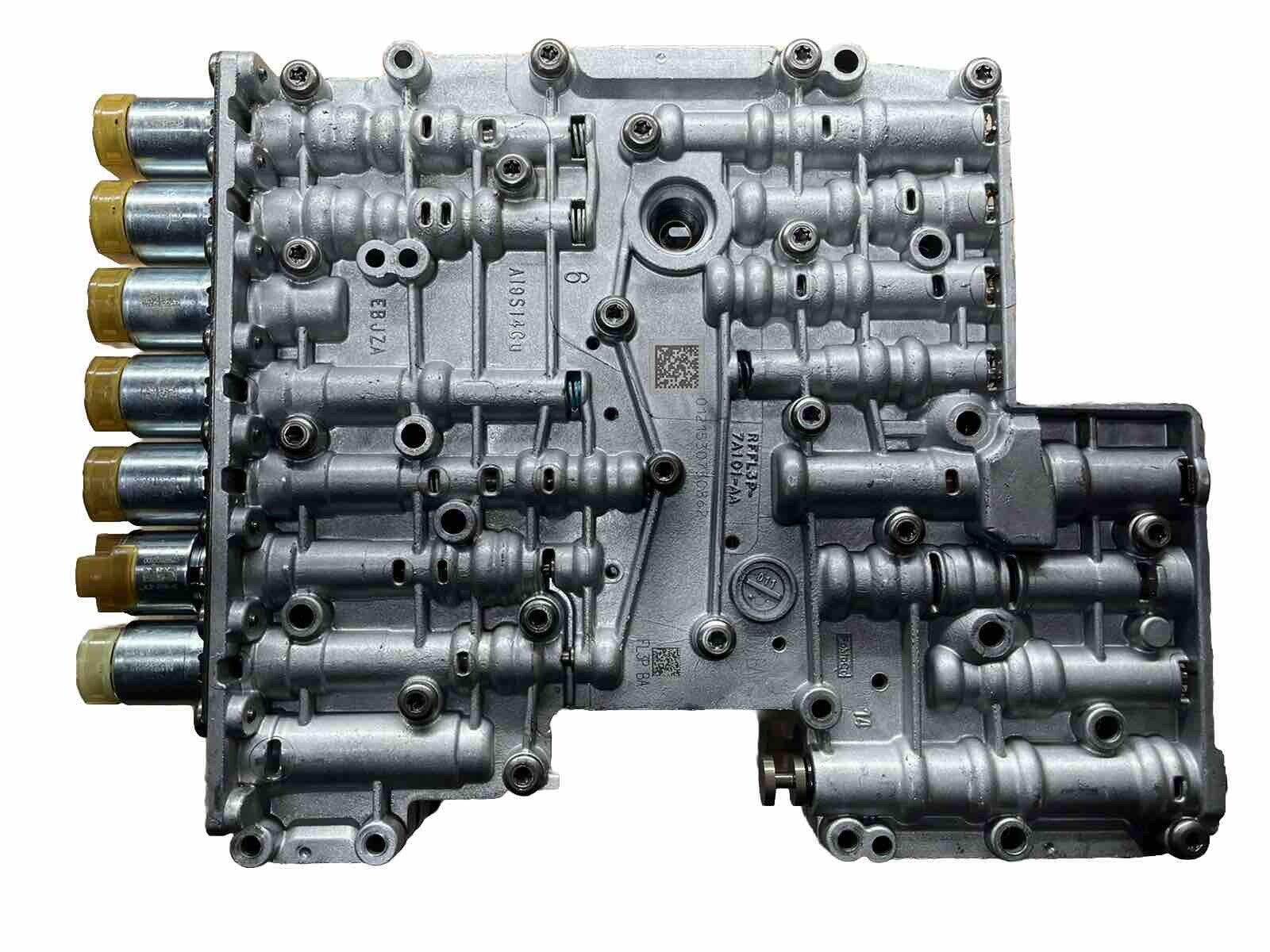
| Harsh shifts right after a tune, swap or valve body job | Solenoid body strategy or ID mismatch, adapts not learned | Strategy and ID in the PCM vs. the case tag |
Two quick checks before anything else. Confirm it really is a 6R80. The 2018-up Mustang uses the 10R80, a different transmission with a different fluid and different parts. Then check the fluid level and condition at the fill plug with the fluid at operating temperature, because a low unit will throw shift complaints that look like everything on this list. Our 6R80 fluid type and capacity post has the procedure.
Clunk going into gear on a 2015-2017 Mustang
This one gets misdiagnosed as a transmission problem more than anything else on the S550. Ford Special Service Message 49083 covers 2015-2017 Mustangs with the 3.7L and 5.0L and the 6R80, built on or before April 1, 2017, that make a clunk or ping from the driveshaft when shifting from Reverse to Drive or Drive to Reverse. Ford's answer was not a calibration or a valve body. It released a revised driveshaft with improved NVH characteristics, and dealers claim it against the driveshaft as the causal part.
Tell the two apart on the lift and on the scan tool. A transmission engagement problem shows up as a delay after the shift lever moves, then a hard hit as the clutch applies, and you will usually see it on turbine speed dropping to zero late. A driveline clunk happens right as the gear goes in and has a sharp, metallic ping to it that you can often reproduce by rocking the car in gear with the engine off and the brake released. Bob Warnke at Sonnax also reminds techs to check the engine mounts before condemning the converter for roughness in Reverse, and the same goes for the transmission mount on a car that clunks. A torn mount lets the whole powertrain shift on engagement and makes a normal apply feel like a bang.
Sudden downshift into 1st: the 2012 recall
If a 2012 Mustang drops into first gear without warning, sometimes hard enough to chirp or lock the rear tires, read the recall before you read the codes. Ford recall 16S19, filed with NHTSA as 16V-248 in April 2016, covers 2012 Mustangs with the 6R80 produced from August 19, 2011 through February 21, 2012. Ford's Part 573 report describes an intermittent loss of the output shaft speed sensor signal to the PCM that can cause a temporary, unintended downshift into first gear. Sometimes the signal comes back while driving. Sometimes the car has to be stopped and restarted to get normal operation back. The remedy is a PCM reprogram.
Ford paired the recall with Customer Satisfaction Program 16N02, which extended coverage on the molded leadframe for Mustangs built at Flat Rock from August 9, 2011 through February 24, 2012. The program lists P0720, P0722, P0731 and P1500 as the codes that go with an intermittent OSS failure and has dealers replace the molded leadframe. That extension ran 10 years or 150,000 miles from the warranty start date, so on almost every one of these cars it has run out by now. The repair is the same. You just pay for it.
On the scan tool, graph output shaft speed against vehicle speed from the ABS module. A healthy OSS tracks the wheel speed in a smooth line. A failing leadframe sensor drops to zero for a fraction of a second. ATRA's Lance Wiggins explains in GEARS that the speed sensors live on the valve body assembly, and that when the 6R80 loses control it goes to failsafe: 5th gear in Drive if the failure happened in 5th or 6th, 3rd in manual for other failures. A car that starts out in 5th is the other side of the same failure.
Fix order: recall reflash first, then the leadframe if the OSS still drops out. Shift solenoids are not the cause here.
Flared or bound-up 1-2 and 2-3 shifts
The classic Mustang 6R80 shift-quality complaint is a 2-3 that sometimes flares and sometimes binds up quickly, often paired with a 1-2 that is sometimes slow and sometimes finishes with a bump. Jim Dial wrote this exact case up for Sonnax in 2022, and his scan data is a good template for what normal looks like.
Know the clutches involved. In 1st through 4th the 1-2-3-4 clutch (the A clutch) is on. 2nd adds the 2-6 clutch (C). The 2-3 shift releases the 2-6 clutch and applies the 3-5-Reverse clutch (B). The 2-6 clutch is controlled by the C solenoid, which is normally low, and the 3-5-R clutch by the B solenoid, which is normally high. So during a good 2-3 you should see the C solenoid start high, around 1.0 amp, while B amperage falls toward about 0.56 amp and its pressure begins to build, around 14.6 psi in his capture. As the shift completes, C drops out and its pressure goes to zero, and B finishes near 0.07 amp with close to 50 psi on the clutch. C should turn fully off just before B finishes its apply.
That timing is the whole diagnosis. If the commands are wrong, the problem is in the calibration or the PCM. If the commands look like the pattern above every time and the shift is still inconsistent, the electronics are doing their job and the solenoids are not following them mechanically. Dial's fix on that car was to replace both the B and C solenoids with parts carrying the same band numbers as the originals, so the valve body only had to come out once. Then he reset the adaptives and road tested with 20 to 25 stop-and-go cycles through 1st to 6th, followed by 20 stops. The complaint went away.
He also flags the other cause of a bind-up: clutch packs set too tight during a rebuild. Stay close to the OE clutch clearances. A 6R80 built tight will tie up on the overlap shifts and may have to come right back out.
Strategy and solenoid ID on tuned and swapped cars
Per GEARS, every 6R80 case tag carries a 13-digit solenoid body strategy and a 12-digit solenoid body ID, and a mismatch between those and what the PCM holds can cause harsh shifts or transmission damage. On a Mustang with a used transmission, a replacement valve body or a fresh tune, compare the PCM's numbers to the tag before you look for hardware. Our 6R80 shift solenoid symptoms post covers the electrical checks.
Hard coast-down and kickdown: the converter clutch
A bang on the 2-1 coming to a stop or a hard forced 3-2 is often a converter clutch still applied when it should be released, as Sonnax's Bob Warnke lays out for the ZF6 and 6R60/80.
The circuit to watch is WK, converter release. It holds the converter clutch piston off the cover. The only test point is the WK port on the driver side of the bell housing, with a 10 x 1.00 mm thread, and you want a 100 psi gauge or transducer because you need to see it go to zero. Warnke's numbers:
- About 70-75 psi cool, dropping to about 65-68 psi hot, with the converter released.
- A brief dip to about 50 psi when Reverse is selected is normal.
- About 0-2 psi when lockup is commanded: zero is full apply, 1.5-2 psi is controlled slip.
If WK does not climb above about 2-5 psi during a 2-1 coast-down or forced 3-2, the converter stays locked through the downshift and the driver feels it as a harsh shift. The opposite failure is WK sitting above zero during a shift when the converter should be applied, which lets the engine flare. Compare WK against TCC solenoid amperage while driving. More amperage should mean more apply and lower WK, and engine rpm should match turbine speed when WK is at zero.
When WK is wrong, look at the valve body before the converter. Warnke lists a worn main pressure regulator bore robbing converter feed, a worn solenoid pressure regulator bore that makes every solenoid's output run high or low, leaking end plugs and failing accumulator dampers that cause erratic solenoid output. He also calls out the input and output bushings and the pump stator bushing as common causes of TCC, shift and ratio complaints. One more Ford detail: a thermal element routes converter flow to the bushings until the case is warm, roughly 125 degrees F, so check level and pressures only after the unit is fully warmed up. More converter testing is in our 6R80 converter shudder guide.
The fix, by what you found
- 2015-2017, clunk or ping going into Reverse or Drive, engagement time normal: mounts first, then the revised driveshaft per SSM 49083.
- 2012, sudden downshift into 1st, OSS dropouts: recall 16S19 PCM reprogram, then the molded leadframe if the OSS still drops out. Leave the solenoids alone.
- 2-3 flare or bind with correct solenoid commands: replace the B and C solenoids with matching band numbers, or a matched solenoid body with its strategy and ID programmed. Reset adapts and drive the relearn.
- Harsh shifts after a tune, swap or valve body: match the strategy and ID to the case tag, load a correct calibration, reset adapts.
- Hard coast-down or flare tied to WK pressure: valve body regulator bores, end plugs and accumulator dampers, then the converter and bushings.
- Bind-up right after an overhaul: clutch clearances out of OE spec. It has to come back apart.
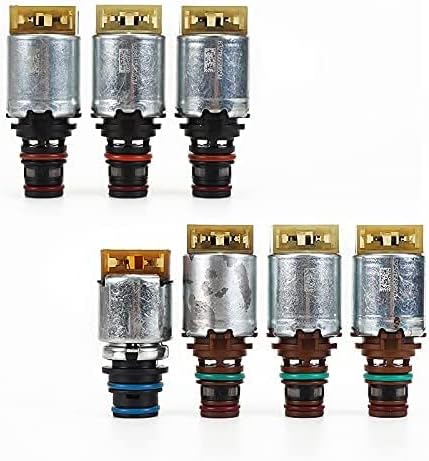
6R80 solenoid kit, OEM AL3P-7G276-AF, 2007-2014
For a 2011-2014 Mustang with a solenoid-driven 2-3 flare, this OEM-number kit replaces the shift solenoids in one valve body removal. Program the new strategy and ID after install. Sold by our sister store, CoreTransmissionParts.
Shop the part for this fix →2015-2017 car or need a single solenoid? The solenoids collection has the other 6R80 options.
Need parts for this job?
Mustang 6R80 solenoid sets, lead frame kits, valve bodies by year, TCC solenoids and master rebuild kits are on our 6R80 parts page, with checkout on site.
FAQ
Why does my 6R80 Mustang shift hard?
The usual causes are solenoids that have drifted out of their calibration band, a solenoid body strategy or ID in the PCM that does not match the valve body, a converter clutch that stays applied during a coast-down or forced downshift, and worn valve body bores. On 2015-2017 cars a clunk going into Reverse or Drive can also come from the driveshaft, not the transmission. Graph the shift on a scan tool before you replace parts.
Is there a recall for a 2012 Mustang 6R80 downshifting into first gear?
Yes. Ford recall 16S19 (NHTSA 16V-248) covers 2012 Mustangs with the 6R80 built from August 19, 2011 through February 21, 2012. An intermittent loss of the output shaft speed signal can cause a temporary downshift into first gear, and the remedy is a PCM reprogram at no charge. Ford also extended molded leadframe coverage on these cars under program 16N02.
What causes a clunk when shifting a 2015-2017 Mustang into Reverse or Drive?
Ford Special Service Message 49083 covers 2015-2017 Mustangs with the 3.7L or 5.0L and the 6R80, built on or before April 1, 2017, that make a clunk or ping from the driveshaft when shifting between Reverse and Drive. Ford released a revised driveshaft with better NVH characteristics. Rule out mounts and a harsh engagement on the scan tool before you blame the transmission.
Should I replace one 6R80 solenoid or the whole set?
Replace with solenoids that carry the same band number as the originals, or use a matched solenoid body and program its new strategy and ID into the PCM. Sonnax recommends replacing both the B and C solenoids together on a 2-3 shift complaint so the valve body only comes out once. After any solenoid work, reset the adaptive tables and drive the relearn cycle.
Related guides
- 6R80 Mustang Common Problems and Fixes
- 6R80 Mustang Slipping: Causes and Fix
- 6R80 Harsh Shift Causes
- 6R80 Shift Solenoid Symptoms
- 6R80 F-150 Shift Problems
Sources
- Ford Motor Company — Part 573 Safety Recall Report 16V-248 (Ford recall 16S19), April 25, 2016, hosted by NHTSA. Backs the 2012 Mustang production window of August 19, 2011 through February 21, 2012, the intermittent OSS signal loss, the unintended downshift into first gear and the PCM reprogram remedy. static.nhtsa.gov (PDF)
- Ford Customer Service Division — Customer Satisfaction Program 16N02, "Molded Leadframe Extended Coverage," June 16, 2016, hosted by NHTSA. Backs the Flat Rock Mustang build dates of August 9, 2011 through February 24, 2012, DTCs P0720, P0722, P0731 and P1500, the 10-year or 150,000-mile coverage and the leadframe replacement. static.nhtsa.gov (PDF)
- Ford Motor Company — Special Service Message 49083, "2015-2017 Mustang 3.7L/5.0L 6R80 - Clunk/Ping Noise When Shifting From Park To Reverse And/Or Park To Drive Engagement," hosted by NHTSA. Backs the April 1, 2017 build cutoff, the driveshaft as the noise source and the revised driveshaft. static.nhtsa.gov (PDF)
- Sonnax — Jim Dial, "Troubleshooting Ford 6R80 & 6R140 2-3 Shift Quality Issues," September 2022. Backs the 1-2-3-4, 2-6 and 3-5-R clutch roles, the B and C solenoid behavior and scan values through the 2-3, matching band numbers, the 20-25 cycle relearn and the warning about tight clutch clearances. sonnax.com
- Sonnax — Bob Warnke, "Six Ways from Sunday: Diagnosing ZF6 & Ford 6R60/80 TC-Related Drivability Concerns," March 2016. Backs the WK test port and thread, the WK pressure values, harsh coast-down and flare shifts from converter release faults, the valve and bushing wear points, the mount check and the thermal element. sonnax.com
- GEARS Magazine (ATRA) — Lance Wiggins, "Controlling the 6R80," July 2015. Backs the sensors on the valve body assembly, the 5th and 3rd gear failsafe modes, the 13-digit strategy and 12-digit solenoid body ID, the five solenoid bands and the mismatch warning. atracom (PDF)