P0776 is the code that sends more 6T40s to the rebuild bench than any other pressure control code. The scan tool calls it "Pressure Control Solenoid B Stuck Off," so the first instinct is to buy a TEHCM. On this unit that is usually the wrong first move. PCS B is the solenoid that feeds the 3-5-reverse clutch, and when GM's monitor sets P0776 it is telling you the 3-5-R clutch did not hold when it was asked to. The solenoid is one reason that can happen. A broken waved plate, a cut piston lip, a damaged drum and a weak pump are the others, and GM's own bulletins say to look at those before you replace the module.
This guide covers the 6T30, 6T40, 6T45 and 6T50 family in the Cruze, Sonic, Malibu, Equinox, Terrain, Regal, LaCrosse, Verano, Encore and Trax. It explains exactly what the TCM tests to set the code, why the customer complaint is almost always "no reverse" or "slips into 3rd," and the order I check things so the job ends with one repair instead of two.

What GM's monitor actually checks
GM's 2011 OBD monitor tables have a dedicated 6T40 section, and P0776 is listed as Pressure Control (PC) Solenoid B Stuck Off [C35R] [1]. The bracket matters. GM is naming the clutch, not just the solenoid. The same table lists P0966 as the PC Solenoid B circuit low code and labels it the "C35R VBS," so PC Solenoid B and the 3-5-R clutch variable bleed solenoid are the same part [1].
The monitor runs two cases, and both are clever [1]:
- Case 1, steady state 3rd: the TCM has 3rd commanded and sees 400 RPM or more of gearbox slip for a table-based time. It then runs an intrusive test and commands 4th. If 4th is attained and holds, it increments a 3rd-gear fail counter. Two 3rd-gear fail counts, or 14 accumulated C35R fail counts, sets the code.
- Case 2, steady state 5th: same idea. 5th commanded, 400 RPM or more of slip, then the TCM commands 6th. If 6th works, it counts a 5th-gear failure. Three of those set the code.
- MIL: one trip. Unlike P0751, which needs two trips on this unit, P0776 turns the lamp on the first time it matures.
- Enables: ignition voltage 9 to 31.99 V, engine speed 400 to 7,500 RPM, fluid temperature at or above about -6.7 C, hydraulic system pressurized, output speed at least 650 RPM or the pedal off zero, and no input or output speed sensor faults.
Why command 4th and 6th? Because of the clutch chart. 3rd gear on the 6T40 is the 1-2-3-4 clutch plus the 3-5-R clutch. 4th is the 1-2-3-4 clutch plus the 4-5-6 clutch. 5th is 3-5-R plus 4-5-6, and 6th is 4-5-6 plus the 2-6 clutch. When 3rd slips and 4th holds, the 1-2-3-4 clutch has just proven itself good, so the only thing left is 3-5-R. When 5th slips and 6th holds, 4-5-6 has proven itself good, and again the finger points at 3-5-R. The monitor isolates one clutch by elimination. Reverse uses the 3-5-R clutch too, along with the low/reverse clutch, which is why no reverse rides along with this code so often.
For completeness, the sister codes in the same table: P0777 is PC Solenoid B stuck on (C35R applied when it should not be), P0796 is PC Solenoid C stuck off on the 4-5-6 clutch, and P2714 is PC Solenoid D stuck off on the 2-6 clutch [1]. If you see P0776 alongside P0796 or P2714, stop thinking about one clutch. Multiple "stuck off" codes on different clutches point to a pressure supply problem, which we will get to.
How the 3-5-R circuit works, and where it fails
GEARS magazine's solenoid breakdown is the clearest description of the circuit [5]. PCS2 controls oil to the 3-5-R clutch regulator valve, and that regulator valve applies the clutch. The catch is that PCS2 changed between generations:
- Gen 1: PCS2 is normally high. Low current applies the 3-5-R clutch, high current releases it.
- Gen 2: PCS2 is normally low and in a new location. High current applies the clutch, low current releases it.
GEARS identifies the generation by the eighth character of the TEHCM number: 1, 2 or 3 is Gen 1, and B, C or D is Gen 2. The two are not interchangeable [5]. Every pressure control solenoid should measure 3 to 5 ohms with the solenoid out of the TEHCM, and you never apply 12 volts to a pressure control solenoid [5].
Downstream of the solenoid is all hard parts: the 3-5-R regulator valve in the valve body, the case feed, the sealing rings, the 3-5-R piston, the waved apply plate, the clutch pack and the housing. Any leak or break in that chain looks exactly the same to the TCM as a dead solenoid. That is the whole reason GM wrote two bulletins about this one code.
The usual causes, most likely first
- Broken 3-5-R apply (waved) plate. GM bulletin PI0780A names this as the cause of slip or no reverse, slip or no 3rd and P0776 on units built on or before Julian date 11-015 (January 15, 2011) [3]. Sonnax says the same plate breaks in '07 to '09 units and that it is "not uncommon in later units, either" [6]. When the plate breaks, the pieces chew the drum and send metal through the whole unit.
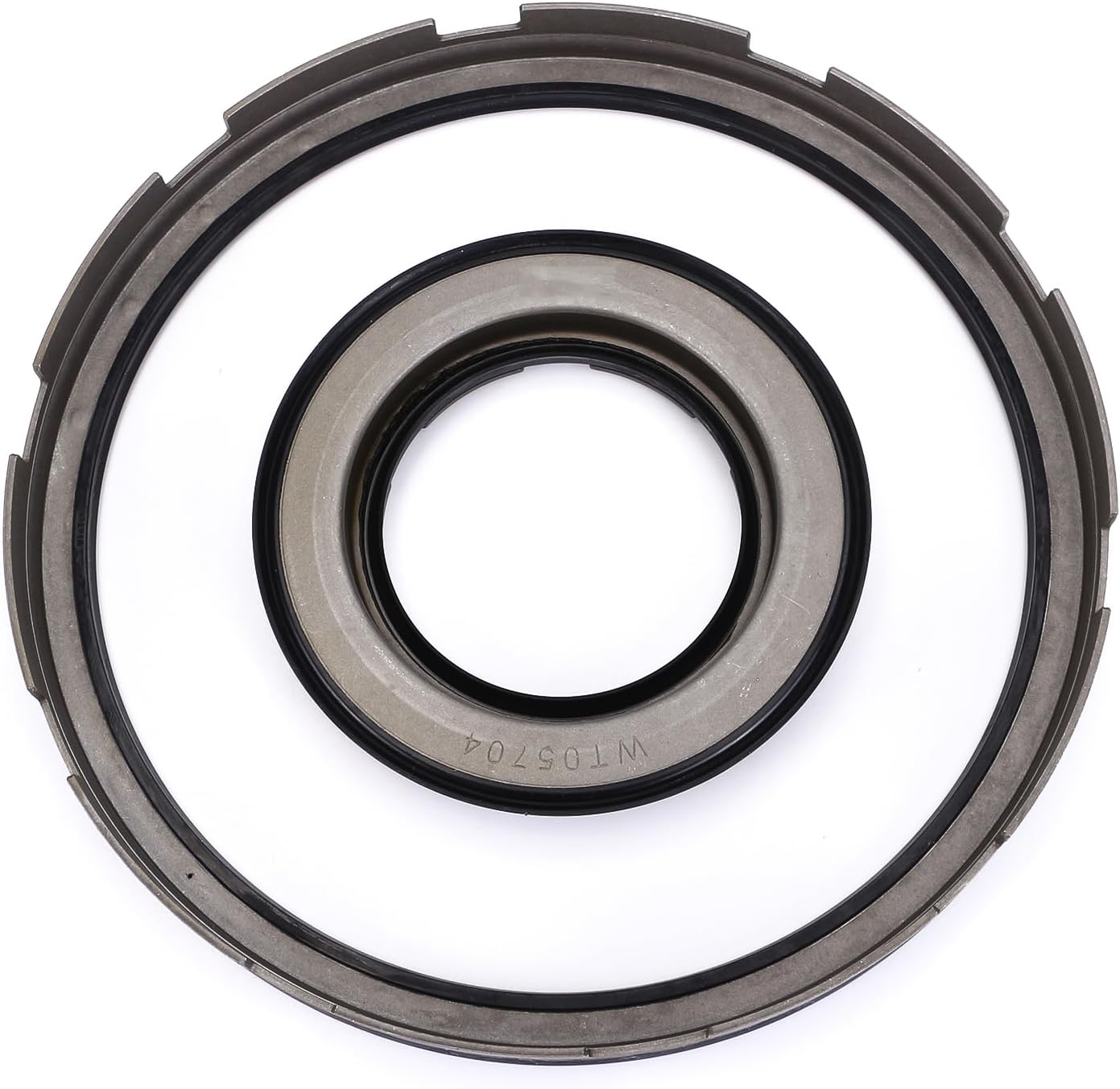
- Cut or damaged 3-5-R piston lips. GM's PI0670A lists inspecting the 3-5-R piston for cut or damaged sealing lips as its own step in the P0776 diagnosis [2]. Early pistons also had notches that GM removed during the 2011 model year, and PI0780A says to replace any notched piston you find [3].
- Low line pressure from a damaged pump. GM's PI0324F lists P0776, P0796, P2714 and P2723 as codes that show up when a damaged pump cannot make line pressure, often on cars with under 10,000 miles [4]. This is the multi-code pattern mentioned above.
- Valve body or 3-5-R housing damage. PI0670A tells you to inspect the valve body, the pump and the 3-5-R housing before anything else [2].
- The PCS2 solenoid or TEHCM itself. It happens, but GM puts it last. In PI0670A's words, do not replace the TEHCM before visually inspecting the 3-5-R clutch and piston [2].
Diagnosis, in the order I run it
1. Read the whole code list and the complaint
Write down every code. P0776 alone with a "no reverse, flares into 3rd" complaint is the classic waved plate pattern. P0776 with P0796, P2714 or P2723, on a low-mile car, is the PI0324F pump pattern [4]. P0966 or P0967 with it means you have a circuit problem on the C35R solenoid, and you chase wiring and the TEHCM first [1]. Input or output speed sensor codes have to be fixed before the monitor will run at all [1].
2. Check the fluid and pull the pan
Level matters on a 6T40 because the circuit is sensitive to aeration, so check it hot at the check plug and fill with DEXRON VI. Then drop the pan. Bright steel flakes and chunks of spring steel point straight at a broken waved plate. A pan with clean fluid and no debris makes a solenoid or valve problem more likely. That one look decides whether this is a valve body day or an overhaul.
3. Check line pressure before you buy a module
PI0324F is blunt: perform a line pressure check, and do not replace the TEHCM or the valve body before you do [4]. Low or no line pressure means the pump, not the solenoid. On the units in that bulletin the pump damage can be bad enough that the engine will not rotate with the transmission attached [4].
4. Run the TEHCM performance test on Gen 2
PI0670A splits the vehicles by control generation. On Gen 2 controls, the Control Solenoid Valve and TCM Assembly performance test in SI is functional and must be used as part of the diagnosis. On Gen 1 controls that test is not functional, and the bulletin sends you to a hard-parts inspection instead [2]. Know which one you have before you plug in.
5. Bench test PCS2 if the module is out
Remove the solenoid from the TEHCM and measure it. It should read 3 to 5 ohms [5]. GEARS describes an air check of the solenoid block with a plastic test plate and 45 psi of air, without energizing anything. These are variable bleed solenoids, so they all leak some air; a normally high solenoid passes noticeably more than a normally low one [5]. Compare PCS2 against the generation it is supposed to be.
6. Do not air check 3-5-R through the case
This is the trap. It is natural to blow air into the case feed and listen for the clutch. GM says not to rely on it: air testing the 3-5-R clutch through the case oil feed ports "has been found to frequently lead to incorrect diagnosis" of the piston condition, and the only reliable check is disassembly and visual inspection of the piston [2]. A good air check does not clear the piston.
The fix
- Broken waved plate or damaged piston: this is an overhaul. PI0780A recommends a new 3-5-R piston and a new 3-5-R waved plate any time the transmission is apart for any reason [3]. Most rebuilders now go further and install a Sonnax 3-5-R Drum Saver Kit, part 144555K for the 6T40/6T45/6T50 (Gen 1, Gen 2 and the Gen 3 6T41/6T46/6T51), which pairs an improved waved plate with a custom steel and can save a drum that has started to wear [6]. Sonnax lists P0776, no reverse, no 3rd, no 5th and flare shifts among the symptoms it helps cure [6].
- Clean up the debris: PI0780A says to separate the case halves, clean debris from the entire transmission and replace the pump fluid filter and the control solenoid filter plate. GM warns that skipping that step can lead to repeat damage [3]. A broken plate leaves metal everywhere, including in the solenoid screens.
- Pump damage: replace the pump assembly per PI0324F, then recheck line pressure [4].
- Circuit code or failed PCS2: repair the circuit or replace the TEHCM or solenoid set, matched to the generation. A new TEHCM needs programming.
- After any repair: refill with DEXRON VI, check the level hot, clear codes, run the adaptive learn for the vehicle, and road test through reverse, 3rd and 5th under light throttle until the monitor passes.
Overhauling a 6T40 for P0776?
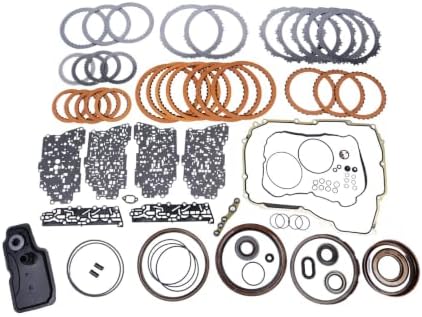
Core Transmission Parts carries a 6T40 master rebuild kit with the frictions, steels, seals and gaskets for the case-split cleanup GM calls for. Pair it with a new 3-5-R piston and waved plate.
View the 6T40 master rebuild kit →FAQ
What does P0776 mean on a 6T40?
GM calls it Pressure Control Solenoid B Stuck Off, and labels it C35R, the 3-5-reverse clutch. The TCM saw 400 RPM or more of slip in 3rd or 5th, then commanded 4th or 6th as a cross check. If the other gear held, it blamed the 3-5-R circuit. The code turns on the check engine light after one trip.
Is P0776 the solenoid or the transmission?
Usually the transmission. GM bulletin PI0780A names a broken 3-5-R waved plate as the cause on early units, and PI0670A says not to replace the TEHCM before visually inspecting the 3-5-R clutch and piston. A damaged pump with low line pressure can also set it. Check line pressure and the pan before buying a module.
Why does a 6T40 with P0776 have no reverse?
Reverse uses the 3-5-R clutch together with the low/reverse clutch. If the 3-5-R clutch cannot hold, because of a broken waved plate, a cut piston lip or no apply pressure, reverse slips or disappears along with 3rd and 5th.
Can I air check the 3-5-R clutch to confirm P0776?
GM says not to rely on it. PI0670A states that air testing the 3-5-R clutch through the case oil feed ports frequently leads to an incorrect diagnosis of the piston. The only reliable check is to take the transmission apart and look at the piston.
What fixes P0776 for good on a 6T40?
If the waved plate or piston failed, overhaul the unit with a new 3-5-R piston and waved plate, split the case to clean all debris, and replace the pump filter and control solenoid filter plate as PI0780A calls for. Many rebuilders also install a Sonnax 3-5-R Drum Saver Kit, 144555K, to prevent a repeat.
Shop the 6T40 rebuild kit →
Need parts for this job?
6T40 bonded piston sets, rebuild kits, solenoid sets, TEHCM modules and valve bodies, with secure checkout.
Shop 6T40 parts →Sources
- General Motors — 2011 OBD monitor tables, "11OBDG08 TRANS Diagnostics," 6T40 Unique Section. Backs the "PC Solenoid B Stuck Off [C35R]" descriptor, the 3rd and 5th steady-state cases with 400 RPM slip, the intrusive 4th and 6th gear commands, the 2 / 3 / 14 fail counts, one-trip MIL, the enable conditions, P0966 as the C35R VBS circuit code, and the P0777, P0796 and P2714 sister codes. gsi.ext.gm.com PDF
- GM Preliminary Information PI0670A, "Diagnostic Tips for DTC P0776, Slips in or No Reverse, Third, Fifth" (February 2012), via NHTSA. Backs the complaint list, the Gen 1 vs Gen 2 TEHCM performance test rule, the valve body / pump / 3-5-R housing / piston lip inspection order, the do-not-replace-the-TEHCM-first instruction, and the warning against case air checks of the 3-5-R clutch. static.nhtsa.gov PDF
- GM Preliminary Information PI0780A, "Slip or No Reverse or 3rd Gear, No Forward, DTC P0776" (June 2015), via NHTSA. Backs the broken 3-5-R apply (waved) plate cause, the Julian date 11-015 build cutoff, replacing the piston and waved plate whenever the unit is apart, the case-split debris cleanup with new pump filter and control solenoid filter plate, and the notched piston change. static.nhtsa.gov PDF
- GM Preliminary Information PI0324F (December 2013), via NHTSA. Backs P0776, P0796, P2714 and P2723 from a damaged pump with low or no line pressure, the low-mileage pattern, and performing a line pressure check before replacing the TEHCM or valve body. static.nhtsa.gov PDF
- GEARS Magazine (ATRA) — "Understanding GM 6T40 Solenoids." Backs PCS2 controlling the 3-5-R clutch regulator valve, normally high on Gen 1 and normally low on Gen 2, the eighth-character TEHCM generation ID, the 3-5 ohm spec, the 12-volt warning and the 45 psi solenoid air check. gearsmagazine.com
- Sonnax — "Protect Against 6T40 & 6T70 3-5-R Failures & Salvage Damaged Drums with Sonnax Drum Saver Kits." Backs the '07-'09 waved plate failures continuing in later units, the 144555K kit and its 6T40/45/50 Gen 1, 2 and 3 coverage, and the P0776 / no reverse / no 3rd / no 5th symptom list. sonnax.com