An Acadia that bangs into Drive, thumps on a light-throttle 1-2, flares on the 3-4 or shudders around the 2-3 is the one shift complaint we see most from GM's Lambda crossovers. From 2007 through 2016, and on 2017-2019 V6 trucks, the Acadia is a 3.6L V6 behind the 6T75, the heavy-duty member of GM's 6T70/6T75 six-speed family (RPO M7V/M7X on the later units) [2][5][6]. The way to attack an Acadia shift problem is to pin down which shift is wrong, check whether a bulletin covers it, then go after the one clutch, valve or switch behind it. Numbers in brackets point to the Sources list at the bottom.
Map the bad shift to the clutch that controls it
Every 6T75 shift is one clutch coming on while another lets go, so the shift that feels wrong tells you where to look. GM's own symptom pages are grouped that way, and ATRA's CP Learn notes line up with them [4][5]:
| Complaint | Clutch GM points at | First things to check |
|---|---|---|
| Bang into Drive or Reverse | 1-2-3-4 and low/reverse | Idle line pressure, boost valves, wave plates, splines [4] |
| Harsh light-throttle 1-2 (sometimes 2-3), no codes | 2-6 | 2-6 adapts not learned; PIP5363B drive learn [1] |
| Harsh or late 3rd, 5th and Reverse | 3-5-R | Wave plate, piston seals, housing [4][5] |
| Harsh 4th, 5th and 6th; 3-4 flare | 4-5-6 | Piston, dam, air bleed, housing [4] |
| 3-4 or 4-3 bind, possible P0797 | 3-5-R and 4-5-6 both on | Case cover hub sleeve ring groove [5] |
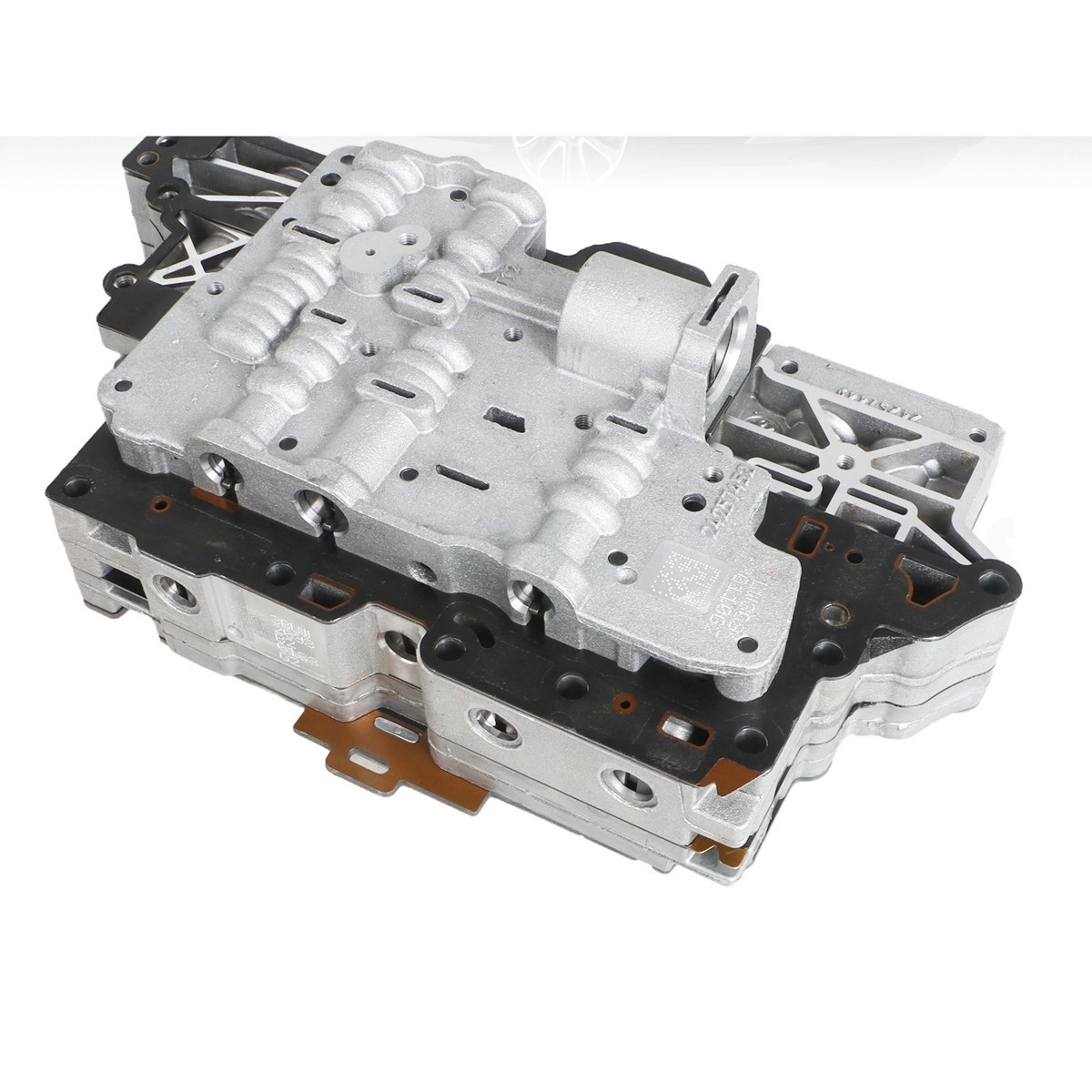
| Shudder on 2-3 or 3-2, launch shudder (2014-2019) | Valve body | 18-NA-358 [2] |
| Wrong gear shown, no PRNDL, P182E (2009-2011) | Range input | Cable, IMS; PI0269B [3] |
Rule out the shifts the Acadia is supposed to make
Some "shift problems" are the calibration working as designed. The 2012 Acadia owner manual describes Automatic Engine Grade Braking, which downshifts on its own on a downhill grade to help hold speed. It works in D in both normal and Tow/Haul mode, and it is not available while Electronic Range Select is active [6]. A driver who feels the transmission drop a gear coasting down a hill is feeling that feature.
The manual also explains Electronic Range Select. Move the lever to L and a number appears next to it; that number is the top gear the transmission is allowed to use. With 4 shown, it shifts 1 through 4 on its own and will not take 5th until the plus button is pressed or the lever goes back to D. It will also refuse a minus-button downshift if engine speed would be too high [6]. An Acadia "stuck in 4th" with L4 on the cluster is a driver setting.
Cluster messages count the other way. SERVICE TRANSMISSION means the controller has found a fault, and TRANSMISSION HOT IDLE ENGINE means the fluid is overheating; GM warns that driving on it can damage the transmission [6]. Either one with a shift complaint is a real problem.
2015-2017 Acadia: harsh 1-2 on light throttle, no codes (PIP5363B)
This is the one to know before you quote a valve body. GM's PIP5363B covers 2015, 2016 and 2017 Acadia, Enclave and Traverse with the 6T70/75 and a harsh 1-2 shift, mostly on light throttle, with no DTCs set; in rare cases the 2-3 is harsh too. GM's explanation is that the shift adaptive time may not have learned [1]. The fix is a drive procedure that lets the controller learn the 2-6 clutch adapts:
- Put the selector in M5 (L with 5 shown) to hold the transmission in 5th.
- Drive at 38 mph or above with fluid temperature above 30 C (86 F), about 5 miles on flat, level ground at a steady throttle. GM notes cruise control can help hold the speed constant [1].
- Stop, then try some light-throttle 1-2 shifts. Drive another 5 miles if needed.
- If a second learn drive is needed, let the TEHCM power down before you start it [1].
Only if nothing changes after the drive learn does GM send you to normal harsh-shift diagnosis [1]. Why 5th? ATRA explains that the 6T70/75 runs its clutch fill-volume learn (CP Learn) during steady driving, and the 2-6 clutch is one of the clutches it learns in 5th gear. The learn aborts when the controller sees a rough road [5]. A customer who only drives short stop-and-go trips may never give it that window, which is how a 2016 Acadia ends up with a 1-2 that bangs and no code to show for it.
Get the basics clean first
- Engine codes. GM's harsh-shift chart starts at the engine. If the engine controller reports its torque signal as inaccurate, the transmission commands high line pressure and every shift goes firm [4]. Fix the misfire or MAF code first.
- Fluid level and type. The Acadia takes DEXRON-VI, about 5.0 L (5.3 qt) on a drain-and-refill [6]. ATRA's level check is on a level surface, engine idling, fluid at 180-200 F [5]. A cold check reads low, gets topped off, and the unit is overfull and foaming once it is hot.
- Adapts. GM requires Transmission Adaptive Values Learn after an overhaul, a valve body repair or replacement, a control solenoid valve assembly replacement, a TCM software update, or any service done for a shift quality concern [4].
Running Transmission Adaptive Values Learn
The scan tool procedure needs the drive wheels blocked, parking and service brakes on, zero throttle, fluid between 70 and 100 C (158-212 F), and the selector cycled Park to Reverse three times to purge air from the reverse clutches. When it is done, shut the engine off and let the module power down [4]. If it aborts on a vehicle that should pass, read GM's troubleshooting list: engine speed must rise above 1,500 RPM at the start, the Park/Neutral switch must be adjusted, the vehicle cannot be moving, and line pressure control has to reach 1,000 kPa [4]. A learn that keeps failing is often telling you line pressure is not making spec.
Harsh engagement into Drive or Reverse
GM's Harsh Garage Shift chart checks whether idle line pressure is below 800 kPa (about 116 psi), then goes to stuck boost valves in the lower valve body, a damaged or fatigued 1-2-3-4 or low/reverse wave plate, a plugged or mispositioned low/reverse piston air bleed, and worn or stripped splines on the 1-2-3-4 plates, the low/reverse clutch assembly and the input carrier ring gear [4]. If you can feel lash in the axle on the engagement, suspect the spline items. No valve body fixes worn splines.
Harsh or late 3rd, 5th and Reverse
Third, fifth and reverse share the 3-5-R clutch. GM's list: improper plate finish, a fatigued 3-5-R waved plate, leaking 3-5-R piston seals, a warped 3-5-R/4-5-6 housing, and plugged passages or air bleed in that housing [4]. ATRA calls the 3-5-R wave plate the one most likely to break in this family and recommends new-design wave plates in every clutch when you are in there: 1-2-3-4 24259063, 2-6 24259816, 3-5-R 24254103 and low/reverse 24259817 [5].
The 3-4 shift: flare, harsh or bind
Harsh or flared 4th, 5th and 6th
The 4-5-6 clutch comes on for the 3-4 and stays on through 6th. GM checks for a leaking 4-5-6 piston or piston seals, a plugged piston dam air bleed, a fatigued piston spring, leaking dam seals, improper plate finish, and porosity or seal-groove damage in the 3-5-R/4-5-6 housing [4].
3-4 or 4-3 bind with P0797
ATRA documents a tie-up on the 3-4 or 4-3 shift, sometimes with P0797, caused by a worn ring groove on the case cover hub sleeve. The worn groove leaks between the 3-5-R and 4-5-6 circuits, so both clutches are partly applied together [5]. Pull the hub from the rear case cover and check the rings in the grooves with a feeler gauge; ATRA's limit is 0.007 in. between the ring and the groove edge, and past that the case cover gets replaced [5]. New rings in a worn groove will bind again.
Harsh or late 2nd and 6th
If PIP5363B's drive learn did not cure a harsh 1-2, or the 5-6 is wrong too, go to the 2-6 clutch, which lives in the case cover. GM lists worn or improperly finished 2-6 plates and backing plate, a fatigued 2-6 piston cushion spring, a damaged 2-6 piston with worn or delaminating seals, and a fatigued return spring [4]. ATRA also notes the 2-6 snap ring and case snap ring groove were updated [5], so match the parts to the case you have.
2014-2019 Acadia: shudder on the 2-3 or 3-2 (18-NA-358)
GM bulletin 18-NA-358 lists the 2014-2019 Acadia with RPO M7V or M7X for a severe launch shudder in 1st, a shudder while driving in 4th, or a shudder during the 2-3 upshift or 3-2 downshift. Customers may also report flare, slide/bump, slip or harsh shifts. GM's cause is debris in the upper and/or lower valve bodies, or scratched and scored valves that do not move freely [2].
Confirm it is not an engine misfire or driveability problem, and confirm it is not TCC shudder by watching TCC slip during the event [2]. GM allows reproducing a launch shudder by power-braking in 1st for 5 seconds or less, so you do not hurt the 1-2-3-4 clutch [2]. The repair is both valve bodies together, and GM specifically says replacing the TEHCM has not fixed this concern. Before the new valve bodies go in, look at the speed sensors for collected debris: debris on the ISS or OSS points to an internal failure, and clean sensors with scored valves send you to check the final drive bearing [2].
Wrong gear on the display, no PRNDL, or P182E
GM PI0269B covers 2009-2011 Acadia (and the other 6T70/6T75 crossovers) built February 2009 through July 2010 with a check engine light and P182E in the TCM, and in rare cases no PRNDL display [3]. GM's steps: verify shift cable adjustment, verify the ECM Park/Neutral switch status in every range, and verify the internal mode switch A/B/C/P parameters in every range. If P182E does not come back after you drive it within the DTC's run conditions, replace the IMS (the manual shift detent lever with shaft position switch). A U0101 in the brake module on these trucks sets falsely and can be ignored [3].
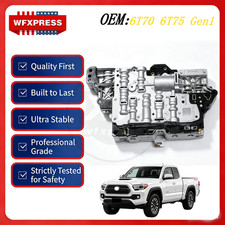
Gen 1 vs Gen 2: do not mix parts
The 6T75 (RPO M7V and M7X) got a major control system update for the 2013 model year, so 2013 units exist as Gen 1 and Gen 2. Units with other RPO codes did not get the update until 2014 production [5]. The update changed the valve body and controls, so a Gen 1 valve body on a Gen 2 case, or the reverse, is a built-in shift complaint. Read the RPO off the glovebox label, confirm it on the bench, and order by year. On a late Acadia, confirm the RPO before ordering: 6T70 and 6T75 parts look alike and do not all interchange.
The same goes for the TEHCM. Sonnax warns that a module designed for Gen 2 6T70, 6T75 and 6T80 units will not work properly in a Gen 1 build, even when the part number seemed to match, and that copying the part number off the old module is how wrong modules get passed from one repair to the next [7]. A wrong-generation module can program without complaint and still leave the Acadia shifting badly. Order the module by VIN and RPO, not by the number on the one you pulled out [7].
After the repair: give it time to learn
Run Transmission Adaptive Values Learn [4], then drive it, ideally with a few miles held in 5th and 6th on a smooth road so CP Learn can finish [5]. If the complaint was a light-throttle 1-2, finish with the PIP5363B M5 drive [1].
Shop the part for this fix: 6T75 friction clutch kit (2013-up)
When the drive learn and the adapts do not cure it and the clutch packs are burned or the wave plates are tired, the job is new frictions. This 6T75 friction clutch kit from CoreTransmissionParts fits the 2013-up units that make up most of the 18-NA-358 Acadia years.
View the 6T75 friction clutch kit at CoreTransmissionPartsLeaking piston seals? See the 6T75 bonded piston set or the 6T75 master rebuild kit at CoreTransmissionParts.
Need parts for this job?
Our 6T75 parts page has valve bodies by year, shift kits, solenoid kits, pumps, drums and rebuild kits for the GMC Acadia, all on our own checkout. For fluid specs across every unit, see the transmission fluid spec chart.
FAQ
Why does my GMC Acadia shift hard from 1st to 2nd?
On a 2015-2017 Acadia with no codes, GM bulletin PIP5363B says the 2-6 clutch shift adapts may not have learned. The fix is a drive learn: hold it in M5 at 38 mph or more, fluid above 86 F, for about 5 miles at a steady throttle, then retest light-throttle 1-2 shifts. Only if that does nothing do you move on to harsh-shift diagnosis.
What causes a shudder on the 2-3 shift in an Acadia?
GM bulletin 18-NA-358 covers 2014-2019 Acadia with RPO M7V or M7X for a launch, 4th gear or 2-3/3-2 shudder. The cause is debris in, or scored valves in, the upper and lower valve bodies, and the repair is both valve bodies. GM says replacing the TEHCM has not fixed it.
What causes a 3-4 bind or P0797 on the 6T75?
ATRA traces a 3-4 or 4-3 tie-up, sometimes with P0797, to a worn ring groove on the case cover hub sleeve that leaks between the 3-5-R and 4-5-6 circuits. If ring-to-groove clearance is over 0.007 in., the case cover is replaced.
Related guides
Sources
- General Motors, Product Information PIP5363B, "6T70/75 Transmission Assembly With Harsh 1-2 Shift With No DTCs," January 2017 (2015-2017 Acadia, Enclave, Traverse). Backs the light-throttle harsh 1-2 (rarely 2-3) with no codes, the unlearned shift adapt cause, and the M5 drive learn: 38 mph or above, TFT above 30 C (86 F), about 5 miles steady throttle, cruise control, second learn after TEHCM power-down. static.nhtsa.gov (PDF)
- General Motors, Service Bulletin 18-NA-358, "Shudder, 2-3 Upshift or 3-2 Downshift Concern," October 2019 revision. Backs the 2014-2019 Acadia RPO M7V/M7X listing, the launch, 4th gear and 2-3/3-2 shudder with flare, slide/bump, slip or harsh shift, the valve body debris cause, the 5-second power-brake limit, the TCC slip check, both valve bodies, the TEHCM caution and the ISS/OSS debris and final drive bearing checks. static.nhtsa.gov (PDF)
- General Motors, Product Information PI0269B, "Malfunction Indicator Lamp (MIL) - Check Engine Light On, DTC P182E," October 2016 (2009-2011 Acadia and other 6T70/6T75 models built 2/2009-7/2010). Backs the P182E and no-PRNDL symptoms, the cable, Park/Neutral and IMS A/B/C/P checks, IMS replacement and the false U0101 note. static.nhtsa.gov (PDF)
- General Motors 6T70/6T75 service information (fault diagnosis section, as mirrored on SAAB WIS Online): Harsh Garage Shift (engine torque signal, idle line pressure below 800 kPa, boost valves, wave plates, splines); Harsh or Late Third, Fifth and Reverse; Harsh Fourth, Fifth and Sixth; Harsh or Late Second and Sixth; Transmission Adaptive Values Learn (when required, 70-100 C, P-R three times, 1,500 RPM, 1,000 kPa). Harsh Garage Shift · 3rd/5th/Reverse · 4th/5th/6th · 2nd/6th · Adaptive Values Learn
- ATRA, "6T70 Product Issues and Updates" seminar. Backs the 3-4/4-3 bind with possible P0797, the hub sleeve ring groove leak and 0.007 in. limit, the wave plate part numbers and the 3-5-R plate as most likely to break, the updated 2-6 snap ring groove, the 2013 Gen 1/Gen 2 controls update by RPO, the 180-200 F level check and the CP Learn gears. atracom (PDF)
- GMC, 2012 Acadia/Acadia Denali Owner Manual. Backs the 3.6L V6 (VIN D), Electronic Range Select top-gear limit behavior, Automatic Engine Grade Braking, the SERVICE TRANSMISSION and TRANSMISSION HOT IDLE ENGINE messages, DEXRON-VI and the 5.0 L (5.3 qt) drain-and-refill. assets.gm.com (PDF)
- Sonnax, "Identifying GM 6T70 Series TEHCM Generations Using VIN & RPO Codes" (Jim Mobley, December 2024). Backs the warning that a Gen 2 TEHCM will not work properly in a Gen 1 build even with a matching part number, the copied-part-number problem, the Service Parts Identification label and ordering OE parts by VIN. sonnax.com