Shift complaints on a V6 Impala come in a handful of flavors: a sag when you get back on the throttle after a coast, a bump on the 4-3 as the car rolls to a stop, a harsh or late 2-3, a shudder on launch, a hard bang into Drive. Some of these are calibration issues GM already fixed with a reflash. Some are valve body problems with their own bulletin. Some are a clutch pack or piston that no software will fix. The trick is sorting them before you pull the unit. This guide walks through each Impala 6T70 shift complaint, the GM bulletin or service checklist behind it, and the repair. Numbers in brackets point to the Sources list at the bottom.
Which 6T70 is in the Impala on your lift?
Only the 3.6L V6 Impala uses the 6T70, and two generations of it. The 2012-2013 W-body Impala carries the first-generation unit, RPO MH2 or MH4, and GM bulletin PI0837 is written for exactly that car [1]. The redesigned 2014 Impala carries the second-generation unit, RPO M7W, which is the RPO named in both PI1081 and 18-NA-358 [2][3]. The 2014-and-later car was also sold with 2.4L and 2.5L four-cylinders [6]; those run the smaller 6T40/6T45 family and are not covered here.
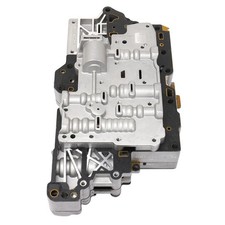
Sonnax describes the 2013 controls update (M7W/M7U for the 6T70) as a major change: a new TEHCM with variable feed solenoids and no pressure switches, a new valve body with updated pressure regulator, clutch regulator, boost, actuator feed limit and 4-5-6 accumulator parts, an added checkball, a new spacer plate, and new clutch stacks. Most of those updates are not designed to back-service Gen 1 units [4]. On a shift complaint that means a 2013 Impala valve body will not go into a 2014 car, and the parts list depends on the RPO tag, not just the model year.

How a 6T70 makes a shift
The 6T70 is a clutch-to-clutch transmission with one one-way clutch for first. Five clutches do the work: 1-2-3-4, 2-6, 3-5-R, 4-5-6 and low/reverse. Per the Sonnax apply chart, first is the 1-2-3-4 clutch plus the one-way clutch (low/reverse added for engine braking), second is 1-2-3-4 plus 2-6, third is 1-2-3-4 plus 3-5-R, fourth is 1-2-3-4 plus 4-5-6, fifth is 3-5-R plus 4-5-6, sixth is 2-6 plus 4-5-6, and reverse is 3-5-R plus low/reverse [4]. Every upshift is one clutch releasing while another applies, and the TCM times that overlap.
The control side is in the TEHCM bolted to the valve body. Sonnax lists two on/off shift solenoids and six pressure control solenoids, and maps each one to its valve [4]:
| Solenoid | Valve it controls | What a fault feels like |
|---|---|---|
| Shift Solenoid 1 | Clutch Select Valve 2 | Wrong clutch fed, odd ratio, default gear |
| Shift Solenoid 2 (6T70 only) | Clutch Select Valve 3 | Same, on the other select valve |
| PCS 1 | Line pressure valves | Harsh or soft everything, garage engagements |
| PCS 2 | 3-5-Reverse clutch regulator | Harsh/late 3rd, 5th, reverse |
| PCS 3 | Low-Reverse/4-5-6 clutch regulator | 4th, 5th, 6th and reverse feel |
| PCS 4 | 2-6 clutch regulator | Harsh/late 2nd and 6th |
| PCS 5 | 1-2-3-4 clutch regulator | Launch, 1-2 feel, low gear flare |
| TCC solenoid | TCC valve | Lockup shudder, cruise RPM flare |
Gen 1 units also have four pressure switches that report clutch regulator valve position to the TCM; Sonnax lists them at open 8 psi / closed 12 psi and notes they feed the adaptive calculations [4]. Gen 2 dropped them. Read the shift complaint against this table and you usually know which clutch, which regulator and which solenoid you are chasing before the pan comes off.
First pass: codes, fluid, software
Before you condemn hardware, cover three things. Pull codes from both the ECM and TCM; GM's harsh garage shift checklist starts at the engine, because if the ECM tells the TCM that engine torque is inaccurate, the TCM commands high line pressure and every shift gets firm [5]. Check fluid level and condition hot, with DEXRON-VI only. And check the software level against the two Impala calibration bulletins below, because a reflash fixes both of those complaints and nothing else will.
The 2014 owner manual lists the driver messages that matter here. SERVICE TRANSMISSION means the TCM has seen a fault. SHIFT DENIED appears when the driver uses manual mode and asks for a gear the speed and RPM will not allow; that is normal and not a failure. TRANSMISSION HOT IDLE ENGINE means fluid temperature is high and GM tells the driver to stop and idle until it clears [6]. A car that shifts badly only after that message has come on has a heat story behind it, so look at the cooler and fluid before the valve body.
2012-2013: sag or hesitation after a coast (PI0837)
This is the most common shift-feel complaint on the 2012-2013 car. GM bulletin PI0837 describes a hesitation or sag when the driver lifts off to turn a corner and then gets back on at moderate throttle. A 5-3, 4-2 or 3-2 downshift happens, engine RPM drops momentarily and acceleration sags. GM traced it to the engine calibration cutting torque during the downshift to avoid tip-in clunk [1].
The fix is software: reprogram the TCM and ECM through SPS as a sequential programming event, with battery voltage held at 12-15 volts using a programming support maintainer, 0.4 hours of labor under warranty [1]. GM is specific that this calibration only addresses the 5-3, 4-2 and 3-2 coast-then-accelerate sag and may add a little tip-in clunk. If the complaint is a different shift, the bulletin does not apply. We see a lot of these cars reflashed for the wrong complaint and then sent on with nothing fixed.
2014: 4-3 bump on a closed-throttle coastdown (PI1081)
Early 2014 Impalas can bump on the 4-3 downshift as the car coasts down with the foot off the throttle. GM bulletin PI1081 covers 2014 Impalas with the M7W built before VIN breakpoint EU125212 (Detroit-Hamtramck) or E9163315 (Oshawa), and the fix is a revised TCM calibration through SPS [2]. Check the last six of the VIN and the build plant before you start; a car built after the breakpoint already has the calibration and the bump means something else, most often a 4-5-6 or 3-5-R clutch feel problem covered below.
2014-2019: shudder, 2-3 flare or harsh 3-2 (18-NA-358)
This is the big Gen 2 bulletin. GM 18-NA-358 lists the 2014-2019 Impala with the M7W and describes a severe launch shudder in first, a shudder in 4th, or a shudder on the 2-3 upshift or 3-2 downshift, sometimes with flare, slide or bump, slip, or harsh shift [3]. The cause is debris in the upper or lower valve body, or a scored valve that no longer moves freely [3].
The diagnosis has three gates. First, rule out an engine misfire or driveability problem. Second, rule out converter clutch shudder by watching TCC slip on the scan tool while the TCC is applied during the event. Third, try to reproduce the launch shudder by power braking in first, for 5 seconds or less so you do not hurt the 1-2-3-4 clutch [3]. If the shudder comes back on the power brake, GM replaces both the upper (24281084) and lower (24257450) valve bodies at the same time, with kit 24264343 [3].
Two notes in the bulletin save real money. GM says TEHCM replacement has not been an effective repair for this condition and tells you not to replace it unless the concern is isolated to something else [3]. And GM tells you to inspect the input and output speed sensors for debris: metal on the sensors means an internal failure, and if the sensors are clean but the valves and bores are scratched, check for a final drive bearing failure [3]. That last check is the one that separates a valve body job from a teardown. A new valve body on a unit shedding bearing material will be scored again in a few thousand miles.
Harsh engagement into Drive or Reverse
A hard garage shift on a 6T70 has a short, specific GM checklist [5]. Check for engine codes and inaccurate torque reporting. Check line pressure at idle, which GM says should be below 800 kPa. Look for stuck valves in the lower valve body, especially the boost valves. Inspect the 1-2-3-4 and low/reverse clutch wave plates for damage or fatigue, check the 1-2-3-4 plates for stripped splines, and make sure the low/reverse piston air bleed is positioned correctly and not plugged. Then check fluid level, the input carrier ring gear splines, and the low and reverse one-way clutch splines [5].
If idle line pressure is high, the problem is upstream of the clutches: torque signal, PCS 1, or the pressure regulator valve, which Sonnax flags as a wear item [4]. If line pressure is normal and only the engagement is harsh, the clutch hardware is the suspect.
Harsh or late upshifts by clutch
GM's service information breaks the remaining harsh-shift complaints out by clutch, which lines up with the apply chart above [5]:
- Harsh or late 2nd and 6th: the 2-6 clutch. Check the 2-6 plates and backing plate for wear or poor surface finish, a fatigued 2-6 piston cushion spring, and, in the case cover, a damaged 2-6 piston, worn or delaminating piston seals, or a fatigued return spring [5].
- Harsh or late 3rd, 5th and Reverse: the 3-5-R clutch. Check plate finish, plugged oil passages or air bleed in the 3-5-R/4-5-6 housing, leaking piston seals, a warped housing, and a fatigued 3-5-R wave plate [5].
- Harsh 4th, 5th and 6th: the 4-5-6 clutch. Check for a leaking piston or seals, a plugged piston dam air bleed, a fatigued piston spring, leaking dam seals, damaged plates, and a porous or damaged 3-5-R/4-5-6 housing [5].
Sonnax adds two valve body items to that list. A worn 4-5-6 accumulator piston bore gives a 3-4 flare or a harsh 3-4, burned 4-5-6 clutches, ratio codes and slipping. A worn actuator feed limit valve gives wrong gear starts, solenoid codes and clutch failures [4]. Sonnax also points out that 6T70 solenoid-fed valve bores wear from the solenoid's duty cycle scrubbing the valve against the bore [4], which is why a high-mileage valve body can feel fine cold and shift poorly hot. Vacuum-test those bores before you reuse a valve body.
After the repair: run the adaptive learn
Do not hand a 6T70 back without resetting and relearning adapts. GM requires Transmission Adaptive Values Learn after internal service or overhaul, valve body repair or replacement, control solenoid valve assembly replacement, a TCM software update, or any service done for a shift quality concern. Skipping it can leave poor shift quality and set codes [5].
The conditions are strict: wheels blocked, parking and service brake applied, zero throttle, fluid temperature 70-100 C (158-212 F), and the selector cycled Park to Reverse three times to purge air from the reverse clutches. The scan tool runs the routine under Module Diagnosis, Transmission Control Module, Configurations/Reset Functions. If it will not run, GM's checklist is: TFT in range, brake switch working, no active codes, engine RPM rising above 1,500 at the start of the test, park/neutral switch adjusted, line pressure able to reach 1,000 kPa, the car not moving or vibrating, and clutches correctly assembled [5]. A learn that aborts on the line pressure check is itself a diagnosis: the pump or regulator is not making pressure.
Quick reference
| Complaint | Impala build | Likely cause | Fix |
|---|---|---|---|
| Sag after coast, 5-3 / 4-2 / 3-2 | 2012-2013 (MH2/MH4) | Torque reduction calibration | ECM + TCM reflash, PI0837 [1] |
| 4-3 closed-throttle bump | 2014 M7W before EU125212 / E9163315 | TCM calibration | TCM reflash, PI1081 [2] |
| Launch, 4th, 2-3 or 3-2 shudder; flare, harsh | 2014-2019 M7W | Valve body debris or scored valves | Upper + lower valve body, not TEHCM, 18-NA-358 [3] |
| Harsh into Drive/Reverse | All | Torque signal, high line pressure, boost valves, wave plates | GM harsh garage checklist [5] |
| Harsh/late 2nd and 6th | All | 2-6 clutch, case cover piston | Clutch and piston service [5] |
| Harsh 3-4 or 3-4 flare | All | 4-5-6 accumulator piston bore | Valve body repair [4] |
Shop the part for this fix
If the valve body checks out and the clutches are what is cooked, the Gen 2 master rebuild kit covers the 2014-2019 M7W Impala with the updated nine-plate 1-2-3-4 stack.
View the 6T70 Gen 2 master rebuild kit at CoreTransmissionPartsNeed a Gen 1 kit or a different part? Browse all 6T70 parts at CoreTransmissionParts.
Need parts for this job?
Our 6T70 parts page has Gen 1 and Gen 2 valve bodies, shift kits, rebuild kits and solenoid parts for the V6 Impala, all on our own checkout. For fluid specs across every unit, see the transmission fluid spec chart.
FAQ
Why does my Chevy Impala hesitate after coasting and then accelerating?
On a 2012-2013 V6 Impala this is the condition in GM bulletin PI0837. After a lift-off, a 5-3, 4-2 or 3-2 downshift happens and the engine calibration cuts torque to avoid driveline clunk, so the car sags. The fix is a sequential ECM and TCM reprogram, and GM says it only addresses that specific sag.
Why does my 2014 Impala bump when coming to a stop?
GM bulletin PI1081 covers a 4-3 closed-throttle coastdown bump on 2014 Impalas with the 6T70 (RPO M7W) built before VIN breakpoint EU125212 (Detroit-Hamtramck) or E9163315 (Oshawa). A revised TCM calibration fixes it. If the car was built after the breakpoint, look at the 4-5-6 and 3-5-R clutch feel instead.
What causes a 2014-2019 Impala to shudder or flare on the 2-3 shift?
GM bulletin 18-NA-358 traces launch, 4th gear and 2-3 or 3-2 shudder, flare and harsh shifts to debris or scored valves in the upper and lower valve bodies. After ruling out misfire and torque converter clutch shudder, GM replaces both valve bodies together. GM states that replacing the TEHCM has not fixed this condition.
Do I need to relearn the transmission after fixing an Impala shift problem?
Yes. GM requires Transmission Adaptive Values Learn after a valve body or solenoid assembly replacement, a TCM software update, internal repair, or any service for a shift quality concern. Fluid must be at 70-100 C (158-212 F) and the selector cycled Park to Reverse three times before the scan tool routine runs.
Why does my Impala slam into Drive or Reverse?
GM's harsh garage shift checklist starts with engine codes, because an inaccurate engine torque signal makes the TCM command high line pressure. Idle line pressure should be below 800 kPa. After that, check the lower valve body boost valves, the 1-2-3-4 and low/reverse wave plates, and the low/reverse piston air bleed.
Related guides
Sources
- General Motors, Preliminary Information PI0837, "Hesitation or Sag on Acceleration After Coast (Reprogram TCM and ECM)," October 2012. Backs the 2012-2013 Impala MH2/MH4 coverage, the 5-3/4-2/3-2 sag after coast, the torque-reduction cause, the sequential SPS reprogram at 12-15 V, the tip-in clunk note and the 0.4 hr labor. static.nhtsa.gov (PDF)
- General Motors, Preliminary Information PI1081, "4-3 Coastdown Bump," October 2013. Backs the 2014 Impala M7W coverage, the VIN breakpoints EU125212 and E9163315, and the TCM recalibration. static.nhtsa.gov (PDF)
- General Motors, Service Bulletin 18-NA-358, "Shudder, 2-3 Upshift or 3-2 Downshift Concern," December 2021. Backs the 2014-2019 Impala M7W listing, the shudder/flare/harsh symptoms, the valve body debris cause, the misfire, TCC slip and 5-second power brake checks, the TEHCM note, the speed sensor and final drive bearing check, and parts 24281084, 24257450 and 24264343. static.nhtsa.gov (PDF)
- Sonnax, "GM Gen 1 6T70/75/80, Ford 6F50/55 Concerns and Repair Techniques" webinar. Backs the clutch apply chart, the solenoid-to-valve table, the Gen 1 pressure switch values, the 2013 Gen 2 controls update, the 4-5-6 accumulator piston and AFL valve symptoms, the pressure regulator wear, and the solenoid-scrubbing bore wear explanation. Sonnax (PDF)
- GM service information for the 6T70/6T75 (2011 Saab 9-4X workshop manual): Harsh Garage Shift, Harsh or Late Second and Sixth Shift, Harsh or Late Third, Fifth and Reverse Shift, Harsh Fourth, Fifth and Sixth Shift, and Transmission Adaptive Values Learn. Backs the torque-signal and idle line pressure (below 800 kPa) checks, the per-clutch harsh shift checklists, and the adaptive learn triggers, conditions and troubleshooting list. Harsh Garage Shift / 2nd and 6th / 3rd, 5th and Reverse / 4th, 5th and 6th / Adaptive Values Learn
- Chevrolet, 2014 Impala Owner Manual. Backs the 2.4L/2.5L/3.6L engine lineup and the SERVICE TRANSMISSION, SHIFT DENIED and TRANSMISSION HOT IDLE ENGINE messages. 2014 manual (PDF)