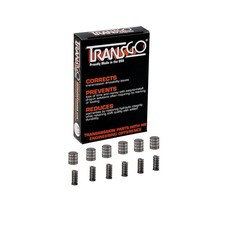
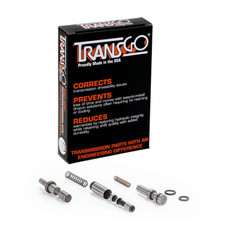
A 2007-2012 GM 6T70 that hunts the converter clutch at cruise, slams or flares on the 3rd, 5th or reverse apply, or keeps logging pressure switch codes after the solenoids were already blamed usually has a worn valve body, not a bad computer. This is the TransGo SK 6T70 Gen 1 shift kit for those units, the V6 six-speed found in Traverse, Acadia, Enclave and Outlook crossovers, V6 Malibu and Equinox models, and other GM front-drive cars of that era. It repairs the bores that wear first and adds protection the factory hydraulics never had.
What the shift kit does in a Gen 1 6T70
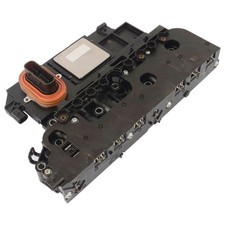
On the Gen 1 6T70 the TEHCM (the combined control module and solenoid body) bolts to a valve body that feeds every clutch through a handful of regulator circuits. Three of them do most of the damage when they wear. The actuator feed limit (AFL) valve caps the pressure going to the solenoids; once its bore leaks, solenoid output drifts and shift timing goes with it. The pressure regulator valve sets line pressure, and a tired one lets pressure swing high or low. The isolator valve circuit can cross-leak and over-boost line pressure, which is hard on drums and wave plates. This kit replaces the AFL with a drop-in bushing and new valve, installs a new pressure regulator valve and spring, and swaps the isolator line-up for a ball-and-spring relief bushing that caps over-boost. It also includes five diaphragms and five grommets to rebuild the TEHCM pressure switches.
Symptoms this kit is aimed at
- Erratic or hunting torque converter clutch, especially at steady highway speed
- Harsh or flared shifts that come and go as the fluid warms
- Pressure switch codes such as P0752, P0872, P0877 and P0989 caused by blown diaphragms in the TEHCM
- Line pressure that reads too high or too low with no electrical fault
- Repeat 3-5-R or 4-5-6 clutch damage after a rebuild, the over-boost pattern that breaks the 3-5-R wave plate
How to confirm it before you buy
Pull codes first. TransGo is clear that this kit does not fix solenoid performance or circuit codes, so a solenoid that is electrically open or shorted needs its own fix. Pressure switch codes, TCC slip and pressure complaints that remain after a clean electrical check point at the valve body. Our 6T70 harsh shift causes guide walks through separating adapts, valve body wear and clutch tie-up, and the 6T70 shift solenoid symptoms guide helps you rule a solenoid in or out before you open the pan.
Fitment
This listing is for the 2007-2012 Gen 1 6T70: the version with pressure switches in the TEHCM. GM moved to Gen 2 controls around the 2013 model year, and the Gen 2 units have no pressure switches, so this kit does not fit them. Changeover-year vehicles need a check of the RPO code or the valve body itself. If yours is a 2013-up Gen 2, look at the 2013 6T70 shift kit listing instead. Valve bodies also vary inside Gen 1, which the kit handles (see install notes). When in doubt, send us your year and VIN before ordering, or browse every part for this family in our 6T70 parts collection.
Install notes
- No special tools are needed; work one circuit at a time and keep removed parts in order.
- Check the TCC control valve bore for a casting step. If your valve body has one, reuse the original spring and retainer; only castings without the step take the new spring and retainer.
- The separator plate gaskets are bonded at the factory and can be reused if undamaged. The three original pulse dampers go back in.
- Only rebuild the pressure switches that fail an air test. TransGo's method is a flat washer over the grommet and about 30 psi from a rubber-tip blow gun; a good switch holds and clicks.
- Refill with Dexron VI, then clear codes and relearn the shift adapts with a scan tool so the TCM stops correcting for the old pressure errors.
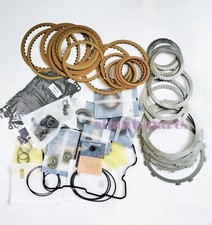
If the clutches already show heat or the 3-5-R wave plate is cracked, the valve body repair alone will not save the unit. Pair it with a 6T70 master rebuild kit, and use a sealing ring installer kit so the new drum seals go on without twisting.