"It shifts funny" covers a lot of ground on a 3.6L Malibu. A bang going into Drive, a hard 2-3, a 3-4 that feels like the car hit a wall, a lazy 5th, a PRNDL that shows the wrong letter: each of those has a different home in the 6T70, and most of them can be pinned down before anyone quotes a rebuild. The unit is clutch-to-clutch, so every shift is one clutch letting go while another one applies under solenoid control. When a shift is harsh or late, the question is which clutch, which regulator valve or which input to the TCM is wrong. This is the order we chase it in. Numbers in brackets point to the Sources list at the bottom. If the complaint is a slip or flare rather than a harsh or late shift, start with our Malibu slipping guide instead.

Which Malibu, which generation
The 6T70 only went behind the 3.6L V6 in the Z-body Malibu. ATRA lists the four-cylinder cars with the 6T40/45 (RPO MH7/MHC) and the 3.6L cars with the 6T70/75 (RPO MH2/MH4/MY9/MH6) [5]. GM's 2015 shudder bulletin adds the 2015 Malibu with RPO M7W [2]. Check the RPO sticker before you go further, because a 6T40 Malibu shares almost nothing internally with what follows.
On the 3.6L cars, 2009 through 2012 is Gen 1. ATRA notes the Gen 2 controls package came in for 2013 on M7U/M7W/M7V/M7X units only, with other RPOs waiting until 2014 production [5]. Gen 2 changed the valve body, the solenoids from VBS to VFS, the pistons and the wave plates [6]. That matters for shift diagnosis, because Gen 1 has clutch pressure switches the TCM uses to watch each regulator, and Gen 2 does not.
How the 6T70 makes a shift
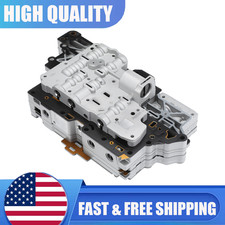
Everything a shift does on this unit comes out of the TEHCM, the TCM and valve body assembly bolted to the side of the case. Sonnax's breakdown of what each solenoid controls is the map you work from [6]:
| Solenoid | Valve it controls |
|---|---|
| Shift solenoid 1 (on/off) | Clutch select valve 2 |
| Shift solenoid 2 (on/off, 6T70 only) | Clutch select valve 3 |
| TCC solenoid | TCC valve |
| Pressure control solenoid 1 | Line pressure |
| Pressure control solenoid 2 | 3-5-R clutch regulator |
| Pressure control solenoid 3 | R1 / 4-5-6 clutch regulator |
| Pressure control solenoid 4 | 2-6 clutch regulator |
| Pressure control solenoid 5 | 1-2-3-4 clutch regulator |
On Gen 1, four normally closed pressure switches sit behind the 1-2-3-4, 3-5-R, 2-6 and R1/4-5-6 regulators. They open at 8 psi (55 kPa) and close by 12 psi (82 kPa), so a switch reads low on the scan tool when pressure is present [6]. Every gear uses two clutches, and Sonnax's apply chart pairs them: 1-2-3-4 is on in 1st through 4th, 3-5-R in 3rd, 5th and reverse, 4-5-6 in 4th through 6th, 2-6 in 2nd and 6th, and low/reverse in reverse [6]. The harsh or late shift tells you which oncoming clutch to look at.
Step 1: Codes first, including the engine
Pull codes from the ECM as well as the TCM. GM's harsh garage shift chart puts this at the top for a reason: if the engine controller tells the transmission that its torque signal is inaccurate, the TCM commands high line pressure as a safeguard [4]. Every engagement and every shift gets harder, and no amount of transmission work fixes it. A misfire, a MAF fault or a throttle body code on a Malibu can show up as a shift complaint.
Then check the fluid hot, on level ground, the GM way: run the lever through each range, idle, and read it only once fluid temperature is up into the normal range [4]. Low fluid makes clutch fill time inconsistent, which feels like a late shift followed by a bump.
Harsh engagement into Drive or Reverse
A bang going into gear from Park or Neutral is the 1-2-3-4 clutch (Drive) or the low/reverse and 3-5-R clutches (Reverse) applying too fast. GM's list for a harsh garage shift [4]:
- Engine torque reported as inaccurate, which drives line pressure up.
- Line pressure at idle: it should be below 800 kPa (about 116 psi). Gauge it before you guess.
- Stuck valves in the lower valve body, particularly the boost valves.
- A damaged or fatigued 1-2-3-4 wave plate or low/reverse wave plate.
- Stripped or worn splines on the 1-2-3-4 clutch plates, and worn or stripped ring gear splines on the input carrier.
- An improperly positioned or plugged low/reverse piston air bleed.
- Stripped internal or external splines on the low and reverse clutch assembly with the one-way clutch.
- Fluid level.
The wave plate items are the ones we find most often on a high-mileage Gen 1 unit. A tired wave plate stops cushioning the piston, so the clutch goes from released to locked with nothing in between. GM and ATRA both point at the updated wave plates as the fix, and ATRA says to install them in every clutch when the unit is apart: 1-2-3-4 is 24259063, 2-6 is 24259816, 3-5-R is 24254103 and low/reverse is 24259817 [5]. Sonnax notes these 2012 plates back-service earlier units [6].
Harsh or late 3rd, 5th and reverse
If the 2-3 and 4-5 shifts are hard or late and reverse engagement is also rough, the 3-5-R clutch is the common factor. GM's checklist: improper surface finish on the 3-5-R plates or backing plate, a plugged oil passage or air bleed in the 3-5-R/4-5-6 housing, damaged or leaking 3-5-R piston seals, a warped housing, and a fatigued 3-5-R waved plate [4].
On a 2008-2009 Malibu this complaint has its own bulletin. GM 09-07-30-012F covers slip, flare or harsh shifts in 3rd and/or 5th, often with no reverse and P0776 set, caused by a broken 3-5-R wave plate [1]. The repair is the updated plate 24254103 with a new pump filter and solenoid filter plate, and the bulletin warns against replacing the TEHCM unless the service diagnostics call for it [1]. ATRA puts it more bluntly: the 3-5-R wave is the one that breaks most often [5].
Harsh or late 2nd and 6th
A hard 1-2 that comes back on the 5-6 shift is the 2-6 clutch, which lives in the case cover. GM lists worn plates or a bad finish on the 2-6 plates and backing plate, a fatigued 2-6 piston cushion spring, a damaged or broken 2-6 piston with worn or delaminating seals, and a fatigued 2-6 return spring [4]. A weak return spring makes the 2-6 drag on release, so the 2-3 can feel like a tie-up even though the 3-5-R side is fine. ATRA also flags an updated 2-6 snap ring and case groove; mixing old and new is a comeback waiting to happen [5].
Harsh 4th, 5th and 6th, and the 3-4 bind
If the 3-4 shift is the harsh one and the upper gears follow, look at the 4-5-6 clutch. GM's list is mostly sealing: a leaking 4-5-6 piston or piston seals, a plugged piston dam air bleed, a fatigued piston spring, leaking dam seals or a damaged dam, improper plate finish, and porosity or seal groove damage in the 3-5-R/4-5-6 housing [4]. In the valve body, Sonnax ties a worn 4-5-6 accumulator piston bore to a 3-4 flare or a harsh 3-4, burned 4-5-6 clutches, ratio codes and slipping [6].
A 3-4 or 4-3 that binds, as if two gears are on at once, is a different failure. ATRA traces it to a worn ring groove on the case cover hub sleeve, which lets the 3-5-R and 4-5-6 circuits leak into each other and tie the unit up; P0797 may set [5]. Pull the hub from the rear case cover and measure the gap between the ring and the groove edge with a feeler gauge. ATRA's limit is 0.007 in.; over that, the case cover gets replaced [5]. A new valve body will not fix this one.
Poor shift quality everywhere: the valve body
When every shift is a little off, not one clutch pair, the regulator side of the valve body is the suspect. Sonnax lists erratic line pressure, burnt clutches, low converter and lube flow, TCC apply and release complaints, overheating and poor shift quality for a worn pressure regulator bore, and clutch failures, solenoid codes and wrong-gear starts for a worn actuator feed limit (AFL) valve, which feeds the solenoids [6]. If the AFL bore leaks, every pressure control solenoid sees low feed and the TCM's commands stop matching what the clutches get.
The 2015 Malibu with RPO M7W has a bulletin for this side of things. GM 18-NA-358 covers a launch shudder in 1st, a 4th gear shudder or a 2-3 or 3-2 shudder that can come with flare, slide, slip or a harsh shift, and blames debris or scored, sticking valves in the upper and/or lower valve body [2]. After ruling out misfire and TCC slip, GM has you replace the upper (24281084) and lower (24257450) valve bodies together, and states that TEHCM replacement has not fixed it [2].
Wrong gear on the display, or no PRNDL
Sometimes the complaint is that the car "shifts wrong" because the cluster says it is in a different range than the lever. On 2009-2011 6T70 Malibus built February 2009 through July 2010, GM bulletin PI0269B covers a check engine light with P182E and, in rare cases, no PRNDL display [3]. The steps: verify shift cable adjustment, verify the ECM Park/Neutral switch status in every range, and verify the internal mode switch A/B/C/P parameters in every range. If P182E will not reset, replace the IMS; if it does, go to circuit testing. A U0101 in the brake module can be ignored, since GM found it sets falsely [3].
GM's wrong-gear chart adds the mechanical side: a damaged cable, a cable not locked into the shifter or transmission bracket, a shift lever loose on the manual shaft, or a twisted manual shaft [4]. If the display is intermittent and the IMS checks out, ATRA lists Z-body Malibu circuits 5981 through 5984 between the cluster, BCM and shift lever, and connectors X206, X303 and X304 for loose terminals, plus an updated calibration [5].
After the repair: Transmission Adaptive Values Learn
A fixed 6T70 can still shift badly if the TCM is running on old adapts. GM requires Transmission Adaptive Values Learn after an internal overhaul, valve body work, a solenoid assembly replacement, a TCM software update, or any service for a shift quality concern; skip it and you can get poor shifts and DTCs [4]. Conditions: wheels blocked, parking and service brake applied, zero throttle, fluid at 70 to 100 C (158 to 212 F), and the lever cycled from Park to Reverse three times to purge air from the reverse clutches [4]. When it finishes, the transmission stays in neutral until you key off, let the TCM power down and restart. If it will not run, GM says line pressure control must be able to make 1,000 kPa, there can be no active codes, and the clutches must be assembled correctly [4].
The TCM keeps learning on the road. ATRA explains that CP Learn runs in steady 3rd, 5th and 6th gear: the 4-5-6 clutch learns in 3rd, the 1-2-3-4 and 2-6 clutches in 5th, and the 3-5-R clutch in 6th, and it aborts on rough road [5]. Give the customer smooth highway miles before you judge the result.
Quick reference
| Malibu shift complaint | Suspect | First check |
|---|---|---|
| Every shift harsh, engine codes present | Engine torque signal | ECM codes; TCM raises line pressure [4] |
| Bang into Drive or Reverse | Line pressure, boost valves, wave plates | Idle line pressure under 800 kPa [4] |
| Harsh or late 2-3, 4-5 and reverse, P0776 | 3-5-R clutch, wave plate | Bulletin 09-07-30-012F [1] |
| Harsh 1-2 and 5-6 | 2-6 clutch | Case cover piston, return spring [4] |
| Harsh 3-4, upper gears rough | 4-5-6 clutch, accumulator | Piston dam seals, accumulator bore [4][6] |
| 3-4 or 4-3 bind, P0797 | Case cover hub ring groove | Ring clearance max 0.007 in. [5] |
| 2015 M7W shudder with harsh shift | Valve bodies | Bulletin 18-NA-358 [2] |
| Wrong or no PRNDL, P182E | Cable, IMS, cluster circuits | Bulletin PI0269B [3][5] |
Shop the part for this fix: 6T70 rebuild kit with pistons
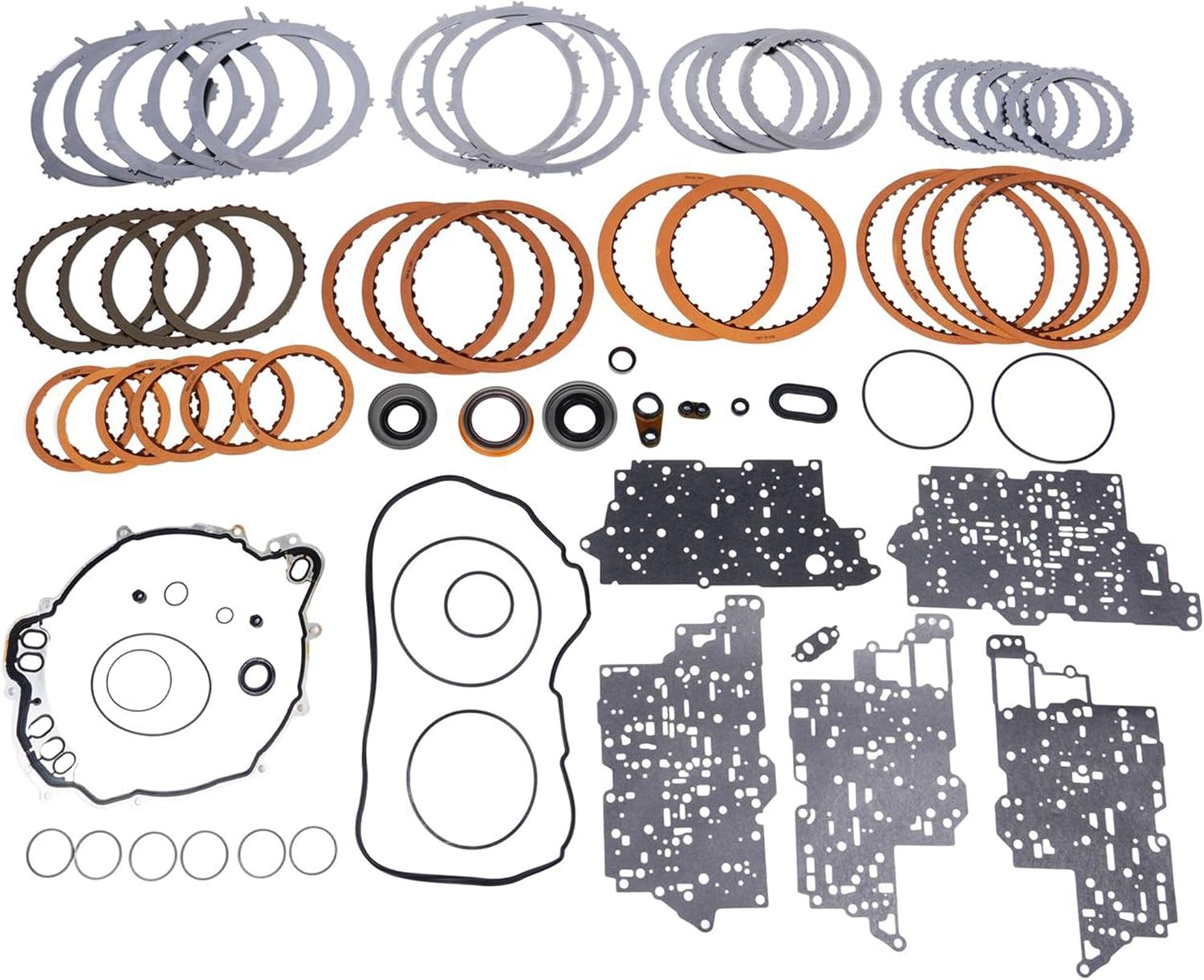
When a harsh shift comes down to fatigued wave plates, leaking piston seals or worn plates, this CoreTransmissionParts kit carries the pistons, frictions and seals to put the clutch packs back to spec. Match the generation to your unit.
View the 6T70 rebuild kit with pistons at CoreTransmissionPartsLooking for something else? Browse all 6T70 parts at CoreTransmissionParts.
Need parts for this job?
Our 6T70 parts page has valve bodies, Gen 1 shift kits, rebuild kits with pistons and solenoid kits for the 3.6L Malibu, all on our own checkout. For fluid specs across every unit, see the transmission fluid spec chart.
FAQ
Why does my Chevy Malibu shift hard?
On a 3.6L Malibu with the 6T70, start with engine codes, because GM says the transmission commands high line pressure when the engine controller reports inaccurate torque. Then check idle line pressure, which should be under 800 kPa, and match the harsh shift to its clutch: 3rd, 5th and reverse is the 3-5-R clutch, 2nd and 6th is the 2-6 clutch, and 4th through 6th is the 4-5-6 clutch.
What causes a harsh shift into Drive or Reverse on a 6T70?
GM lists high idle line pressure, stuck boost valves in the lower valve body, fatigued 1-2-3-4 or low/reverse wave plates, worn 1-2-3-4 plate splines, a plugged low/reverse piston air bleed, low fluid and stripped low and reverse clutch splines. Check engine codes and idle line pressure before you pull the pan.
Why does the PRNDL display show the wrong gear on my Malibu?
On 2009-2011 6T70 Malibus GM bulletin PI0269B covers P182E and a missing PRNDL display. The fix starts with shift cable adjustment, the Park/Neutral status in the ECM and the internal mode switch parameters in every range; if the code does not come back, GM has you replace the internal mode switch.
Do I need to relearn the transmission after fixing shift problems?
Yes. GM requires Transmission Adaptive Values Learn after an overhaul, valve body or solenoid work, a TCM calibration update, or any repair for a shift quality complaint. Fluid must be at 70 to 100 C, and you cycle Park to Reverse three times first to purge air from the reverse clutches.
Related guides
Sources
- General Motors, Service Bulletin 09-07-30-012F, "No Reverse, 3rd or 5th, Check Engine Light Illuminated, DTC P0776." Backs the 2008-2009 Malibu listing, the slip, flare or harsh shift in 3rd and 5th with P0776, the broken 3-5-R wave plate, updated plate 24254103 with new pump filter and solenoid filter plate, and the TEHCM caution. static.nhtsa.gov (PDF)
- General Motors, Service Bulletin 18-NA-358, "Shudder, 2-3 Upshift or 3-2 Downshift Concern." Backs the 2015 Malibu RPO M7W listing, the shudder with flare, slip or harsh shift, the valve body debris cause, valve bodies 24281084 and 24257450, and the TEHCM note. static.nhtsa.gov (PDF)
- General Motors, Preliminary Information PI0269B, "Check Engine Light On, DTC P182E." Backs the 2009-2011 Malibu 6T70 listing and build dates, the no-PRNDL complaint, the cable, Park/Neutral and IMS verification steps, IMS replacement, and the false U0101. static.nhtsa.gov (PDF)
- GM service information for the 6T70/6T75 (2011 Saab 9-4X workshop manual): Harsh Garage Shift, Harsh or Late Third, Fifth and Reverse Shift, Harsh or Late Second and Sixth Shift, Harsh Fourth, Fifth and Sixth Shift, Shift Indicator Indicates Wrong Gear Selection, Transmission Adaptive Values Learn, and Fluid Level and Condition Check. Backs the engine torque and 800 kPa idle line pressure checks, every clutch inspection list, the wrong-gear cable and manual shaft checks, and the adaptive learn requirements and conditions. Harsh Garage Shift / 3rd, 5th, Reverse / 2nd and 6th / 4th, 5th, 6th / Wrong Gear Indicated / Adaptive Values Learn / Fluid Level Check
- ATRA, "6T70 Product Issues and Updates" seminar. Backs the Z-body Malibu RPO split, the 2013 Gen 1/Gen 2 split, the four updated wave plate part numbers and "3-5 Rev wave most common to break," the 2-6 snap ring update, the 3-4/4-3 bind and P0797 from the case cover hub ring groove with the 0.007 in. limit, the Z-body PRNDL circuits and connectors, and CP Learn gears. atracom (PDF)
- Sonnax, "6T70/6F50 Webinar." Backs the solenoid-to-valve table, the Gen 1 pressure switch 8/12 psi values, the clutch apply chart, the Gen 2 change list, wave plate back-service, and the 4-5-6 accumulator, pressure regulator and AFL valve symptom lists. Sonnax (PDF)