A generic code reader calls P0842 "Transmission Fluid Pressure Sensor/Switch A Circuit Low." That wording makes it sound like a sensor you unplug and replace. On a GM 6T70 or 6T75 it is something narrower. GM's own descriptor is Transmission Fluid Pressure Switch 1 Circuit Low Voltage, and per GM service information that switch has one job: it tells the TCM where the 3-5-Reverse clutch regulator valve is sitting.
That matters because it tells you which circuit to look at before you spend a dime. P0842 lives in the same hydraulic circuit as P0776, the same circuit that gives these units their reputation for losing Reverse, 3rd and 5th. Read the code as a report on that one valve and the diagnosis gets short.
One more thing up front: P0842 is a Gen. 1 code. Per Sonnax, Gen. 2 TEHCMs dropped the pressure switches entirely, with the change starting in the 2013 model year on the 6T70. If you have a P0842 on a late unit, confirm what TEHCM is actually in it before anything else.
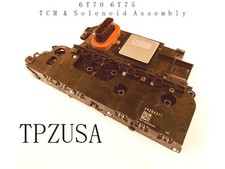
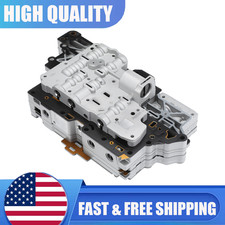

What pressure switch 1 actually does
The switch is built into the control solenoid valve assembly — the TEHCM, which GM calls the Q8 control solenoid valve assembly and says has no serviceable components. Per GM's circuit description for DTC P0842/P0843, the TCM supplies a signal circuit to the switch and the switch has an internal case ground. It is normally closed, which reads LOW (0 volts). Oil pressure on the switch opens it and the signal goes HIGH (12 volts).
Pressure control solenoid 2, a normally high solenoid, controls pressure to the 3-5-R clutch regulator valve. When the 3-5-R clutch is commanded off, the regulator valve sits in its released position and routes oil to the switch, so the switch reads HIGH. When the clutch is commanded on, the valve strokes and exhausts the switch circuit, so it reads LOW. Sonnax describes the same arrangement across the Gen. 1 unit: each switch is tied hydraulically to one clutch regulator valve, and the TCM uses the switches both to confirm gear position and to time clutch apply against input speed changes for its adaptive learning.
GM publishes the full switch logic. This is the table you should have open on the bench:
| Range / gear | TFP SW1 (3-5-R) | TFP SW3 | TFP SW4 | TFP SW5 |
|---|---|---|---|---|
| Park | High | Low | Low | Low |
| Reverse | Low | Low | Low | Low |
| Neutral | High | Low | Low | Low |
| Drive 1st (engine braking) | High | High | Low | Low |
| Drive 1st | High | High | Low | High |
| Drive 2nd | High | Low | Low | High |
| Drive 3rd | Low | High | Low | High |
| Drive 4th | High | High | Low | Low |
| Drive 5th | Low | High | High | Low |
| Drive 6th | High | Low | High | Low |
Switch 1 goes LOW in exactly three places: Reverse, 3rd and 5th. Those are the three ranges that apply the 3-5-R clutch. Everywhere else it should read HIGH.
A note on numbering. GM's table for the 2011 application lists switches 1, 3, 4 and 5 and states plainly that TFP switch 2 does not exist. Some training material and older aftermarket write-ups number the four Gen. 1 switches 1 through 4 and put the 3-5-R valve on "switch 2." Do not let that trip you up. The DTC definition is what counts, and GM ties P0842/P0843 to the 3-5-R regulator valve.
How the TCM decides to set P0842
Per GM's DTC page, the test only runs when all of these are true:
- None of these are set: P0711, P0712, P0713 (fluid temp), P0716, P0717 (input speed), P0722, P0723 (output speed), P0742, P0751, P0756, P0757, P0973, P0974, P0976, P0977, P1915 or P182E.
- The high side driver is enabled.
- Engine speed has been 400 RPM or more for 5 seconds and is currently 550 RPM or more.
- Ignition voltage is 8.6 volts or more.
- Transmission fluid temperature is between -7 and 120°C (19-248°F).
The failure condition is specific. P0842 counts an incident every time the switch signal stays LOW after the 3-5-R clutch goes from a high pressure state to a low pressure state — in plain terms, the clutch released, the valve should have returned and pressurized the switch, and the switch still reads closed. The code sets at 25 counts. Its mirror, P0843, counts a switch that stays HIGH after the clutch applies and sets at 35 counts. For comparison, the 1-2-3-4 clutch switch code P0877 sets after only 5 counts, so the 3-5-R monitor is deliberately patient.
When it sets, P0842 is a Type C DTC and the TCM freezes adaptive learning for the 3-5-R clutch. That is the practical consequence. GM's diagnostic aid states that normal debris in the fluid can make a TFP switch set intermittently, and that because the switch outputs are used for shift adaptives, a bad switch usually causes no symptom unless it fails continuously for an extended period. If the car is shifting fine and the code is a stored history, that is consistent with what GM describes.
What "stuck low" means physically
The TCM only sees 0 volts where it expected 12. There are four ways to get there:
- Signal shorted to ground. The circuit is entirely inside the TEHCM, so this is the module, its connector pins, or metallic debris bridging them. GM's table lists a short to ground as the P0842 fault; open or high resistance and short to voltage set P0843 instead.
- A failed switch. Sonnax reports waffled or delaminated switch films found at teardown, caused by high pressure and/or debris that compromises the seal and lets contaminants reach the piston and contacts.
- No oil reaching the switch on release. If the 3-5-R regulator valve hangs in its stroked position, or oil leaks past it, the switch never sees pressure. Sonnax documents that oscillation of this valve wears its bore and causes pressure loss in the 3-5-R circuit; the same wear produces 2-3 flare, 4-5 flare, delayed Reverse, Reverse slip and ratio codes.
- A filter plate or debris problem. GM's TEHCM inspection specifically checks the four filter plate retaining tabs for cracks and proper tension. A plate packed with material from a 3-5-R failure starves the circuits it feeds.
That last one is why I never look at P0842 in isolation. GM bulletin 09-07-30-012F covers the broken 3-5-R waved plate on 2007-2009 6T70/6T75 units (RPOs MH2, MH4, MH6, MY9): P0776 is the headline code, the plate normally breaks after about 20,000 miles, and the debris can affect the speed sensors and other clutches. A switch code in that same circuit on a unit that is already making metal is not an electrical problem.
Diagnosing it without throwing a TEHCM at it
1. Fix the other codes first. GM says so directly. Any speed sensor, fluid temp, solenoid or P0776 code comes before P0842.
2. Pull a fluid sample. Bright metal or friction material means you are dealing with a mechanical 3-5-R failure and the switch code is a symptom. Plan for a teardown.
3. Watch the switches live. GM's verification: engine idling in Park, parking brake set, drive wheels chocked. Monitor the TFP Switch 1, 3, 4 and 5 parameters. Move through Park, Reverse and Neutral and compare against the table above. Then go to Drive and command the transmission through all forward gears with the scan tool. Switch 1 should read High in Park, drop Low in Reverse, go back High in Neutral, and in Drive go Low only in 3rd and 5th.
4. If everything follows the table, stop. Drive it under the enable conditions or recreate the freeze frame data. GM is blunt here: if the vehicle passes verification, do not go on to the circuit and component tests, because that leads to unnecessary part replacement. Treat it as an intermittent.
5. If switch 1 is stuck Low, split electrical from hydraulic on the bench. Ignition off, remove the Q8 assembly and do GM's inspection: connector pins for damage, bent pins, debris or a broken retaining tab; no metallic debris near the terminals; solenoid leads clean; filter plate tabs intact and tight. Set the module on a clean surface near the transmission, connect it to the vehicle harness through the DT-47825-20 adapter harness at the X1 20-way connector, ignition on, and press each TFP switch gently with a pencil eraser. Each parameter should change state. If one does not, GM's call is to replace the Q8 assembly.
If switch 1 toggles cleanly on the bench, the module is not your problem. The oil is not getting there. That puts you in the upper valve body at the 3-5-R clutch regulator valve: vacuum test the bore and look at the valve.
The fix, by root cause
Failed switch film. Sonnax notes that a failed switch used to mean a new TEHCM. They now sell a pressure switch rebuild kit (124740-70K) for 6L45 through 6L90 and 6T70/6T75, plus film and seal kits for Gen. 1 6T70 and a TL30 install tool. That is a builder repair on a module you already have programmed.
Shorted or damaged TEHCM. Replace it, but match it correctly. Sonnax warns that a Gen. 2 module will not work properly in a Gen. 1 build and that copying the part number off the old module can put the wrong one in. Get the transmission RPO from the Service Parts Identification label in the glove box and match RPO plus year and model. A replacement module needs programming.
Worn 3-5-R regulator bore. Ream and oversize it. Sonnax's 124740-21K kit replaces the 1.83 ratio OE valve with a .335" small spool; the 1.35 ratio valve with the .390" spool takes 124740-26K. Measure the spool before you order. The two are not interchangeable, and the ratio matters to apply pressure. Per Sonnax's Gen. 1 identification guide, 2007 and 2008 units use the 1.35 ratio valve and 2009 through 2013 units use the 1.83 ratio valve, with the lower separator plate changing from a cut-out (2007-08) to a notch (2009) to a circle hole (2010-13).
Broken waved plate or debris. Follow 09-07-30-012F: the plate is P/N 24254103, the debris has to be cleaned out of the whole transmission, and the pump fluid filter and the control solenoid filter plate must be replaced. GM also says the control solenoid assembly should not be washed in parts cleaner, and should not be replaced for any DTC unless SI diagnostics tell you to.
Every repair: reset adapts. GM requires it after internal repair, valve body work or control solenoid valve assembly replacement. Clear codes, ignition off and wait up to 2 minutes for everything to power down, then ignition on with the engine running and reset adapts with the scan tool. Road test, then ignition off for 2 minutes. Skipping this gets you poor shift quality, new DTCs and a customer who thinks you made it worse.
Parts for a P0842 repair
Gen. 1 6T70 parts for the 3-5-R circuit: TEHCM assemblies, valve bodies and the clutch packs a broken waved plate takes out. Check your RPO and generation before ordering.
View the Gen. 1 6T70 master rebuild kit →FAQ
Is it safe to drive with P0842 on a 6T70?
Usually it drives normally. GM classifies P0842 as a Type C DTC, and the TCM's response is to freeze 3-5-R clutch adaptive learning. GM notes that a TFP switch fault usually causes no symptoms unless it fails continuously for a long time. If it is paired with P0776, slipping or no Reverse, stop driving it and check the fluid for debris.
Will replacing the TEHCM fix P0842?
Only if the switch or its circuit inside the module is actually bad. GM's test is to bench the module on an adapter harness and press each switch with a pencil eraser; if switch 1 changes state, the module is fine and the problem is oil not reaching it. GM's bulletin also says the assembly should not be replaced for any DTC unless SI diagnostics call for it.
What is the difference between P0842 and P0843?
P0842 means the switch 1 signal stayed LOW (0 volts) after the 3-5-R clutch released, and it sets at 25 counts. P0843 means it stayed HIGH (12 volts) after the clutch applied, and it sets at 35 counts. A short to ground sets P0842. An open, high resistance or a short to voltage sets P0843.
Can a Gen. 2 6T70 set P0842?
It should not set it as a switch code, because Sonnax documents that Gen. 2 TEHCMs eliminated the pressure switches and use clutch pulse learning instead, pulsing the clutches roughly every 1,250 miles to track shift timing and wear. The 6T70 change started in the 2013 model year, though Sonnax notes not every model changed at once. If a late unit reports pressure switch codes, verify which TEHCM is installed, since a Gen. 1 and Gen. 2 module do not interchange.
Shop the Gen. 1 6T70 rebuild kit →
Need parts for this job?
TEHCM solenoid assemblies, valve bodies, pressure switch seal tooling, rebuild kits and DEXRON-VI for the 6T70 and 6T75.
Shop 6T70 parts →Sources
- General Motors service information, 6T70/6T75 — "DTC P0842 or P0843" and "Transmission Fluid Pressure Switch Logic" (2011 application, published on SAAB WIS Online). Backs the GM descriptors, the circuit description (switch in the non-serviceable control solenoid valve assembly, internal case ground, normally closed, HIGH with pressure), the PC solenoid 2 to 3-5-R regulator valve relationship, the run conditions, the 25-count and 35-count set criteria, the Type C classification and frozen 3-5-R adapts, the debris diagnostic aid, the scan tool verification and the pencil-eraser bench test with DT-47825-20, plus the full switch state table and the note that switch 2 does not exist. DTC page · switch logic table
- General Motors service information, 6T70/6T75 — "Control Solenoid Valve and Transmission Control Module Assembly Inspection" and "Resetting of the transmission's adaption." Backs the connector, pin, debris, solenoid lead and filter plate retaining tab inspection, and the adapt reset sequence with its 2-minute power-down steps and the repairs that require it. inspection · adapt reset
- General Motors — Service Bulletin 09-07-30-012F (October 2012), hosted by NHTSA. Backs the covered 2007-2009 6T70/6T75 models and RPOs, the broken 35R waved plate cause and the roughly 20,000-mile onset, debris affecting speed sensors and other clutches, plate P/N 24254103, the pump filter and control solenoid filter plate replacement, and the warnings against washing or replacing the control solenoid assembly without SI direction. static.nhtsa.gov
- Sonnax — "Under Pressure: Shift Quality & Pressure Switches in TEHCM Applications." Backs the four Gen. 1 switches and their link to the clutch regulator valves, their role in gear confirmation and adaptive clutch timing, the Gen. 2 elimination of switches (6T70 from the 2013 model year), waffled or delaminated film failures from pressure and debris, and the 124740-70K rebuild kit and TL30 tooling. sonnax.com
- Sonnax — Oversized 3-5-R Clutch Regulator Valve Kit 124740-21K. Backs the bore wear mechanism from valve oscillation, the symptom list, and the 1.83 ratio (.335" spool, 124740-21K) versus 1.35 ratio (.390" spool, 124740-26K) split. sonnax.com
- Sonnax — "Identifying GM 6T70 Series TEHCM Generations Using VIN/RPO Codes." Backs the warning that a Gen. 2 module will not work properly in a Gen. 1 build, the part-number "follower" trap, and finding the RPO on the Service Parts Identification label. sonnax.com
- Sonnax — "GM Gen. 1 6T70/6T75 Identification Guide." Backs the model-year chart: 1.35 ratio 3-5-R regulator valve on 2007-2008 units, 1.83 ratio on 2009-2013, and the lower separator plate cut-out / notch / circle hole progression used to tell them apart. sonnax.com