Ask three shops what a 722.9 rebuild costs and you'll get three different answers, and none of them are wrong. That's because "722.9 rebuild" isn't one job — it's a label that covers everything from a fluid and filter service to a full teardown with new clutch packs, a replaced K1 drum and stator, and a decision about whether the mechatronic unit gets reused or swapped. The number on the invoice is a direct function of which of those jobs the transmission actually needs, and the biggest avoidable cost on this unit isn't a part price, it's paying for a repair tier the transmission didn't actually require. Here's what really drives the total, tier by tier, backed by Mercedes' own diagnostic bulletins and ATRA's documented failure data on this specific transmission.


Three Repair Tiers, Not One Price
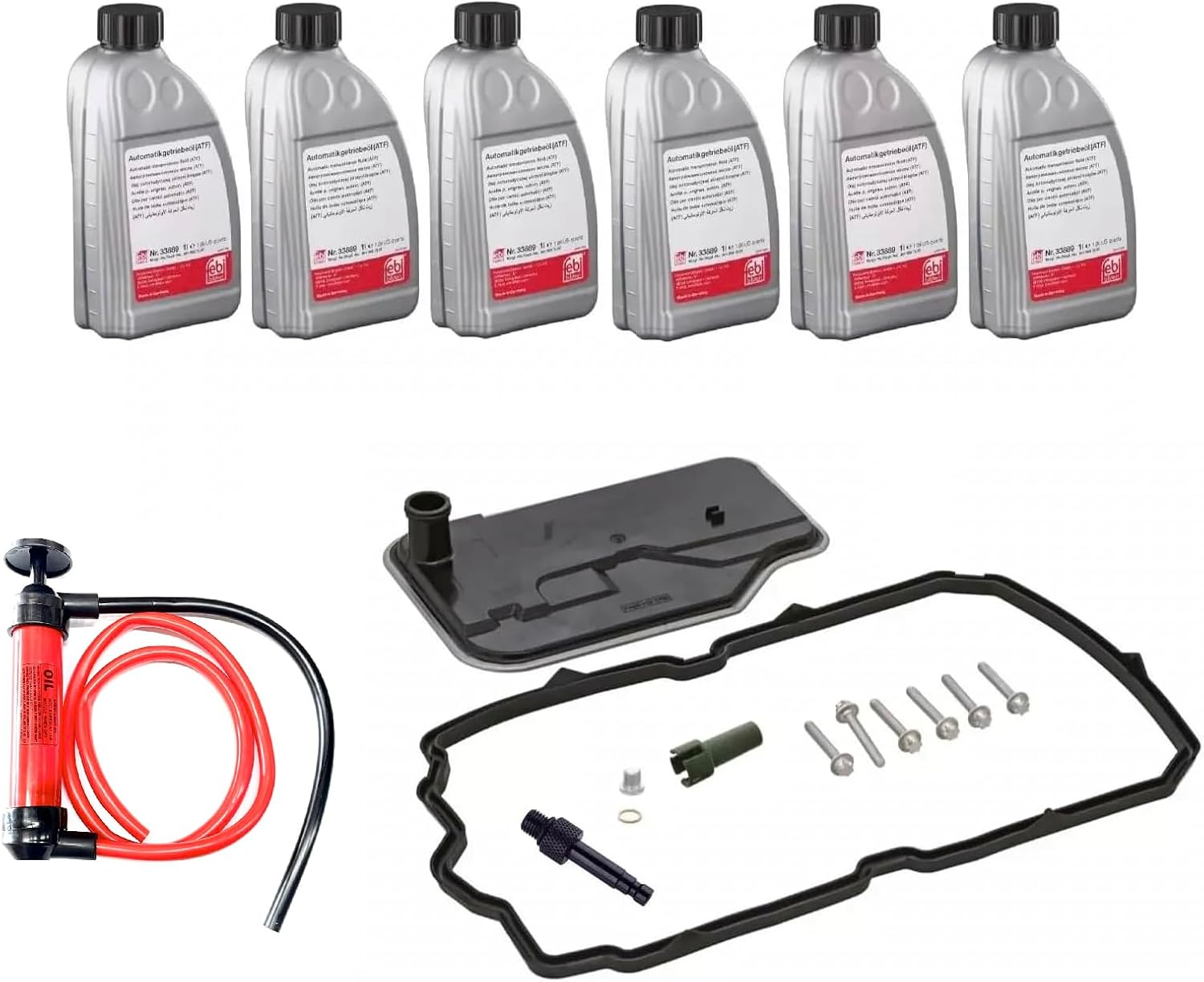
The honest way to think about 722.9 cost is as three separate jobs stacked on top of each other, each one deeper and more expensive than the last. Tier one is a fluid and filter service: pull the pan, replace the filter, refill with the correct spec fluid. Tier two is a solenoid repair: pull the valve body, replace worn solenoid seals, inspect for related damage, reinstall. Tier three is a structural rebuild: full disassembly, clutch pack replacement, and in some cases replacement of the K1 drum and stator assembly. Parts cost alone spans roughly $50 for a filter kit up to several hundred dollars for a complete rebuild kit, and that's before labor, which varies by shop and by how much of the transmission has to come apart to get at the failure. Almost every 722.9 cost complaint traces back to a shop (or a DIYer) landing in a higher tier than the actual failure required, or missing a tier-two problem and having it turn into a tier-three one.
Tier One: Fluid and Filter Service, and the Fluid Mix-Up That Costs More Later
The 722.9 was built across two non-interchangeable factory fluid generations. Motul's official technical data sheet for its MB-Approval 236.15 fluid confirms the spec: a blue, fully synthetic fluid with a viscosity of 17.4 mm²/s at 40°C and 4.3 mm²/s at 100°C, a viscosity index of 163, and a pour point of -45°C, engineered specifically for Mercedes' 7-speed transmissions built since 2010. Units built before that cutoff spec out under the earlier MB 236.14 standard. Getting this wrong at a routine service doesn't usually show up immediately — it shows up weeks later as flare, harsh shifts, or erratic pressure that looks exactly like early hydraulic wear, because the wrong fluid changes how the valve body's pressure-regulating valves and solenoids behave. A filter and fluid service done with the correct spec fluid is the cheapest preventive tier on this transmission; the same service done with the wrong fluid can turn into a diagnostic chase that costs far more than the fluid would have.
Tier Two: Solenoid O-Rings, the Most Common Repair on This Unit
According to ATRA's Gears magazine, the majority of 722.9 failures that reach the bench trace back to the O-rings on the tips of the shift solenoids deteriorating over time. Once those seals go, fluid leaks past them instead of building the pressure needed to stroke the valve, and the O-rings themselves are sometimes found cut or missing entirely — with the clutch that solenoid was supposed to control usually burning as a result. The solenoids themselves rarely fail as units; it's almost always the seals. That matters for cost because it means a correctly diagnosed solenoid O-ring problem is a valve body job, not a full rebuild — but Gears magazine also notes the valve body should be fully disassembled during this repair, because broken springs inside it can still partially function well enough to pass a quick visual check and get missed, only to cause a comeback. Skipping that full teardown to save time on a tier-two job is how a shop ends up doing the same job twice.
Tier Three: K1 Drum Bearings, Piston Failures, and When a Full Rebuild Is Actually Justified
Early-production 722.9 units have a documented structural weak point: ATRA's Gears magazine reports multiple bearing failures between the K1 drum and the stator support, serious enough that Mercedes issued an update calling for both the stator and drum to be replaced. The practical guidance from Gears is to replace both proactively during a rebuild that's already torn down that far, since dealing with the same failure again under warranty later costs more than handling it once. Separately, the K1 drum is also where molded piston failures show up, and the telltale symptom is distinctive: the transmission drops into neutral specifically during the shift into third gear. These are the failures that genuinely justify tier-three pricing, because they require the kind of teardown a full master rebuild kit is built for — clutch packs, seals, and the hard parts that wear alongside them — not just a valve body swap.
The Mechatronic Decision That Swings the Bill Most
The single biggest avoidable cost add on a 722.9 job is replacing the mechatronic (conductor plate) unit when it didn't need to be replaced. Per ATRA's Gears magazine, the reasonable approach is to let the reuse-versus-replace decision come down to real evidence: no electrical codes stored, no water contamination, no signs of overheating, and no visible damage. If all of that checks out, reusing the original unit is a legitimate option, not a corner cut. Getting to that decision correctly requires real data, which is exactly what Daimler's own diagnostic bulletin for 722.9 shift quality complaints (topic LI27.00-P-051451, covering the full NAG2/NAG2i family) requires: pulling the transmission control unit's log and EEPROM data to a USB stick before any adaptation or quick test is performed, because that EEPROM data can't be reproduced once adaptation has run. Skip that step, adapt first, and you've thrown away the evidence that would have told you whether the mechatronic unit was actually the problem — and a part that expensive shouldn't be replaced on a guess.
Don't Let a Torque Converter Guess Inflate the Bill
Humming, droning, vibration, shuddering, jolting, or slip feels like a torque converter problem, and on the 722.9 it sometimes isn't one. Daimler's own bulletin on this exact symptom set (topic LI27.10-P-057361) states plainly that on NAG2 transmissions built after transmission sequence number 1.515.055 (after November 2007), which already have Mercedes' optimized torque converter installed, replacing the torque converter again is not an effective remedy for these symptoms. The bulletin directs techs to check the propeller shaft for excessive resistance, inspect engine and transmission mounts, swap the wheels diagonally to rule out a balance issue, and check whether a recent fluid change coincided with the complaint — all before condemning the converter. When the converter clutch itself is genuinely worn, the fix is often a part-level repair rather than a full converter swap: Sonnax's MB-SR-3 snap ring resets clutch release clearance in 722.6 and 722.9 converters (272mm and 290mm), and its MB-B-1 bushing repairs front cover hub bore wear that causes leakage and alignment problems. Both are real alternatives to buying a complete replacement converter when the actual wear is isolated to one component.
One More Cost Trap: Mismatched Pump and Converter Generations
Gears magazine also flags a production change worth knowing before you source parts: later 722.9 pumps were upgraded from a bushing to a bearing, but the torque converter hubs they mate to weren't updated on the same timeline. Pairing a later bearing-style pump with an earlier hub, or the reverse, can lead to pitting and noise that looks like a new failure but is really a parts-generation mismatch. It's a cheap mistake to avoid and an expensive one to chase if a core or used converter gets paired with the wrong-generation pump during a rebuild.
| Repair tier | What it actually involves | What drives it into this tier |
|---|---|---|
| Fluid & filter service | Pan drop, filter, correct-spec fluid refill | Routine maintenance; cheapest tier when the correct 236.14/236.15 spec is used |
| Solenoid O-ring repair | Valve body removal, full disassembly, seal replacement | Deteriorated O-rings leaking fluid past solenoid tips — the most common failure |
| Structural rebuild | Full teardown, clutch packs, K1 drum/stator if affected | Confirmed bearing failure, molded piston failure, or worn clutches |
| Mechatronic reuse vs. replace | Depends on evidence, not assumption | No codes/water/overheat/damage → reuse is valid; otherwise replace |
| Torque converter | Often a part-level clearance/bushing fix, not a full swap | Post-11/2007 units already have the optimized converter — rule out driveline first |
Frequently Asked Questions
What's the real cost range for a 722.9 rebuild?
There isn't one number, because the 722.9 fails in genuinely different ways with different repair depths. A fluid and filter service is the cheapest tier. A solenoid O-ring repair sits in the middle, since it requires pulling and disassembling the valve body but not touching the clutch packs. A rebuild that includes K1 drum bearing and stator replacement, or a full clutch pack rebuild, costs the most because it's a complete teardown. Parts cost alone can run from under $50 for a filter kit to several hundred dollars for a full rebuild kit, and labor is additional and varies by shop.
Does the mechatronic/conductor plate unit always need to be replaced during a rebuild?
No. Per ATRA's Gears magazine, a tech can let the customer choose whether to reuse the original mechatronic unit if there are no electrical codes stored, no water contamination, no signs of overheating, and no visual damage. Replacing it when it isn't necessary is one of the biggest avoidable cost additions on this transmission, which is why Mercedes' own diagnostic bulletin for 722.9 shift complaints requires pulling the TCU log and EEPROM data before any adaptation, so you're working from real fault data instead of a guess.
Will using the wrong ATF type cost more money later?
It can. The 722.9 uses two non-interchangeable factory fluid generations tied to MB-Approval 236.14 and 236.15, and fluid-related shift quality symptoms can look identical to early hydraulic wear. Catching a fluid mix-up at a routine service is inexpensive; chasing a shift quality complaint for weeks because the wrong fluid is in the pan is not. Always confirm the correct spec before refilling.
Why would a shop replace the K1 drum and stator during a rebuild if they aren't failed yet?
Early 722.9 units have a documented pattern of bearing failures between the K1 drum and stator support, and Mercedes issued an update requiring replacement of both parts. ATRA's Gears magazine notes it's more expensive to deal with that failure under warranty after the fact than to handle it proactively during a rebuild that's already torn down that far. It's a preventive call based on a known failure point on this specific unit, not an upsell for its own sake.
Is replacing the torque converter always the right fix for shudder or vibration on a 722.9?
Not always, and replacing it on a guess can add cost without fixing anything. Daimler's own bulletin for 722.9 humming, droning, vibration, shuddering, jolting and slip states that on transmissions built after transmission sequence number 1.515.055 (after November 2007) with the optimized converter already installed, replacing the torque converter again is not an effective fix for those symptoms. The bulletin directs techs to check the propeller shaft, engine and transmission mounts, wheel balance, and recent fluid service history first.
722.9 7G-Tronic Master Rebuild Kit
For units with confirmed structural wear — clutch packs, seals and the hard parts this transmission actually needs when the failure is past the valve body.
View the rebuild kit →Sources
- Mercedes-Benz USA, Daimler AG / Xentry Diagnostic Bulletin LI27.00-P-051451, "Shift quality complaints on TRANSMISSION 722.9 (7G-TRONIC and 7G-TRONIC PLUS)," Version 5, July 14, 2014. Backs the required diagnostic order of operations before any mechatronic replacement decision: reading out the TCU log and EEPROM data before adaptation (since it cannot be reproduced afterward), verifying the gearshift with Star Diagnosis, and working through "Fault Tree NAG2." Confirms validity across the full 722.9 NAG2/NAG2i family. static.nhtsa.gov (PDF)
- Mercedes-Benz USA, Daimler AG / Xentry Diagnostic Bulletin LI27.10-P-057361, "Humming, droning, vibrations, shuddering, jolting, slip," Version 1, June 10, 2014. Backs the statement that torque converter replacement is not an effective remedy for these symptoms on NAG2 units built after transmission sequence 1.515.055 (after 11/2007), and the required driveline checks (propeller shaft, mounts, wheels, recent fluid service) before condemning the converter. static.nhtsa.gov (PDF)
- ATRA, Gears Magazine, "Common Mercedes 722.9 Problems," by Rob Faucett, September 2018. Backs the solenoid O-ring failure pattern and full valve body disassembly recommendation, the K1 drum/stator bearing failure update, the molded piston failure causing neutral engagement in third gear, the mechatronic reuse-vs-replace criteria, and the pump bushing-to-bearing production change. gearsmagazine.com
- Motul, Official ATF 236.15 Technical Data Sheet, June 2024. Backs the MB-Approval 236.15 fluid specification, its blue color, viscosity (17.4 mm²/s at 40°C, 4.3 mm²/s at 100°C), viscosity index of 163, and pour point of -45°C for Mercedes 7-speed transmissions built since 2010. motul.com (PDF)
- Sonnax, "Snap Ring" product page, part MB-SR-3. Backs the torque converter clutch release clearance repair for Mercedes 722.6 and 722.9 converters (272mm and 290mm) as a part-level alternative to full converter replacement. sonnax.com
- Sonnax, "Bushing" product page, part MB-B-1. Backs the front cover hub bore repair for Mercedes 722.6/722.9 addressing leakage and clearance issues without replacing the full converter assembly. sonnax.com
Shop filter kits, fluid service kits and rebuild kits for the 722.9, shipped fast from the USA.
Shop 722.9 parts →