No movement in any gear is a different animal than a shift complaint. The car sits in Drive or Reverse and just revs, or creeps weakly and stops. That is not a shift-quality problem you can chase with a TV cable adjustment. It is either a hydraulic problem (the transmission is not building or delivering pressure to any clutch) or a mechanical one (something between the engine and the output shaft is not transmitting torque at all). The AOD is a fully hydraulic, cable-and-governor-controlled unit with no scan tool data to lean on, so the diagnosis has to come from Ford's own engagement charts, a pressure gauge, and a cooler-line check, in that order.
Below is the order we actually run on a no-move AOD, what each check rules in or out, and where that lines up with Ford's published forward and reverse engagement diagnosis charts. Specs and sources are listed at the bottom.
Step 1: fluid level and condition, hot and running
Ford's own diagnosis charts for both "No or Delayed Forward Engagement" and "No or Delayed Reverse Engagement" list improper fluid level as cause No. 1, ahead of the valve body, the filter and the pump. Check it with the engine running, the transmission at operating temperature, and the vehicle level. Low fluid lets the pump draw air, which collapses line pressure across every circuit at once, so a transmission that is five minutes from being full can act exactly like a dead pump. Dark, burnt fluid with a varnish smell tells you something different: the clutches are probably already damaged, and whatever you find next may be a symptom of that, not the root cause.
If the transmission was just installed or just serviced, there is a second fluid question: did it actually take a normal fill? A unit that only draws up a few quarts and stays full from there usually has a plugged filter or a pump that is not drawing properly, and that is worth knowing before you go any further.
Step 2: manual linkage, cable-end to lever
Cause No. 2 on both Ford charts is a manual linkage that is misadjusted or damaged. The shift lever has to fully engage the manual valve inside the valve body, and on a cable-shift AOD that depends on the cable, the lever travel and the detents all lining up correctly. A linkage that looks connected from outside the car can still be off one detent, or the cable end can be worn enough that it no longer pulls the valve all the way into the gate. This is also where a dropped or disconnected TV/kickdown cable belongs: it will not cause no-movement by itself, but a cable hanging loose or caught on a bracket is a five-minute check that has to happen before you start pulling pans.
Step 3: pull the cooler return line
If fluid and linkage check out, the next move is a cooler-flow check, not a line-pressure gauge. As Wayne Colonna lays it out in Transmission Digest, if the transmission drew up all its fluid and there is still no movement, pulling the cooler return line is the fastest way to see whether the torque converter is even getting fed. No flow at the return line means the converter charge circuit is compromised, and that traces back to the pump or the pressure regulator before anything else. Use a temperature laser or carefully route the open line into a catch container; resting a hand on the line to judge "warm" is the method Colonna specifically calls out as risky.
Step 4: line pressure, both ranges
With cooler flow confirmed, a line pressure check is the next logical step regardless of what the cooler line showed. Ford's AOD control pressure test uses two gauges at once: a 2000 kPa (300 psi) gauge on the main line pressure tap on the left-hand side of the case, above the control levers, and a 0-690 kPa (0-100 psi) gauge on the TV pressure tap on the right-hand side. Warm the fluid fully, keep the throttle linkage off the fast-idle cam when reading idle pressure, apply both the parking and service brakes, and shift through every range while you record both line and TV pressure. Jeff Parlee's pressure-gauge piece for Transmission Digest adds the practical safety rules: tape the gauge to the windshield or have someone hold it outside the car during a road test, route the hose away from the exhaust and the driveshaft, and never exceed the gauge's rating. Ford publishes the actual psi targets for each range in its Special Specifications booklet rather than in the test procedure itself, so compare your readings against that chart, not a guess.
What the readings tell you: if line pressure is present and close to spec in both Drive and Reverse but the transmission still will not move, the manual valve itself is the top suspect, per Colonna, since the valve body may simply not be getting mechanical engagement even though the hydraulics are fine. If pressure is low in both forward and reverse, the shared causes take over: a bad pump, a pressure regulator valve stuck in the low-pressure position, or a filter problem such as a torn seal or a pan pushed up against the filter neck. If pressure is fine in one direction but low only in the other, that points straight at that direction's own clutch circuit, not the pump.
Reading the rest of Ford's chart
Once the shared causes are cleared, Ford's forward and reverse engagement charts branch into clutch-specific checks. For no or delayed forward engagement: forward clutch stator support seal rings leaking, a burnt or damaged forward clutch assembly, or a leaking forward clutch check ball or piston seal ring, each confirmed with an air pressure test. For no or delayed reverse engagement, the same structure applies to the reverse clutch and its own stator support seal rings. Both charts also list valve body bolts that are loose or overtorqued (spec is 9-11 Nm, 80-97 lb-in), a dirty or sticking valve body, a plugged filter, and a damaged or leaking pump, confirmed by inspecting the pump gears. If only one direction is dead and the other works normally, skip straight to that direction's clutch and stator support seals and run the air test before you touch the pump or filter.
Don't confuse this with a worn valve body that still moves the car
The AOD's most common valve body failure is a different problem and worth ruling out by its symptoms rather than tearing into it blind. Sonnax's own description of its boost valve kit (76990K) covers the AOD's pressure regulator boost valve: a hardened steel valve rides inside an aluminum sleeve, wears the bore over time, and leaks boost oil past the clearance. The result is soft, sliding shifts, a delayed Reverse engagement, low line rise under throttle, and eventually direct clutch failure, because the direct clutch applies in Reverse, third and fourth and needs that line rise to hold. None of that is true no-movement. A worn boost valve and sleeve still gets you moving, just weakly and with bad shift quality. If the car genuinely will not move at all in a given range, the boost circuit is not your answer; go back to the linkage, the pump and the clutch-specific checks above.
When it's mechanical, not hydraulic
If fluid, linkage, cooler flow and line pressure all check out normal and the transmission still will not move, the problem is between parts, not in a circuit. Ford's own converter checks cover two failure modes directly: a seized converter one-way clutch, which shows up as overheating and calls for converter replacement, and a locked one-way clutch, which shows up as poor acceleration and also calls for replacement. Ford also specifies a damper hub weld check: apply 50 lb-ft of torque to the input shaft and replace the converter if it rotates more than two degrees or grinds. A failed weld there can let the input side spin with nothing transmitted to the turbine. On a transmission that was just reinstalled, also confirm the converter is fully seated on the pump's drive tangs before you condemn the pump itself; a converter sitting slightly forward from installation can mimic a pump failure.
Two of Ford's other chart entries are worth knowing even though they are not true "no movement in any gear" conditions: a damaged planetary one-way roller clutch causes no drive, slipping or chatter specifically in first gear, and a worn or burnt low/reverse band or servo causes no reverse engagement and no engine braking in manual low, while Drive still works. Neither one leaves the car dead in both Drive and Reverse, which is the detail that separates them from the problem this guide is about.
The order, start to finish
- Fluid level and condition, hot, running, level ground.
- Manual linkage adjustment and engagement at the valve body, plus a quick look for a dropped TV/kickdown cable.
- Cooler return line flow. No flow means the pump or pressure regulator is not charging the converter.
- Line pressure in every range, using the 300 psi line tap and 100 psi TV tap, compared against Ford's spec chart.
- Interpret: good pressure both ways but no movement points to the manual valve; low pressure both ways points to the pump, regulator or filter; one direction only points to that clutch.
- Mechanical checks on the converter (one-way clutch, damper hub weld, pump engagement) once the hydraulics test clean.
Work it in that order and you will not spend an afternoon pulling a pan for a linkage problem, or chasing a cable adjustment that was never going to fix a dead pump.
Shop the part for this fix: AOD-family parts at CoreTransmissionParts
Sonnax valve body kits, pump and hard parts for the AOD family (AOD, AODE, 4R70W). Many listings there are AODE/4R70W-only, so confirm year and fitment before ordering for a 1980-93 AOD.
Browse AOD-family parts at CoreTransmissionPartsNeed parts for this job?
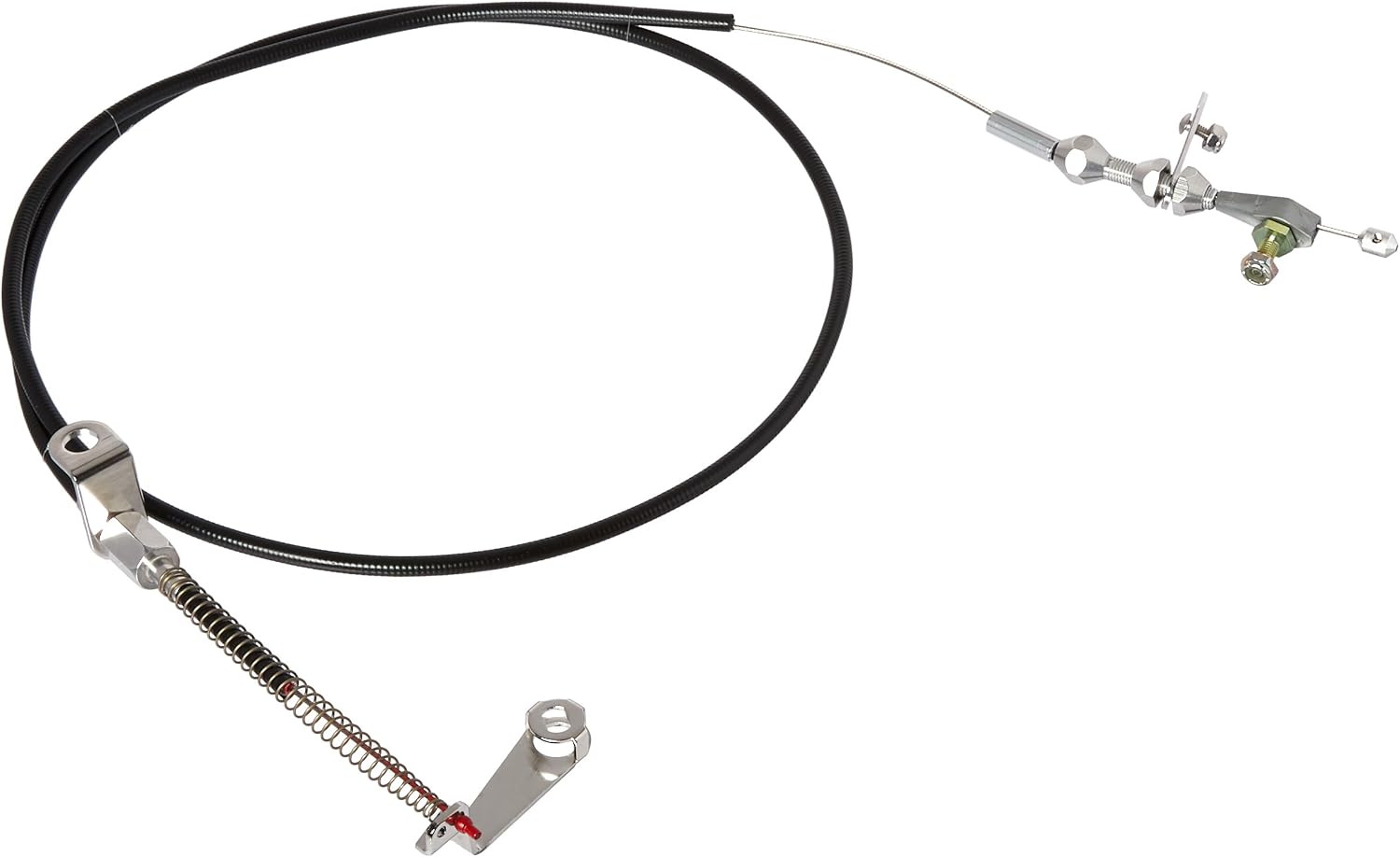
Our AOD parts page has a TransGo-built valve body, a master rebuild kit with clutches and band, and a Lokar kickdown cable kit, all on our own checkout. Run the diagnosis order above first; it tells you which one of those you actually need.
FAQ
What causes an AOD to have no movement in any gear?
Ford's own diagnosis charts for no or delayed forward and reverse engagement share the same short list: improper fluid level, a misadjusted or damaged manual linkage, low main control pressure, a plugged filter, loose or overtight valve body bolts, a dirty or sticking valve body, or a damaged pump. If only one direction fails, that direction's own clutch and stator support seals move to the top of the list instead.
Is low fluid enough to cause complete no movement?
Yes, and it is listed first on both the forward and reverse engagement charts. Low fluid lets the pump pick up air, which drops line pressure everywhere and can leave the transmission unable to apply any clutch. Always check fluid level and condition, hot and running, before testing anything else.
How do you test line pressure on an AOD?
Ford's procedure uses two gauges: a 2000 kPa (300 psi) gauge on the main line tap on the case's left side above the control levers, and a 0-690 kPa (0-100 psi) gauge on the TV pressure tap on the right side. Warm the fluid, hold the TV linkage off the fast idle cam, apply both brakes, then shift through every range and record line and TV pressure in each one.
Can a bad torque converter cause no movement in an AOD?
It can, through a few specific failures: a seized converter one-way clutch (overheats, replace the converter), a locked one-way clutch (shows up as poor acceleration, replace), or a damper hub weld that has failed, which Ford checks by applying 50 lb-ft to the input shaft and replacing the converter if it rotates more than two degrees or grinds.
What is the difference between no movement and a slow or soft engagement?
A worn pressure regulator boost valve and sleeve, the AOD's most common valve body failure, produces soft slide shifts, delayed Reverse and low line rise, but the transmission still moves. True no movement means the manual valve is not engaging a circuit at all, or line pressure itself is too low to apply any clutch, which points to the linkage, the pump, the filter or a burnt clutch rather than a worn valve bore.
Related guides
- AOD Delayed Engagement: Causes and Fix
- AOD Valve Body Symptoms and Testing
- AOD Harsh Shift Causes and Fix
- AOD Slipping Under Load: Causes and Fixes
- AOD Common Problems and Fixes
- AOD Won't Shift Into Overdrive
Sources
- Ford Motor Company, 1993 Mustang Workshop Manual, Section 07-01B (AOD), Diagnosis Charts. Backs the "No or Delayed Forward Engagement" and "No or Delayed Reverse Engagement" cause lists (fluid level, manual linkage, control pressure, clutch and stator support seal leakage, valve body bolts at 9-11 Nm/80-97 lb-in, dirty/sticking valve body, plugged filter, damaged pump), the planetary one-way roller clutch and low/reverse band entries, and the converter one-way clutch and damper hub weld checks (50 lb-ft, 2-degree limit). SPB71B03
- Ford Motor Company, 1993 Mustang Workshop Manual, Section 07-01B (AOD), Control Pressure Test. Backs the two-gauge test setup (2000 kPa/300 psi line tap on the case left side, 0-690 kPa/0-100 psi TV tap on the right side), the fully-warmed fluid and fast-idle-cam requirement, and the brakes-applied, shift-through-every-range procedure. SPB71B11
- Wayne Colonna, "Another 62TE 'No-Move' Possibility," Transmission Digest, December 30, 2020. Backs the diagnostic sequence of checking how much fluid a fresh install actually drew up, pulling the cooler return line to confirm converter charge flow before condemning the pump, running a line pressure check next, and suspecting the manual valve when pressure is good but the unit still will not move. https://www.transmissiondigest.com/another-62te-no-move-possibility/
- Jeff Parlee (Sonnax TASC Force), "Diagnosis with Pressure Gauges," Transmission Digest, December 1, 2007. Backs the pressure-gauge testing method and safety rules: securing the gauge for a road test, routing the hose away from heat and moving parts, using a gauge rated above the expected maximum pressure, and testing under real road load rather than on a lift. https://www.transmissiondigest.com/diagnosis-with-pressure-gauges/
- Sonnax, Boost Valve Kit 76990K (Ford AOD). Backs the pressure regulator boost valve and aluminum sleeve wear mechanism, and the resulting soft slide shifts, delayed Reverse, low line rise and direct clutch failure, used here to separate a worn-valve-body AOD (which still moves) from a true no-movement condition. https://www.sonnax.com/parts/2413-boost-valve-kit