A TH350 fluid change is one of the cheapest services on any automatic GM ever built, and one of the most misunderstood. People pay for a "flush" they did not need, or they drop the pan once, see dark fluid come back a week later, and think something is wrong. Neither problem is about money; both come from not knowing how much fluid the job actually replaces.
This guide breaks down what a Turbo 350 fluid service costs in parts and labor, what the money actually buys, and how to get the most fresh fluid into the unit for the least spend. The fluid numbers come from GM's own service literature and the fluid and pan makers' published instructions. The full source list is at the bottom.


The Short Answer
For a stock-pan TH350, a pan drop with a new filter and gasket is a one-gallon job. Here is how it pencils out with parts at our current shelf prices and typical counter pricing for a filter kit:
| Service | Fluid needed | Parts cost (DIY) |
|---|---|---|
| Pan drop, stock pan, new filter and gasket | About 2-1/2 qt to refill (GM spec), buy 1 gallon | About $65 to $85 |
| Three pan drops a few hundred miles apart | About 7-1/2 qt total, buy 2 gallons | About $150 to $200 |
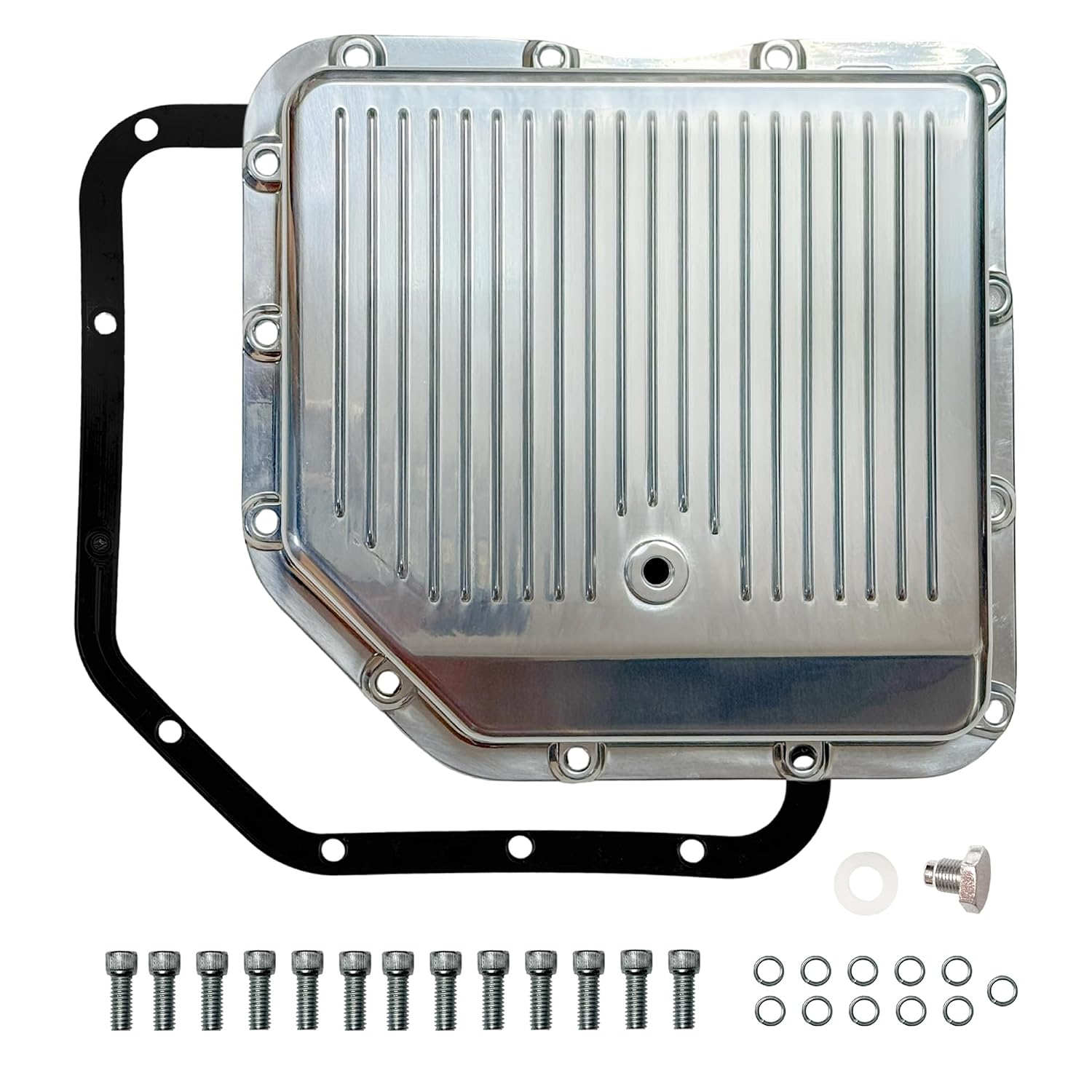
| Deep pan upgrade with drain plug | About 6 qt initial add (B&M deep pan instructions), buy 2 gallons | About $230 to $260 including the pan |
| Cooler-line exchange (full fluid replacement) | Roughly 10 to 12 qt depending on converter, buy 3 gallons | About $160 to $180 in fluid, plus filter kit |
Fluid is the biggest line item. A gallon of Dexron-licensed ATF runs $52.99 to $59.99 on our shelf (Castrol Transmax DEX/MERC or ACDelco Dexron VI). A TH350 filter and pan gasket kit is usually the cheapest part of the job, typically under $25 at the counter. When you buy, match the filter to GM 8640848, the OE number for 1969-1986 TH350s; Raybestos Powertrain's 515615 is a direct cross, and the company notes its 515-series part numbers are filter only, with no gasket, so a kit (Raybestos 7615) or a separate cork or nitrile 13-bolt pan gasket is needed to finish the job (Raybestos Powertrain 515615 listing). Our TH350 filter and pan service guide walks through the job step by step. If you pay a shop, most bill about one hour of labor for a pan drop and filter on a rear-wheel-drive car or truck, plus parts at their markup. Ask for the quote in hours and parts separately so you can compare.
What the Book Actually Says
Everything about TH350 fluid cost hangs on three numbers from GM, so get them right first.
Fluid type
GM's 1976 light truck service supplement (ST-330-76) calls for fluid "identified with the mark DEXRON II" in the Turbo Hydra-Matic 350 and 400. Dexron II has not been sold under that name for decades. The current licensed fluid is Dexron VI, and Valvoline's product page for its GM-licensed Dexron VI/Mercon LV fluid states that it is "fully back-serviceable, so it can be used wherever Dexron-II and/or Dexron-III are recommended." In practice that means any current Dexron VI-licensed fluid is a correct fill for a TH350. You do not need a special "classic" ATF, and you do not need to pay extra for one.
Refill quantity
Per GM ST-330-76, after you drain the sump of a TH350 you add approximately 2-1/2 quarts U.S. of fresh fluid to bring the level back to the dipstick mark. The TH400 takes about 7.5 pints by the same procedure. That 2-1/2 quart figure is the single most useful number in this whole article, because it tells you how little of the total fluid a pan drop replaces.
Interval
The same GM manual sets two intervals. Change fluid and filter every 15,000 miles if the vehicle is driven in heavy city traffic, where outside temperature regularly reaches 90 F, in very hilly or mountainous areas, with frequent trailer pulling, or in commercial use such as taxi, police or delivery. Otherwise, every 60,000 miles. Honestly, most TH350s still on the road today are hot rods, tow rigs or trucks that sit and then work hard, and they belong on the 15,000-mile schedule. Fluid is cheap; a direct clutch pack is not.
Why One Pan Drop Leaves Most of the Old Fluid Behind
A TH350 with a stock pan and converter holds roughly 10 to 11 quarts total when filled dry, depending on converter diameter. That number is a builder's working figure, not a GM book spec, so treat it as approximate. The pan only holds the 2-1/2 quarts GM lists for the refill. The rest stays in the converter, the cooler and lines, the clutch drums and the valve body passages.
Do the math with GM's refill figure and a 10.5-quart total. One pan drop replaces about 24 percent of the fluid. Do it again a few hundred miles later and you are at about 42 percent fresh. A third drop gets you to about 56 percent. That is why fluid looks dark again a week after a single service, and it is not a sign of a problem. It is the old fluid from the converter mixing with the new.
So when you price the job, decide what you are buying. One pan drop with a filter is cheap maintenance and a look at what is in the pan. If the fluid is dark or the unit has an unknown history, budget for two or three drops, which costs another gallon of fluid and your time, but no extra parts if you reuse a good gasket on the intermediate drops.
Is a Flush Worth the Extra Money?
A cooler-line exchange pushes new fluid in while the pump pushes old fluid out through the cooler return, so it replaces nearly all of it, including the converter. It costs about three gallons of fluid, and a shop will charge more for the machine time.
On a healthy TH350 with a known history, it is a fine service. On a high-mileage unit with fluid that has never been changed, I am more careful. GEARS magazine, published by ATRA, covered this exact question in its article on changing fluid in high-mileage vehicles. The advice that matters for a TH350: test-drive it before you touch it so you know what it did beforehand, inspect what comes out of the pan, and favor partial changes over a one-shot complete exchange on a unit with a questionable past. If the transmission is already slipping, fresh fluid will not cure it, and the fluid service will get blamed for a failure that was already happening.
My rule on an unknown TH350: drop the pan first. Look at the pan floor and the filter. A light gray film on the magnet is normal wear. Brass chunks, steel slivers, or black friction material mean the unit needs to come apart, and the fluid money is better spent on parts. If the pan is clean, do two or three drops over the next 1,000 miles rather than one hard exchange.
The Deep Pan Upgrade: Pay Once, Save Every Service
If you are going to service a TH350 regularly, a deep pan with a drain plug is the one upgrade that pays back. B&M's installation instructions for its TH350 deep pans (30280 cast aluminum and 30289 chrome steel) list the reasons plainly: extra capacity for the pump pickup, added cooling, and a drain plug that "allows regular transmission maintenance" without dropping the pan. Their procedure uses a filter extension and B&M filter #10288 so the pickup stays submerged in the deeper sump.
The cost trade is simple. A deep pan holds more fluid, so each service uses more, but each service also replaces a bigger share of the total, and with a drain plug a top-off service is a 15-minute job with no gasket to replace. A TH350 deep pan kit with a drain plug runs $131.99 on our shelf. On a car you plan to keep, it pays for itself in gaskets and mess within a few services.
Torque Specs and the Leaks That Cost You Twice
The most expensive TH350 fluid change is the one that leaks afterward. The pan rail is thin stamped steel on the stock pan and it distorts if you crank the bolts.
- Pan bolts, B&M deep pan: 12-13 ft-lb. B&M warns: "Do not overtighten as this can cause leaks."
- Drain plug, B&M deep pan: 20-25 ft-lb.
- Pan bolts, Moroso 42010 pan: 10 ft-lb, and Moroso does not recommend any sealer on the gasket because pieces can dislodge and clog the transmission or transbrake internals.
On a stock stamped pan, stay at the low end of those numbers and tighten in a crisscross pattern. If the bolt holes in the pan rail are dimpled from past over-tightening, flatten them on a block with a hammer before you install the new gasket. Scrape every trace of the old gasket off the case rail; B&M's instructions call out that old gasket material causes leaks.
Checking the Level Correctly Saves a Comeback
Most TH350s that come back after a fluid service were overfilled, not underfilled. GM explains why: the level rises more than 3/4 inch as fluid temperature goes from 60 F to 180 F, so a cold dipstick reads low and people keep adding. Overfilling causes foaming and fluid loss through the vent, and GM says slippage and transmission failure can result.
GM's procedure, from ST-330-76:
- Engine running, shifter in Park, vehicle level.
- Fluid cool to the touch (65-85 F): level should be 1/8 to 3/8 inch below the ADD mark. The dipstick has two dimples below ADD to show this range.
- Fluid warm: level close to the ADD mark.
- Fluid hot (too hot to hold comfortably): level between ADD and FULL.
- It takes only one pint to go from ADD to FULL on a hot transmission. Add in small amounts.
If the truck has just been towing or sitting in hot traffic, GM says to let it cool about 30 minutes before you trust the reading. After a deep pan install, B&M's procedure is to add the initial fill, start the engine, add until the level is between ADD and FULL, run it through the gears, and recheck in Neutral.
Where the Real Savings Are
- Buy fluid by the gallon, not the quart. The TH350 always needs at least 2-1/2 quarts, and a gallon is cheaper per quart.
- Do not pay for "classic car" ATF. Licensed Dexron VI is back-serviceable to Dexron II per the fluid maker.
- Reuse a good gasket on intermediate drops if it is a reusable rubber-core type and seals; buy the new filter kit for the first or last drop.
- Add a cooler if the car tows or runs a high-stall converter. Heat, not mileage, is what kills the fluid, and a cheap cooler stretches every dollar you spend on ATF. Our TH350 overheating guide covers sizing.
- Read the pan. The cheapest diagnosis on a TH350 is what you find on the pan floor. Our TH350 common problems guide explains what each failure leaves behind.
FAQ
How much does a TH350 fluid change cost?
For a stock-pan TH350 doing it yourself, plan on about $65 to $85: one gallon of Dexron VI-licensed ATF plus a filter and pan gasket kit. GM specifies only about 2-1/2 quarts to refill after a pan drain, so one gallon covers it with fluid left for top-offs. A shop typically adds about one hour of labor.
What fluid does a TH350 take?
GM originally specified DEXRON II for the Turbo Hydra-Matic 350. Current GM-licensed Dexron VI is back-serviceable wherever Dexron II or Dexron III is recommended, so any licensed Dexron VI fluid is a correct fill. You do not need a special classic-car ATF.
How many quarts does a TH350 take after a pan drop?
GM's service literature lists approximately 2-1/2 U.S. quarts to return the level to the dipstick mark after draining the TH350 sump on a stock pan. A deep aftermarket pan takes more; B&M's deep pan instructions call for about 6 quarts initially. Always finish the fill by the dipstick with the engine running.
Should I flush a TH350 or just drop the pan?
A pan drop replaces only about a quarter of the fluid because most of it stays in the converter, cooler and drums. Three pan drops a few hundred miles apart gets you to roughly half fresh fluid. On a high-mileage unit with unknown history, inspect the pan first and favor partial changes over a single complete exchange.
What is the torque spec for TH350 pan bolts?
B&M's TH350 deep pan instructions specify 12-13 ft-lb on the pan bolts and 20-25 ft-lb on the drain plug, and Moroso specifies 10 ft-lb for its pan. Over-tightening distorts the pan rail and causes leaks, so tighten in a crisscross pattern and stay at the low end on a stock stamped pan.
Sources
- General Motors / Chevrolet — 1976 Light Truck Service Overhaul Supplement (ST-330-76), Section 0 General Information and Lubrication (PDF). Backs the DEXRON II fluid requirement, the 2-1/2 quart TH350 refill after a sump drain (7.5 pints for the TH400), the 15,000-mile severe and 60,000-mile normal intervals and severe-service conditions, the 3/4-inch level rise from 60 F to 180 F, the cool/warm/hot dipstick readings, the one-pint ADD-to-FULL note and the overfill warning. 73-87chevytrucks.com (PDF)
- Valvoline — DEXRON-VI/MERCON LV Full Synthetic ATF product page. Backs the statement that the GM-licensed Dexron VI fluid is fully back-serviceable wherever Dexron-II and/or Dexron-III are recommended. valvolineglobal.com
- B&M (Holley) — Installation Instructions, TH-350 Cast Aluminum and Chrome Steel Deep Pans, Part No. 30280 and 30289 (PDF). Backs the deep pan benefits, filter extension and #10288 filter, 12-13 ft-lb pan bolt torque, 20-25 ft-lb drain plug torque, 6-quart initial add, the old-gasket leak warning and the fill-and-check procedure. documents.holley.com (PDF)
- Moroso Performance — Turbo 350 Transmission Pan P/N 42010 Installation Instructions (PDF). Backs the 10 ft-lb pan bolt torque and the recommendation against sealer on the gasket. moroso.com (PDF)
- GEARS Magazine (ATRA) — Pat Burrow, "Is It Safe to Change Transmission Fluid in High-Mileage Vehicles?" Backs the high-mileage service approach: test-drive first, inspect the pan, and favor partial fluid changes over a complete exchange on a unit with an unknown history. gearsmagazine.com
- Raybestos Powertrain — 515615 GM TH350 Transmission Filter, 1969-1986. Backs the OE 8640848 filter cross, kit 7615, the cork (03G615, 63G615) and nitrile (22G615) pan gasket options, the 13 pan bolts, and that 515-series numbers include no gasket. raybestospowertrain.com