A ZF8HP that rolls in with 90,000 to 150,000 miles on it is usually in one of two states: still shifting fine on original fluid that is near the end of its useful life, or already showing the first soft shift, flare or shudder that the owner has been ignoring. The checklist below is what I run on every high-mileage 8HP before I quote anything, whether it is a BMW, a Ram 1500 with the 8HP70/850RE, a Grand Cherokee, a Charger or an Audi. It is built from ZF's own service information, the BMW and Stellantis factory bulletins, and the valve body wear data Sonnax publishes for this family, not from forum folklore.
The order matters. Most of the expensive mistakes on this transmission come from doing step five before step one: changing fluid and resetting adaptations on a unit that already had a verified hydraulic problem, or condemning a transmission that was simply a liter low.

Why "Lifetime Fill" Stops Being True at High Mileage
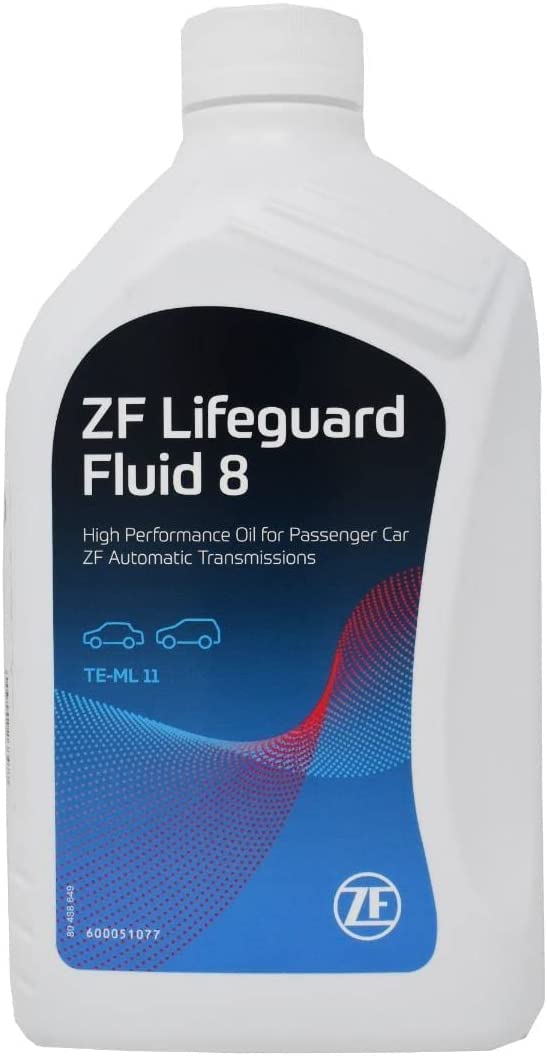
ZF does sell the 8HP as a lifetime-fill unit, but its own product data sheet for ZF LifeguardFluid 8 qualifies that in the same breath: because so many factors affect transmission life in individual operation, ZF recommends an oil change after 150,000 km (about 93,000 miles), and says shorter intervals make sense under high temperatures and loads, or when the vehicle's past use is unknown. A used truck that towed, a car with no service records, or anything that has lived in heat checks every one of those boxes.
The reason is friction behavior. The same data sheet explains that the fluid's friction characteristics are matched to the 8HP's shift elements and are what make smooth, vibration-free shifts possible. The 8HP shifts by overlapping two clutches at a time under closed-loop pressure control, so when the friction modifiers in the fluid are worn out, the transmission control unit sees the clutches grab differently than its learned values expect. The first symptoms are subtle: a slightly firmer 2-3, a flare on a coasting downshift, or a light converter shudder at steady cruise. Those are the complaints this checklist is designed to catch early.
Step 1: Verify the Complaint and Save the Data Before You Touch Anything
BMW's own bulletin for the 8HP, SIB 24 02 13 "8-Speed ZF Automatic Transmission Diagnosis and Troubleshooting Hints," puts this first for a reason. Drive the vehicle and reproduce the exact condition, including speed, temperature and throttle. Then save the stored fault memory and module data before any programming or clearing. BMW is explicit: never program the vehicle or reset the transmission adaptations if the complaint cannot first be verified, because the untouched data is often what points at the root cause.
On a high-mileage unit this is where you separate service items from repair items. Print the codes before clearing anything. On a Stellantis 850RE, pay specific attention to P0733-00 (Gear 3 Shift Incorrect Ratio), P1DA8-00 (Incorrect Gear Ratio Clutch A, B or D Defective) and P1D92-00 (Incorrect Gear Ratio Clutch 4 Defective). Those are the exact DTCs listed in Stellantis TSB 21-039-24 REV. G as the qualifying symptoms for its D clutch repair on 2020-2023 Ram 1500, Grand Cherokee, Wrangler, Gladiator, Durango, Charger, Challenger, 300 and Wagoneer. If those codes are present, a fluid service is not the fix. The repair is a D clutch replacement with an output shaft kit, which the bulletin pays at 6.4 to 9.7 hours depending on the vehicle.
BMW's bulletin adds one more thing worth copying on any brand: rule out engine drivability first. A misfire, stumble or hesitation will show up as a shift-quality complaint, and ratio-monitoring faults logged after an engine stall are irrelevant.
Step 2: Check the Fluid Level the Way ZF Specifies
BMW's bulletin calls for a fluid level check on every transmission complaint, even with no visible leak, and asks techs to note how much fluid was needed to bring it to level. That number is diagnostic information. A unit that takes half a liter or more has a leak you have not found yet, and a low 8HP produces exactly the slipping and ratio codes that get transmissions condemned.
The 8HP has no dipstick. ZF Service Information 50130 lays out the level check:
- Vehicle level, engine running, selector in Park.
- Fluid temperature between 30 and 50°C (50 to 60°C on Maserati applications). Below 30°C, let it warm up; above 50°C, let it cool.
- Hold the engine at 2,000 rpm for 30 seconds to fill the converter, return to idle, then select the gear positions so all circuits are filled.
- Recheck temperature, open the fill plug, and add the correct ZF LifeguardFluid until it just drips from the hole.
ZF's Oil Filling Specification 8HP | 8P (document 1087.754.107c) adds that the car must be level within ±0.2°, must not be in limp-home mode, and that fourth-generation 8HP units can only be checked or filled through the OEM scan tool routine. Read fluid temperature on the scan tool. Do not estimate it with a hand on the pan.
While the plug is out, smell and look at what comes out. Fluid that smells burnt or carries chips or metal fragments points to internal damage. At that point you have a repair, not a service.
Step 3: Leak Inspection, in the Order They Usually Fail
With the vehicle on the lift, work through the common leak points on a high-mileage 8HP:
- Mechatronic connector sleeve. The plastic sleeve where the transmission harness passes into the case is a well-known weep point on 8HP units. Oil wicking up the harness is the giveaway. See our 8HP mechatronic sleeve leak guide for the replacement.
- Oil pan gasket and bolts. Look for wetness at the pan corners. Stellantis's procedure for the 850RE removes 13 pan bolts and says to inspect the gasket for reuse, replacing it if the seal is cut or torn.
- Cooler line connections and the cooler itself. Check both lines at the case and at the cooler or thermostat housing.
- Output and input shaft seals. Wet bellhousing or tailshaft areas need to be traced to the source, not just cleaned.
- Pan impact damage. BMW's bulletin specifically calls for inspecting the oil pan for impact and checking the emergency park-release screw or cable adjustment, bracket and lever. A dented pan can crowd the filter, and a mis-adjusted park release causes its own complaints.
On Stellantis start-stop applications, also note the Hydraulic Impulse Oil Storage (H.I.S.) connector called out in the TSB pan removal steps. Disconnect it before you drop the pan, and make sure it is reconnected and dry afterward.
Step 4: Pan, Filter and Fluid Service
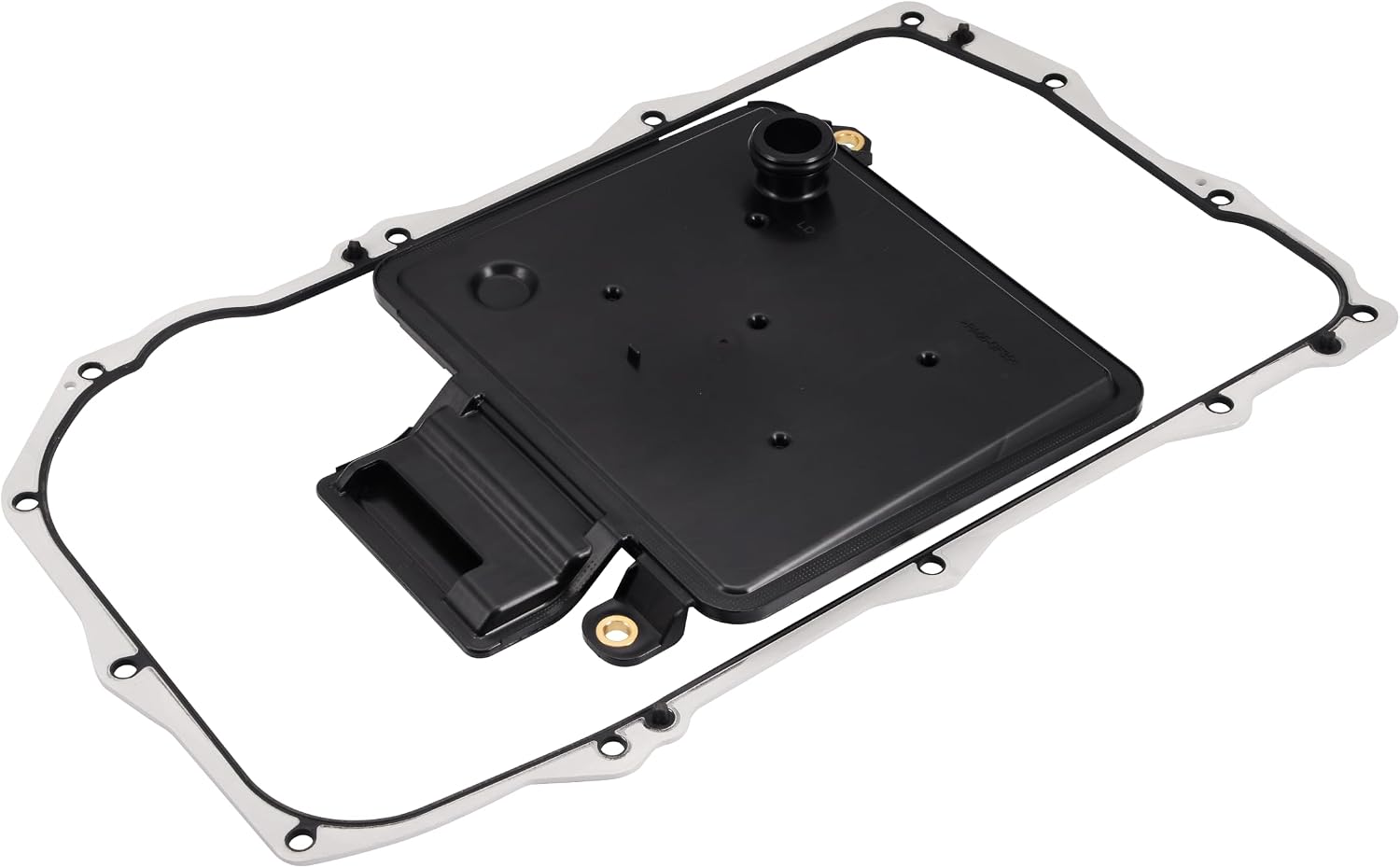
If steps 1 through 3 show a healthy transmission that is simply due, do the service. The full procedure is in our ZF8HP filter and pan service guide. These are the items people get wrong at high mileage:
| Item | Spec / Requirement | Source |
|---|---|---|
| Fluid | ZF LifeguardFluid 8 or 9 only, no additives | ZF LifeguardFluid 8 data sheet |
| Stellantis 850RE fluid | Mopar 68218925AB, not compatible with ATF+4 | Stellantis TSB 21-039-24 |
| Drain plug, RWD (M18x1.0, 10 mm hex) | 8.0 N·m ± 1.0 | ZF SI 50130 |
| Fill/level plug, RWD (M18x1.5, 8 mm hex) | 35 N·m ± 3.5 | ZF SI 50130 |
| Fill/level plug (M22x1.5, 10 mm hex) | 30 N·m ± 3.0 | ZF SI 50130 |
| Level check temperature | 30-50°C (Maserati 50-60°C) | ZF SI 50130 |
Two ZF warnings from SI 50130 apply to every high-mileage job: never start the engine with no oil in the transmission, and use only the LifeguardFluid specified for that transmission. ZF's data sheet is blunt about the second point. Other oils can cause anything from badly degraded shift quality to transmission failure. On Chrysler-badged units, Stellantis prints a caution in its own bulletin that this fluid is not compatible with ATF+4 or any other current FCA transmission fluid. The jug of ATF+4 sitting on the shelf is the single most common wrong fill on these trucks.
Step 5: Adaptations, and When to Reset Them
This step causes the most arguments. BMW's SIB 24 02 13 gives a clear answer for one case: after you correct the fluid level on a shift complaint, clear the EGS adaptation values and test drive the vehicle fully warmed up, at various speeds, for at least five miles. If the shift complaint is resolved, find and fix the leak that caused the low level. If not, the complaint goes to deeper diagnosis.
Stellantis treats adaptation as a required step after internal work. TSB 21-039-24 states that when the transmission is reconditioned (clutch or seal replacement) or replaced, the TCM adaptation procedure must be performed, and the bulletin closes with running the wiTECH Quick Learn procedure and clearing DTCs. The bulletin even allows a full hour of labor for it under labor op 21-00-00-51.
My rule on a healthy unit that only got fresh fluid: reset the adaptations only if you can do the full relearn drive right away, and only after the level has been set correctly at temperature. A reset followed by a careless or short relearn drive leaves the unit shifting worse than before. A reset on a transmission with a real mechanical problem hides the evidence BMW tells you to preserve in step 1.
Step 6: Road Test for Hydraulic Wear
After service and relearn, drive it again with the scan tool connected. Watch commanded gear against actual ratio, fluid temperature, and converter slip at steady cruise. What you are looking for at high mileage is not a code. It is a pattern:
- Soft shifts, weak line rise under load, or burnt clutches on an 8HP50, 8HP75 or 850RE. Sonnax documents this as a pressure regulator and reducing valve wear problem: the reducing valve oscillates in its sleeve, wear opens a leak path to sump, and line pressure becomes high, low or erratic. Their fix is reconditioning the bore and installing oversized pressure regulator valve kit 35740-40K. The kit is replaced when vacuum testing at the specified ports does not hold the recommended minimum or when wear is visible.
- Erratic line pressure that changes with temperature. The same regulator wear gets worse as the fluid thins out when hot, so a unit that shifts fine cold and goes soft after 20 minutes of highway driving fits the pattern. Log the shift feel cold and hot before you blame the clutches.
- Converter shudder at light-throttle cruise that remains after fresh fluid and relearn. That points at the converter clutch or its control circuit. Our ZF8HP TCC shudder diagnosis walks through it.
If the valve body shows any of these patterns, it is a bench job. Vacuum test it, ream and sleeve the worn bores, or swap in a known-good unit. Do not keep changing fluid to chase it. Our valve body wear guide covers the bench side.
The Printable Checklist
- Reproduce the complaint; save fault memory and module data before clearing or programming.
- Check for 850RE D clutch codes P0733-00, P1DA8-00 and P1D92-00; rule out engine drivability faults.
- Level check at 30-50°C, engine running, vehicle level, not in limp mode; record how much fluid it took.
- Inspect the fluid: a burnt smell or chips means repair, not service.
- Leak inspection: mechatronic sleeve, pan gasket, cooler lines, shaft seals, pan damage, park-release adjustment.
- Pan and filter service with ZF LifeguardFluid 8/9 (Mopar 68218925AB on 850RE), plugs torqued to ZF spec.
- Reset adaptations only with a full relearn drive available; 5+ warm miles minimum per BMW.
- Road test on the scan tool for soft shifts, weak line rise, flare and converter shudder; send the valve body to the bench if the pattern points there.
Shop the part for this fix
The 8HP70 filter that goes into this service, from our sister store CoreTransmissionParts.
View the 8HP70 filter at CoreTransmissionParts →Looking for something else? Browse all rebuild kits at CoreTransmissionParts.
FAQ
At what mileage should a ZF8HP get its fluid changed?
ZF markets the 8HP as lifetime fill, but its own LifeguardFluid 8 data sheet recommends an oil change after 150,000 km, about 93,000 miles. ZF also says shorter intervals make sense under high temperatures and heavy loads, or when the vehicle's past use is unknown, which covers most towing rigs and used vehicles without records.
Should you reset ZF8HP adaptations after a fluid change?
Only when you can complete a proper relearn drive right away and the level has been set correctly at temperature. BMW's SIB 24 02 13 calls for clearing the EGS adaptations after correcting the fluid level on a shift complaint and then driving at least five warm miles at various speeds. Stellantis requires the TCM adaptation and wiTECH Quick Learn after any clutch or seal reconditioning on the 850RE.
What codes mean a high-mileage 850RE needs more than a fluid service?
Stellantis TSB 21-039-24 lists P0733-00, P1DA8-00 and P1D92-00 with the MIL on as the qualifying symptoms for its D clutch repair on 2020-2023 Ram 1500, Jeep, Dodge and Chrysler models with the 850RE. If those codes are present, a fluid change will not fix it. The repair is a D clutch replacement using an output shaft kit.
Can I use ATF+4 in a Ram or Jeep with the 8-speed?
No. Stellantis states in its own bulletin that the 850RE fluid, Mopar 68218925AB, is not compatible with ATF+4 or any other current FCA transmission fluid. ZF likewise says only LifeguardFluid 8 or 9 may be used, because other oils can cause anything from poor shift quality to transmission failure.
Why does a high-mileage ZF8HP shift soft or burn clutches even with fresh fluid?
On the 8HP50, 8HP75 and 850RE, Sonnax documents wear between the reducing valve and its sleeve and in the pressure regulator bore. That wear lets line pressure leak to sump, so line pressure becomes low or erratic. The fix is reconditioning the bore and installing an oversized pressure regulator valve kit such as Sonnax 35740-40K, confirmed with a vacuum test.
Sources
- ZF Friedrichshafen AG — Product Data Sheet, ZF LifeguardFluid 8 (2021-07-19). Backs the 150,000 km recommended oil change, the shorter interval under high temperature, heavy load or unknown history, the fluid's friction behavior being matched to the 8HP, and the requirement to use only LifeguardFluid 8 or 9 with the warning that other oils can cause transmission failure. aftermarket.zf.com (PDF)
- ZF Aftermarket — Service Information 50130 DE, Oil Change Kit for ZF Automatic Transmission 8HP (11.2024). Backs the 30-50°C (Maserati 50-60°C) level-check window, the 2,000 rpm / 30 second converter fill step, the drain and fill plug sizes and torques, and the warnings not to start the engine with no oil and to use only the specified LifeguardFluid. aftermarket.zf.com (PDF)
- ZF Aftermarket — Oil Filling Specification 8HP | 8P, document 1087.754.107c. Backs the ±0.2° vehicle-level requirement, the no-limp-mode requirement, and the OEM scan tool requirement for fourth-generation 8HP fill and level checks. aftermarket.zf.com (PDF)
- BMW of North America / NHTSA — SIB 24 02 13, "8-Speed ZF Automatic Transmission Diagnosis and Troubleshooting Hints" (May 2013). Backs verifying the complaint before any programming or adaptation reset, saving module data first, checking the fluid level on every complaint and recording the amount added, clearing EGS adaptations after correcting the level followed by a 5+ mile warm test drive, the pan impact and park-release inspection, and ruling out engine drivability faults first. static.nhtsa.gov (PDF)
- Stellantis / NHTSA — TSB 21-039-24 REV. G, "D Clutch Repair" (November 2, 2024). Backs the 850RE applications, qualifying DTCs P0733-00, P1DA8-00 and P1D92-00, 6.4-9.7 hour labor times, the 13 pan bolts and gasket reuse criteria, the H.I.S. connector, Mopar fluid 68218925AB and its incompatibility with ATF+4, and the required TCM adaptation and Quick Learn after reconditioning. static.nhtsa.gov (PDF)
- Sonnax — Oversized Pressure Regulator Valve Kit 35740-40K (ZF8HP50, ZF8HP75, Chrysler 850RE). Backs the reducing valve oscillation and bore wear mechanism, the resulting soft shifts, low line rise and burnt clutches, and the vacuum-test replacement criterion. sonnax.com