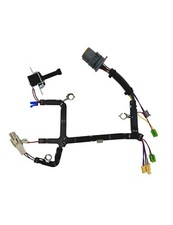
A late 4L65E behind a 6.0L or 5.3L V8 that suddenly holds third gear, flashes the check engine light with a shift solenoid code, and then behaves perfectly after the engine cools down is usually telling you about its wiring, not its clutches. This is a new internal wiring harness for 2006-2008 4L65E transmissions, the heavy-duty member of GM's 4L60E family found in Silverado, Sierra, Tahoe, Yukon, Suburban and Avalanche models. If you have already swapped a solenoid and the same code came back, the harness is the next thing to look at.
What the internal harness does in a late 4L65E
The powertrain computer never touches the valve body directly. Every command enters through the round pass-through connector on the passenger side of the case, and this harness distributes it inside the pan: to the 1-2 and 2-3 shift solenoids, the 3-2 control solenoid, the pressure control solenoid that sets line pressure, and the converter clutch solenoids. It also carries the pressure switch manifold signal back out so the computer knows which range the manual valve is in. On a 4L65E that tows, the pan runs hot for hours at a time, and the harness insulation gradually stiffens and cracks, most often at the bends near the case connector and wherever a missing retainer clip lets a wire rub on the valve body.
Symptoms of a failing 2006-08 harness
- P0753 or P0758 shift solenoid electrical codes, sometimes both at once
- P0743 converter clutch circuit or P0748 pressure control solenoid circuit codes
- Firm or erratic line pressure that comes and goes with temperature
- Limp mode in third gear, the gear a 4L60E-family unit falls back to when it loses solenoid power
- Converter lockup that drops out on a hot highway run, raising RPM and fluid temperature
Keep these separate from the 4L65E's mechanical weak spots. Third and fourth gear slipping under a trailer is usually a burnt 3-4 clutch, and a truck that loses second, fourth and reverse has a stripped sun shell. Neither will be fixed by wiring.
How to confirm it before ordering
Start outside the transmission: check the fuse that feeds the solenoids, then unplug the case connector and look for ATF or green corrosion on the pins. ATRA traced a run of stacked solenoid codes and stuck-in-third complaints on this family to one poor crimp on the shared power feed, so a single bad terminal can impersonate several failed parts. With the connector unplugged, measure each solenoid circuit through the transmission side while you flex the harness at the case. A reading that jumps or goes open points to the harness. Our 4L65E shift solenoid symptoms guide covers the resistance checks, and the Silverado 1500 shift problems guide walks through separating electrical faults from worn valve body bores.
Fitment
This listing is for 2006-2008 4L65E transmissions. GM revised the 4L60E-family internal harness more than once, and the earlier 1993-2002 and 2003-2005 designs do not plug into a late unit correctly, so the model year by itself is not proof. Before installing, set your old harness beside this one and compare the case connector, each solenoid plug and the pressure switch connector. Transmissions that were rebuilt or swapped between trucks can carry a harness from a different year. If anything looks different, send us your year and VIN and we will check it. Everything else for this unit is on our 4L65E parts page.
Install notes
- The harness is serviced from the pan with the transmission in the truck. Drain the fluid, then remove the pan and filter.
- Unplug each solenoid and the pressure switch manifold, and photograph every retainer clip before you remove anything.
- Release the case connector by pressing its tabs and pushing it inward. Do not twist or pry, which bends the pins. Check its O-ring and replace it if it is flattened.
- Route the new harness exactly along the old path, clear of the manual valve and detent spring, with every clip installed.
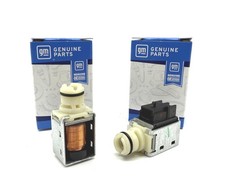
- If the solenoids are original and the truck has high miles, the 4L65E solenoid kit renews them while everything is apart.
- Refill with Dexron VI, clear codes, then road test through all four gears and several lockup cycles at full operating temperature.
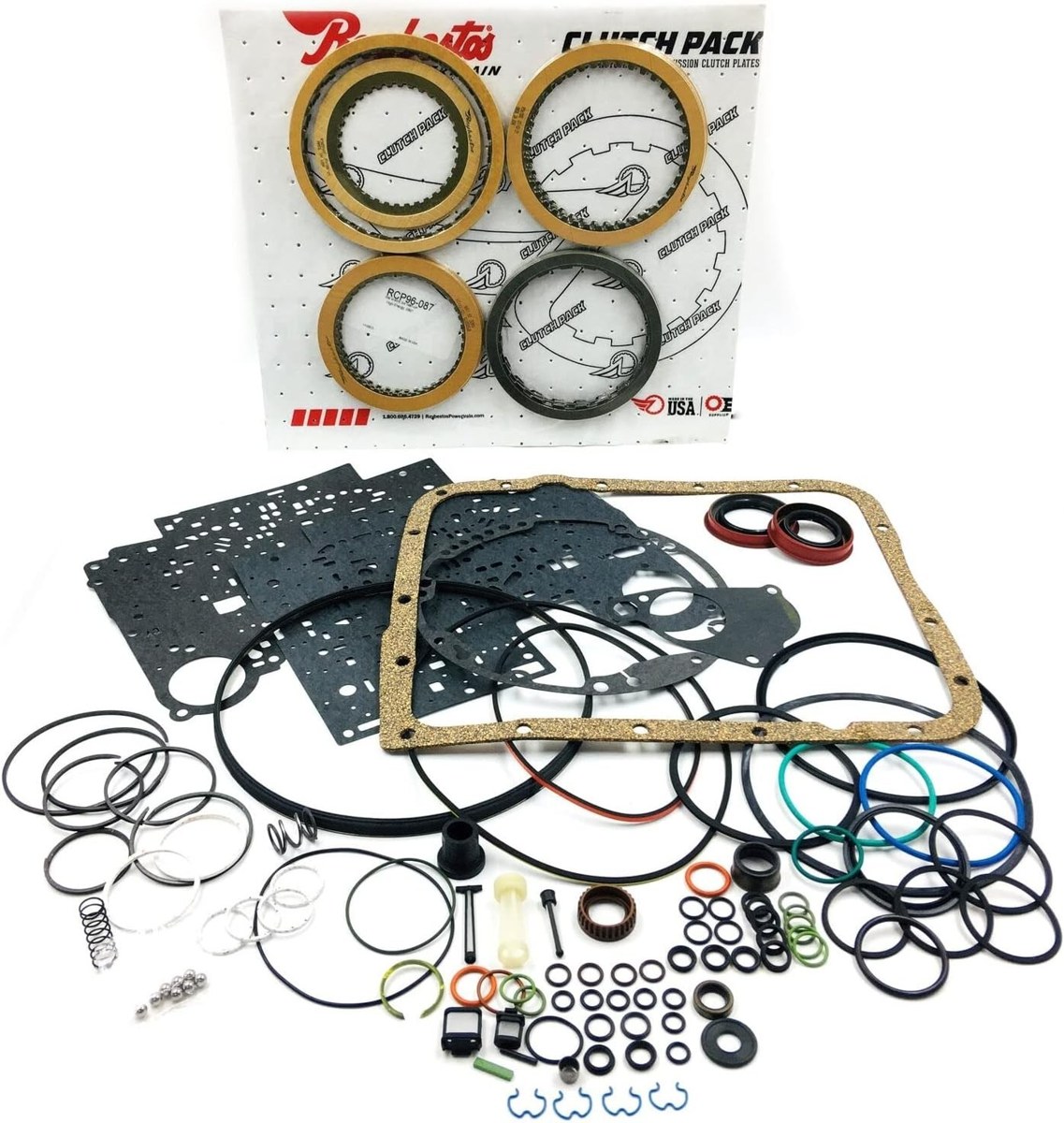
If the inspection turns up a burnt pan full of friction material, wiring is no longer the main job, and a 2004-2014 rebuild kit is the right place to start.