"It shifts weird" is the most common thing a Tahoe owner says about a 4L65E, and it covers four very different complaints: a 1-2 shift that bangs, an upshift that never comes, a truck stuck in one gear, and a downshift that flares before it grabs. Each one has a different cause, and most of them can be narrowed down before the pan comes off. The parts that fix a harsh 1-2 are not the parts that fix a missing 4th, so the diagnosis matters more than the shopping list.
The 4L65E in a 2001-and-later Tahoe is a heavier-duty member of the 4L60-E family, and it shares that family's control system and valve body layout. The diagnostic logic below applies directly. Here is the order I work through a Tahoe shift complaint.
The short version: A harsh 1-2 is very often the computer running high line pressure because a TCC slip code (P0894 or P1870) is stored, so read codes first (Transmission Digest, GM PIP5340A). A light-throttle 1-2 bang without codes points to the accumulator valve train or the servo. A truck stuck in 3rd with no upshift or downshift is the default failsafe gear, which means a solenoid power or ground problem. Missing 2nd and 4th with 1st and 3rd working is the 2-4 band or sun shell, not a solenoid.
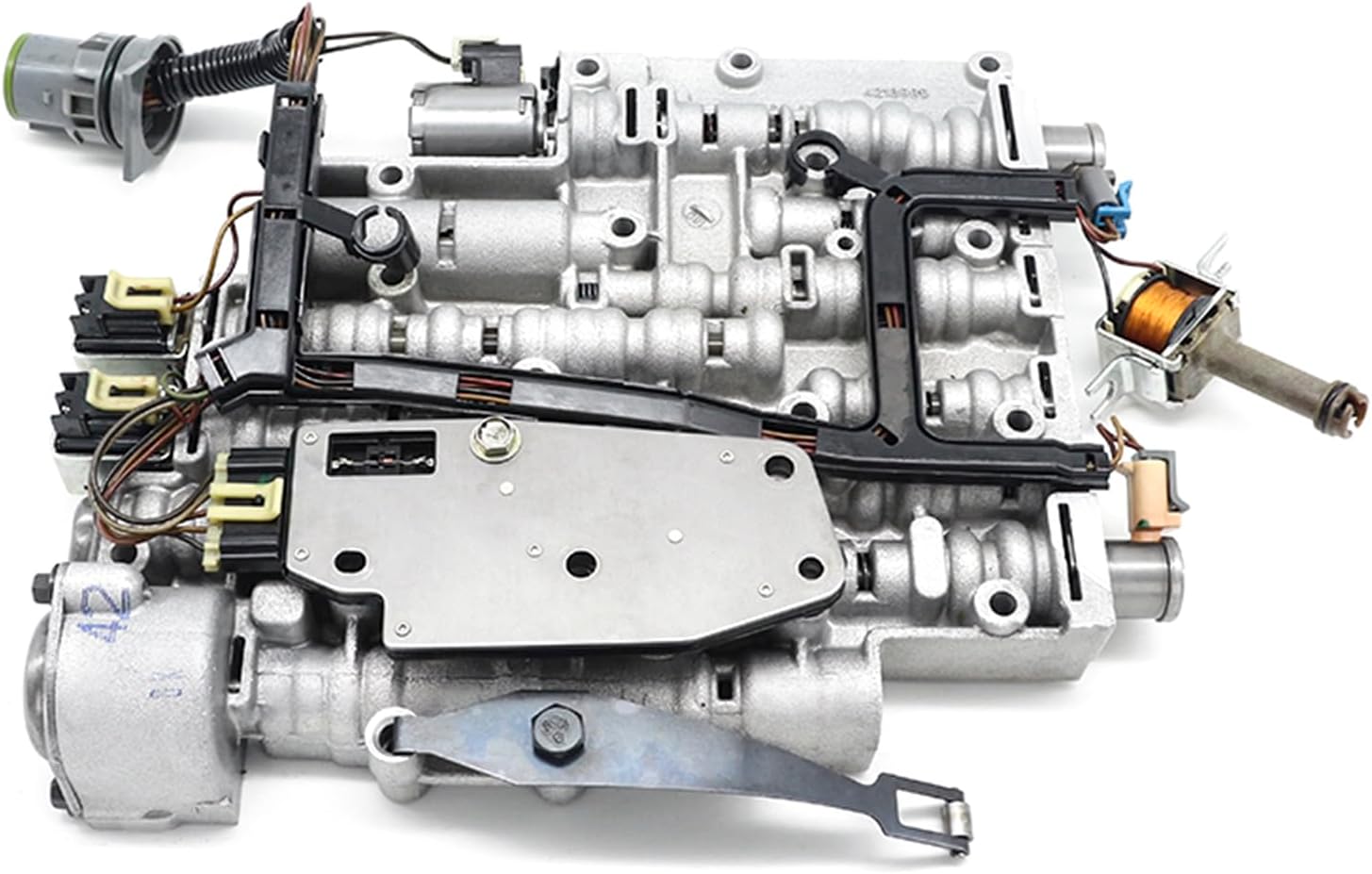
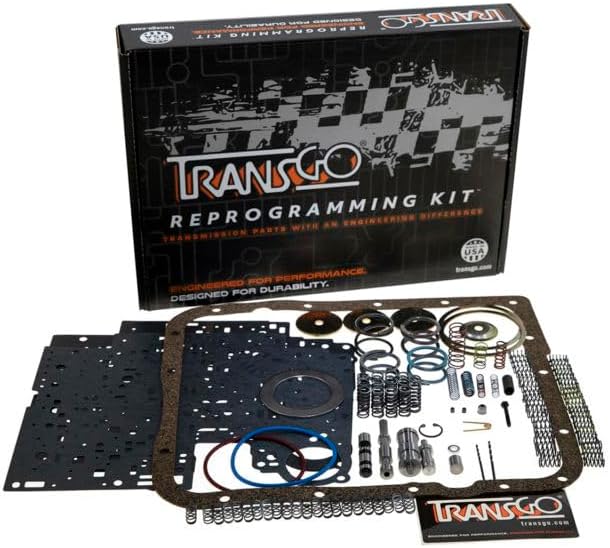
Start With the Solenoid Chart
The 4L65E picks gears with two on/off shift solenoids: shift solenoid A (the 1-2 solenoid) and shift solenoid B (the 2-3 solenoid). Barry Bartlett, a diagnostician for Certified Transmission, makes the point in Transmission Digest that the application chart is the fastest diagnostic tool you own, because it tells you whether a symptom is electrical or mechanical before you spend a dime.
| Gear | Solenoid A (1-2) | Solenoid B (2-3) | Main apply elements |
|---|---|---|---|
| 1st | On | On | Forward clutch, forward sprag, low roller clutch |
| 2nd | Off | On | Forward clutch, 2-4 band |
| 3rd | Off | Off | Forward clutch, 3-4 clutch |
| 4th | On | Off | 3-4 clutch, 2-4 band |
Read the chart backward and the symptoms sort themselves out. Bartlett walks through the three that matter most:
- Solenoid A not turning on: the truck starts in 2nd, shifts to 3rd, and never gets 4th. Second and third are the only forward gears.
- Solenoid B not turning on: the truck starts in 4th. Manual 2nd and 3rd still work, and when you shift up out of manual it goes to 4th because solenoid A is still working.
- No power to either solenoid: the truck stays in 3rd in Drive with no upshift or downshift. Manual 2nd still works because it is hydraulically shifted. A loss of solenoid power usually sets multiple solenoid codes, so check the fuse, then check for power at the transmission connector before condemning anything inside.
That last one is the classic Tahoe "limp mode" complaint: sluggish takeoff, then it feels fine at highway speed. It is 3rd gear all the time, and it is almost always a wiring, connector, fuse or computer problem, not a hard part.
Harsh 1-2 Shift: Read the Codes Before You Touch the Valve Body
What the driver feels: the 1-2 upshift slams, sometimes hard enough to chirp the tires or jolt passengers. The other shifts may also feel firm.
Wayne Colonna's Transmission Digest article on the 4L60E harsh 1-2 lists the control functions that shape the shift: failsafe operation, line pressure control, the accumulator valve system, servo apply area, the 1-2 accumulator piston and spring, the #8 checkball and 2nd gear feed orifice, the servo cushion spring, and the 4-3 sequence valve. That is the checklist. The order matters, though, because the most common cause is not in the transmission at all.
Cause 1: The computer is commanding high line pressure on purpose
Colonna calls line pressure boost control the Achilles heel of the 4L60E family and states that many harsh 1-2 complaints come from torque converter clutch slip codes. When P1870 or P0894 sets, the computer puts the transmission into high line pressure mode, and every shift gets hard. Fix the slip problem and the harsh shift goes away with it.
GM documented the same link. Preliminary Information PIP5340A (February 2016) describes a harsh 1-2 upshift with the Check Engine light on and P0894 or P1870 set after a torque converter or service transmission is installed in 4L60E (M30) and 4L65E (M32) vehicles. The PI lists 1998-2004 Astro, Blazer, S-10, Jimmy, Safari and Sonoma, 1999-2002 Express and Savana, and 1998-2000 Silverado and Sierra. Tahoe is not on that list, so it does not apply to a Tahoe by name, but it shows GM treating "harsh 1-2 plus a TCC slip code" as one condition rather than two.
On a Tahoe, scan for codes first. If P0894 or P1870 is stored, the harsh shift is a symptom. Go after the converter clutch circuit, which on this family usually means the TCC regulator valve bore. Our 4L65E P0894 guide walks through it.
Cause 2: Line pressure control is wrong
With the TCC codes cleared, Colonna's next suspects are the EPC solenoid driver in the computer, lean misfire, MAF sensor problems and the EPC (pressure control) solenoid itself. His warning is worth repeating: do not trust the scan tool's commanded EPC amperage PID. He says it can show the correct value when the actual current is wrong, especially when the computer's driver has failed. Measure it with a meter and put a gauge on the line pressure tap.
For what "right" looks like, Rob Faucett explains GM's strategy in GEARS magazine: the pressure control solenoid runs around 0.9 to 1.1 amps at idle and drops toward 0.2 to 0 amps at wide-open throttle just before the 1-2 shift. Less current means more line pressure. If the gauge reads high at light throttle while current is high, the solenoid or the pressure regulator side of the valve body is the problem. If current is low at light throttle, the computer is asking for that pressure, so look for the reason (codes, a bad TP or MAF signal) before replacing hydraulic parts.
Cause 3: Accumulator valve train wear (light-throttle 1-2 bang)
If the harsh shift is worst at light throttle and there are no codes, look at the accumulator valve in the valve body. Sonnax describes the condition on 200-4R, 700-R4 and 4L60-E units: a 1-2 abrupt or bang shift at light throttle, especially with the 093 Corvette or 553 2nd apply servo pistons. Sonnax gives two causes: wear in the aluminum sleeve that lets torque signal or accumulator pressure leak, or an accumulator valve that is too large for the application, which puts too much pressure on the 2-4 band. Sonnax also notes the old fix of going to a smaller servo apply area limits 2-4 band life, so it is not a free cure.
The valve trains come in sizes stamped on the sleeve (B, A, N, M, L, K and F per Sonnax), and Sonnax says most vehicles use the M, L or K version. Sonnax lists the "M" kit (0.341 in. valve) for heavy-weight vehicles, which is where a Tahoe sits. Colonna adds the basic inspection: make sure the valve is not sticking and the spring is not cocked in the bore.
Cause 4: Wrong servo, accumulator or checkball after a repair
A Tahoe that started banging into 2nd right after a rebuild or a "shift kit" usually has one of these. Colonna lists four OE servo sizes and says the wrong apply area causes either a soft, slide-bang 1-2 or a harsh 1-2. He notes most units should have the 553 or 159 piston, the 093 is mainly Corvette and high-performance Camaro, and the 554 is for four-cylinder and 2.8 V6 applications only. A Corvette servo in a heavy Tahoe gives a firm 1-2 by design.
Two other assembly mistakes he calls out:
- The #8 checkball. It forces band apply oil through the 0.067 to 0.086 in. orifice in the separator plate during the 1-2 shift. Leave it out and the 1-2 is harsh. Some builders enlarge that orifice, which does the same thing.
- The 1-2 accumulator piston and spring stack. Early units installed the piston first with the spring on top, so more spring meant a firmer shift. Later units put the springs in first with the piston on top, which reverses the effect: more spring gives a softer shift. Mix up the stack and the shift feel flips. Also check that the piston pin bore is not worn.
- The servo cushion spring. Pull the band apply pin and confirm it is not binding in the servo piston. A binding pin takes the cushion spring out of the shift.
Cause 5: A stuck 4-3 sequence valve
Colonna's last item is the one that blindsides people. A 4-3 sequence valve stuck inboard routes 2-4 band apply oil to the 4th gear servo piston, which applies the band at full flow with no cushion spring and no metering through the orifice. The 1-2 hits hard, and he notes it also causes 2-3 and 3-2 shift problems. If a harsh 1-2 shows up together with a bad 2-3 or 3-2, check this valve.
4L65E Shift Solenoid Set A and B (1993-2014, OEM 24230298)
The matched 1-2 and 2-3 shift solenoids for a Tahoe 4L65E. Replace them as a pair once the chart and a circuit test point to a solenoid rather than wiring.
Shop the A and B solenoid set →Different failure? Browse the full 4L65E parts collection.
Late or Missing Shifts: Solenoid or Friction?
What the driver feels: the Tahoe holds 1st forever, or has to lift off the throttle before it shifts, or never seems to reach overdrive.
Bartlett describes exactly this customer: the transmission "stays in first a long time," then shifts when they lift. What actually happened is the truck went from 1st to 3rd, and the driver never noticed there was no 4th. If 1st and 3rd work, both solenoids are turning on and off correctly, because 1st is both on and 3rd is both off. The common element in 2nd and 4th is the 2-4 band, which holds the reaction sun shell.
From there, it is either the band and servo, or the shell itself. Bartlett notes that the sun gear can break away from the sun shell on these units, and then 2nd, 4th and Reverse are all lost. If Reverse still works, look at the band, the servo and its seals. If Reverse is gone too, it is the shell. Both are internal repairs. Our Tahoe slipping guide covers the sun shell repair.
The 3rd gear "neutral" test
If the truck shifts 1-2 and then feels like it falls into neutral when 3rd is commanded, Bartlett's logic says the solenoids are fine (both on in 1st, A off in 2nd, both off in 3rd). The 2-3 shift releases the band and applies the 3-4 clutch. To prove it, run it in manual 2nd to about 40 mph, shift to Drive and lift. If it stays in a 2nd gear ratio when 4th is commanded, the 3-4 clutch is not holding, because 4th is the 3-4 clutch plus the band. That is a 3-4 pack job, covered in our 3-4 clutch failure guide.
Fluid, Specs and Prevention
GM's Chevrolet Performance Supermatic sheet for the 4L65E lists DEXRON-VI, an 11.2 quart (10.6 L) dry fill with the 300 mm converter, 18 ft-lb (24 N-m) on the pan bolts and 28 ft-lb (38 N-m) on the cooler pipe nuts. Low fluid aerates the oil and drops line pressure, which turns firm shifts into flares and slips, so check the level hot before diagnosing anything else.
- Clear engine codes first. Colonna lists lean misfire and MAF problems among the causes of line pressure trouble. A bad engine signal can make a healthy transmission shift badly.
- Do not reset adapts as a fix. If a shift was bad because of a hard fault, clearing learned values only hides it for a few days while the computer relearns.
- Fix TCC slip codes right away. They raise line pressure on every shift, which wears the band and clutches faster.
- Add an auxiliary cooler on any Tahoe that tows. The Supermatic sheet says to plumb it after the radiator and before the fluid returns to the transmission.
Keep the numbers at the bench. Our free transmission fluid spec chart lists the correct ATF for the 4L65E and dozens of other units, so nobody tops off a Tahoe with the wrong fluid.
FAQ
Why does my Tahoe slam into 2nd gear?
The most common reason is high line pressure commanded by the computer because a torque converter clutch slip code (P0894 or P1870) is stored. Transmission Digest and GM PIP5340A both tie a harsh 1-2 to those codes. With no codes, check the accumulator valve train, the servo size and the #8 checkball.
My Tahoe is stuck in one gear and will not shift. What is wrong?
If it stays in 3rd in Drive with no upshift or downshift, the shift solenoids have lost power and the transmission is in its default gear. Check the fuse, the connector and the wiring to the transmission before replacing internal parts. Manual 2nd still working confirms it.
How do I know if it is a shift solenoid or something inside the transmission?
Use the solenoid chart. Both solenoids are on in 1st and both are off in 3rd, so if 1st and 3rd work, the solenoids are switching. Missing 2nd and 4th with 1st and 3rd normal points to the 2-4 band or the sun shell, not a solenoid.
Can resetting the transmission adapts fix bad shifts on a Tahoe?
Only temporarily if there is an underlying fault. Clearing learned values makes the shift feel different for a few days, but the computer relearns around a worn part or a bad signal and the problem returns. Find the cause first, then let the computer relearn.
What fluid does a Tahoe 4L65E take?
DEXRON-VI. GM's Supermatic specification sheet lists an 11.2 quart dry fill with the 300 mm converter. A routine pan drop takes far less, so fill to the hot level rather than to a fixed number.
Sources
- Transmission Digest, Wayne Colonna, "4L60E Harsh 1-2 Shift" (April 30, 2021). Backs: the 1-2 shift control list, TCC slip codes P1870/P0894 forcing high line pressure, EPC driver/MAF/misfire causes, not trusting the commanded EPC PID, servo sizes (553/159, 093, 554), the #8 checkball and 0.067-0.086 in. orifice, accumulator piston and spring orientation, the servo cushion spring, and the 4-3 sequence valve. transmissiondigest.com: 4L60E Harsh 1-2 Shift
- Transmission Digest, Barry Bartlett, "Diagnosing Shifting Issues" (February 1, 2016). Backs: the 4L60E solenoid on/off logic, results of solenoid A or B not turning on, 3rd-gear-only with no solenoid power, the 2-4 band as the common element in 2nd and 4th, sun shell failure taking 2nd, 4th and Reverse, and the manual 2nd to Drive 3-4 clutch test. transmissiondigest.com: Diagnosing Shifting Issues
- Sonnax, 200-4R / 4L60 / 4L60-E Accumulator Valve Train Kit (77777L-K / 77777M-K) technical description. Backs: light-throttle 1-2 bang and reduced 2-4 band life from sleeve wear or an oversized accumulator valve, the 093 and 553 servo note, the smaller-servo tradeoff, sleeve size codes, and the 0.341 in. "M" heavy-vehicle valve. sonnax.com/parts/2475
- General Motors Preliminary Information PIP5340A, "MIL Illumination Harsh 1-2 Shift And P0894 Or P1870 Setting After Torque Converter Or Transmission Replacement" (February 2016, via NHTSA). Backs: the harsh 1-2 plus P0894/P1870 condition on 4L60E (M30) and 4L65E (M32) units and the listed models. GM PIP5340A (NHTSA PDF)
- GEARS magazine (ATRA), Rob Faucett, "Controlling Pressure General Motors" (August 2023). Backs: pressure control solenoid about 0.9-1.1 A at idle and 0.2-0 A at WOT, and current falling as line pressure rises. gearsmagazine.com: Controlling Pressure General Motors
- General Motors / Chevrolet Performance, Supermatic Transmission Specifications (covers 4L65-E 19260380). Backs: DEXRON-VI, 11.2 qt dry fill with 300 mm converter, pan bolt and cooler pipe torque, and auxiliary cooler placement. Chevrolet Performance Supermatic spec sheet (PDF)