A Tahoe that "slips" can mean five different failures in a 4L65E, and the parts for each one have nothing in common. A TCC regulator valve kit will not fix a broken sun shell, and a 3-4 clutch pack will not fix a converter that cannot hold lockup. Owners describe all of them the same way: the engine flares and the truck does not pull. The job on a Tahoe is to figure out which gear slips before anyone orders parts.
A Tahoe is also harder on this transmission than most trucks it shares parts with. It is heavy, it often tows, and many of them spend their lives in stop-and-go traffic with the cooler full of hot fluid. That is why the failures below show up on Tahoes at lower mileage than on a lightly loaded pickup. Here is the order I check them in.
The short version: Slip only at cruise with lockup on, with P0894 or P1870, is usually a worn TCC regulator valve bore (Sonnax). Slip in 3rd and 4th is the 3-4 clutch, and the real cause is usually low line pressure or a 3rd-gear oil leak. Loss of 2nd, 4th and Reverse with 1st and 3rd still working is a broken reaction sun shell (GM 00-07-30-022). Slip in all forward gears right after a repair with a service input housing points to GM PIP5072.
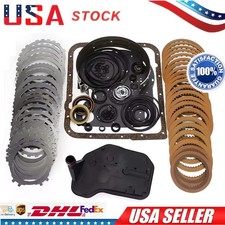
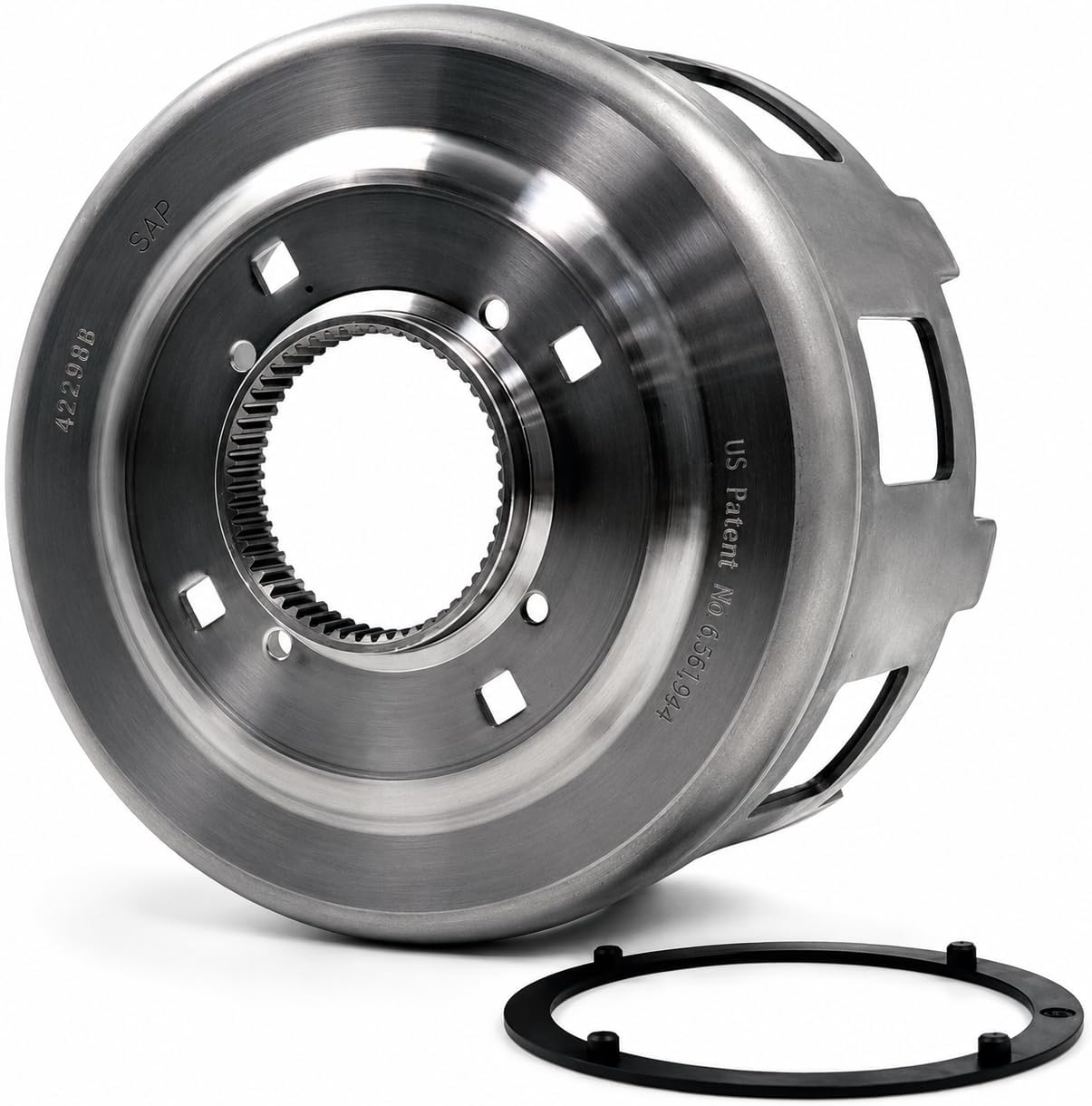
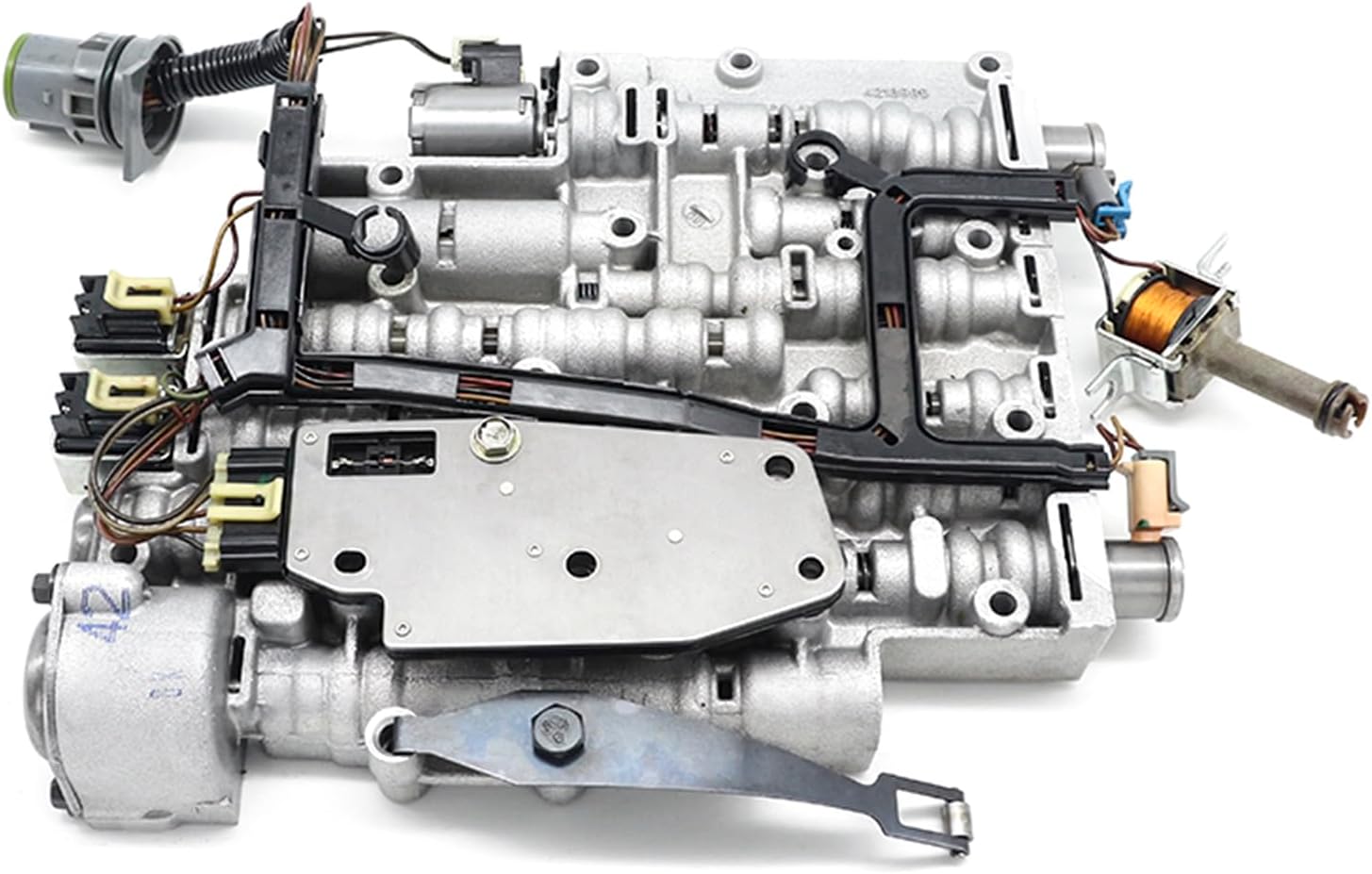
Step 1: Know Which Gear Slips
The 4L65E is a 4L60-E family unit, so every gear is a combination of two apply elements. Map the slip to the gear and the list of suspects gets short fast:
| Gear | What is applied | If only this gear slips, look at |
|---|---|---|
| 1st | Forward clutch, forward sprag, low roller clutch | Forward clutch, sprag, input housing feed |
| 2nd | Forward clutch, 2-4 band | Band, servo, sun shell |
| 3rd | Forward clutch, 3-4 clutch | 3-4 clutch, 3rd-gear oil leaks |
| 4th | 3-4 clutch, 2-4 band | 3-4 clutch or band, then TCC |
| Reverse | Reverse input clutch, low/reverse clutch | Reverse input drum, low/reverse pack, sun shell |
Two patterns save the most time. Slip in both 3rd and 4th but a solid 2nd is the 3-4 clutch, because it is the one element those two gears share. Slip or no drive in 2nd, 4th and Reverse while 1st and 3rd still pull is not a clutch at all. It is the reaction sun shell, and we will get to it in Step 4.
On the scan tool, compare commanded gear to the actual ratio between input (turbine) speed and output speed. Gear slip shows as a ratio that never settles. Converter slip shows as engine speed running away from turbine speed with the gear ratio itself correct. That one distinction decides whether you are pulling the transmission or chasing the lockup circuit.
Step 2: Slip at Cruise With Lockup On (P0894 and P1870)
What the driver feels: at 45 to 70 mph the tach drifts up 100 to 300 rpm with no change in speed, then drops back. It is worse warm and worse towing. The truck shifts through all four gears normally.
What is happening: the converter clutch is not holding. GM's 4L60-E family moved to PWM lockup control in the mid-1990s, and later EC3 units refine it. Sonnax lays out how it works: on PWM units the duty cycle rises from 0% (unlocked) to about 90% at full lockup. On EC3 units the computer steps the duty cycle up to about 50%, where it holds a controlled slip of roughly 20 to 40 rpm, and it goes to 98% for full lock at freeway speed or high torque.
The weak spot is the TCC regulator valve. Sonnax explains that the valve oscillates constantly, wears its bore, and lets apply pressure leak to exhaust. The computer sees more slip than it asked for and sets P1870 and/or P0894 for excess slip.
The scan tool tell: watch TCC duty cycle and TCC slip speed at steady cruise. As the regulator bore wears, the duty cycle needed to keep slip in the target window climbs. Sonnax gives the example of an average duty cycle of 79% on a low-mileage vehicle as a sign the computer is compensating for wear. If your Tahoe is already living near the top of the range and still slipping, the valve body is the target, not the converter.
The fix: recondition the bore and install a regulator and isolator valve kit. Sonnax lists 77754-04K for all years, including 1998-later EC3 units, and 77754-03K for 1997-earlier non-EC3 units only, so a Tahoe 4L65E gets the 04K. Do not block the regulator valve open. Sonnax notes OE apply pressure runs about 60 to 80 psi, and a blocked regulator puts up to 140 psi of line pressure into the apply circuit under load, which it ties to cracked pistons, broken dampers and delaminated linings. A converter with a burnt clutch still needs replacing, but replacing it without fixing the bore just burns the new one.
One warning: P0894 means the computer saw component slip, and a dying 3-4 pack can set it too. If the slip happens in 3rd as well as in 4th lockup, go to Step 3 first. The lockup side is covered in more detail in our 4L65E P0894 guide.
4L65E TCC Regulator Valve and Isolator Sleeve Kit (2001-2013, 77754-04K)
The bore-wear fix for P1870 and P0894 lockup slip on EC3-era 4L65E units. Ream the bore to the kit's spec; the valve alone will not seal a worn bore.
Shop the TCC regulator kit →Different failure? Browse the full 4L65E parts collection.
Step 3: Slip in 3rd and 4th (the 3-4 Clutch)
What the driver feels: the 2-3 shift flares, then 3rd and 4th slip under load, and eventually the Tahoe only pulls in 1st and 2nd. On a tow rig it often lets go on one long grade. The pan has friction material in it and the fluid smells burnt.
Burnt 3-4 clutches are the best-documented failure in this family, and Sonnax's Brian Wing puts the root cause plainly: low line pressure and/or leaks of 3rd-gear oil cause most 3-4 slipping. The clutches are the victim. Put a new pack in without finding the leak and the Tahoe comes back.
Check line pressure before you pull it
Put a gauge on the line pressure tap and watch the pressure control (PC) solenoid on the scan tool at the same time. In GEARS magazine, Rob Faucett describes how GM controls it: the solenoid runs around 0.9 to 1.1 amps at idle and falls toward 0.2 to 0 amps at wide-open throttle just before the 1-2 shift. As engine load goes up, amperage goes down and line pressure should go up. Confirm the command with an amp clamp on the solenoid wire, then confirm the pressure actually follows it on the gauge. If the command is right and the gauge does not rise, the problem is hydraulic: the pump, the pressure regulator, the boost valve or a leak.
Sonnax also lists engine-side causes that look like transmission slip: TP, MAP or MAF faults and voltage drops that make the computer command too little pressure. Clear every engine code before you condemn the transmission.
The leak checks at teardown (per Sonnax)
- Input housing checkball: vacuum test it. Sonnax calls for at least 25 in-Hg.
- Loaded input drum: air check the 3-4 and forward clutch apply circuits, and the input housing bore-to-shaft seal area for bubbles.
- 3rd accumulator checkball capsule: a leak here drops 3-4 apply pressure. Vacuum or wet air test it along with the 3-4 passages in the pump, the valve body bores and the servos.
- Pump: look for cracked passages, a binding slide, and worn stator support bushings.
- Boost valve and sleeve: a worn boost sleeve bore leaks line pressure under load.
- AFL screens: clogged screens cause low line pressure.
- 3-4 backing plate: Sonnax notes the OE plate flexes and heats the pack unevenly. Its heavy-duty plate kit (74140-01K) requires a 3-4 apply ring stamped "7".
The full teardown sequence is in our 4L65E 3-4 clutch failure guide.
Step 4: No 2nd, No 4th, No Reverse (the Sun Shell)
What the driver feels: often a bang, then the Tahoe starts in 1st, goes straight to 3rd, and will not back up. Some describe it as "slips in 2nd," but the gear is simply gone.
What GM says: bulletin 00-07-30-022 covers 1996-1999 C/K trucks and other models with the 4L60-E (RPO M30), and describes exactly this: no Reverse, no 2nd or no 4th, with the other gears normal. GM's cause is that the reaction sun gear may not hold inside the reaction sun shell. The correction is a revised shell with an increased radius from the splines to the shell.
The pattern makes sense once you look at the gear chart. The 2-4 band holds the sun shell for 2nd and 4th, and the reverse input clutch drives it for Reverse. When the shell's splines strip or its hub cracks, every gear that depends on it is gone, while 1st and 3rd still work. Sonnax lists the same three ways the shell lets go on 4L60-E-family units, spline stripping, hub breakage and planetary bearing failure, and its 77749-02K heavy-duty shell kit is listed for the 4L65-E. The 4L65E uses the same reaction shell design, so it fails the same way.
The fix: it is an internal repair, so the transmission comes out. Use a hardened or heavy-duty shell rather than another stamped one. Sonnax markets its SmartShell (77749-02K, listed for 4L60, 4L60-E, 4L65-E and 4L70-E) as stopping spline stripping and hub breakage. Inspect the reaction sun gear, the thrust washers and the band while it is apart, and check the pan for debris before deciding how far the rebuild goes.
Step 5: Slips Right After a Repair (PIP5072)
If the Tahoe slips in forward ranges, or will not move forward at all, right after a 3-4 clutch job with a new input housing, check the housing before anything else. GM Preliminary Information PIP5072 covers 1999-2006 Tahoe, Suburban, Yukon and Silverado with the 4L60-E, 4L65-E or 4L70-E (RPO M30, M32 or M70) that received service input housing 17803687. GM says some of those housings have an incorrectly drilled input shaft that connects the forward clutch and 3-4 clutch feed circuits.
The check: with the housing assembled with seals and clutches, apply regulated air to the forward clutch feed hole, then to the 3-4 feed hole. Air should not come out of the other hole. If it does, GM says to replace the housing with 19125752. GM also notes a small air leak between the shaft and housing is normal on an assembled unit, since the press fit is designed to hold fluid, not air.
Fluid, Specs and Keeping a Tahoe From Doing It Again
GM's Chevrolet Performance Supermatic sheet for the 4L65E lists DEXRON-VI, a dry fill of 11.2 quarts (10.6 L) with the 300 mm converter, 18 ft-lb (24 N-m) on the pan bolts and 28 ft-lb (38 N-m) on the cooler pipe nuts. It rates the unit at 430 lb-ft. Low fluid aerates the oil and drops line pressure, which is the same thing that burns 3-4 clutches, so set the level hot and in steps.
- Add an auxiliary cooler on any Tahoe that tows. The Supermatic sheet says to plumb it after the fluid leaves the radiator and before it returns to the transmission.
- Flush and flow check the cooler after a burnt-clutch failure. Friction material in the cooler will starve a fresh rebuild.
- Use Tow/Haul when loaded. Fewer hunting shifts means less heat in the 3-4 pack and the converter clutch.
- Watch TCC duty cycle on high-mileage trucks. A climbing duty cycle warns of regulator bore wear before the code sets.
Keep the numbers at the bench. Our free transmission fluid spec chart lists the correct ATF for the 4L65E and dozens of other units, so nobody tops off a Tahoe with the wrong fluid.
FAQ
Why does my Tahoe's rpm jump at highway speed without shifting?
That is usually the torque converter clutch slipping, not a gear. Sonnax traces most 4L60-E family lockup slip to a worn TCC regulator valve bore that leaks apply pressure, which sets P1870 or P0894. Check TCC duty cycle and slip speed on the scan tool before replacing the converter.
My Tahoe has 1st and 3rd but no 2nd, 4th or Reverse. What broke?
The reaction sun shell. GM bulletin 00-07-30-022 describes no Reverse, no 2nd or no 4th with the other gears normal, caused by the reaction sun gear not holding in the shell. It is an internal repair, and a hardened or heavy-duty shell is the right replacement.
Can a fluid change fix a slipping 4L65E in a Tahoe?
Only if the fluid was low. Low fluid aerates and drops line pressure, so correcting the level with DEXRON-VI can stop a slip that started recently. Once the 3-4 clutches or converter clutch are burnt, new fluid will not bring them back.
Why did my Tahoe start slipping right after a rebuild?
If a service input housing was installed, check GM PIP5072. GM found some 17803687 service housings had a mis-drilled shaft that connects the forward and 3-4 clutch feed circuits, and the fix is replacement housing 19125752. Low line pressure or a leaking checkball that was not tested at teardown are the other common causes.
What is the most common reason a Tahoe 4L65E slips in 3rd and 4th?
Burnt 3-4 clutches. Sonnax says low line pressure and leaks of 3rd-gear oil cause most 3-4 slipping, so check line pressure, the input housing checkball and the 3rd accumulator checkball before installing a new pack.
Sources
- Sonnax, "20 Years Later: What's New with 4L60-E PWM Modifications" (December 2014). Backs: PWM 0-90% and EC3 50% / 20-40 rpm slip targets, 98% full lock, regulator bore wear setting P1870/P0894, the 79% duty cycle example, 77754-04K vs 77754-03K fitment, and the 60-80 psi OE vs 140 psi blocked-regulator apply pressure. sonnax.com/tech_resources/214
- Sonnax, Brian Wing, "All Over the Map: Attacking 4L60/E Burnt 3-4 Clutches with Confidence" (June 2018). Backs: low line pressure and 3rd-gear oil leaks as the root cause of most 3-4 slipping, the 25 in-Hg input housing checkball test, air and vacuum checks, AFL screens, boost valve, stator bushings, engine-side causes, and the 74140-01K backing plate "7" apply ring note. sonnax.com/tech_resources/659
- GEARS magazine (ATRA), Rob Faucett, "Controlling Pressure General Motors" (August 2023). Backs: PC solenoid about 0.9-1.1 A at idle and 0.2-0 A at WOT, amperage falling as load and line pressure rise, and verifying with an amp clamp and line pressure gauge. gearsmagazine.com: Controlling Pressure General Motors
- Sonnax — "Solve Multiple 4L60-E Problems in All Performance Applications with the Sonnax SmartShell." Backs: the three reaction (sun) shell failure modes (spline stripping, hub breakage, planetary bearing failure) and the 77749-02K heavy-duty reaction shell kit for 4L60, 4L60-E, 4L65-E and 4L70-E. GM Service Bulletin 00-07-30-022 (1996-1999 C/K 4L60-E, no Reverse/Second/Fourth, reaction sun gear not holding in the shell, revised shell with a larger spline radius) is cited by number in the text; it is OEM print documentation with no OEM-hosted public copy. sonnax.com/tech_resources/537
- General Motors Preliminary Information PIP5072, "Slip In Forward Ranges Immediately After Replacing The Input Housing" (via NHTSA). Backs: 1999-2006 Tahoe coverage with RPO M30/M32/M70, mis-drilled service housing 17803687, the feed hole air check, the normal shaft-to-housing air leak, and replacement housing 19125752. GM PIP5072 (NHTSA PDF)
- General Motors / Chevrolet Performance, Supermatic Transmission Specifications (covers 4L65-E 19260380). Backs: 430 lb-ft rating, DEXRON-VI, 11.2 qt dry fill with 300 mm converter, pan and cooler pipe torque, and auxiliary cooler placement. Chevrolet Performance Supermatic spec sheet (PDF)