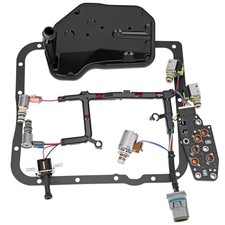
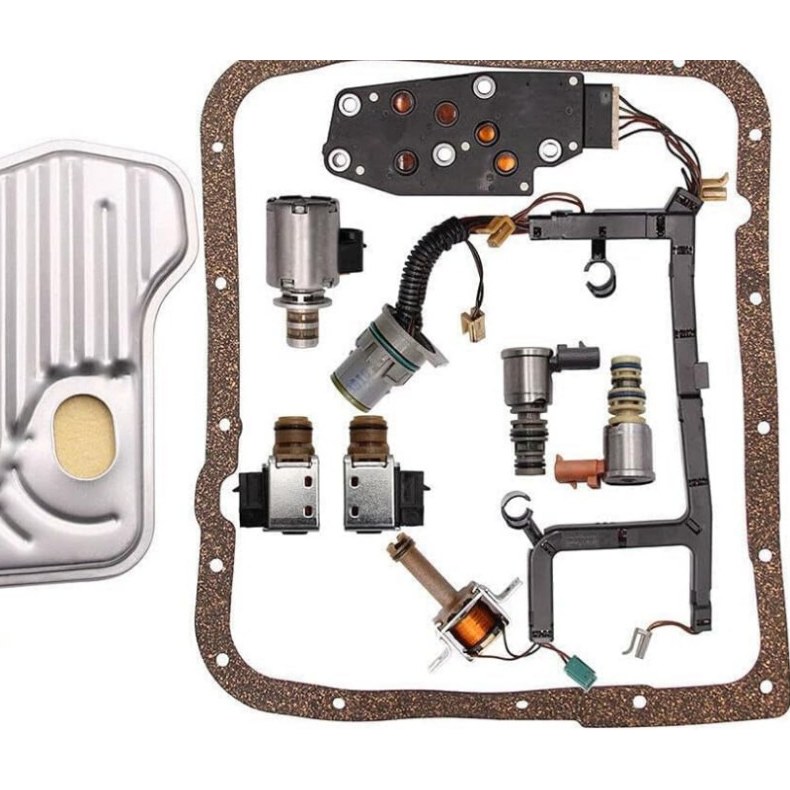
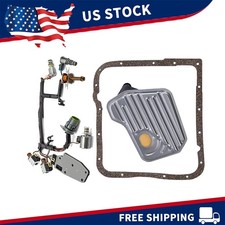
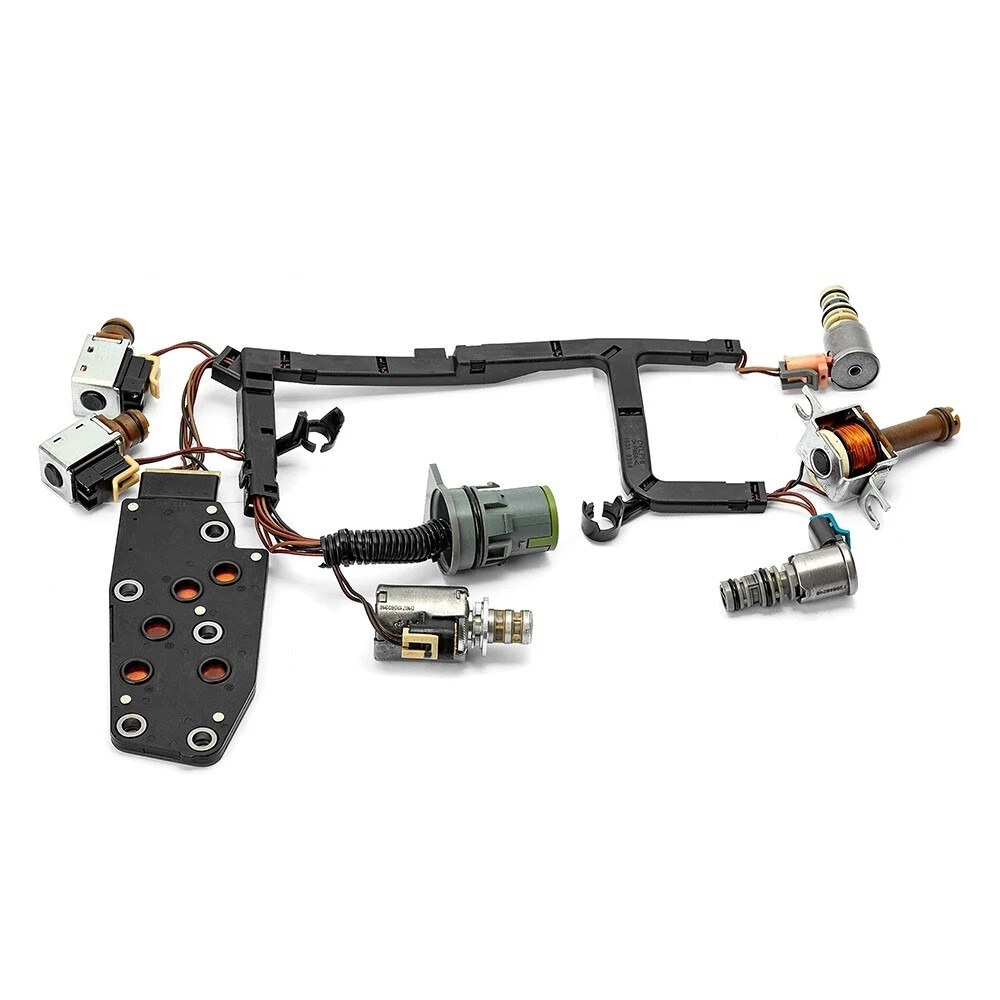
When a 5.3L or 6.0L Silverado, Sierra, Tahoe, Yukon, Suburban or Avalanche with the 4L65E starts to shake at 45 mph, holds high RPM on the interstate, or sets a converter clutch code, the TCC solenoid circuit is the first place to look. This is a new 4L65E TCC solenoid package, and the photo shows more than a single solenoid: an internal wiring harness with solenoids attached, a pressure switch manifold, a filter and a pan gasket. It is built for a buyer who wants to fix lockup and refresh the electrical side of the valve body in one pan-off job.
What the TCC solenoid does in a 4L65E
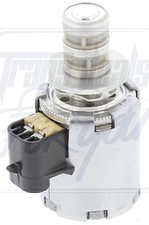
The 4L65E is the heavy-duty version of GM's 4L60E four-speed, and its torque converter clutch is controlled in two stages. An on/off TCC solenoid on the internal harness opens the lockup circuit, and a pulse-width-modulated solenoid on the valve body feathers the converter clutch on so engagement is smooth. Sonnax lists that PWM solenoid as gray plastic at 10-15 ohms on the 2000-2002 and 2003-2008 valve bodies, the two castings used behind 4L65E trucks. Once the clutch locks, engine and input shaft turn together, cruise RPM drops and the converter stops making heat. A solenoid that sticks, leaks or loses its ground lets the converter slip, and slip turns straight into fluid temperature.
Symptoms of a failing TCC solenoid
- Shudder or a rumble-strip feel at light throttle between 40 and 60 mph
- Converter never locks, so the tachometer stays a few hundred RPM high at cruise
- P0741 (TCC stuck off), P0742 (stuck on) or a TCC slip code
- Engine lugs or stalls at a stop because the converter stays applied
- Dark, hot-smelling fluid and falling fuel economy on a tow vehicle
How to confirm it before you buy
Put a scan tool on the truck and compare commanded TCC with actual converter slip on a steady highway run. If the computer commands lockup and slip stays high, test the circuit before condemning anything: GEARS Magazine recommends checking system voltage, solenoid resistance and then current draw, which finds broken wires and bad grounds quickly. If the electrical side is good, the hydraulic side is next. Sonnax identifies TCC regulator valve bore wear as a primary cause of slip codes and overheated converters in the 4L60E family, and that wear also drains line pressure and can burn the 3-4 clutch. Our 4L65E common problems guide covers that connection, and the solenoid symptoms guide has the full resistance test procedure.
Fitment
This listing does not name a year range, so treat fitment as something to confirm. The 4L65E (RPO M32 on the glovebox sticker) went into 2001-2007 GM full-size trucks and SUVs with the 5.3L and 6.0L. Early units used the 2000-2002 valve body casting and later ones the 2003-2008 casting with the late-style pressure control solenoid, and harness connectors changed with them. Lay the old harness next to the photo and match the connector shapes, or send us your year and VIN. If you already know your truck is a 2003-2007, our dedicated 2003-2007 TCC solenoid kit is listed for that range. Everything else for this unit is in the 4L65E parts collection.
Install notes
- Drain and drop the pan, unplug the case connector, and remove the harness and solenoids without bending the retaining clips.
- Lubricate each new O-ring with clean fluid and seat every solenoid fully before installing its retainer.
- Install the new filter with its neck seal fully seated in the case, then the pan with the new gasket.
- Refill with Dexron VI, check the level hot, clear codes and drive through several lockup cycles to confirm.
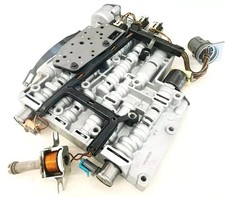
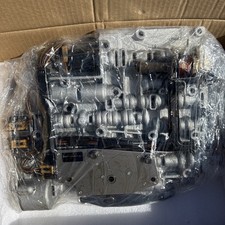
If testing pointed to worn bores rather than a bad solenoid, a replacement 4L65E valve body is the cleaner fix, and the 2003-2008 solenoid kit covers the shift solenoids if those codes show up as well.