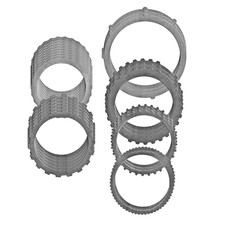
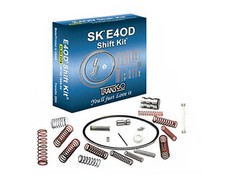
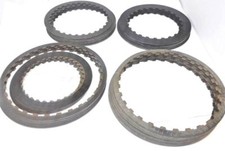
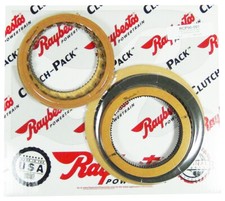
Searching for a 4R100 clutch module for a 1989 truck usually means one of two things: you are rebuilding the original heavy-duty Ford automatic in an early F-250, F-350 or Econoline, or you are working on a later 4R100 and the part is catalogued back to the start of the family. Either way, this listing is a new friction module. The photo shows stacked lined friction plates in several diameters, ready to reline the packs so a truck that slips on a grade or flares on the 2-3 shift holds again.
A note on the 1989 date
Ford did not use the 4R100 name until 1998. Transmission Digest notes the E4OD launched in 1989 and was replaced by the 4R100 in 1998, so any 1989 truck has an E4OD. The two share the same gear train and clutch layout, which is why this module is catalogued under both names. The date tells you where the fitment range begins, not that a 4R100 existed in 1989.
What the clutch module does in this transmission
ATSG's 4R100 manual describes the unit as three simple planetary gearsets controlled by an intermediate band and six multi-disc clutches: coast, overdrive, intermediate, direct, forward and low/reverse. Each pack is a stack of friction plates splined to one member and steel plates splined to another. Line pressure pushes a piston into the stack, the plates lock together, and that planetary member is held or driven. The friction lining is what wears. Heat glazes it, and a glazed pack needs more pressure and more time to lock than the solenoid pack is commanding, which is the flare and slip you feel.
Symptoms that point to worn frictions
- Engine speed rising in overdrive on a hill without the truck picking up speed
- A long, soft 1-2 or 2-3 shift that gets worse as the fluid heats up
- No engine braking when you lift off the throttle in a manual range, a coast clutch sign
- Slow engagement into Reverse after a hard pull
- Dark fluid with a burnt smell and lining material on the pan magnet
Rule out the electrical faults first
The E4OD and 4R100 are known for problems that feel mechanical but are not. A broken connector lock tab, corroded pins, a failing solenoid pack or a weak EPC circuit can all produce soft shifts with good clutches. Our E4OD common problems guide walks through those checks, and the shift solenoid symptoms guide shows how to test the pack. When line pressure is correct and the slip shows up in one range only, the frictions for that range are the problem.
Fitment
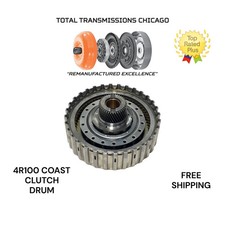
This module is listed for the family starting in 1989. Count and measure the frictions in each of your old packs against the new plates before assembly, because Ford changed parts over the run. Transmission Digest reports the E4OD kept a cast iron coast clutch drum throughout production, while the 1998 4R100 moved to stamped steel drums with wider-tooth coast steels, and the PTO drum holds three coast frictions instead of two. Our 4R100 vs E4OD guide explains how to tell the units apart. If you are not sure which you have, send us your year and VIN. A version dated 1989-1996 is on the E4OD clutch module 1989-1996 page, and the full range is on our E4OD and 4R100 collection.
Install notes
- Soak every friction in clean MERCON-type fluid for at least 30 minutes before stacking. MERCON V is the current service fluid for this family.
- Replace glazed or blued steels, alternate frictions and steels exactly as they came out, and set each pack clearance with a feeler gauge or dial indicator.
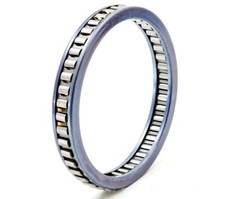
- Fit new piston seals while the drum is apart, and inspect the one-way clutches; the 4R100 sprag clutch from 1989 is listed if yours is worn.
- Flush the cooler and lines so debris from the old packs does not return.