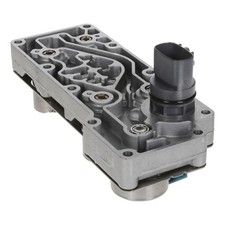
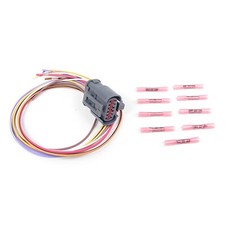
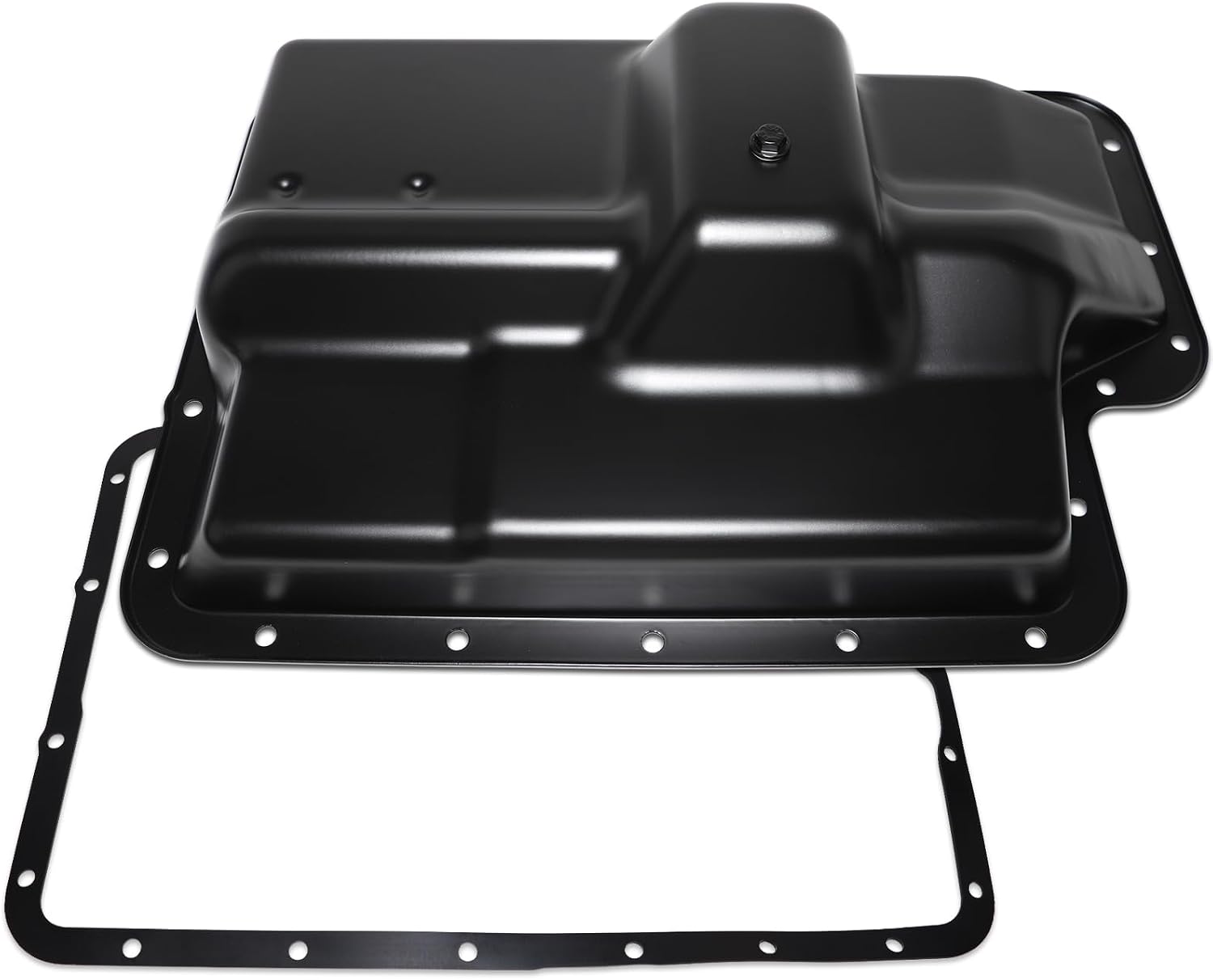
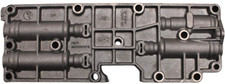
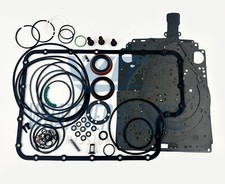
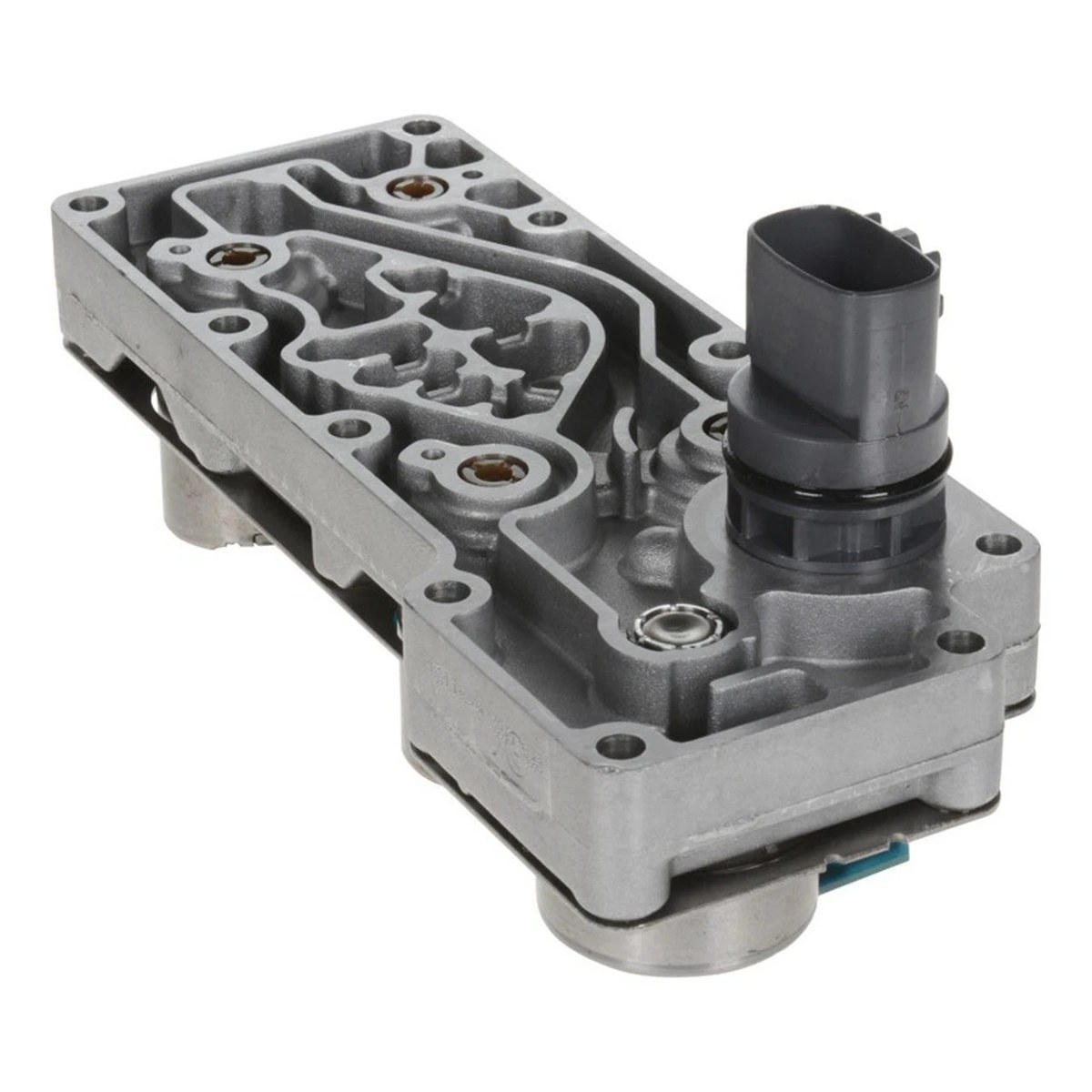
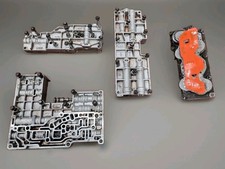
Many people shopping for a 4R100 pressure control solenoid are actually driving a 1995-1997 Ford with the late E4OD, because parts catalogs often lump the two names together. Ford did not badge the transmission 4R100 until the 1998 model year, but the late solenoid block introduced for 1995 carried straight over into the non-PWM 4R100. This remanufactured block, shown in the photo, covers that late design. It holds the electronic pressure control (EPC) solenoid along with the shift, coast clutch and converter clutch solenoids, which is why the whole block is the replacement part.
What the EPC solenoid does in a late E4OD or 4R100
These transmissions set line pressure electronically with no throttle cable or modulator. The computer sends a varying current to the EPC solenoid, which produces a signal pressure that moves the line pressure modulator valve and, through it, the main regulator in the pump. More current means less pressure, so an open circuit leaves the unit at maximum pressure while a short drops it to minimum. The computer trims that pressure every moment from throttle position, engine load, turbine and output speed, fluid temperature and gear range, which is how a 7.3L truck pulling a trailer still gets a firm, non-slipping shift.
Symptoms of a bad pressure control solenoid
- Correct shift timing but every engagement and upshift hits hard, often with the overdrive light flashing
- Slipping or soft shifts paired with a sudden loss of power or misfire as the computer cuts fuel to protect the clutches
- Faults that appear over bumps or after warm-up, often traced to the case connector pins or lock tab
- P1746, P1747 or P1760 on OBD-II trucks (1996 and later); EEC-IV service codes 624 or 625 on a 1995
- Firm shifts after a MAF or throttle sensor fault, which raise EPC pressure even when the solenoid is fine
How to confirm it before you buy
Check engine codes first, then measure the EPC coil across pins 11 and 12 of the solenoid body connector: 3.0 to 5.0 ohms is good. With the harness connected, ATRA's pinout puts the EPC solenoid on case connector terminals L and M, where the signal should change with throttle on a road test. A Transmission Digest case on a 7.3L Ford with a P1747 shows why that step matters: the solenoid pack and a pedal sensor had already been replaced, and the real fault was the EPC driver inside the computer. Our EPC solenoid testing guide lists the line pressure specs to confirm the repair.
Fitment
This block is for 1995-1997 units and, per Sonnax, the same late design also fits 4R100 transmissions that use an on/off (non-PWM) converter clutch. It will not fit a 1989-94 E4OD, and it is the wrong block for a PWM 4R100. Most 1998-and-later 4R100s behind the diesel and many gas engines run PWM lockup; you can check by measuring the converter clutch solenoid (a PWM coil reads 10-20 ohms, an on/off coil 20-30 ohms) or by the TCC valve end plug depth in the pump, explained in our 4R100 vs E4OD comparison. For a 1998-and-later truck, look at our 4R100 pressure control solenoid listing and send us your year and VIN so we can confirm which lockup style it needs. Browse the full E4OD/4R100 catalog for matching parts.
Install notes
Remove the pan and filter, unbolt the old block from the valve body and transfer nothing from it; the new block comes complete. Inspect the case connector, clean the bore, replace the O-rings, check the spacer plate screen and torque the bolts evenly to 80-100 in-lb. Fill with MERCON V, clear codes and verify idle and stall pressure with a gauge. If shifts were flaring before the failure, the bores in the valve body may be worn too; a 1996-2004 4R100 valve body or a 1996 E4OD shift kit addresses that side of the problem.