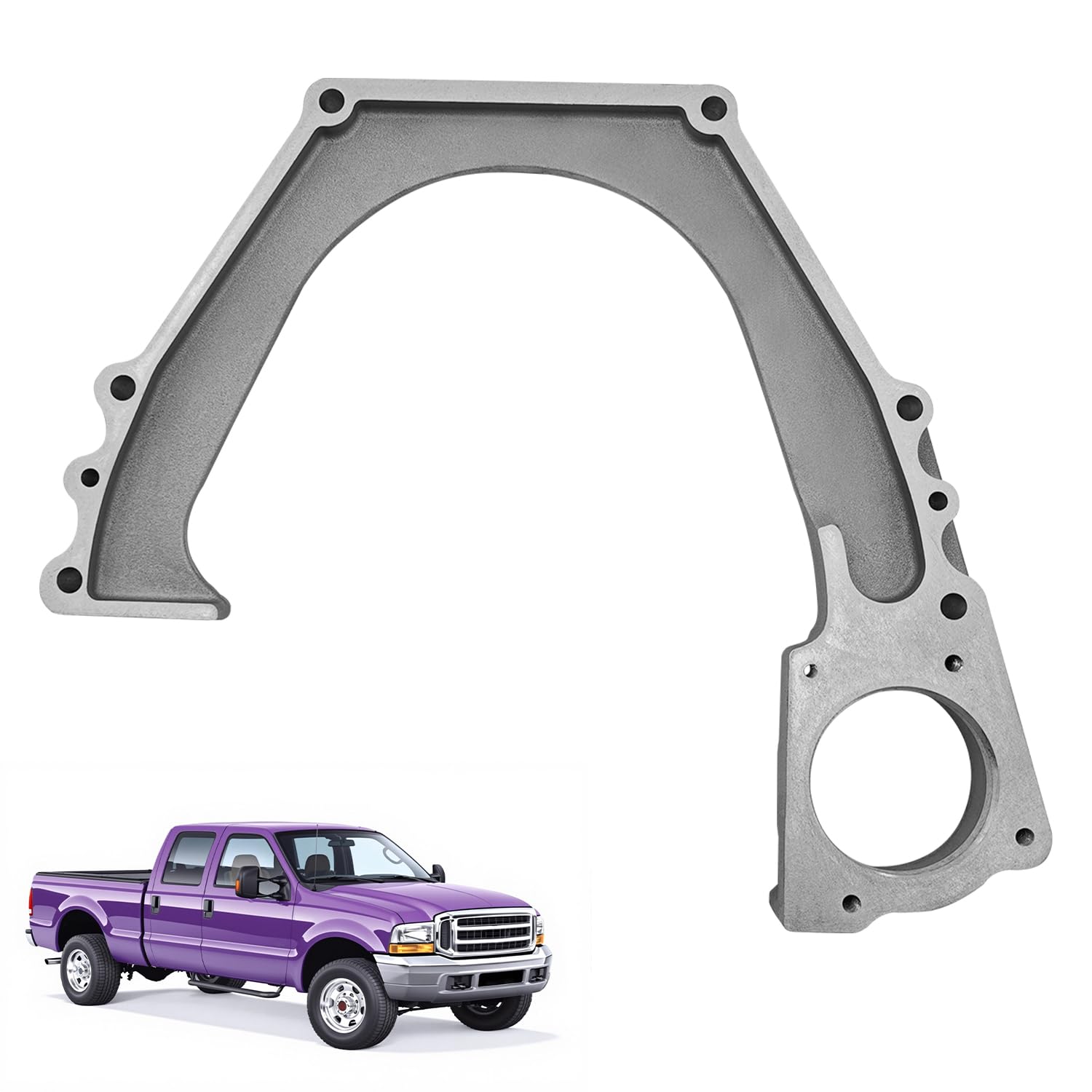
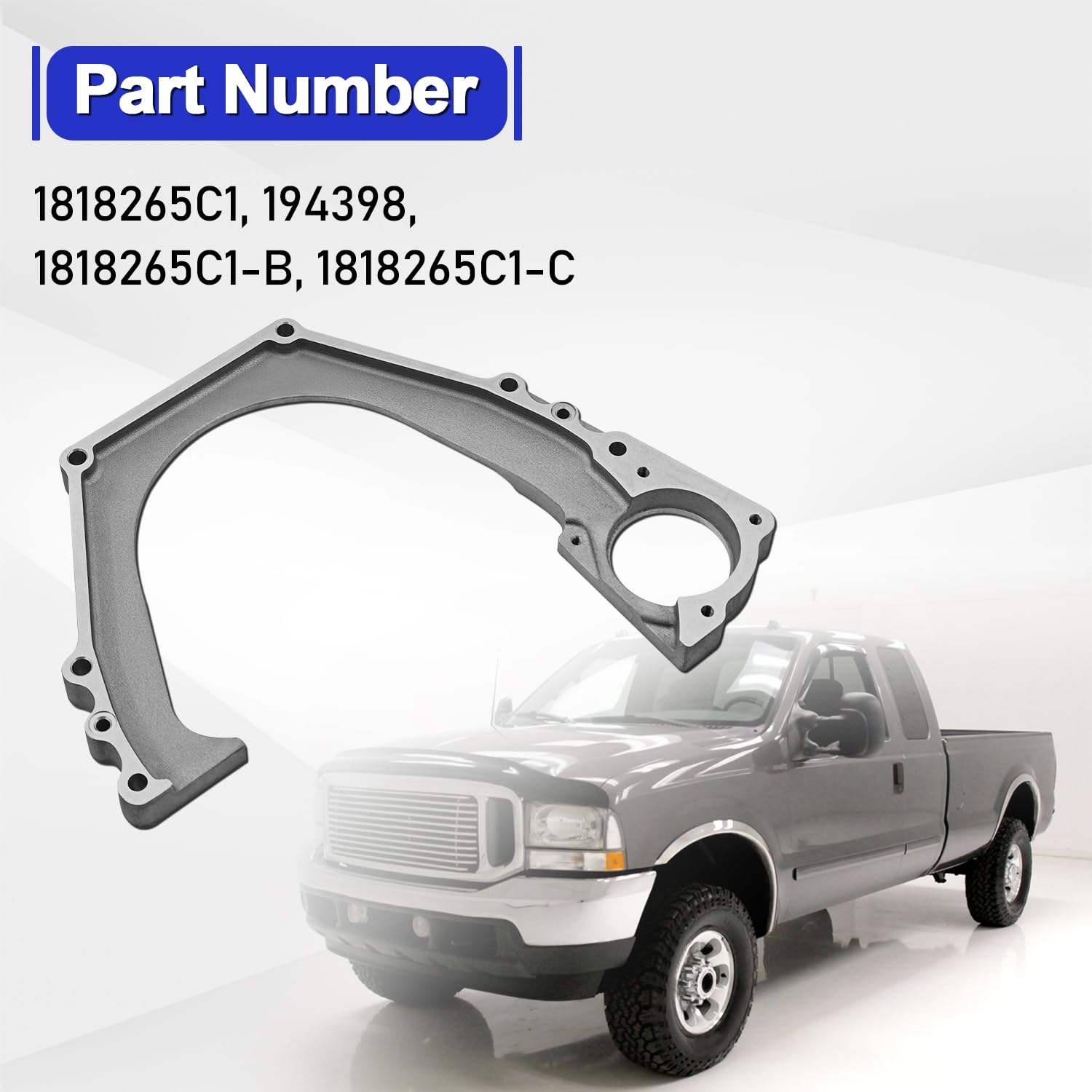
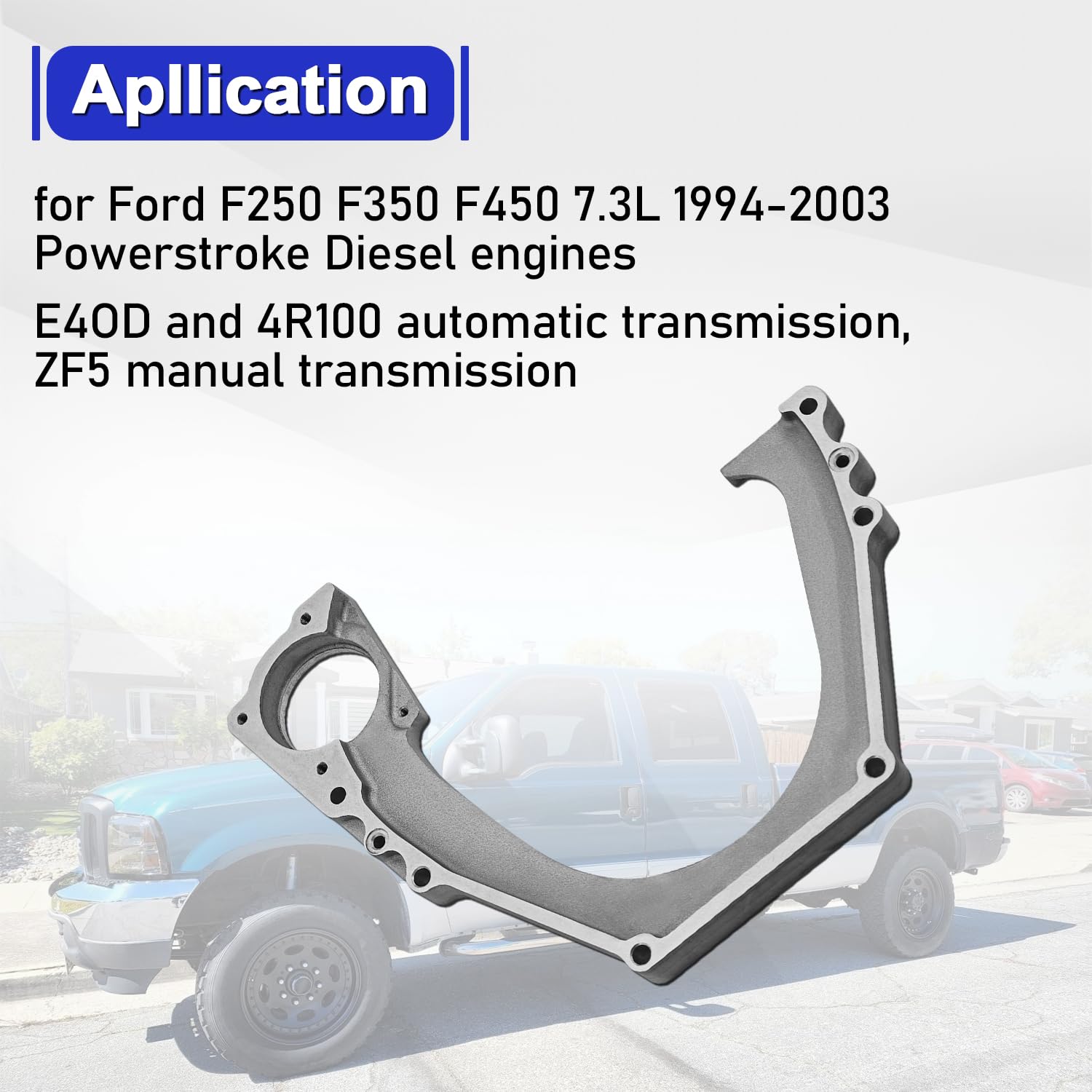
Pulled the transmission out of a 7.3L Power Stroke truck and found the spacer plate cracked at the starter boss, bent, or missing altogether? This is the plate that sits between the back of the block and the bellhousing on 1994-2003 Ford F-250, F-350 and F-450 diesels. It replaces part numbers 1818265C1, 194398, 1818265C1-B and 1818265C1-C, and it is listed for the E4OD and 4R100 automatics and the ZF5 five-speed manual. If your truck will not go back together square, or the starter has started grinding since the last transmission job, this is the piece to look at.
What the spacer plate does behind a 7.3L
On a gas engine the bellhousing usually bolts straight to the block. The Power Stroke is different: the transmission is set back from the block by a thick metal plate, and the starter bolts to that plate rather than to the bellhousing. That one casting decides three things at once. It sets how far the converter or clutch sits from the crank flange, it locates the starter pinion against the ring gear, and it closes off the lower flywheel area. Owners on the oilburners.net diesel forum who have compared them note the Power Stroke plate is noticeably thicker than the cast plate used behind the older IDI diesels, so the two are not swaps for each other. The same thread reports that the six-speed ZF6 manual used in later Super Duty trucks bolts directly to the block without a spacer, which is why this plate is listed only for the E4OD, 4R100 and ZF5.
Symptoms of a damaged or missing plate
- Starter that grinds, whirs without engaging, or engages late after a transmission or clutch job
- Visible crack running out from a starter bolt hole or a dowel hole
- Bellhousing that will not pull flush to the block when the bolts are snugged
- Dust cover or inspection plate holes that no longer line up
- Clunk or vibration at the bellhousing that started after the transmission was reinstalled
- A used transmission swap that arrived without the plate, leaving nothing for the starter to bolt to
How to confirm you need it
With the transmission still in, pull the starter and look at the plate face around its mounting holes with a light; cracks almost always start there because the starter's reaction force goes straight into those bosses. Check the dowel holes for elongation too. If the transmission is already out, set the old plate on a flat bench and look for twist. A plate that rocks on a flat surface will hold the bellhousing off the block and load the front pump and converter hub every time the engine fires. Before you blame the plate for a bad starter engagement, confirm the ring gear teeth are not chewed; a damaged ring gear needs a new flexplate as well. Our E4OD common problems guide covers the transmission-side faults worth checking while everything is apart.
Fitment
Listed for 1994-2003 Ford F-250, F-350 and F-450 trucks with the 7.3L Power Stroke diesel, behind the E4OD (through 1997-98), the 4R100 that replaced it (1998-on), or the ZF5 manual. It is one plate, not a kit. If your truck has the ZF6 six-speed, this part is not for you. Compare your old plate's casting number and bolt pattern to the photo, or send us your year and VIN and we will confirm it before it ships. The 4R100 vs E4OD comparison explains how to tell which automatic you have, and the full list of parts for both is on the E4OD/4R100 parts page.
Install notes
- Clean the rear face of the block and the plate; any scale or old gasket left behind tilts the transmission.
- Hang the plate on the two locating dowels at the back of the block before the transmission comes up.
- Raise the transmission level, engage the converter or input shaft, and start every bellhousing bolt by hand. Draw them in evenly in a cross pattern to the service manual torque; never use the bolts to pull a cocked case into place.
- Mount the starter last and confirm it sits flat against the plate before torquing.
- Reconnect the cooler lines with the right tool; the OTC 6593 cooler line disconnect set releases the Super Duty 4R100 fittings without bending the line. Our cooler line replacement guide covers leaking lines.
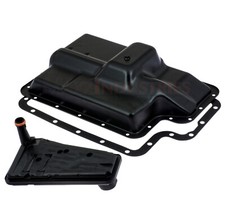
- Refill with MERCON V and check the level hot in Park. If the pan is off anyway, a deep pan, filter and gasket kit adds capacity for towing.