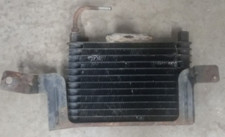
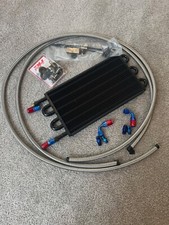
If your 1999 Ford truck or SUV with the 4R70W is running hot when it tows, or the external cooler in front of the radiator is weeping fluid, bent from a front-end hit, or packed solid with debris, this is a used factory auxiliary transmission cooler pulled for the 1999 4R70W. As pictured, it is a stacked-plate cooler core with its steel mounting brackets and two tube fittings still on it, so it is the add-on heat exchanger that sits ahead of the radiator, not the cooler tank built into the radiator itself and not the steel lines.
What the auxiliary cooler does in a 4R70W
Every 4R70W sends hot fluid out of the torque converter circuit to be cooled before it comes back into the case. On a truck set up for heavier duty, that fluid passes through the tank inside the radiator and then through an auxiliary cooler like this one before it returns. The returning fluid is not simply going back to the pan: it feeds the lube circuit for the gearset, bushings and clutch packs. A 4R70W that tows or crawls through stop-and-go traffic makes most of its heat in the converter, and the plate-and-fin core is what pulls that heat out in the airstream. Ford notes in its owner literature that 4R70W fill capacity varies with the cooler fitted, which tells you this core and its plumbing hold a real share of the fluid.
Symptoms of a failing or damaged cooler
- Wet, red-brown film on the cooler fins or brackets, or drips on the ground in front of the radiator
- Fluid level that drops between checks while the pan, case and lines stay dry
- Crushed or bent plates from road debris or a minor front-end impact
- Fins packed with mud, bugs or leaves so air cannot pass through
- Fluid that turns dark and smells burnt sooner than it should, especially after towing
- Soft or slipping shifts and late converter lockup once the fluid runs hot or low, which feeds the 4R70W's known wear points: the forward clutch, the intermediate and overdrive bands, and the converter clutch
How to confirm it before you buy
Clean the core and both fittings with brake cleaner, top off with the correct fluid, drive until warm, and look again with a light. A leak at a fitting is often just the hose or line, while a wet seam between plates means the core itself is done. Next check flow: with the engine idling in Park, open the return line into a clean container and you should get a steady stream. Weak flow with a clean auxiliary cooler points upstream to the radiator tank or the pump. If the transmission already slips after running hot or low, work through our 4R70W F-150 common problems guide first, and the Expedition shift problems guide covers the same unit in the full-size SUV, so a new cooler does not get blamed for a hydraulic fault.
Fitment
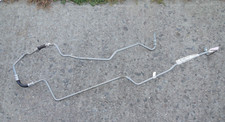
The listing is for the 1999 4R70W. Ford fitted auxiliary coolers to several 4R70W applications that year, mainly trucks and SUVs ordered with towing equipment, and the core size, bracket shape and fitting positions are not the same across every body style. Because this is a used factory part, compare the bracket bolt holes, the spacing and angle of the two fittings, and the overall core size against the cooler on your vehicle. If you are not sure, send us your year and VIN before ordering and we will check it. You can browse every other part for this unit on our 4R70W parts page, and if your truck needs lines rather than the core, see the 1998-2002 4R70W cooler line set.
Install notes
- Clamp or cap both lines before disconnecting so you do not drain the converter circuit onto the shop floor.
- Flush the radiator tank and lines before connecting a replacement core. Clutch material from a slipping unit will plug a fresh cooler within a few hundred miles.
- Use new hose and clamps on any rubber sections, and route them clear of the fan, belt and sharp bracket edges.
- Refill with MERCON V, the correct Ford fluid for this 1999 unit; do not substitute MERCON LV or Type F.
- Check the level hot, in Park, on level ground, after cycling through the gears.
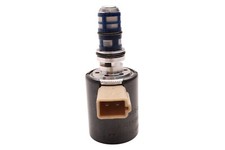
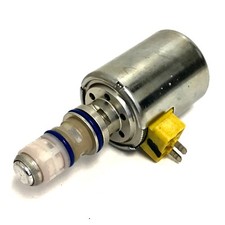
If the old fluid was burnt, change the filter at the same time with a kit such as the 4R70W filter and gasket kit, and if you also had shift complaints, a worn EPC solenoid is common on these years, so look at the 1998-2004 pressure control solenoid.