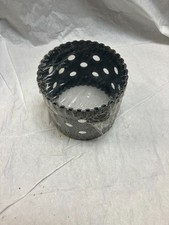
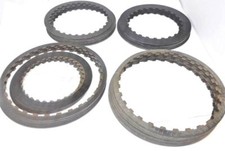
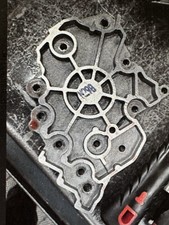
A GM front-wheel-drive car with the 440-T4 or 4T60-E that pulls fine in Drive but has no reverse, or a reverse that bangs in and then lets go, very often has a damaged reverse reaction shell inside. Rebuilders call it the coffee can or stove pipe for its shape. This is a new, hardened steel replacement for that part, interchange 84624, built for 1983-and-later 440-T4, 4T60 and 4T60-E units. It measures about 5 in. tall and 5.75 in. across.
What the reverse reaction shell does in a 4T60-E
Reverse in this family of transaxles is made by holding one member of the planetary gearset still while the engine drives another. The reverse band wraps around the outside of this shell, and the shell is splined into the gearset on its inner end. When the reverse servo applies the band, the band clamps the shell, the shell holds its planetary member, and the gearset turns the output the other way. Every bit of reverse torque passes through the shell's band surface and its splines, so a shell that cracks, stretches or strips its teeth leaves the band clamping something that no longer holds anything.
Symptoms of a failed reverse reaction shell
- No reverse at all while every forward gear still works
- Reverse engages, then slips or drops out under throttle, such as backing up a driveway
- A clunk or bang on the shift into reverse followed by loss of drive
- Steel particles on the pan magnet, or a reverse band lining that is scored or glazed
- A shell found cracked around the band surface or with damaged splines at teardown
How to confirm it before you buy
Start with what costs nothing. Check fluid level and condition hot, because low fluid can cause a weak reverse with no hard failure at all. If reverse is slow rather than absent, look at pressure and the apply circuit first; our delayed engagement guide explains how worn seals and valve body bores cause late, soft engagement on the closely related 4T65E. A reverse that is completely gone with good fluid and normal forward gears is usually mechanical, and the only way to see this shell is to remove the side cover, valve body and drive components and pull the gearset. Inspect the band surface for cracks and heat checking and the splines for rounded or missing teeth. Our 4T65E common problems guide covers the band and servo wear that often accompanies a shell failure.
Fitment
This shell is for the 440-T4 (THM 440-T4), the 4T60 and the 4T60-E, 1983 and later. Parts catalogs list this interchange through about 1997, when the 4T60-E was replaced. It does not fit the 4T65-E: that transaxle uses its own reverse reaction shell in two designs, so a 4T65E owner should not order this part. Confirm your transaxle by the identification tag on the case before buying, and compare your old shell's height and spline count to this one. If you cannot tell which unit you have, send us your year and VIN. For the later transaxle, browse our 4T65E parts collection.
Install notes
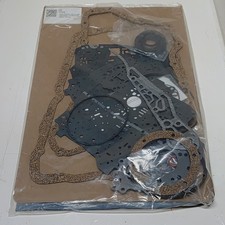
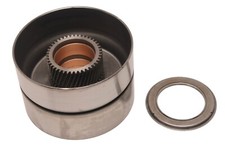
This part goes in during a transaxle overhaul, so treat it as one. Replace the reverse band unless it is like new, and inspect the reverse servo piston, seals and pin, because a weak servo that let the band slip is often what overheated the old shell. Check the mating planetary splines and the bushings and thrust washers the shell runs against; a new shell on a worn gearset will fail again. A 4T60E overhaul kit covers the seals, gaskets and frictions you will disturb, and the 4T60E planetary is here if the gearset is damaged too. Set end play to spec on reassembly. Refill with DEXRON-VI, which GM made back-serviceable into these older DEXRON applications, and check the level hot before the first long drive.