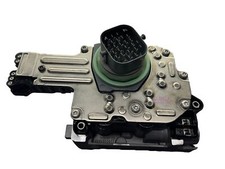
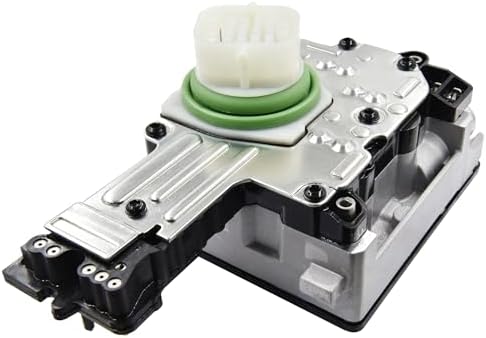
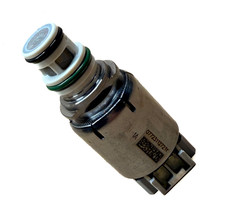
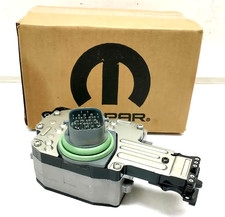
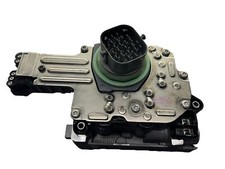
A 2010-2018 65RFE that bangs into Drive, slips on the 1-2 or 2-3 shift, or falls back to its limp-in gear with a line pressure code is a common reason people search for a 65RFE pressure control solenoid. Like every Chrysler RFE transmission, the 65RFE does not use a standalone screw-in pressure solenoid. The line pressure control solenoid lives inside the solenoid and pressure switch assembly on the valve body, so the repair part is the full pack. This listing is a remanufactured pack for the 2010-2018 design.
How line pressure is controlled in a 65RFE
Sonnax describes the RFE system as unique among common transmissions: a full-range pressure transducer feeds a real-time adaptive, closed-loop pressure control system. The controller picks a target pressure, reads the line pressure sensor, and moves the duty cycle of the pressure control solenoid until actual matches desired. The solenoid opposes the pressure regulator spring, so more duty cycle means less pressure. That is why the two failure modes feel so different. If the solenoid goes electrically open, line pressure climbs to maximum and every engagement gets harsh. If it sticks on or is internally leaking, pressure drops and clutches begin to slip and burn. Inside the same pack sit the clutch-apply solenoids and five pressure switches that confirm each clutch was fed. On the 23-pin connector the pressure control solenoid is pin 12, and Sonnax lists its resistance at about 3.5 ohms compared with 1.3 ohms for the shift solenoids.
Symptoms of a failing 65RFE pack
- Hard engagement into Drive or Reverse that does not soften once the fluid warms
- Flare or slip on upshifts, worse under load or on a grade
- Line pressure codes P0868 (low) or P0869 (high), often with the transmission held in limp mode
- Pressure switch rationality codes that show up after the truck sits or the fluid gets hot
- Intermittent solenoid circuit codes traced to the pack connector rather than the harness
How to confirm it before ordering
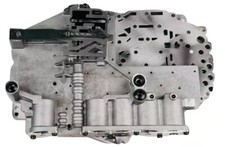
Check fluid level and condition first, then watch desired line pressure, actual line pressure and the pressure control duty cycle on a scan tool. When actual follows desired and the duty cycle sits in a normal working range, the solenoid is fine and the complaint is elsewhere. When the controller has pushed duty cycle down toward its lower limit just to hold ordinary pressure, the leak is hydraulic: pump, regulator bore or valve body. With the engine running in Reverse, all five pressure switches should read open; one that reads closed or flickers when you move the connector points at wiring. The step-by-step version of these tests is in our RFE solenoid pack testing guide, and the bore and checkball checks are in our RFE valve body testing guide; the 65RFE uses the same pack architecture.
Fitment: 2010-2018 gray connector only
This pack is listed for 2010-2018 65RFE transmissions, the gray connector era. Sonnax explains that in 2010 Chrysler eliminated one of the six solenoids and two valve body checkballs, and changed the connector from white to gray. A white pack can be used to service 2009-later units, but a gray pack cannot back-service earlier transmissions because it is built for five solenoids, not six. Before you order, pull the pan or look at the pass-through connector and confirm it is gray, check that your transmission is the 65RFE and not a 66RFE or 68RFE, or send us your year and VIN. You can also see the other 65RFE pack listing and our RFE transmission parts collection.
Install notes
- Remove the pan, filter and valve body in the service manual order, then swap the pack on the bench.
- Use the gray-era solenoid block gasket and the matching filter screen; Sonnax notes the screens for different year ranges are not interchangeable even though both will fit.
- Torque the pack bolts to 53 in-lb, as given in the Sonnax/Transend RFE valve body instructions.
- Fill with ATF+4 and set the level hot, at 160 degrees F or more.
- Clear codes and perform the quick learn with a capable scan tool.
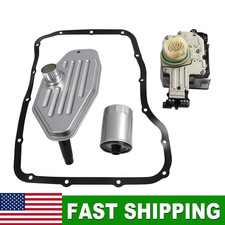
If the fluid is dark or the clutches have already slipped, a new pack only treats the symptom. A 65RFE overhaul kit covers the seals, gaskets and frictions for a proper rebuild.