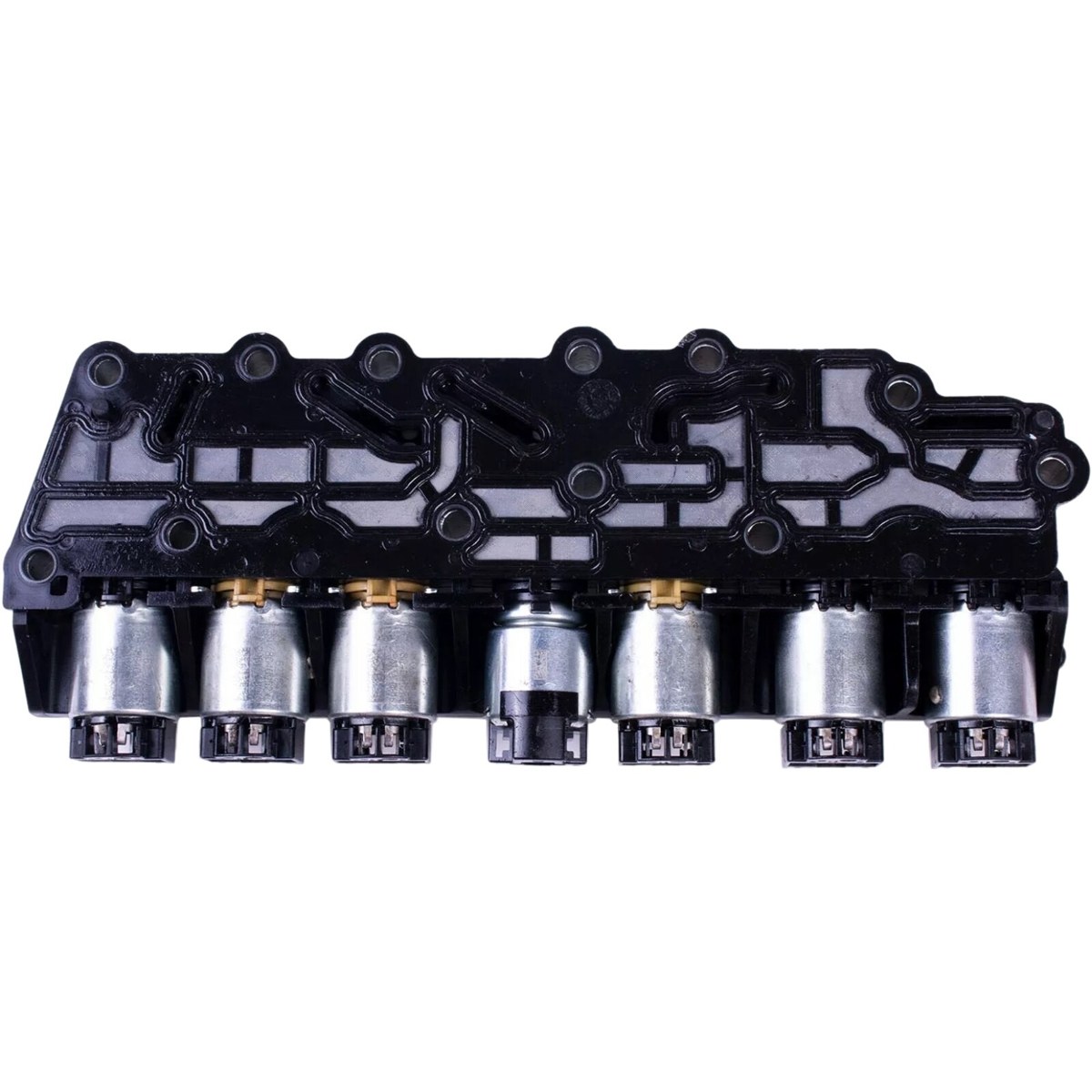
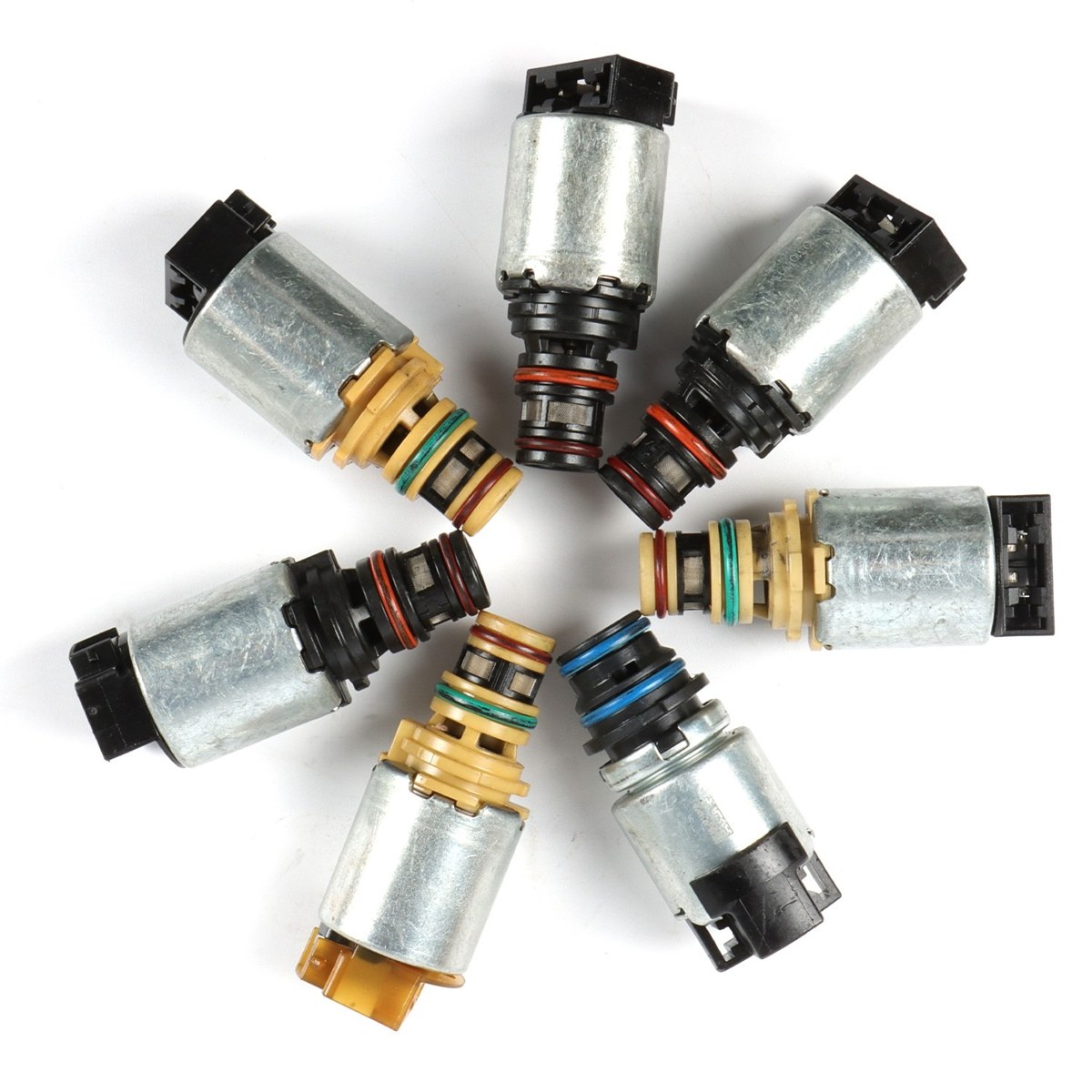
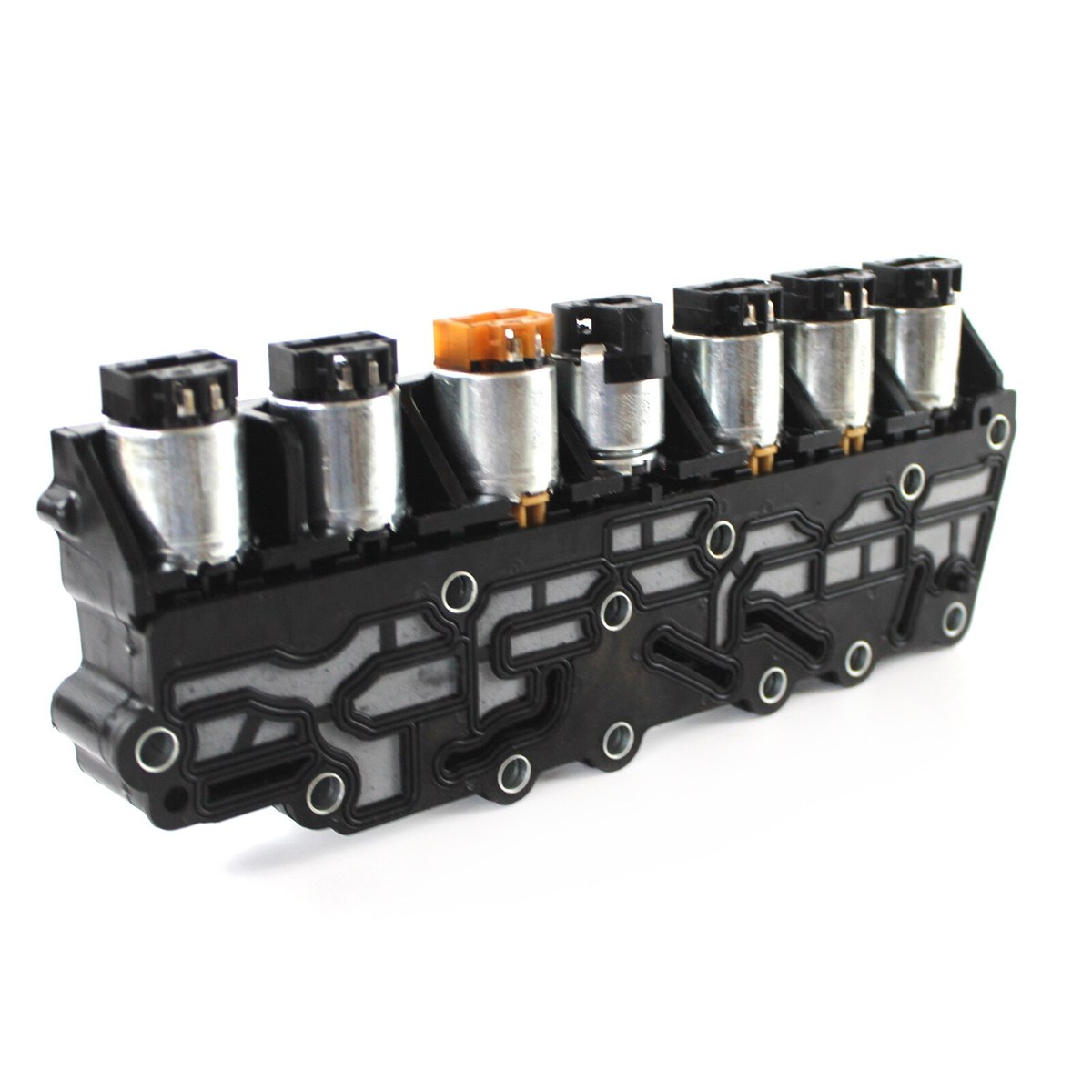
If your GM six-speed front-drive car has started to shudder at steady highway speed, the converter no longer seems to lock, or the scan tool shows a converter clutch or pressure control code, the TCC solenoid is usually the first part people look up. On the 6T30 there is no stand-alone TCC solenoid bolted to the case. It is one of seven solenoids mounted in a plastic solenoid body that sits on the transmission control module (TEHCM) inside the side cover. This listing is that complete solenoid body, with the TCC solenoid and the other six already seated, as the photo shows. You replace the whole hydraulic side of the controls in one piece instead of fishing out one solenoid at a time.
What the TCC solenoid does in a 6T30
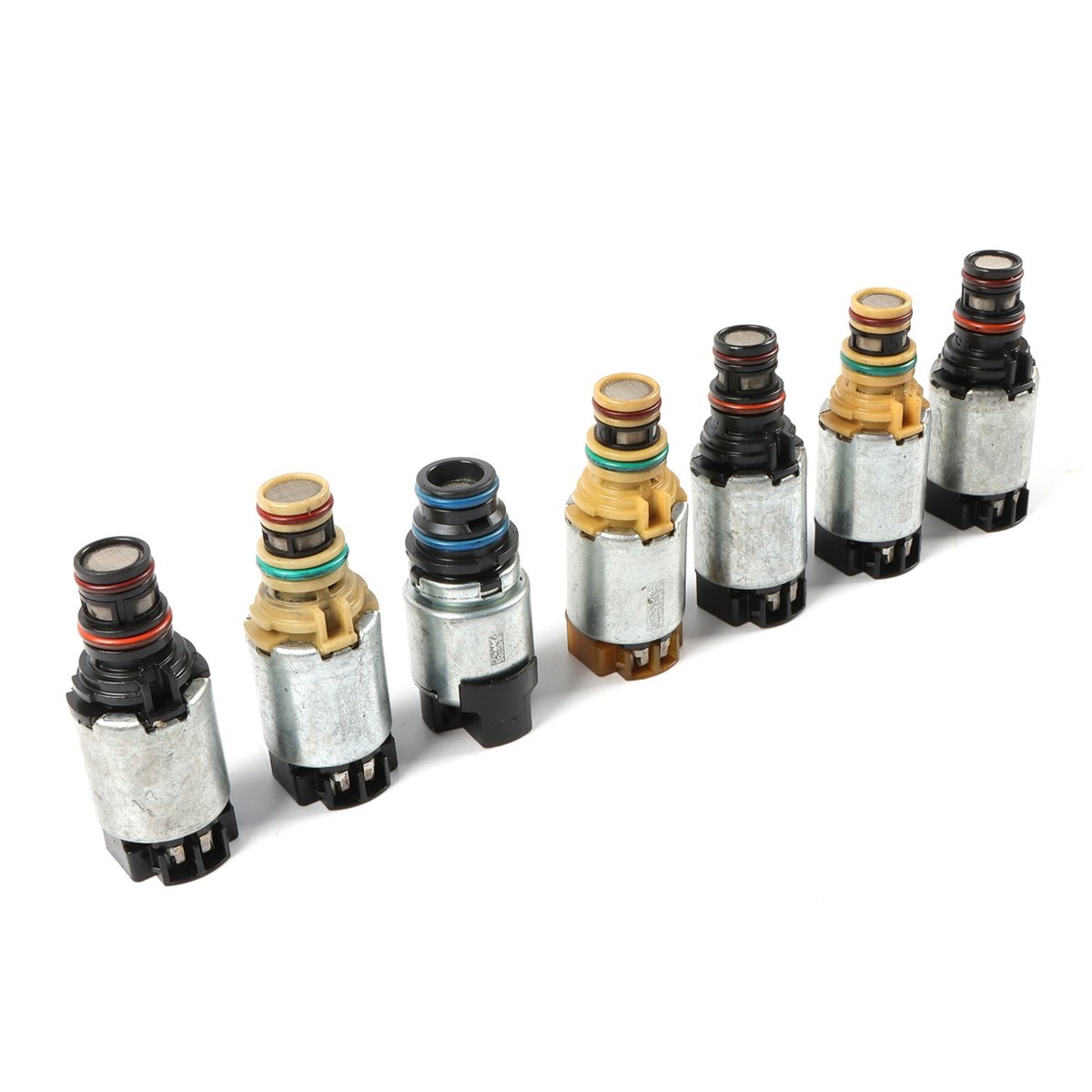
The 6T30 shares its control layout with the 6T40, 6T45 and 6T50, and GM services all four under the same product-update bulletins. In that layout the TCC pressure control solenoid is a normally low, variable bleed solenoid. With little current it passes almost no oil to the TCC control and TCC regulator valves. As the module raises current, oil flow rises in a controlled way and the converter clutch applies gradually, which is what keeps lockup smooth. The body also carries the line pressure solenoid, PCS2 through PCS5 for the clutches, and one on/off shift solenoid that feeds the clutch select valve. A body that has been run on dirty fluid rarely has just one tired solenoid, which is why replacing the full set makes sense on a high-mileage unit.
Symptoms that point here
- Shudder or a rumble-strip feel under light throttle from roughly 40 to 60 mph
- Cruise RPM higher than it used to be, with fuel economy down
- P0741, converter clutch stuck off
- Missing gears with P0776 or P0796, which GM ties in PI1131 to a pressure control solenoid that is not working
- Harsh or late shifts that come and go as the unit warms up
How to confirm before you buy
Check the fluid level and condition first. ATRA Bulletin 1725 spells out the correct method for this family: cycle through the ranges, idle, then check for a drip at the level set plug with the fluid between 85 and 95 C. Low or burnt fluid causes converter shudder on its own. Next, watch commanded TCC pressure against converter slip on a scan tool during a steady cruise. If the module commands apply and slip stays high, the circuit is not holding. Resistance is a useful bench check once the body is out: GEARS gives 3 to 5 ohms for every pressure control solenoid and 16 to 20 ohms for the shift solenoid. Our 6T40 shift solenoid symptoms guide walks through each solenoid and what failure looks like, and the valve body symptoms guide covers the bore wear that can mimic a bad solenoid.
Fitment
This body is catalogued for the 6T30, 6T40, 6T45 and 6T50, with applications that include the 2008 and later Malibu, 2009 and later Cruze, Equinox and Terrain 2.4L, Captiva, Regal, LaCrosse, Saturn Aura and Vue, and Pontiac G6. The catch is generation. GEARS states plainly that Gen 1 and Gen 2 are not interchangeable: PCS2 and PCS5 changed location and operation, and GM removed the pressure switches in the 2012 changeover described in PI0604C. Read the eighth digit of your TEHCM ID before ordering. A 1, 2 or 3 is Gen 1; a B, C or D is Gen 2. Send that digit with your year and VIN and we will confirm the match. If your car carries the heavier-duty unit, the same assembly is listed as the 6T45 TCC solenoid body, and you can browse every model we support from the shop by transmission page.
Install notes
- The body separates from the TEHCM, so you keep your original module and avoid reprogramming.
- Do not apply 12 volts to the pressure control solenoids to test them; GEARS warns it can damage them.
- Inspect the TCC regulator valve bore while the cover is off. A worn bore can keep a new solenoid from curing the shudder.
- Refill with Dexron VI only and set the level hot at the plug.
- Clear adaptives afterward and expect the shifts to settle over the first several drive cycles.
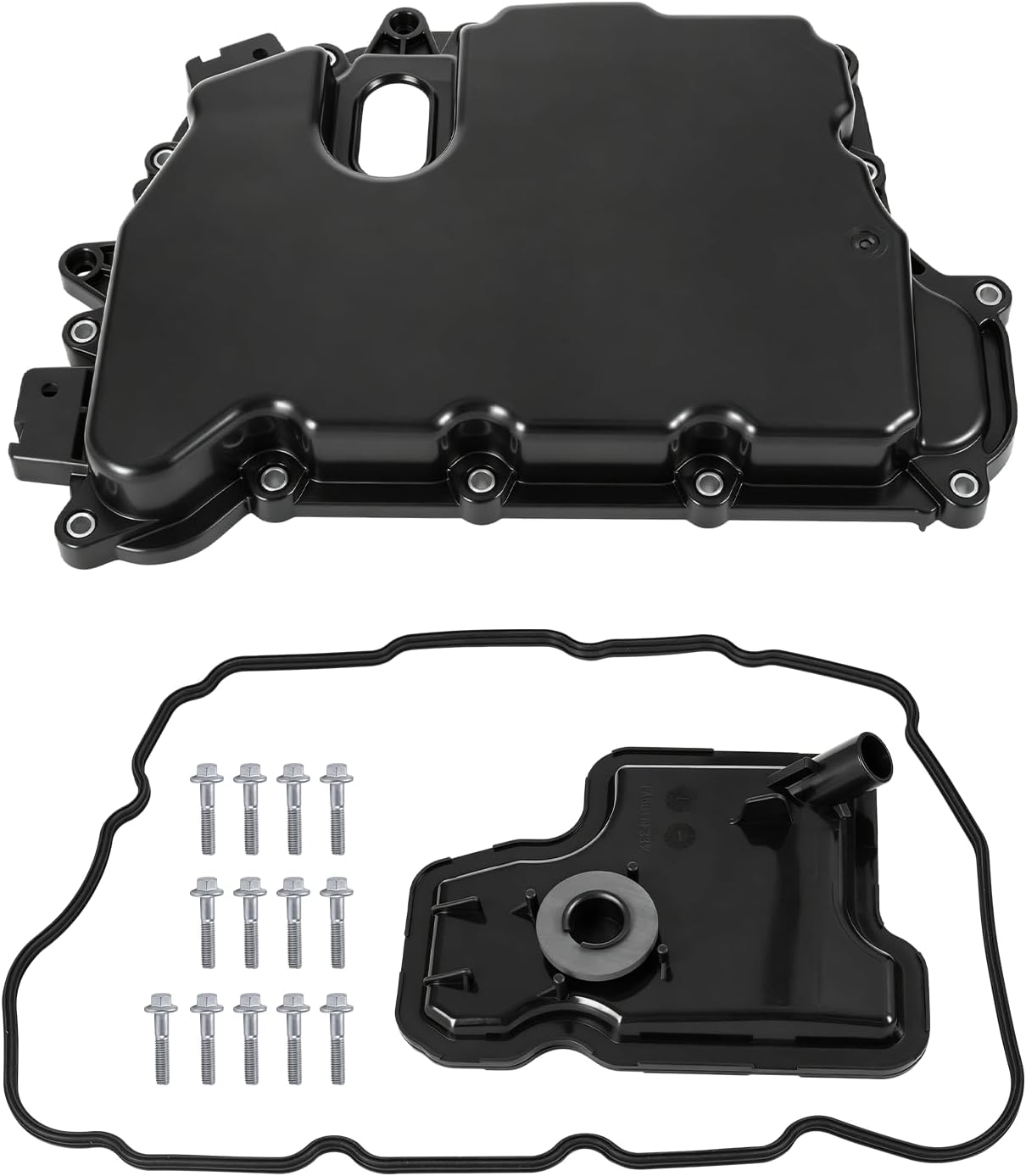
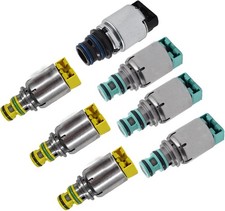
- Do the job with a fresh 6T40 pan, filter and gasket kit. If you only need loose solenoids for a known-good body, the 6T30 solenoid kit is the lower-cost route.