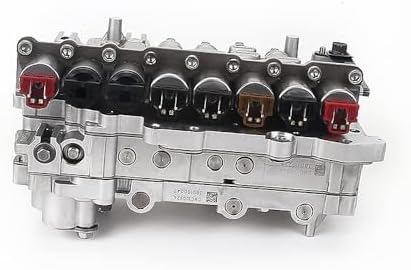
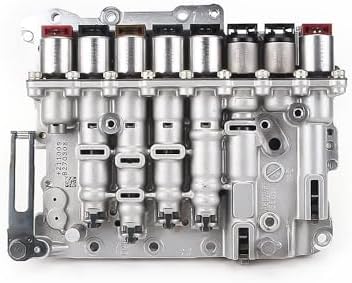
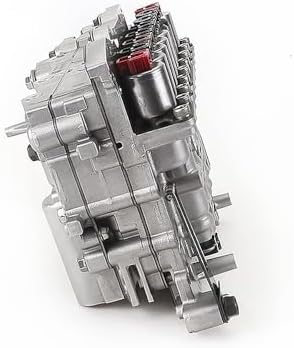
A Hyundai Sonata that slams into second, a Santa Fe that flares on the 3-4 shift and then lights the check engine lamp, a Tucson or Kia Sorento that suddenly sits in one gear and refuses to upshift - on the 6-speed A6LF and A6MF transaxles, those are the calls that most often end at the valve body. This assembly is the full hydraulic control unit with the shift and pressure control solenoids already installed, so the job is a pan-off swap rather than a teardown, and every solenoid on it starts the same age.
What the valve body does in an A6LF1 or A6MF1
Hyundai and Kia built the A6LF (behind the larger 2.4L, 2.0T and V6 engines) and the A6MF (behind the smaller fours) on a shared control layout. The transmission computer never moves a clutch directly - it pulses solenoids on this valve body, and the valve body turns those signals into apply pressure for each clutch. TransGo's documentation on this case describes eight solenoids in total: two on/off solenoids and six pulse-width-modulated (PWM) solenoids. Two reducing valves sit upstream of them. Reducing valve number one sets the feed pressure to the two on/off solenoids and the pressure switch valves; reducing valve number two feeds the six PWM solenoids. That detail matters, because when either reducing valve bore wears, every solenoid it feeds gets the wrong supply pressure, and the shifts go bad even though the solenoids test fine on the bench.
Symptoms this assembly addresses
- Harsh or banging upshifts, most often into 2nd and 3rd, and a hard bang on a 6-4 kick-down
- Flare between gears, where the engine revs up for a moment before the next gear takes hold
- Torque converter clutch shudder or slip at light, steady throttle, often with a TCC code such as P0741
- Gear ratio codes in the P0731 to P0735 range followed by the computer holding one gear (limp mode)
- Shift solenoid circuit or performance codes in the P0750 series
- Overheated fluid and high line pressure, which Sonnax links to wear at the main pressure regulator bore on this family
How to confirm it before you buy
Start with a scan tool that reads the transmission module, not just generic engine codes. A solenoid circuit code (open or short) can be a harness or connector problem, so check the wiring and measure the suspect solenoid first - our guide on testing a transmission solenoid with a multimeter walks through it. If the circuits are good but you have ratio codes, flares or harsh shifts, the wear is hydraulic and lives in the valve body. Knowing whether you have a true slip or a flare changes the answer, and our flare vs. slip guide explains how to tell them apart on a road test. A slip in every gear with burnt, dark fluid usually means worn clutches, which a valve body alone will not cure.
Fitment
The listing names the A6LF1, A6LF2, A6LF3, A6MF1 and A6MF2, and lists the 2009-up Hyundai Sonata, Santa Fe and Tucson, the Azera, the 2012-up Elantra and the Kia models built on the same transaxle family. Hyundai and Kia revised these units over the years, and some Elantra and smaller Kia models use the A6GF1 instead, which takes a different valve body - if your tag reads A6GF1, see our A6GF1 valve body. Read the transaxle code on the case tag, compare the harness connector and casting on your old unit, or send us your year, model and VIN and we will confirm fitment before it ships. For a remanufactured alternative at a different price point, compare the remanufactured A6MF1 valve body.
Install notes
- Drain the fluid, drop the pan, unplug the internal harness and unhook the manual valve from the detent lever.
- Lay the old bolts out in the order they came out - lengths differ by position, and a long bolt in a short hole can crack the case boss.
- Engage the manual valve with the detent lever before any bolt is started, then tighten from the center outward in a cross pattern so the separator plate seats flat.
- Fit a new filter and pan gasket and refill only with SP-4 (SP-IV) ATF, setting the level hot at the check plug. Our ATF fluid types guide explains why a universal fluid is the wrong shortcut.
- Clear the transmission adaptive values with a scan tool and drive gently while it relearns - see adaptive relearn after a valve body swap.
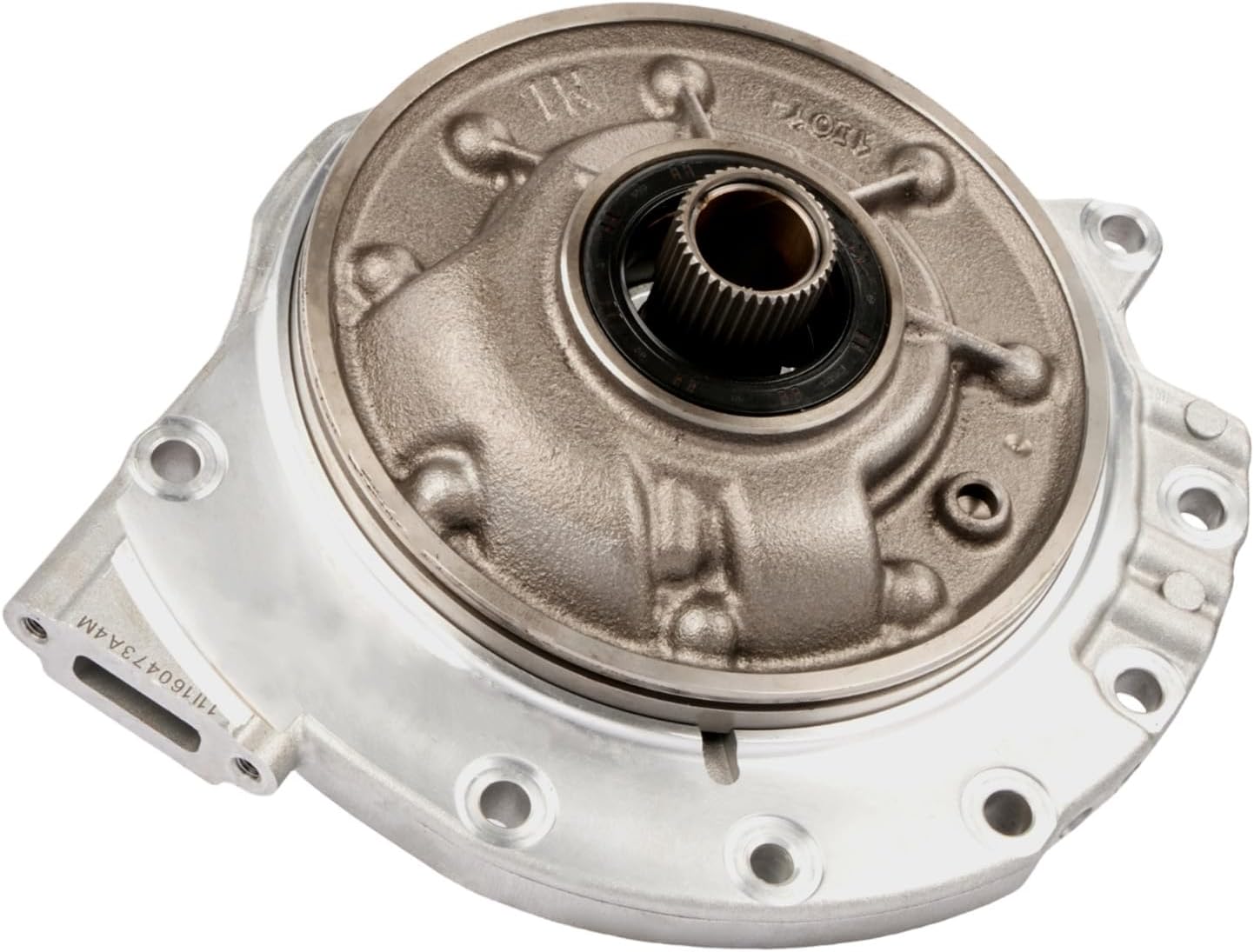
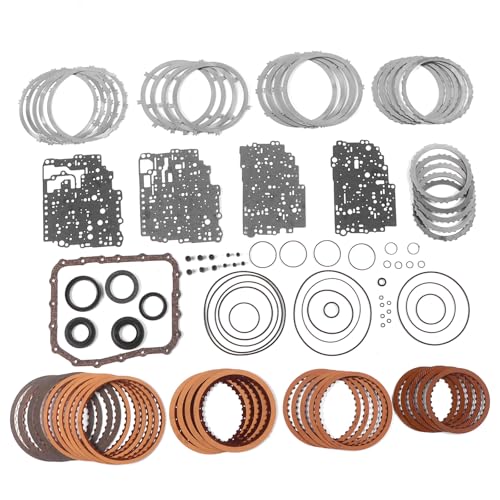
If the unit has high miles and you are already in the pan, a worn pump or tired clutches will undo a good valve body. Our A6MF1/A6MF2 master rebuild kit and remanufactured A6MF1 oil pump cover the parts that usually fail next.