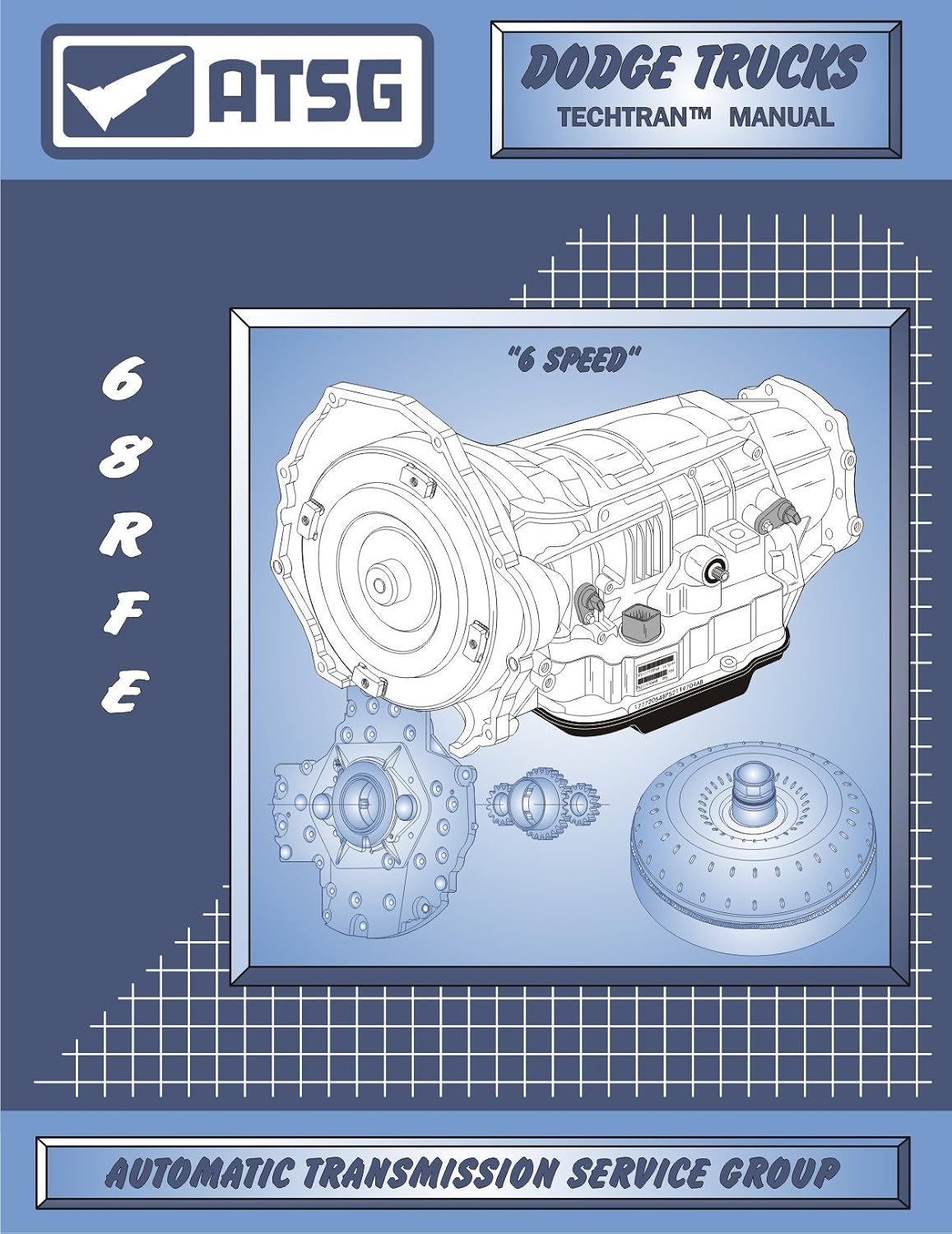
If you are about to pull a 68RFE out of a Ram 2500 or 3500 with the 6.7L Cummins, or you already have one in pieces on the bench, this is the reference that keeps the job on track. It is the ATSG TechTran technical manual for the Chrysler 68RFE six-speed, a printed shop book rather than a download, and the listing notes it is also usable for the closely related 65RFE and 66RFE. Shops and serious DIY rebuilders buy it for the same reasons: a truck that keeps burning the overdrive clutch, a valve body that sets pressure switch codes, or a unit that needs a full overhaul after towing put it into limp mode one too many times.
What this manual covers for the 68RFE
The 68RFE is a fully electronic, rear-wheel-drive six-speed built on three six-pinion planetary sets with driver-adaptive shift logic. There is no throttle valve cable or governor to read; every shift is a solenoid and pressure switch event. That is why a generic rebuild guide falls short. This TechTran book walks through the principles of operation range by range, the clutch application chart, component identification with exploded views, the disassembly and reassembly sequence, and the electrical side including solenoid identification and connector pinouts. When you are holding a drum and are not sure which clutch pack it carries, or you need to know which solenoid feeds which circuit before you chase a code, those pages answer it.
Problems it helps you diagnose
- Overdrive clutch failure under towing, a known 68RFE weak point that Sonnax ties to thin single-sided steels, housing flex and retainer wear
- Limp mode with solenoid or pressure switch rationality codes
- Line pressure complaints such as P0869 or P0933
- Slipping or flare in specific gears that you need to map to a single clutch
- Pump wear that shows up as low or unstable pressure at idle
How to use it before you buy parts
The application chart is the most valuable page in the book before teardown. Match the gear that slips to the clutches applied in that range, and you can usually narrow the fault to one circuit. Pair that with a pressure reading: GEARS Magazine notes a healthy 68RFE idles with roughly 60 to 70 psi commanded and actual line pressure. Our 68RFE valve body testing guide and shift solenoid symptoms guide walk through the electrical checks, and the manual gives you the pinouts to perform them.
Fitment and year changes to watch
The book is written around the 68RFE used in Ram heavy-duty diesel trucks from 2007 on, and the listing states it also applies to the 65RFE and 66RFE. Be aware that the transmission changed during its run. Transmission Digest documents three solenoid pack generations identified by connector color: white, gray from 2010 when the overdrive solenoid was eliminated, and blue from 2019 with a separate TCC solenoid and a normally applied reverse solenoid. When you work on a 2019-up truck, cross-check any solenoid and valve body detail against those later changes. You can find parts for every generation in our 68RFE collection.
Rebuild notes
- Read the operation section before teardown so you recognize abnormal wear when the unit comes apart.
- Lay parts out in order on a clean bench and photograph each subassembly; the exploded views help, but your own photos catch revisions.
- Use ATF+4 for assembly lube and refill; FCA calls for the level to be set with fluid at 160 degrees F or more.
- Check clutch clearances during buildup instead of trusting stack height alone.
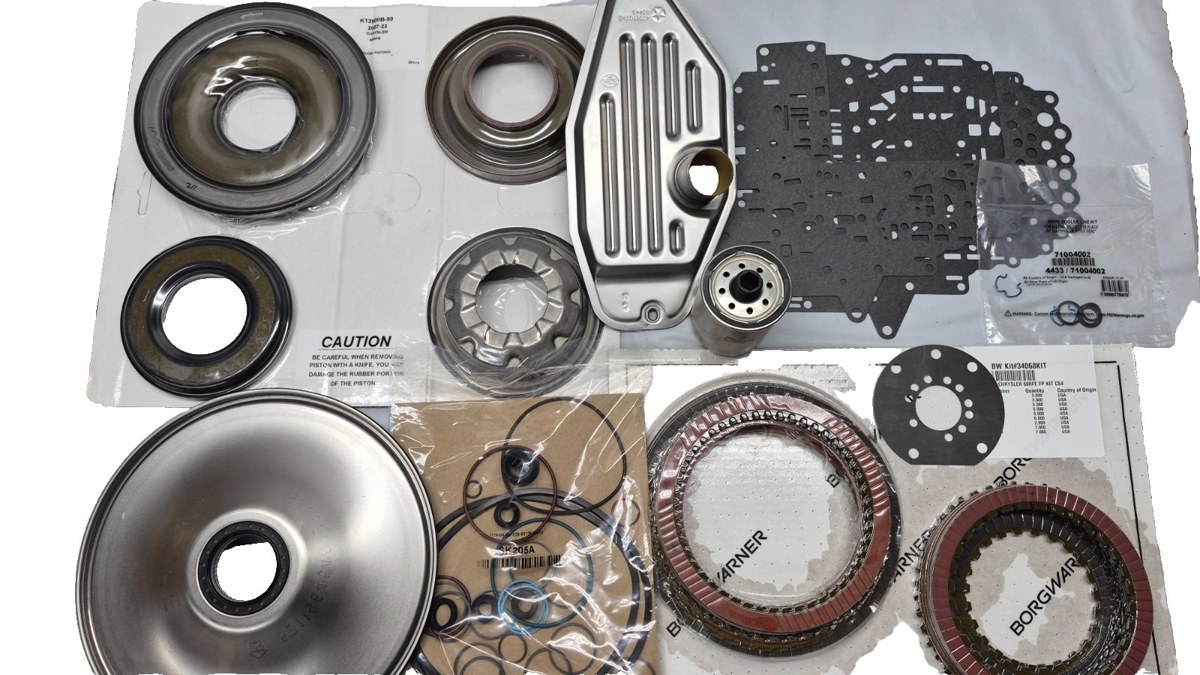
Most rebuilds start with a seal and gasket set. The 68RFE master rebuild kit for 2007-2018 covers earlier trucks, and the 2019-2024 overhaul kit suits the later blue-connector units. If the pump is suspect, read our 68RFE pump failure guide before deciding whether to rebuild or replace it.