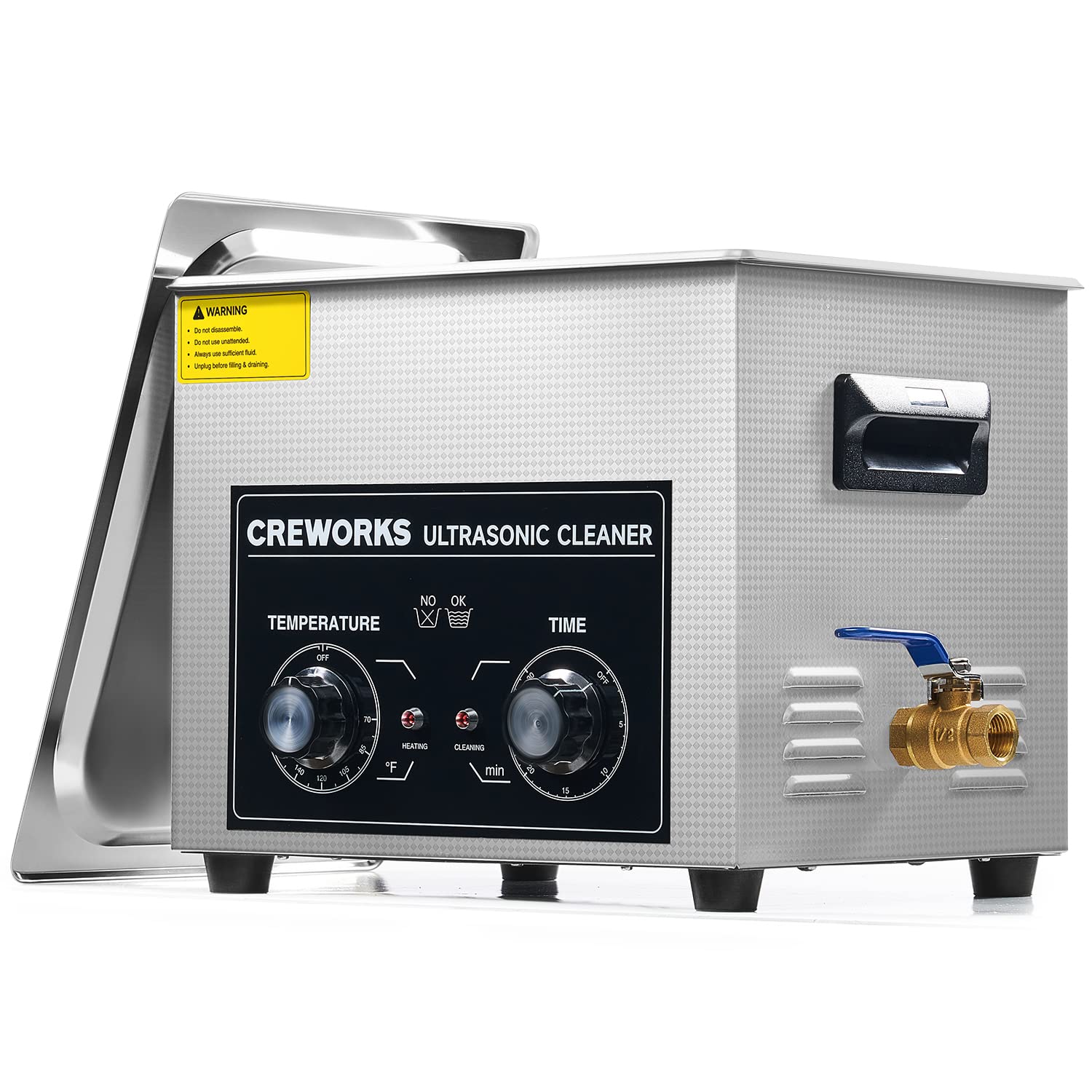
Most valve body comebacks are not bad parts, they are dirty bores. A spool valve that free-strokes on a dry bench can still hang once it is back in the case if a ring of varnish or a sliver of clutch material is left in the bore or under a check ball. This 15 liter (4 gallon) heated ultrasonic tank is sized for the hard parts an automatic transmission rebuild produces, including a full-size GM valve body casting laid flat, so the drilled passages a brush never reaches get cleaned before reassembly.
What this cleaner does in a transmission rebuild
A 40kHz transducer array (360W) creates cavitation, millions of tiny bubbles collapsing against every wetted surface, including blind bores, cross-drilled passages and checkball pockets. A separate 300W heater holds the bath anywhere from 70 to 175 degrees F. Heat matters here: baked varnish barely moves in a cold bath and comes off far faster at roughly 140 to 160 degrees F with a mild alkaline cleaner. The inside of the tank is about 13 x 9.5 x 6 inches, enough for a 4L60E or 4L80E valve body, a 6L80 separator plate, pump halves, solenoid screens, and a basket of springs and check balls. The timer runs 1 to 30 minutes, the tank and basket are 304 stainless, and it runs on standard 110V shop power.
Problems this cleaning step prevents
- Harsh, late or flared shifts after a rebuild from a valve hanging in a varnished bore
- Slipping or a missing upshift caused by debris holding a check ball off its seat
- Converter clutch slip or shudder from a sticky lockup or regulator valve
- Repeat solenoid or ratio codes when fine debris recirculates into new solenoids
- Pinholes in a separator plate hidden under varnish, which only show once the plate is truly clean
How to decide between cleaning and replacing a valve body
Cleaning fixes contamination, not wear. Strip the valve body completely, clean it, then inspect and vacuum-test each circuit. Our valve body cleaning and inspection guide covers teardown and what to look for, and model guides such as 4L80E valve body problems and testing and 6L80 valve body testing explain how to separate a dirty bore from a worn one. If a circuit still fails after cleaning, the bore is worn and needs a repair sleeve or a replacement casting.
Fitment and capacity
The cleaner is universal, not tied to one transmission. It is a good match for rear-wheel-drive GM, Ford and Chrysler valve bodies, separator plates, pump bodies and accumulator hardware, and for front-wheel-drive and CVT valve body sections, which are smaller. Anything that will not fit flat in a 13 x 9.5 inch footprint, such as a full case or large drum, belongs in a spray cabinet instead.
Cleaning notes
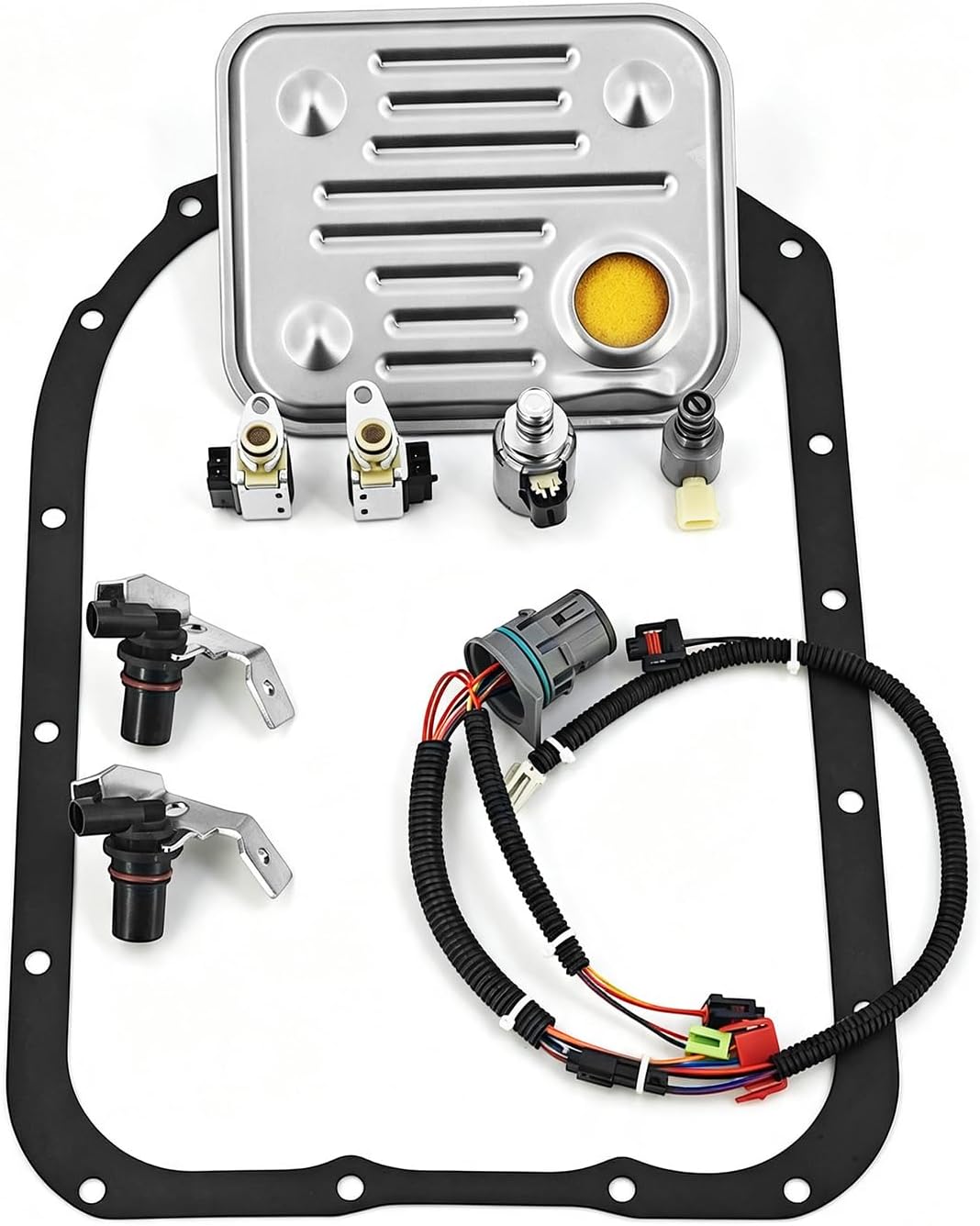
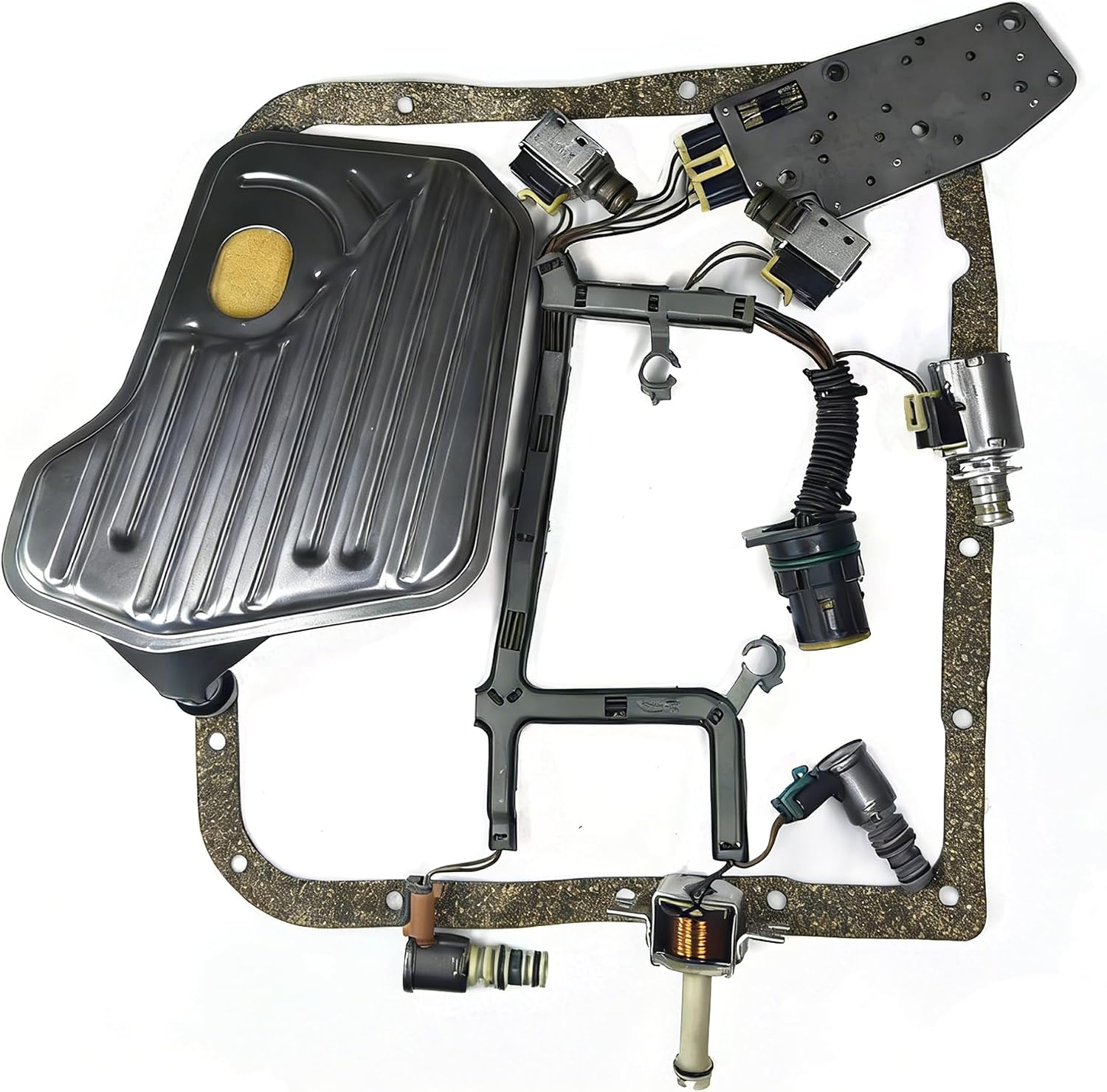
Remove every solenoid, sensor, harness and electrical part before the casting goes in, because cavitation damages solenoid windings. Pull the valves and springs and keep them in order in the basket or a divided tray. Run about 15 minutes hot, check for orange or brown varnish staining in the passages, and repeat if it is still there. Rinse with clean water and blow every passage dry with shop air right away so no solution sits in the bores. Change the bath between jobs. When the clean casting goes back together, pair it with fresh electrical parts such as a 4L80E master solenoid kit with harness and filter or a new 4L60E separator plate, and change the fluid and filter so debris from the old unit is not pumped straight back through it.