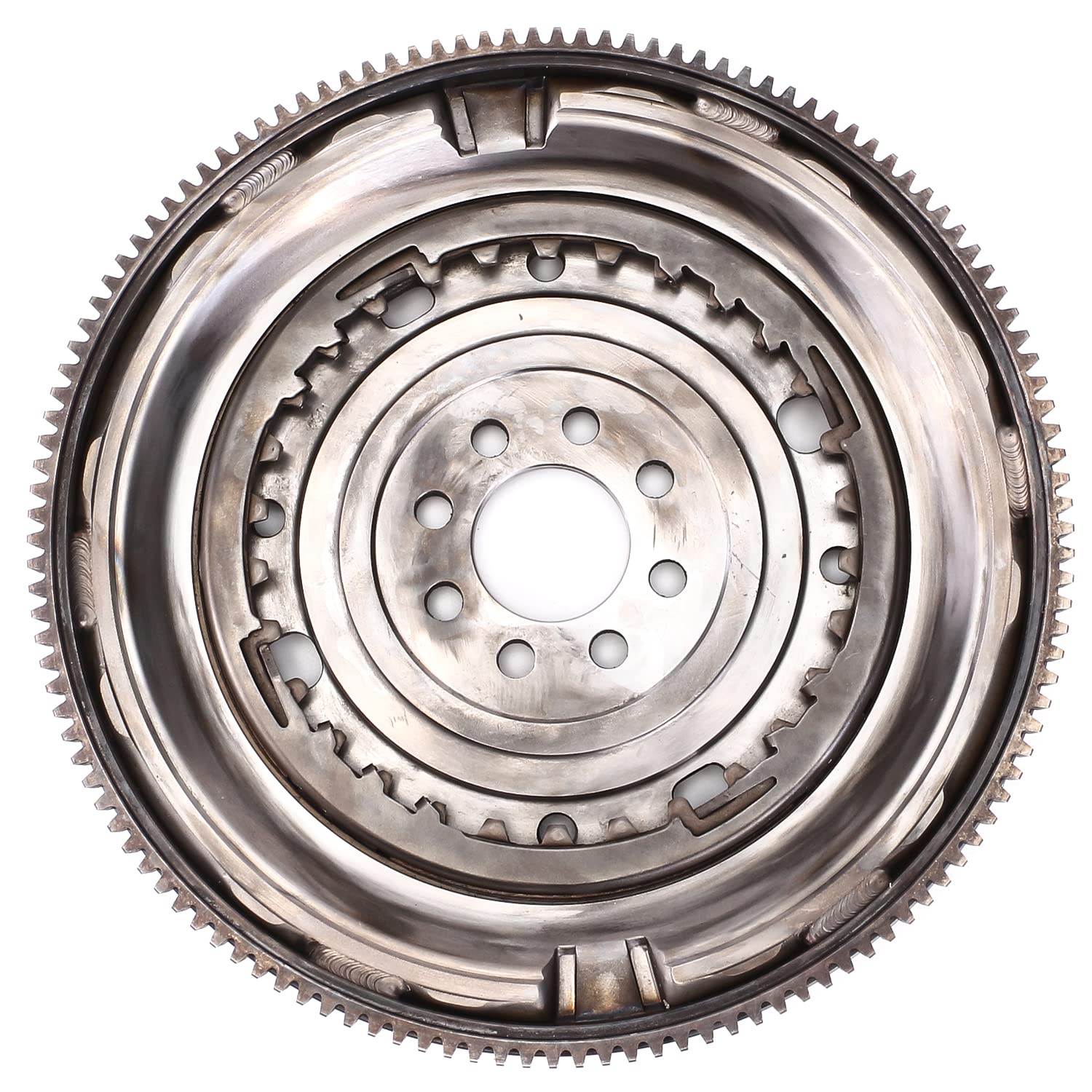
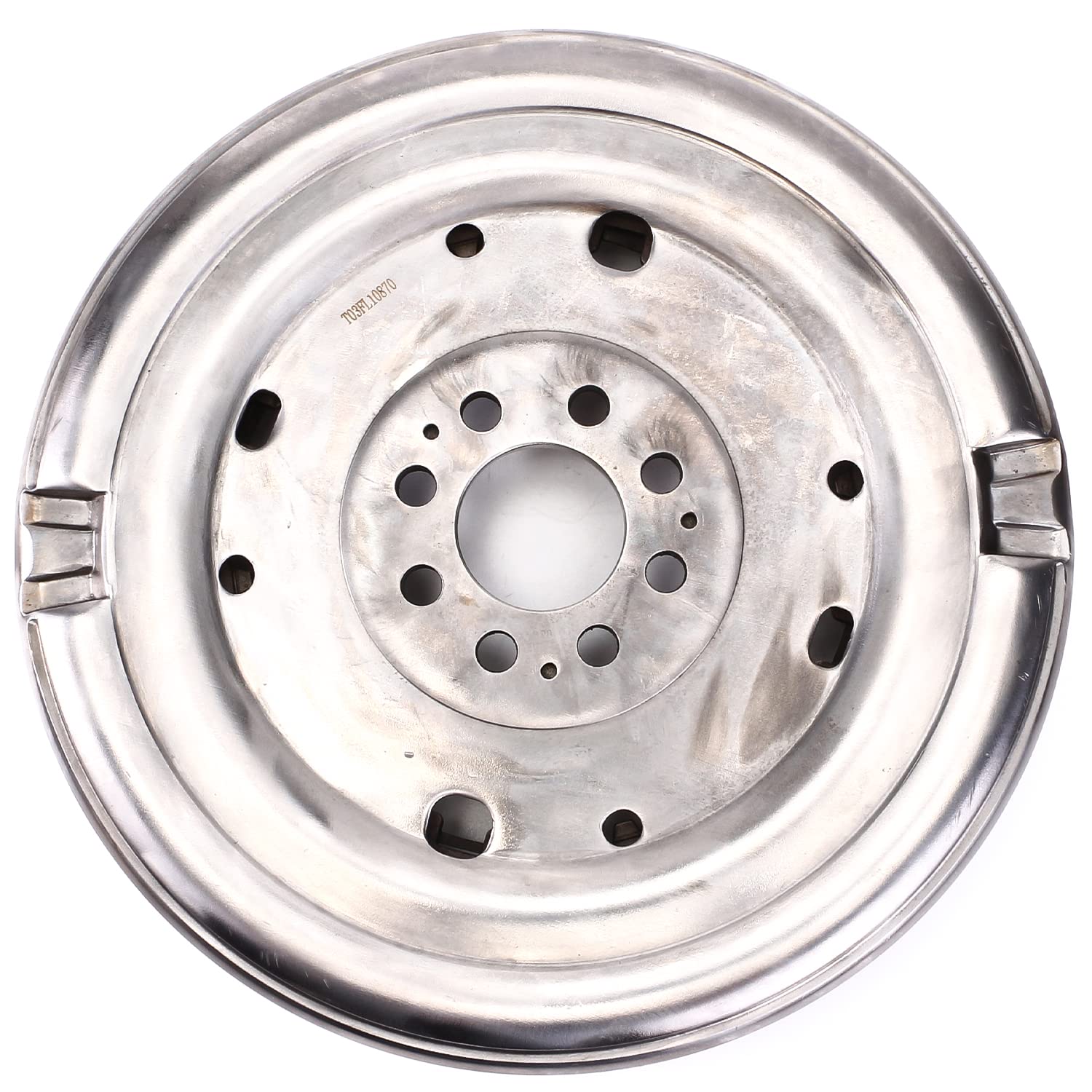
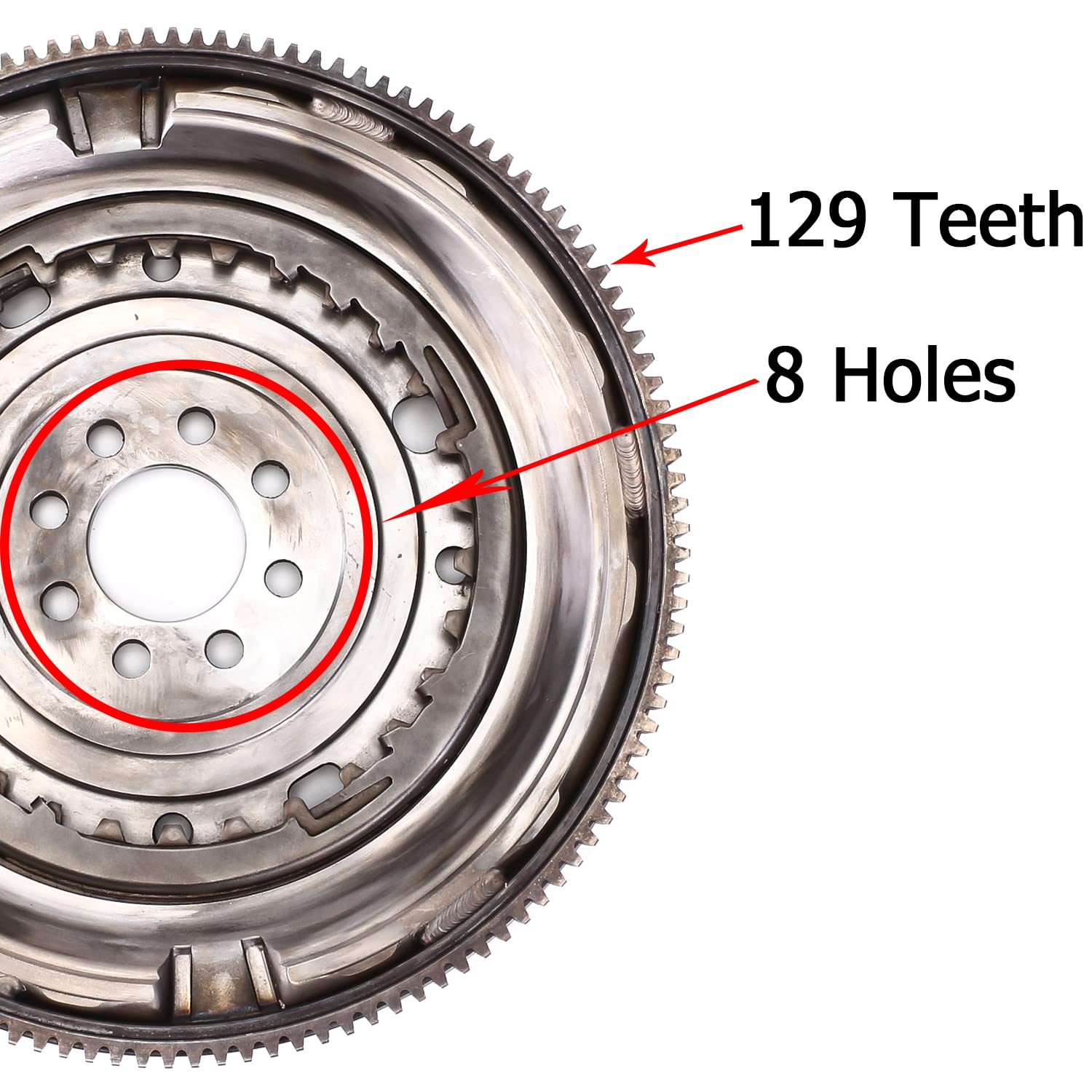
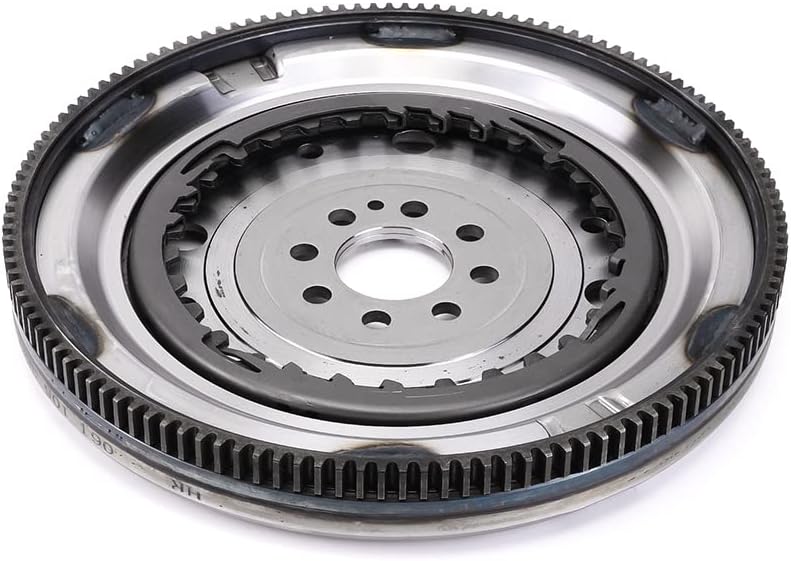
If a seven-speed dry DSG car rattles hard every time it starts, knocks at idle, or clunks as it pulls away, the dual-mass flywheel in front of the gearbox is a prime suspect before anyone condemns the clutch or the mechatronic unit. This is a dual-mass flywheel for the DQ200, also known as the 0AM, with 8 crankshaft bolt holes and a 129-tooth starter ring gear. It cross-references to 03F105266C, 415033410 and 415068209, which is the number to check against the old part.
What the dual-mass flywheel does in a DQ200
The DQ200 is a seven-speed gearbox with two dry clutches instead of the oil-bathed clutches used in the six-speed DQ250. Gears Magazine's DQ200 overview describes it as two manual transmissions in one case, with the dual dry clutch assembly mated to the engine through a dual-mass flywheel. The flywheel is built as two masses. The primary side bolts to the crankshaft and carries the 129-tooth ring gear the starter engages; the secondary side carries the internal toothed ring you can see in the center of the part, which drives the double clutch. Between the two sit curved springs that absorb the torque pulses of each cylinder firing. Because a dry clutch has no oil film to cushion it, those springs are doing all of the damping work, and the small-displacement engines this gearbox sits behind send a lot of pulsation through them.
Symptoms of a worn DQ200 flywheel
- Loud rattle during cranking and the first second after the engine fires
- Knock or chatter at idle in Park or Neutral that changes when you switch on the A/C
- Clunk on takeoff or when coming off the throttle at low speed
- Vibration through the floor and pedals at low rpm
- In severe cases, a no-crank condition when worn springs break through toward the engine side
Gears Magazine explains the mechanism: as the springs wear, clearance opens between the suspended and anchored masses, and the springs rattle when they unload between firing strokes. The noise is most obvious during cranking.
How to confirm it before you buy
Scan every module first. The DQ200 control unit will deliberately open both clutches and hold neutral if shift rail position data is missing, the mechatronic is too hot, a calculated clutch temperature is too high, or system pressure drops below about 40 bar, and that failsafe is easy to mistake for a mechanical fault. If the complaint is judder on launch rather than noise, check codes and clutch adaptation values first; our DSG overheating guide explains how heat and clutch slip show up. A rattle that is loudest at start-up and changes with engine load points at the flywheel. Once the gearbox is out, rock the secondary mass against the primary and look for excessive free travel, grease weeping from the spring channel, or heat discoloration.
Fitment
The listing covers DQ200 applications in the 2011-2014 VW Beetle, the 2012-2014 Audi TT and the 2009-2014 Seat Altea. Most of those are European-market versions; many North American cars with a DSG used the six-speed DQ250 instead, which takes a different flywheel. Confirm your gearbox code (0AM or 0CW on the case or the build sticker) before you order. DQ200 cars were built with more than one flywheel, and we also stock a 132-tooth DQ200 flywheel that looks nearly identical. Count the ring gear teeth and bolt holes on your old part, read the number stamped on it, or send us your year and VIN. Every dual-clutch part we carry is on the DSG collection page.
Install notes
- The gearbox must come out, so most shops replace the flywheel and dry clutch pack together. The K1/K2 clutch sits on the input shafts and must be pulled and set to height with the correct tooling; the 0AM dual-clutch installer and remover tool covers that job.
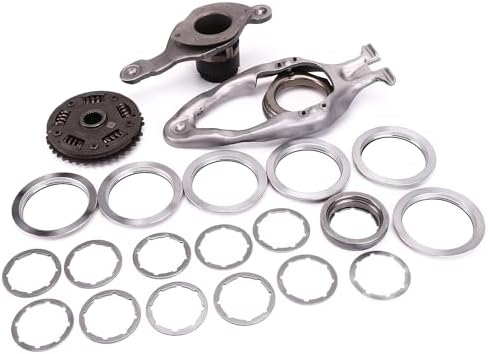
- Worn release levers are common at the same mileage; the DQ200 clutch release lever kit includes the levers and shims.
- Clean the crankshaft flange, check the rear main seal for leaks, and install with new flywheel bolts tightened in a cross pattern to the factory torque and angle.
- The DQ200 has two separate fluid systems, the gearbox oil and the mechatronic hydraulic oil. Neither needs draining for a flywheel swap, but top up whichever you disturb with the correct fluid, filled by capacity.
- Finish with clutch basic settings and adaptation using a capable scan tool before the road test.