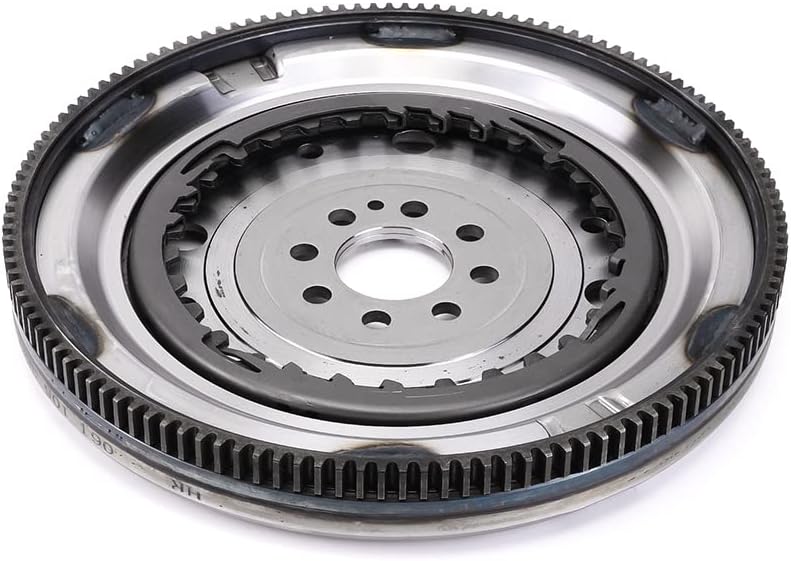
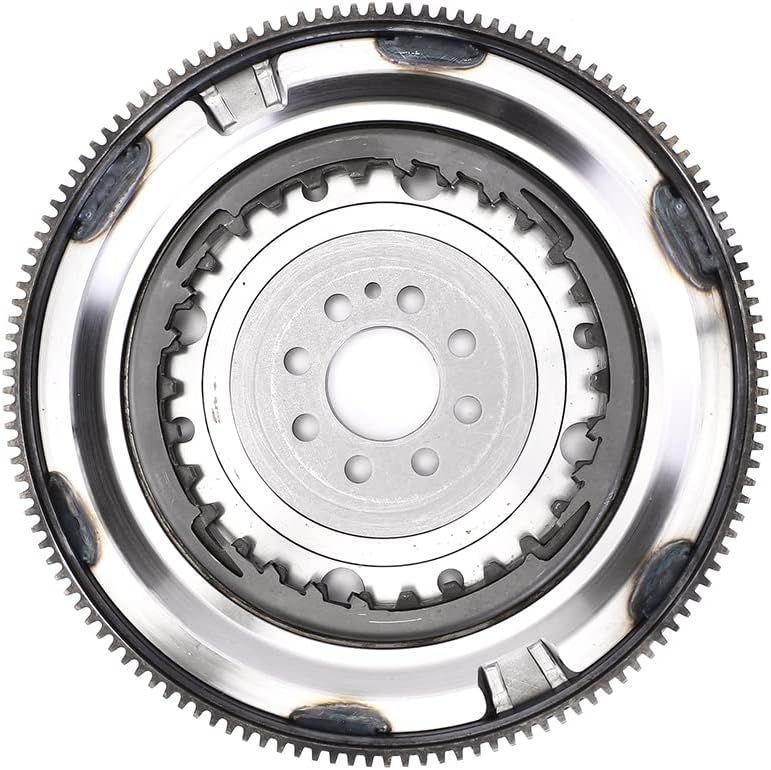
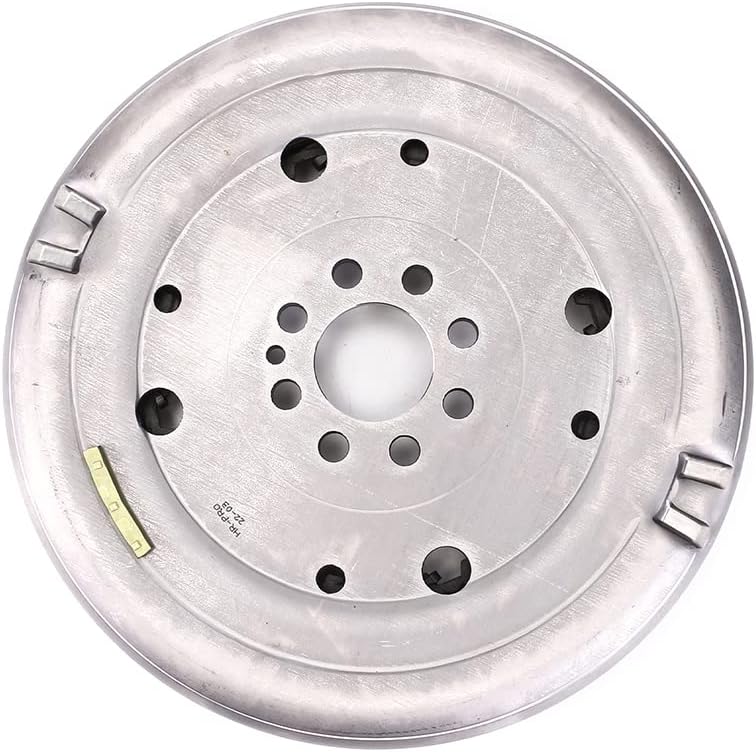
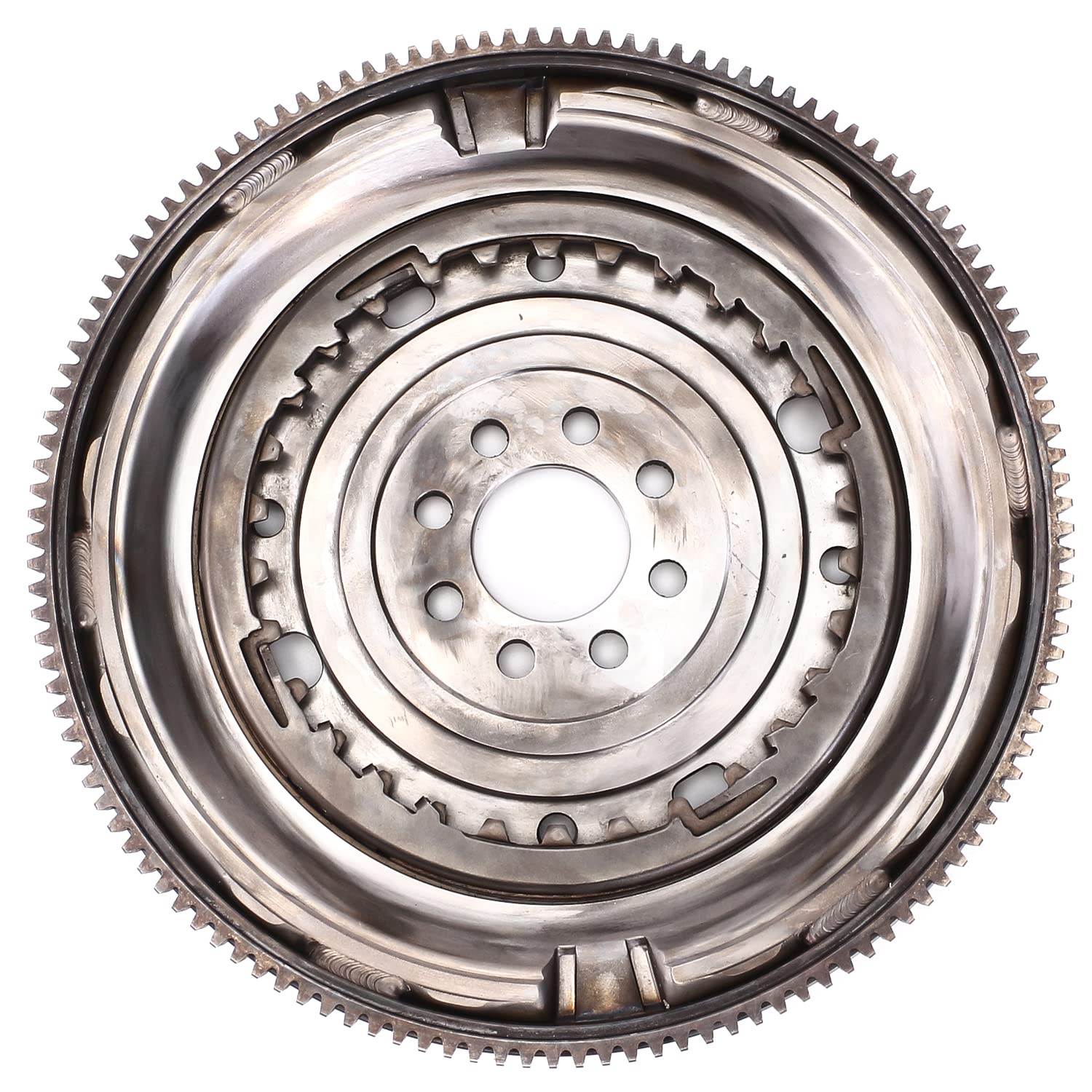
A DQ200-equipped Golf, Passat, Tiguan, Beetle or Audi TT that chatters on start-up, shakes at a stop, or thumps when it creeps forward in traffic often has a tired dual-mass flywheel, not a failing gearbox. This replacement flywheel is for the seven-speed dry dual-clutch DQ200 (0AM) and is the 132-tooth version: 132 teeth on the starter ring gear and 8 holes for the crankshaft bolts. The tooth count matters, because a 129-tooth flywheel was used on other DQ200 builds and the two are hard to tell apart at a glance.
What the flywheel does on a dry-clutch DSG
In the six-speed DQ250 the clutches run in oil, and that oil takes some of the sting out of engine pulses. The DQ200 does without it. Its two clutches are dry plates, and Gears Magazine notes that the dry clutch assembly is coupled to the engine through a dual-mass flywheel, so the flywheel's arc springs are the main buffer between the crankshaft and the gear sets. The inner mass is bolted to the crank through the 8 holes; the outer mass, with its toothed drive ring, turns the double clutch. When the springs are healthy the two masses move against each other smoothly. When they wear, the masses gain free play and start knocking into each other every time the engine fires.
Symptoms that point to this part
- Metallic rattle on cranking and right after start-up, worst on a cold engine
- Idle knock in Park or Neutral that gets louder or quieter as engine load changes
- Shake or thump when creeping in stop-and-go traffic
- Clunk when the engine shuts off
- Starter grinding or a no-crank in severe cases, after a worn spring breaks out of its channel
How to confirm it before buying
Do not order a flywheel on the strength of a launch shudder alone. Pull codes from the gearbox and engine modules: the DQ200 opens both clutches and sits in neutral as a failsafe when shift rail position data is missing, temperatures run high, or mechatronic pressure falls below roughly 40 bar, and those faults need their own repair. Our DSG pressure testing guide covers the pressure side, and the DSG mechatronic and clutch problems guide explains how clutch faults present. Noise that peaks at start-up and shutdown and varies with engine load is the flywheel signature. With the gearbox removed, rotate the outer mass by hand: a healthy unit springs back firmly, while a worn one moves freely with a clack at each end of travel.
Fitment
The listing names DQ200 versions of the VW Beetle and Beetle Convertible, Golf, Jetta SportWagen, Passat, Tiguan and Touran, plus the 2012-2014 Audi TT and 2009-2014 Seat Altea. Many of those models were also sold with the six-speed DQ250 or a manual gearbox, and those use different flywheels, so this part is only for cars with the 0AM gearbox. Engine and build date also decide whether your car came with this 132-tooth flywheel or the 129-tooth DQ200 flywheel. Count the teeth, compare the number stamped on the old part, or send us your year and VIN and we will check it. Other DSG parts are on the DSG collection page.
Install notes
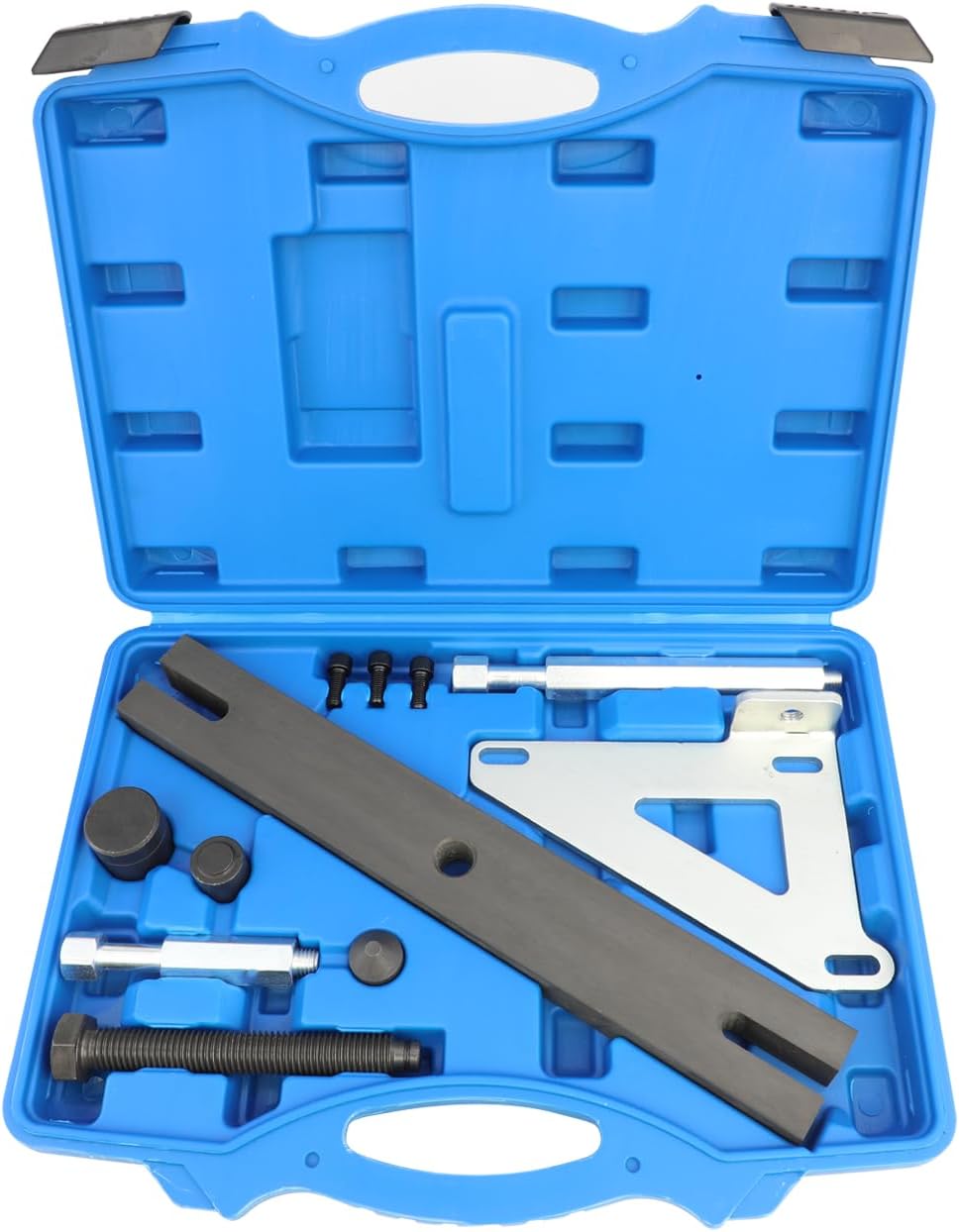
- The gearbox has to come out. If the dry clutch pack is worn, replace it in the same job and set it up with the 0AM dual-clutch installer and remover tool so the K1 and K2 heights come out right.
- Inspect the crankshaft flange and rear main seal while the flywheel is off, and fix any oil leak before the new flywheel goes on.
- Use new flywheel bolts and tighten them in stages in a cross pattern to the factory torque and angle.
- The gearbox and mechatronic unit each have their own oil, filled by capacity. A flywheel job does not require draining either one.
- After reassembly, run clutch basic settings with a scan tool such as our DSG adaptation scan tool, then road test from cold.