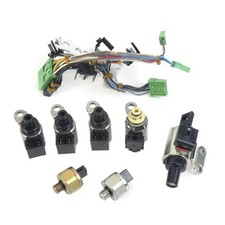
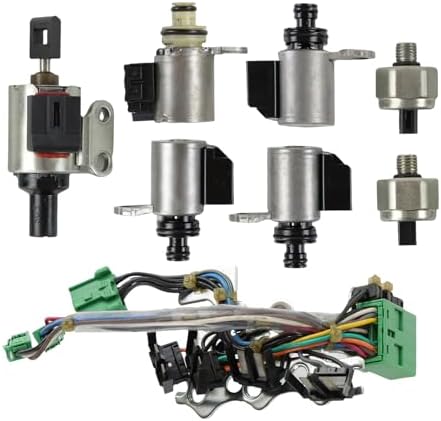
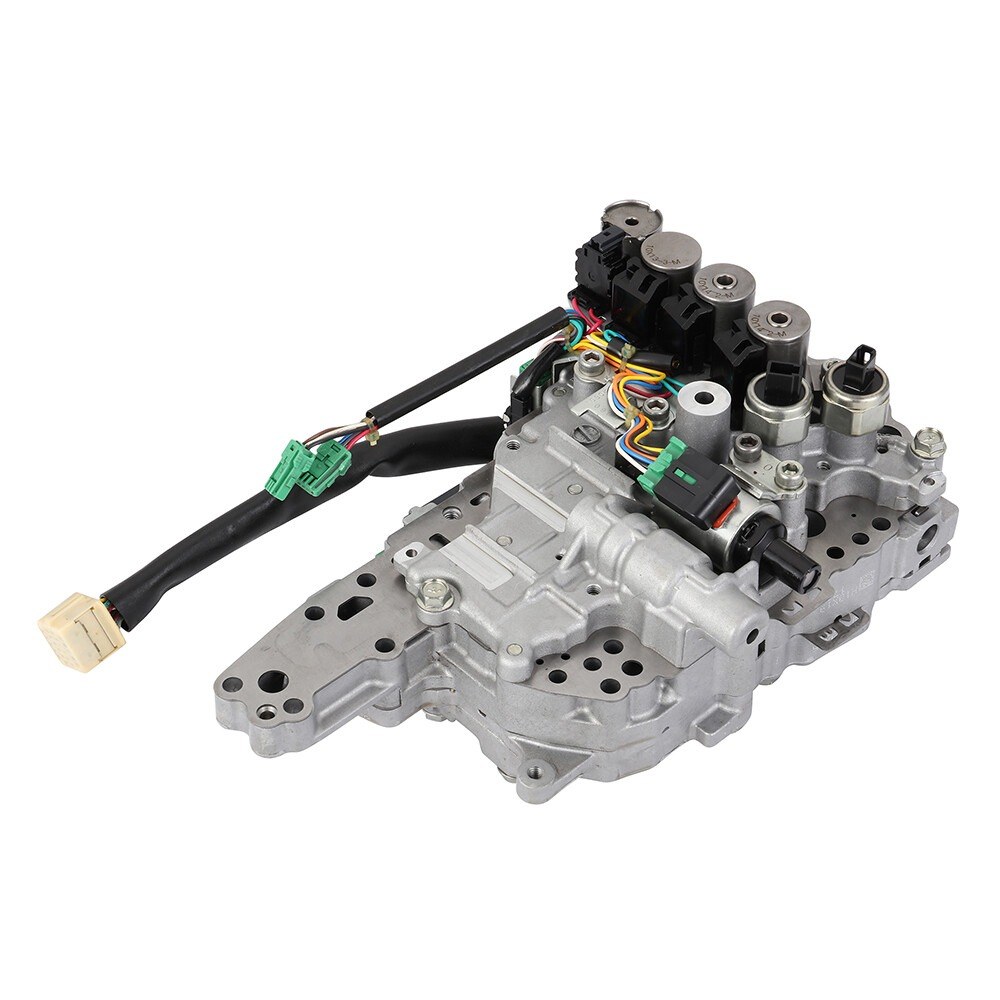
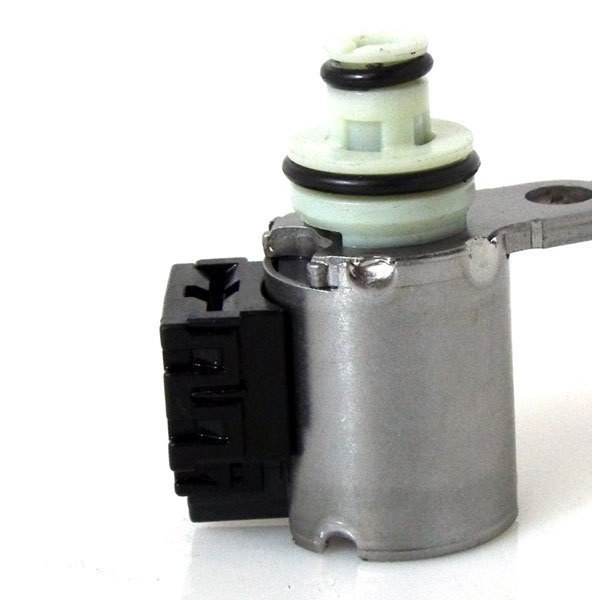
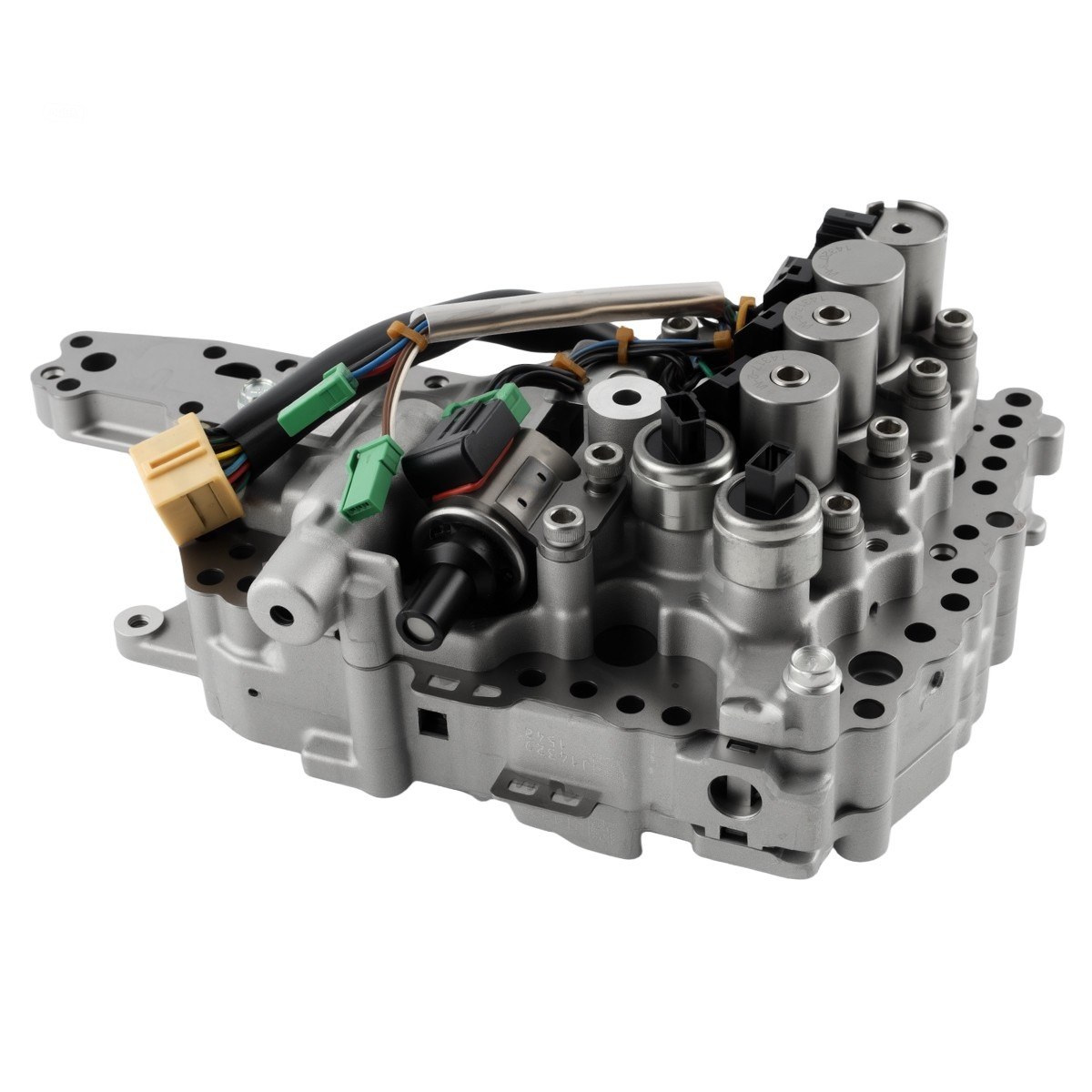
A Nissan Altima, Rogue or Sentra with the RE0F10A CVT that shudders at a steady 40 to 50 mph, cruises at higher rpm than it used to, or stalls when you drop it into gear usually has a torque converter lock-up problem, not a belt problem. The same Jatco unit, sold as the JF011E, sits in the Dodge Caliber, Jeep Compass and Patriot and Mitsubishi Outlander and Lancer. This listing is for the lock-up side of the valve body, but the photo shows the complete solenoid group: both lock-up solenoids, the pressure control solenoids, the primary and secondary pressure sensors and the internal harness. Buying the group makes sense when the coils have all lived through the same heat and mileage.
How lock-up works in an RE0F10A
The RE0F10A launches through a conventional torque converter, then locks the converter clutch so the engine drives the pulleys directly. Two solenoids share that job. The lock-up control solenoid regulates how hard the converter clutch applies and releases. The lock-up select solenoid is an on/off valve that positions a switching valve: in Park and Neutral the TCM powers it, and after you select Drive or Reverse it is switched off within about five seconds, which sends oil from the forward or reverse clutch circuit over to the converter lock-up control valve. Fender Bender points out that this sequence is why a short delay of about three seconds into gear is normal on this unit and is covered by Nissan bulletin NTB10-147. A weak lock-up control solenoid gives slip and shudder; a stuck select solenoid gives engagement complaints or no lockup at all.
Symptoms of a failing lock-up solenoid
- Shudder or a rumble strip feel at light throttle between roughly 35 and 55 mph
- Higher cruise rpm and a drop in fuel economy because the converter never locks
- Jerking when coasting down, or the engine stalling as you come to a stop
- Harsh or late engagement into Drive or Reverse
- Codes for the lock-up circuit, such as P0740 or P0744 on Nissan models; Dodge Calibers report P2770 for the lock-up control solenoid and P1723 for the select solenoid
Confirm the cause before ordering
Unplug the harness at the case and check resistance: about 6.5 ohms for the lock-up control solenoid and about 28 ohms for the lock-up select solenoid. If both are in range, the valve body is the next suspect. Sonnax lists jerking on coastdown, high engine rpm, stalling on engagement, no lockup and harsh engagement as results of a worn lockup control plunger valve and sleeve, and a worn converter pressure regulator bore causes shudder and TCC slip too. On Caliber models, also inspect the case harness for corrosion from the battery drain tube. Our converter clutch shudder diagnosis guide and stall test and lockup diagnosis guide explain how to separate solenoid, valve and converter faults.
Fitment
The listing covers the RE0F10A (JF011E) with no year range stated. It does not fit the RE0F09A used with the 3.5L V6 or the later RE0F11A. Connector bodies, harness routing and terminal numbering differ between the Nissan and the Dodge, Jeep and Mitsubishi versions, and Dodge and Jeep ground three solenoids through an external terminal while Nissan grounds them internally. Compare the photo to your valve body before ordering, or send us your year and VIN. Browse every version on the CVT parts page, where the JF011E and RE0F10A versions are listed, or see the single JF011E lock-up solenoid if you need only one coil.
Install notes
- Drop the pan, remove the strainer and its bracket, and unplug the main connector before lifting the harness away.
- Keep the original ROM chip with the vehicle so the TCM calibration stays matched.
- Fit each solenoid in its original bore with new O-rings lubricated in CVT fluid and clip the harness exactly as removed.
- Refill with Nissan NS-2 on Nissan models, or the CVT fluid specified by Dodge, Jeep or Mitsubishi on those vehicles, and set the level hot.
- Clear codes and drive through several lock-up cycles at steady cruise to confirm the shudder is gone.
If the bores are worn, a replacement RE0F10A valve body fixes both the valve and solenoid side. Renew the filter and pan gasket while you are in there.