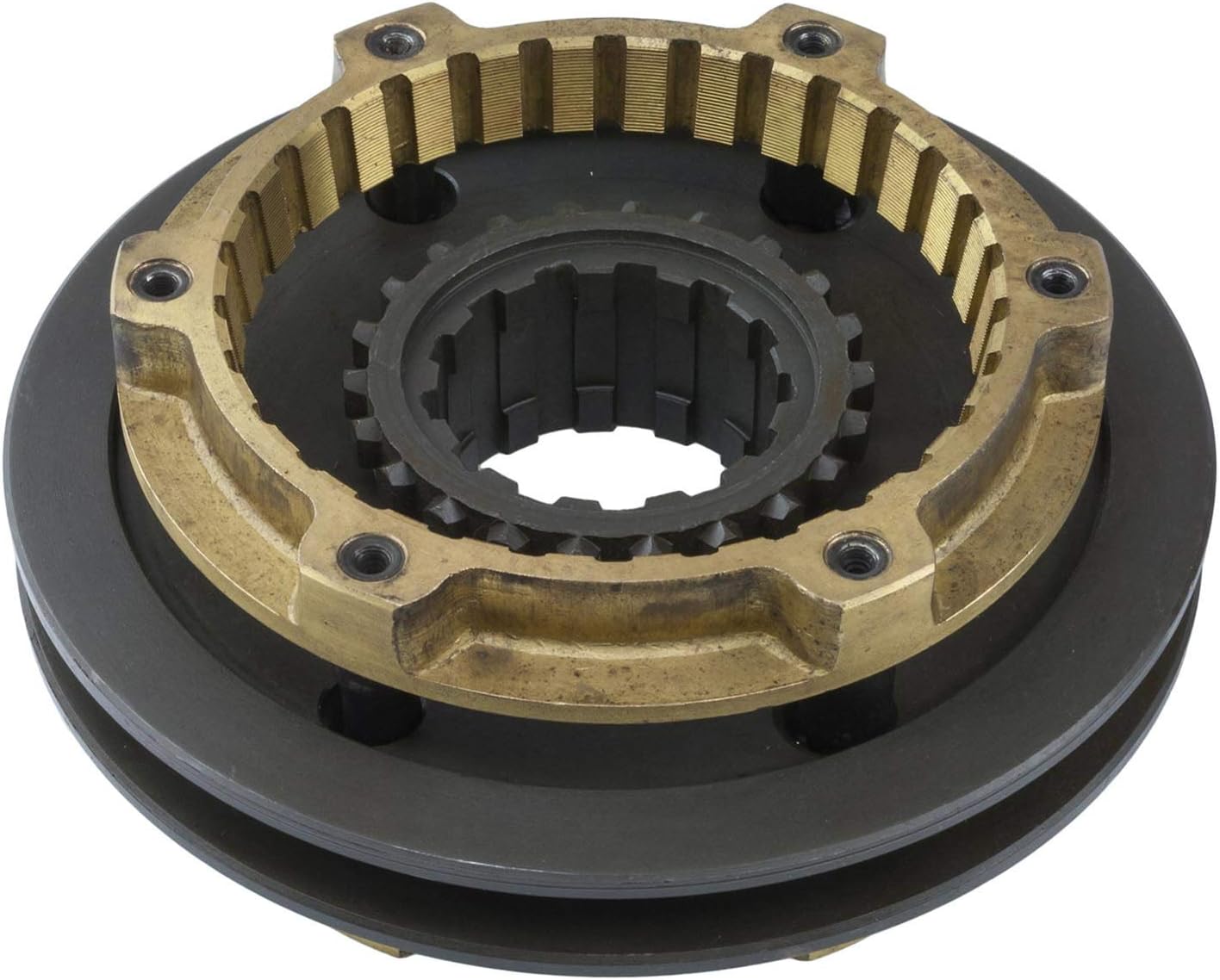
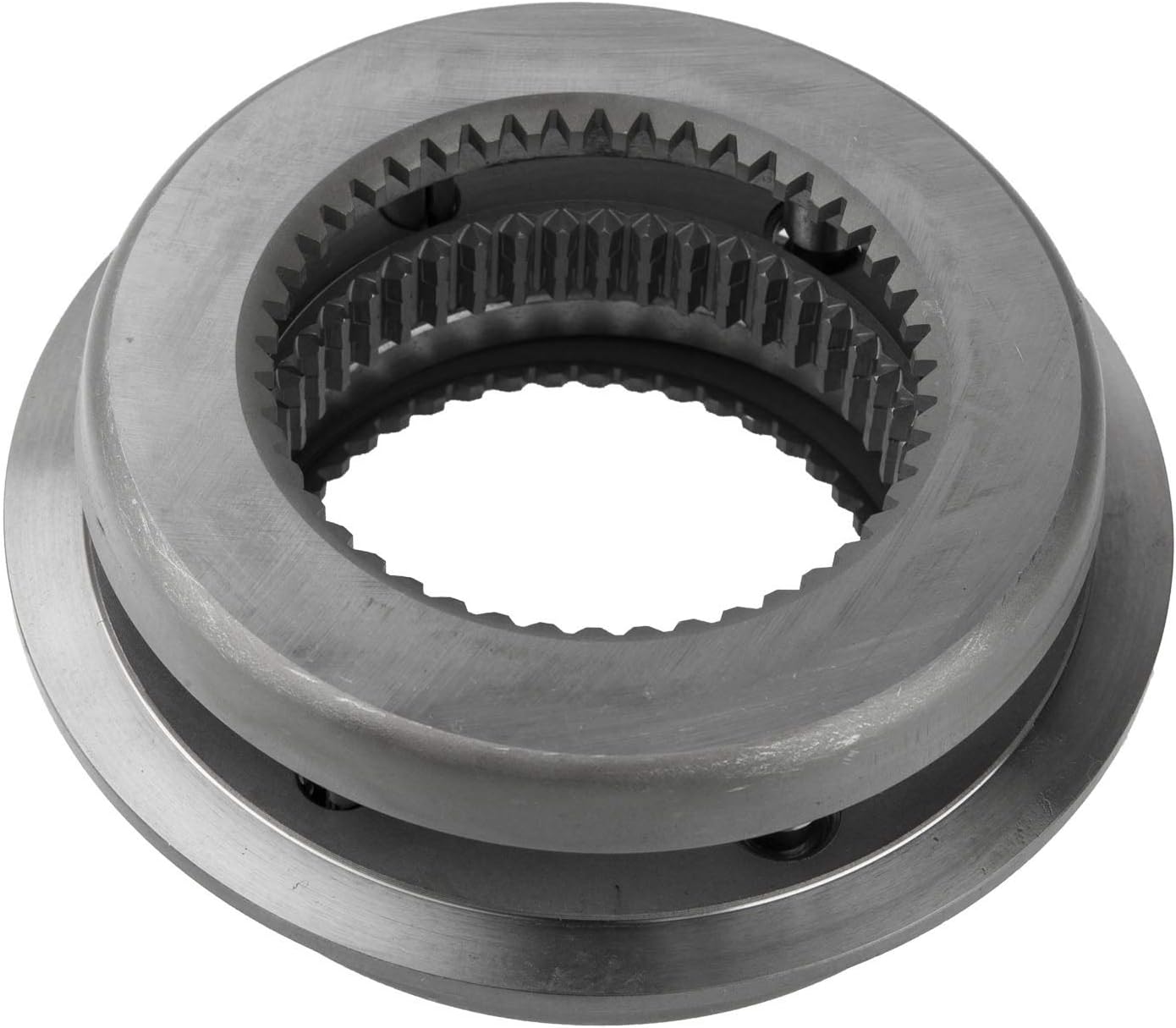
A medium-duty truck with a Spicer CM60-series five-speed that grinds going into 4th or 5th, fights the lever on the top two gears, or kicks out of 5th on a pull is usually wearing out the 4-5 synchronizer. This is the complete 4th-5th synchronizer assembly, part number 312766X, for Spicer (now Tremec TTC) CM60-series transmissions in the direct-drive version, without overdrive. It is the full assembly with the center hub and blocker ring, not a loose ring, so you are not rebuilding a worn hub around new brass.
What the 4-5 synchronizer does in a CM60
The CM60 family are medium-duty constant-mesh manuals built for vocational, utility and municipal trucks. The 4-5 synchronizer sits on the mainshaft between 4th and 5th gear. When the driver moves the lever, the shift fork pushes the sliding sleeve, the keys push the blocker ring onto the gear cone, and friction pulls the gear to mainshaft speed. Once speeds match, the ring lets the sleeve pass and lock the gear. In a direct-drive box the top gear locks the input straight through to the output, so the 4-5 synchronizer carries the shifts the truck makes most often on the road. Big speed differences on upshifts under load, a clutch that is out of adjustment, or the wrong oil wear the cones and round off the blocker teeth.
Symptoms of a worn 4-5 synchronizer
- Grinding going into 4th or 5th with the clutch adjusted and releasing.
- The lever resists or bounces back on the 4-5 shift and only goes in after a pause.
- Popping out of 4th or 5th under load or on deceleration, often with rounded sleeve or gear clutch teeth.
- Notchy shifts on the top two gears only, while 1st through 3rd shift normally.
- Brass particles in the drained oil.
How to confirm before you buy
Check the clutch first. A clutch that is worn or out of adjustment drags and makes shifts notchy, and running it that way long enough is exactly what wears synchronizers. On Spicer self-adjusting and manual-adjust clutches, the OTC 7028 Spicer clutch adjusting wrench makes the adjustment check simple. If every gear grinds, it is the clutch. If only 4th and 5th grind or jump out, it is the 4-5 synchronizer or the mating gear teeth. Our synchro wear guide and popping out of gear guide cover how to tell rings, teeth and forks apart.
Fitment
This assembly is listed for Spicer/Tremec TTC CM60-series transmissions without overdrive, 4th-5th position, replacing 312766X. Overdrive CM60 versions use a different synchronizer, and Spicer used several CM-series models and suffixes across Ford, GM and other medium-duty chassis over the years, so the model letter on the tag matters. Before ordering, read the model number off the transmission tag, confirm it is a direct-drive unit, and match 312766X to the part number on your old synchronizer or in the parts book for your serial number. If the tag is gone, send us the truck year, VIN and any numbers on the case and we will check it. Other heavy-duty internals are in hard parts.
Install notes
- Pull the transmission, split the case and remove the mainshaft. Press the old synchronizer off; a press and driver set keeps the load square.
- Inspect the clutch teeth and cones on 4th and 5th gear. Chipped or rounded teeth, or a scored cone, will ruin the new synchronizer quickly, so replace the gear if it is worn.
- Install the new assembly in the same orientation as the original. Mark the old one before you remove it.
- Check the shift fork pads and the fork for wear; a worn fork lets the sleeve ride off center. The shift fork wear guide shows what to look for.
- Check mainshaft end play, reassemble with fresh gaskets and seals, and fill with the lubricant your transmission tag or service manual specifies.
- Adjust the clutch to spec before the truck goes back in service so the new synchronizer is not fighting drag from day one.
For the tools a heavy truck transmission job needs, see the heavy-duty transmission tools guide, and for budgeting the repair, our manual vs automatic repair cost breakdown.