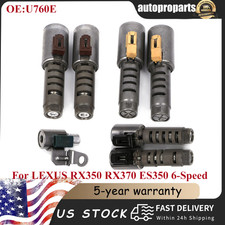
This is a remanufactured set of seven valve body solenoids for the Toyota U760E, the six-speed automatic behind four-cylinder engines in the 2.5L Camry and RAV4 and the 2.7L Highlander and Venza. Buyers usually land here because the car has started to shift hard from first to second, slurs the 2-3 shift, shudders under light throttle, or sat in one gear with a solenoid code. It is the solenoids only, with no harness, which suits a U760E whose harness and case connector are still in good shape.
What the solenoid kit does in a U760E
The U760E runs entirely on electronic control. The transmission computer reads speed, throttle and fluid temperature and then commands the solenoids bolted to the valve body. Most of them are linear, pulse-width-modulated units that build a pressure in proportion to the current they receive: one sets main line pressure, others apply and release individual clutches during each shift, and one controls the converter lockup clutch. GEARS Magazine explains that Toyota's flex lockup strategy partially applies the converter clutch from first through sixth gear at light and moderate throttle, and even while coasting, so the lockup solenoid in a U760E is working nearly all the time the car moves. A set of seven covers every solenoid position in one job instead of replacing the one a code happened to name.
Symptoms of worn U760E solenoids
- Pressure control solenoid performance codes, such as P0746 or P0776, or a stuck shift solenoid code
- Converter clutch performance code P0741 with a shudder between about 25 and 50 mph
- Harsh 1-2 or 2-3 shifts that get worse as the fluid warms up
- Delayed or harsh engagement from Park into Drive or Reverse
- Fail-safe operation with a fixed gear after a hard shift
How to confirm before you buy
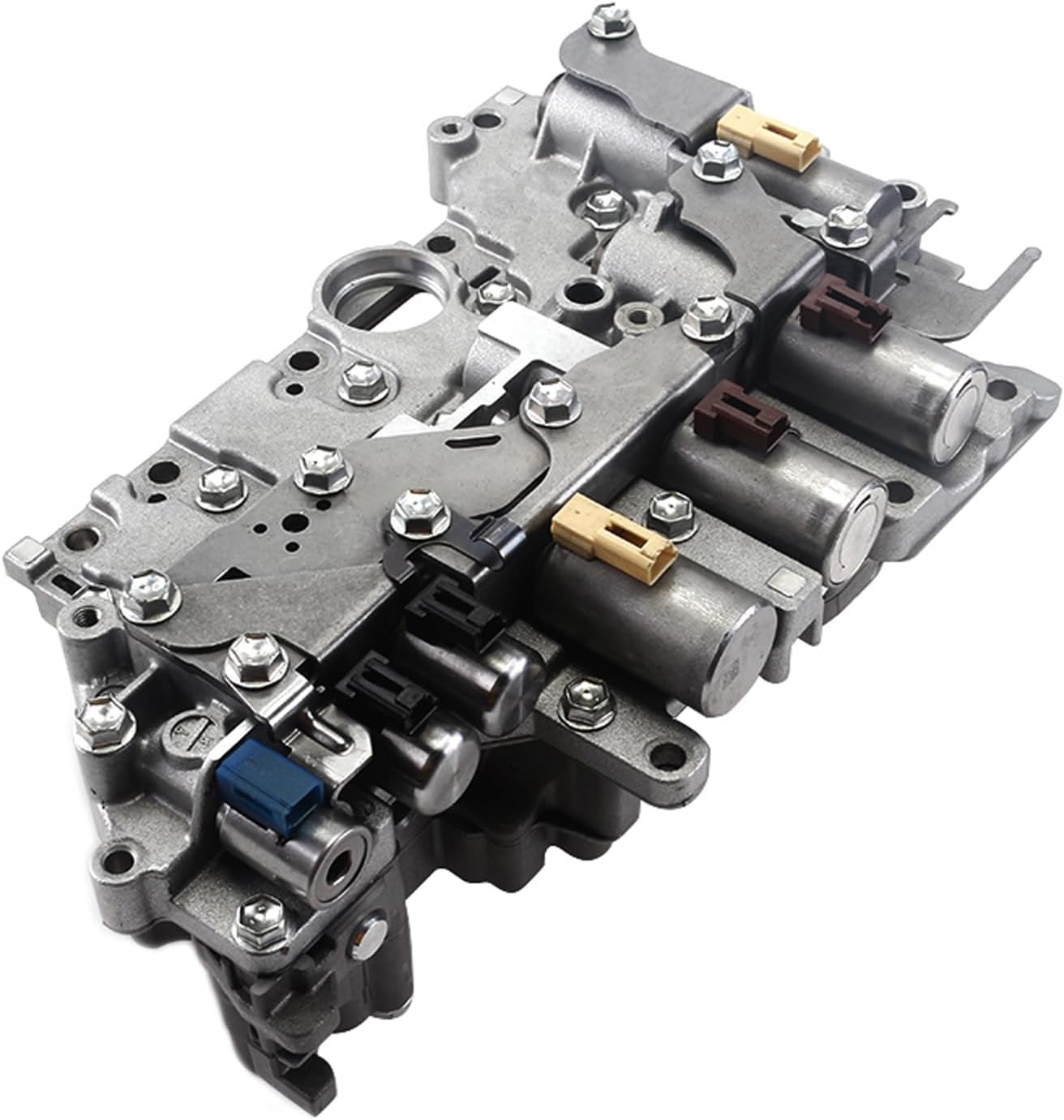
A performance code does not prove the solenoid is bad. GEARS Magazine notes that Toyota solenoids rarely fail electrically and instead stick from degraded or contaminated fluid, and that the wrong fluid alone can set solenoid performance codes. Check that the unit has Toyota WS at the correct hot level first. For a harsh coasting downshift with no codes, the same article points at a dirty throttle body or a slow mass airflow sensor, so look there before opening the pan. Next, think about the valve body: Sonnax shows that a worn solenoid modulator bore sends excess pressure to the SL, SLT and SLU solenoids, and new solenoids will not correct a worn bore. Our U660E and U760E problems guide covers the Manual 3 shudder test and Check Mode code setting. If the bores are worn, price a complete U760E valve body for the Camry instead.
Fitment
The listing names the Toyota Camry, Highlander, RAV4, Venza and Sienna with four-cylinder engines. Two cautions keep you from ordering the wrong part. First, GEARS Magazine dates the U760E to the 2010 model year, so an earlier four-cylinder Camry does not have this transmission, and early 2.5L RAV4s were built with a four-speed automatic. Second, the listing also mentions the Lexus RX350 and ES350, but those are V6 models with the U660-series transaxle, which uses different solenoids; V6 owners should look at the U660E solenoid kit with harness. Confirm U760E on the build label or by VIN and compare connector colors and solenoid sizes with your old parts, or send us your year and VIN. All U760E parts are on the U660E/U760E collection page.
Install notes
- Drain the fluid, remove the pan, and check the magnet. Heavy friction material or metal means internal wear that solenoids will not fix.
- Inspect the harness connectors and pins for heat damage before fitting new solenoids, since this kit reuses your harness.
- Swap one solenoid at a time so each new part goes in the same position as the one it replaces, with its O-rings lubricated in fluid.
- Fit a new strainer and pan gasket; the U760E filter kit covers both.
- Refill with Toyota WS and set the level at 185 to 194 F through the overflow plug, per Toyota's level procedure.
- Clear codes and reset the learned shift values with a scan tool, then road test from cold to hot.
Our WS fluid and capacity guide explains the level check step by step.