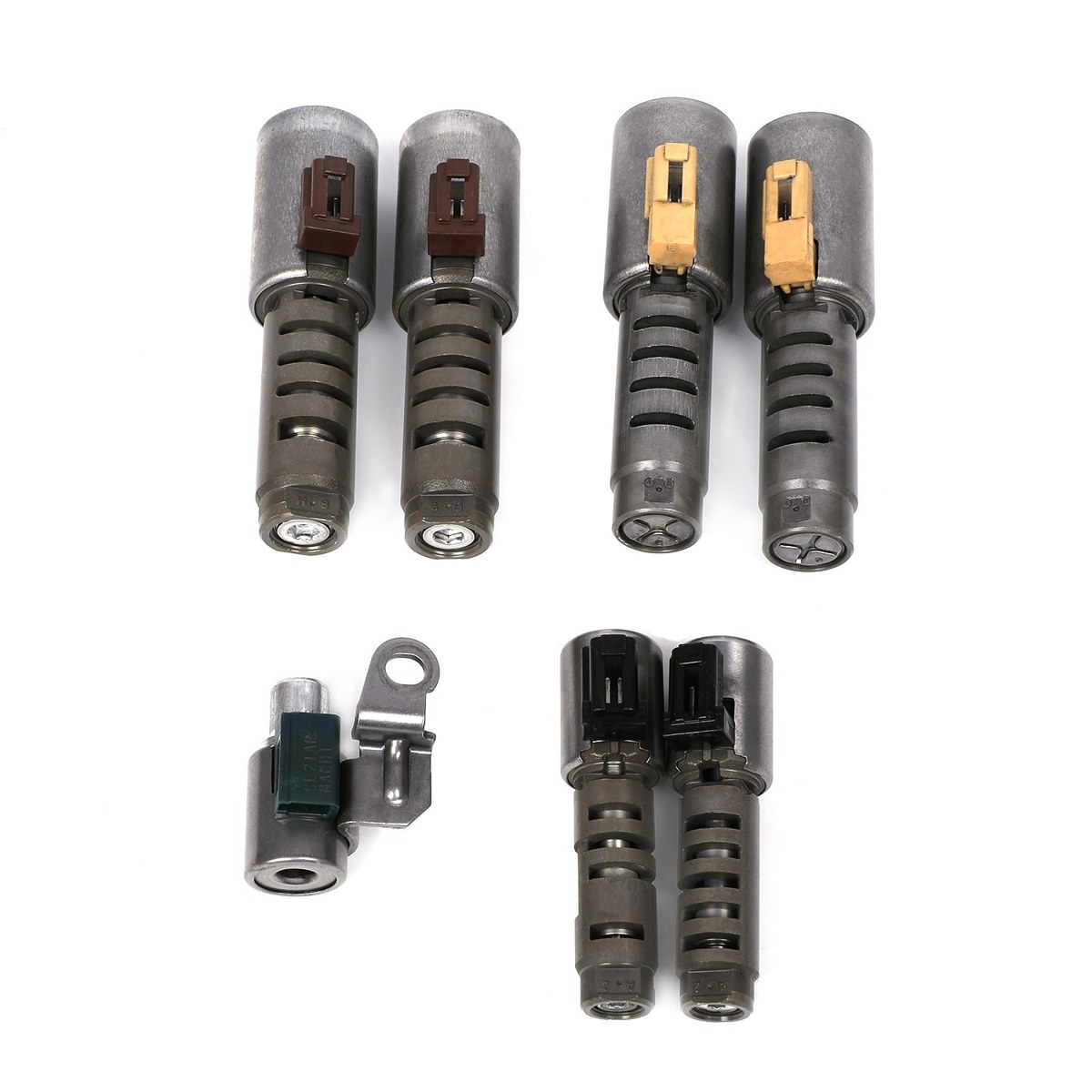
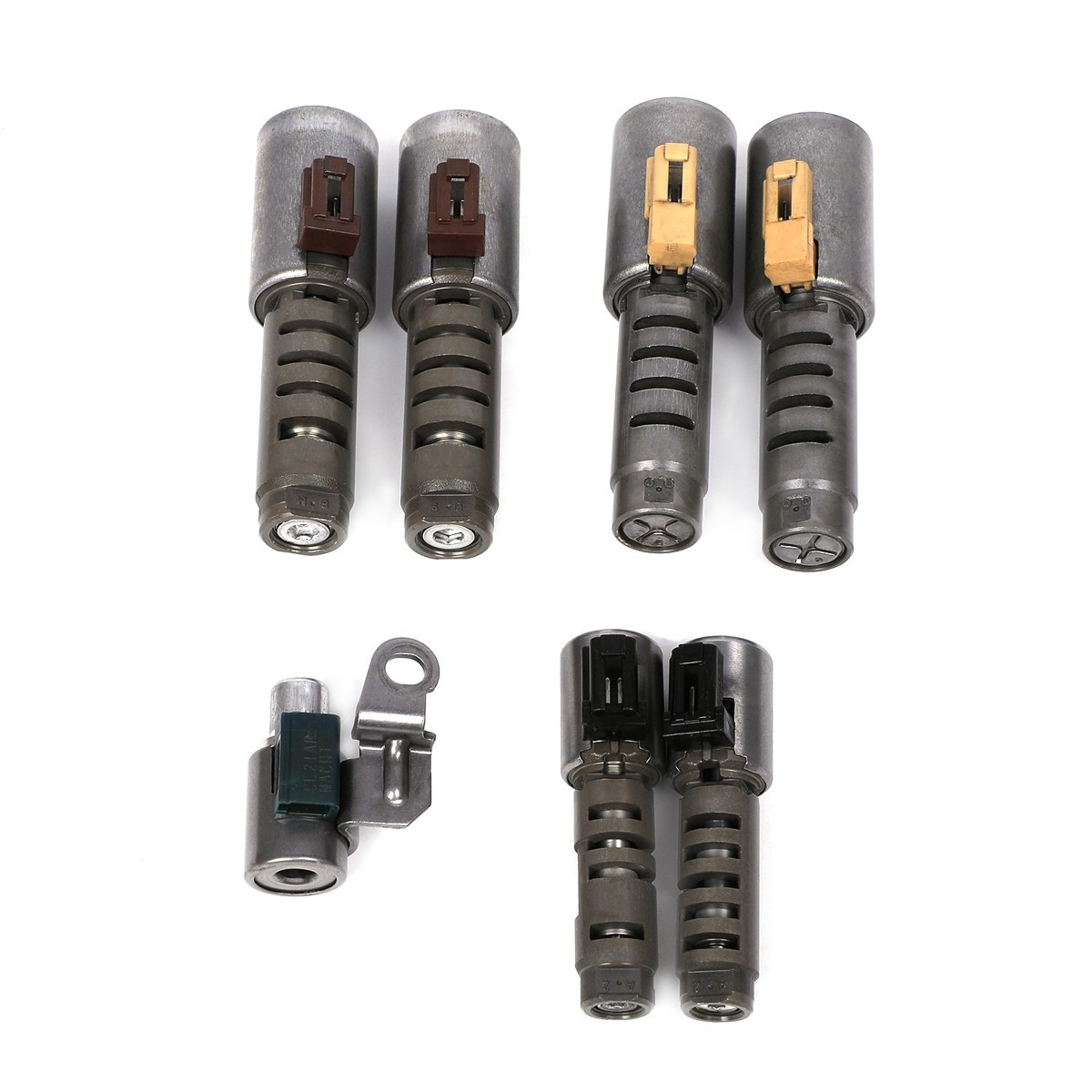
Shopping for a U760E TCC solenoid because your four-cylinder Camry, RAV4, Highlander or Venza shudders at light throttle or set a lockup code? This listing is the full seven-piece U760E solenoid set rather than a single lockup solenoid. You get six canister-style linear solenoids, in matched pairs with brown, tan and black connectors, plus the small bracket-mounted on/off solenoid with the green connector. Replacing the whole set costs little more than chasing one solenoid at a time, and it puts every pressure-control circuit back on equal footing.
What the solenoids do in a U760E
The U760E is the four-cylinder version of Toyota's Aisin six-speed front-drive transaxle, introduced in the 2010 model year according to Gears Magazine (ATRA). The transmission computer runs line pressure, clutch apply and torque converter lockup through pulse-width-modulated linear solenoids, so each solenoid is constantly metering fluid rather than simply switching on and off. Toyota also uses flex lockup, a partial converter apply that can be commanded in any gear under light to moderate throttle and while coasting. Because the lockup solenoid is working almost all the time, its spool and screen see a lot of debris over the life of the fluid. When a solenoid sticks or leaks internally, the pressure it controls drifts, and the TCM sees a slip it cannot correct.
Symptoms a worn solenoid set can cause
- Light-throttle shudder roughly between 25 and 50 mph as the converter applies
- Lockup codes such as P0741 or rpm that flares and drops at steady cruise
- Shift or pressure solenoid performance codes with solenoids that still read fine on an ohmmeter
- Harsh or flaring shifts, especially once the fluid is hot
- Delayed or harsh engagement into Drive or Reverse
How to confirm before you buy
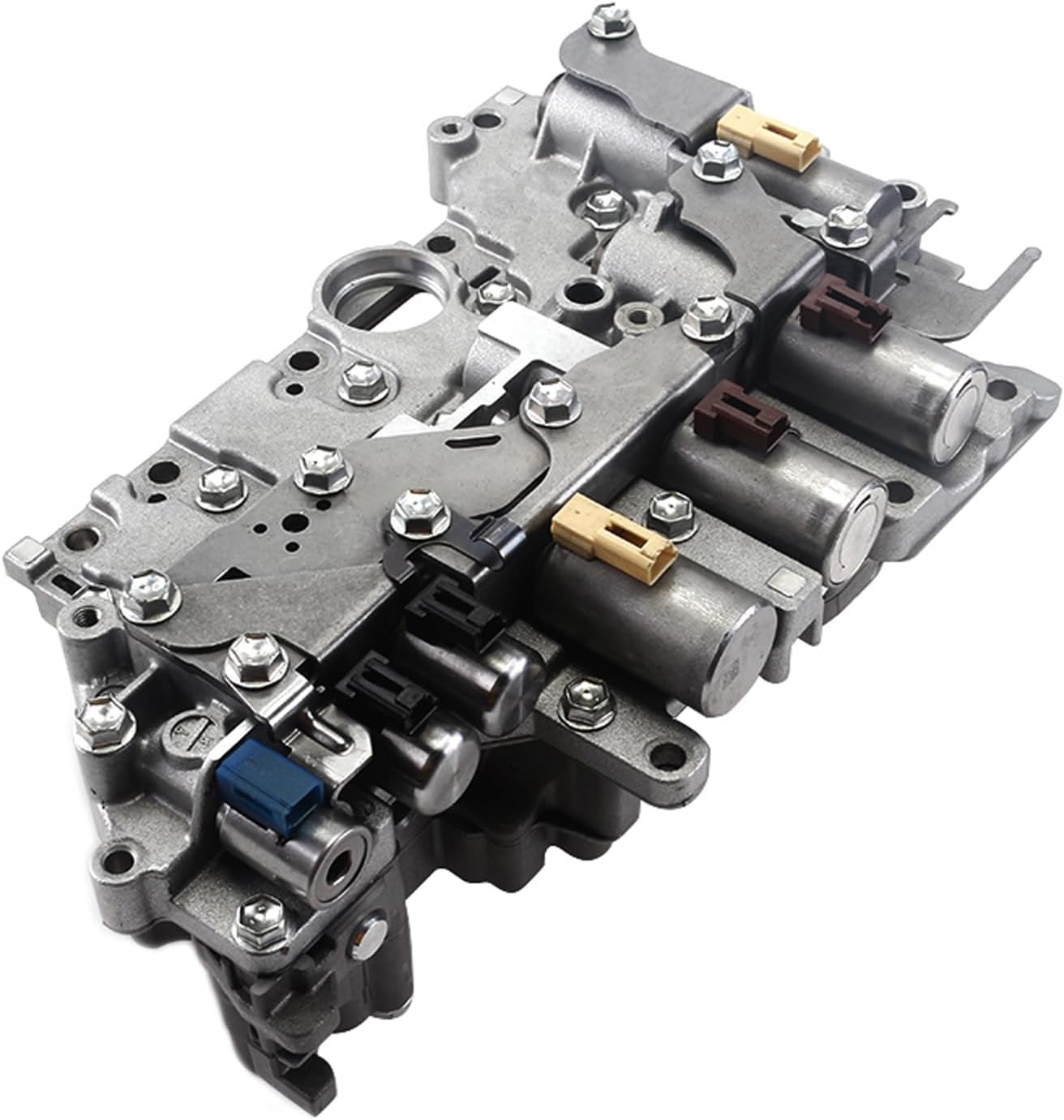
Gears Magazine points out that Toyota solenoids rarely fail electrically but are prone to fail mechanically when fluid deteriorates, so a resistance test passing does not clear them. Before you condemn the solenoids, check fluid type and level first; the U760E needs Toyota WS, and the wrong fluid alone causes converter shudder and solenoid codes. Drive the car in Manual 3rd to turn off flex lockup, which separates an engine misfire from a converter apply problem, and repair any engine or MAF faults before chasing shift quality. The U660E and U760E problems and service guide covers this sequence in detail. If the fluid is dark and full of material, the valve body bores are likely worn too; in that case a complete U760E valve body for the Camry 2.5L is the longer-lasting repair.
Fitment
This set is built for the U760E, the six-speed behind the 2.5L four-cylinder in the Camry and RAV4 and the 2.7L in the Highlander and Venza. Applications and model years vary, and some four-cylinder vehicles in the same years used older four- and five-speed units, so confirm the transmission tag says U760E before ordering. V6 models with the 3.5L use the U660E, which shares the design family; if you have one, lay your old solenoids next to the photos and compare connector colors, body shape and the mounting bracket before installing. When in doubt, send us your year, model and engine size. All U760E-compatible parts are listed on the U660E/U760E collection page.
Install notes
- Drain the fluid and drop the pan; the solenoids are reached from underneath on the valve body.
- Remove one solenoid at a time and install its replacement in the same bore so the connector colors land on the matching harness plugs.
- Lube each new O-ring with clean WS fluid and torque the retaining bolts lightly and evenly into the aluminum.
- Clean the pan and magnet and install a new filter and pan gasket at the same time.
- Refill with Toyota WS and set the level at 185-194 F through the overflow plug per Toyota bulletin T-SB-0036-13.
- Clear adaptive values with a scan tool that supports the ECT reset, then drive cold to hot so the TCM relearns lockup and shift timing.
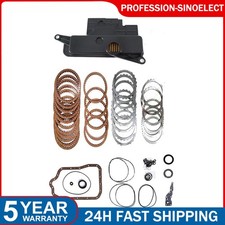
If the unit also has slipping clutches, pair the solenoids with a U760E master rebuild kit rather than reinstalling them in a worn transmission.