A 10R80 that is pushing past 100,000 miles is not a lost cause, but it does need a different kind of attention than a new truck off the lot. The unit has ten clutch applications instead of six, a valve body that leans on precise pressure control for smooth shifts across all ten gears, and a history of mid-production running changes that Ford addressed with technical service bulletins rather than a redesign. Knowing which of those bulletins actually apply to your build date, and which wear points show up on their own without a code, is most of what separates a truck that keeps working at 180,000 miles from one headed for a rebuild.
This checklist covers the 10R80 in the F-150, Expedition, Navigator, Explorer, Mustang, Ranger and Transit: the fluid and filter baseline, five Ford TSBs worth checking against your build date, the cooler-line and valve-body wear points documented by Sonnax and GEARS Magazine, and a 2025 recall that applies specifically to remanufactured units sold as replacement parts. Every source is linked at the bottom.
Start with the fluid and filter baseline
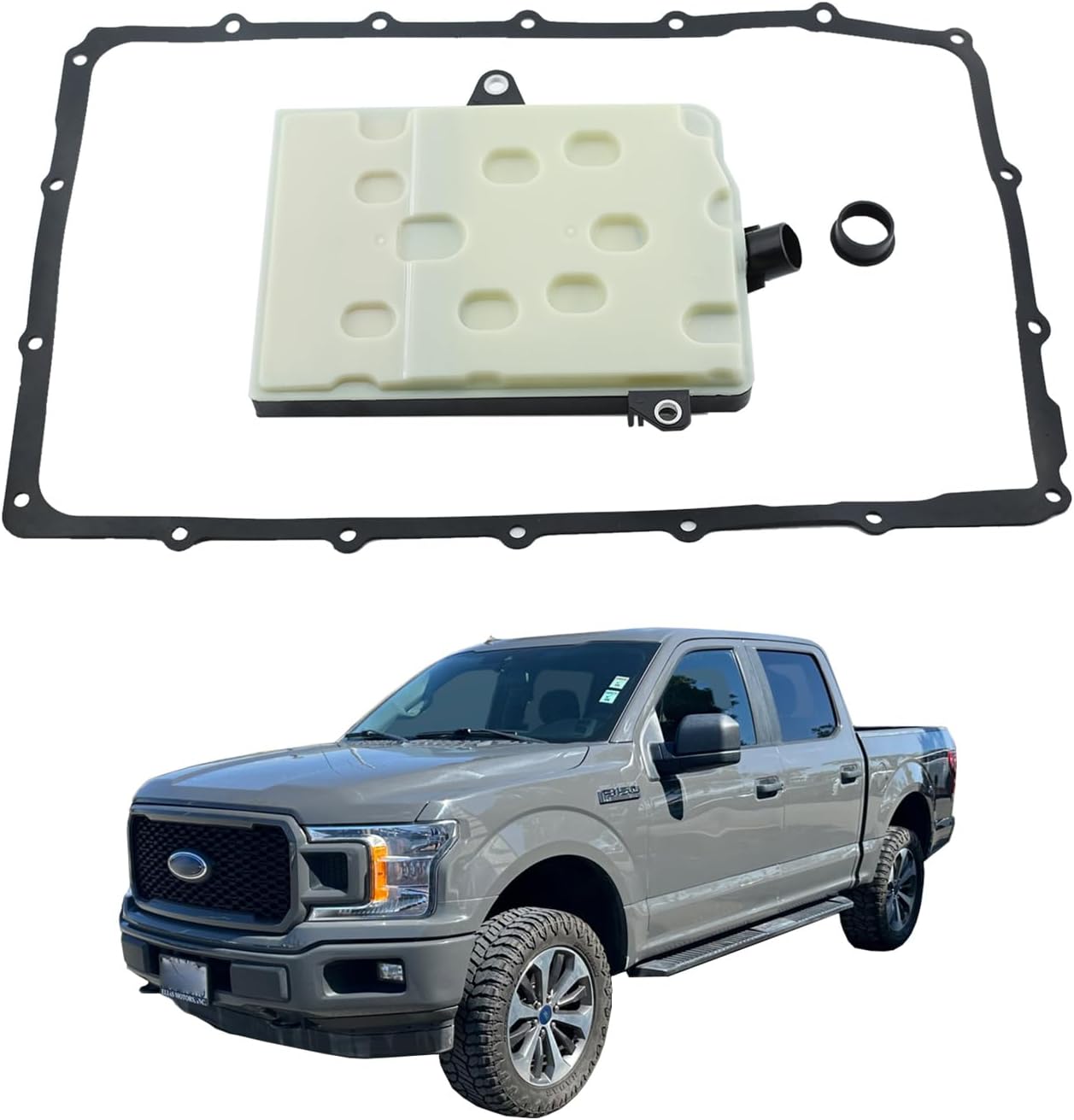
Ford's own schedule is lighter than most owners expect. The 2022 Expedition owner's manual lists the automatic transmission fluid change at every 150,000 miles (240,000 km) with no added line for towing or heavy idling in the Special Operating Conditions tables. The filter and pan gasket are both listed as "if needed" parts across every 10R80 TSB that touches the pan, not mandatory service items.
My practice on a high-mileage truck is simpler: if the pan is coming off for any reason on this checklist, the filter goes in with it, and a truck that tows, plows or idles on a job site gets serviced well before 150,000 miles rather than at it. The full procedure, Ford part numbers and refill steps are in our 10R80 filter and pan service guide.
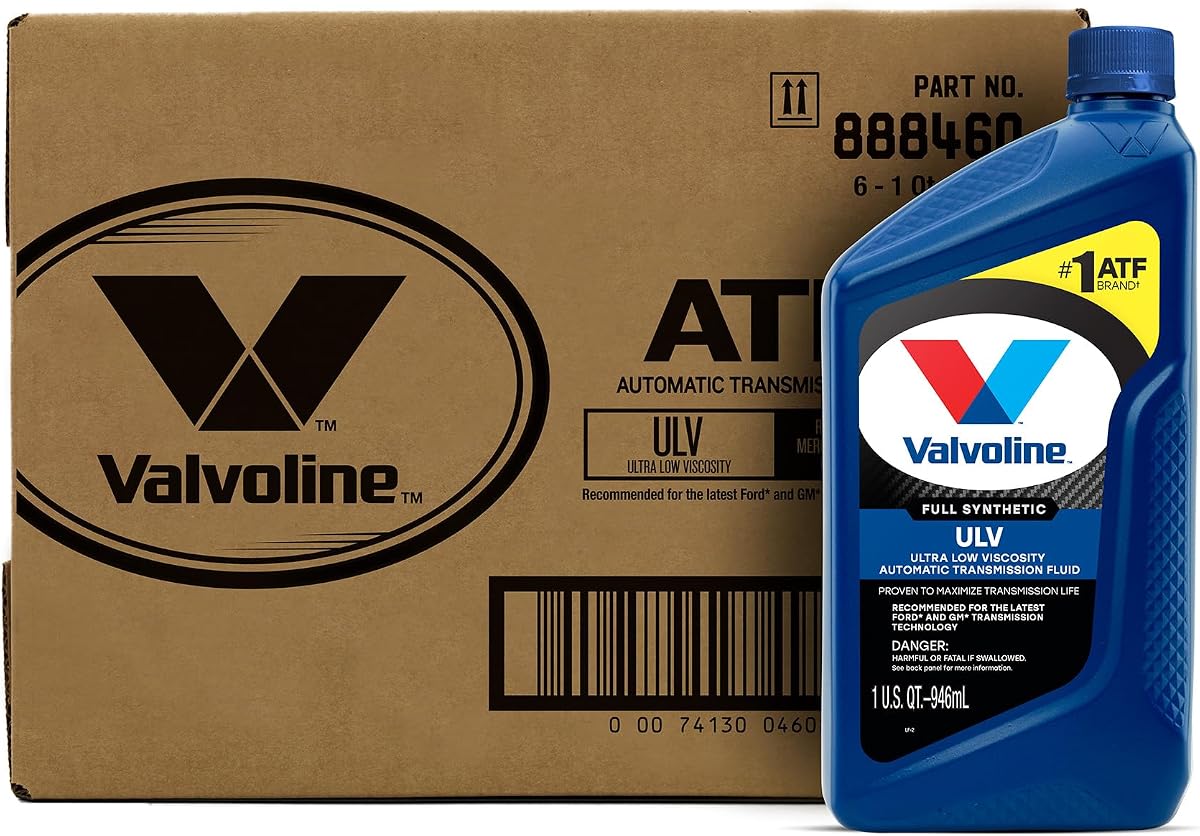
Fluid is MERCON ULV only (Ford XT-12-QULV), never substituted or mixed with MERCON LV, which is a different spec used for the transfer case fluid on 4WD and AWD 10R80 applications in several of the TSBs below. Reading the pan magnet when it is open is free diagnostic information: Ford's bulletins state plainly that a fine layer of gray metal flake is normal. Clutch material, bright chunks you can pick up with your fingers, or brass glitter are not, and point toward the wear points covered later in this checklist.
Check for open TSBs against your build date
The 10R80 has a long production run with several running changes, so Ford's fixes for a given symptom often only apply to trucks built in a specific window. A dealer can check your VIN against open bulletins in Ford's OASIS system, but matching your symptom to the list below tells you what to ask about. These are not blanket recommendations to replace anything; they are what to flag if the symptom matches.
MIL with P0741 and P1744 (built on or before 20-Nov-2017)
TSB 20-2117 covers 2017-2018 F-150/Raptor and 2018 Expedition/Mustang/Navigator units built on or before 20 November 2017. The cause is a sticking torque converter clutch (TCC) valve inside the main control valve body, and the fix is replacing the main control valve body assembly outright, not a solenoid or a reflash.
Harsh engagement, harsh shift or delayed shift, long DTC list
TSB 23-2123 covers 2017-2020 F-150, 2018-2021 Expedition/Navigator/Mustang and 2019-2023 Ranger with any of a long list of pressure and shift-solenoid-circuit codes (P0751 through P0772, the P2700 series, P0729 through P0736, among others). Ford attributes this to the adaptive calibration not keeping pace with normal hardware break-in over time. The fix starts with a transmission strategy reprogram and an adaptive learning drive cycle; if that does not resolve it, the main control valve body gets overhauled. The bulletin is explicit that metal flakes on the magnet during that teardown are a normal finding, not evidence of a separate problem.
Momentary neutral-out while in drive
TSB 23-2120 covers 2018-2021 Expedition/Navigator (10R80) and 2020-2021 Explorer/Aviator (10R60 and 10R80 MHT), with possible codes P07E6 and/or P07E4 and sometimes an audible noise. The cause is a leak in the park valve circuit, and the fix replaces the valve body separator plate with an improved version after inspecting the park pawl actuator rod and cam for wear.
Harsh or delayed engagement from the CDF clutch cylinder (built on or before 15-Aug-2022)
TSB 24-2304 covers 2020-2022 Explorer, 2020-2023 Transit, 2021-2022 F-150, 2021-2022 Mustang and 2022 Expedition/Navigator, excluding hybrid units, built on or before 15 August 2022, with a similar long list of shift and engagement codes. The cause here is different from 23-2123: axial movement of the CDF clutch cylinder (part 7H351) sleeve, which creates hydraulic circuit leaks in the C, D and F clutch applies. Diagnosis requires a pressure-transducer CDF test with Ford's VCMM tooling before the cylinder is replaced; it is not a visual call.
No upshift past second gear, or stuck below third (2024-2025 model years)
TSB 25-2423 is the newest of the group, covering 2024-2025 Expedition, Explorer, F-150, F-Super Duty (10R100), Mustang, Transit and Navigator with codes P0757 and/or P2701. The cause is a damaged SOWC (selectable one-way clutch), diagnosed with a directional test on the No. 1 ring gear after the fluid pump is pulled, and corrected by replacing the front support assembly if the SOWC fails to hold in one direction.
Recall: T10 bearing missing from remanufactured units
This one is not a TSB, it is a safety recall, and it only applies to a specific population: NHTSA campaign 25E070 (Ford's internal number 25SB3), opened 30 October 2025, covers remanufactured 10R80 transmissions sold as service repair parts for 2017-2021 Ford and Lincoln vehicles, not the original factory-installed unit. The automatic transmission T10 bearing may not have been installed, which can prevent the transmission from holding Park and allow the vehicle to roll away. If a 10R80 in your shop had its transmission replaced with a reman unit under warranty or through a parts counter, that is the one to check, not the original.
Check the cooler lines before they cause a bigger problem
GEARS Magazine notes that the 10R-series units already run warmer than many OEM transmissions, with a normal operating range of 206-215 F (97-102 C). A coolant-to-ATF heat exchanger, sometimes backed by a remote ATF-to-air cooler on heavy-duty applications, manages that heat, and a coolant control valve (CCV) governs how much engine coolant reaches the exchanger based on PCM-commanded logic.
The failure mode that catches people off guard at high mileage is internal: the rubber ATF cooler lines can rupture internally without any visible external leak, trapping fluid pockets that restrict or stop cooler flow entirely. The fix is not a torque spec, it is inspection: run an infrared gun or thermal camera along the lines in and out of the transmission and the heat exchanger, looking for a sudden temperature drop that marks a restriction. If the CCV is suspect, verify its control signal with scan data and a DVOM, then confirm flow with bidirectional controls; with the valve closed in Park, the inlet-to-outlet temperature difference should grow, and opening it should equalize them. Our 10R80 cooler line replacement guide covers the hardware side of this job.
Know the valve body's own wear points
Separate from any TSB, Sonnax's Ford 10R60/10R80 and GM 10L60/80/90 (Gen. 1) vacuum test guide maps the valve body bores that wear on these units, independent of any build-date window. Its rule is simple: test each valve at rest, and a low vacuum reading means the bore is worn. The ones that matter most at high mileage:
- TCC regulator valve bore. Per the Sonnax guide, wear here shows up as TCC apply and release problems, low TCC apply pressure in full lockup, and converter shudder with TCC slip. The repair is Sonnax 105740-15K for the Ford 10R60/80/90 (105740-16K is the GM Gen. 1 version).
- TCC signal damper bore and piston. Sonnax lists lube failures, TCC apply and release problems, overheated fluid or converter, and delayed engagement (repair: 105740-06K). The Zip Kit quick guide also notes that some late-model 10R80 separator plates have no hole over that accumulator. If yours has none, the damper kit is not needed.
- Main pressure regulator valve bore. Wear here costs you line pressure control across the board: low line pressure, delayed engagement, poor shift quality, TCC apply and release problems and, left long enough, burnt clutches (repair: 105740-12K, or oversized 105740-20K).
- TCC priority valve. Sonnax ties wear here to TCC apply and release problems, overheated fluid, TCC slip codes, and low line pressure combined with TCC complaints (repair: 105740-03K).
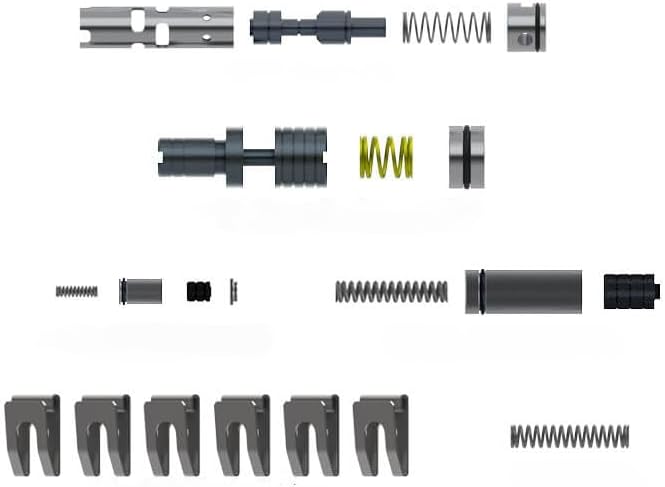
- Latch valves. The Zip Kit deburrs the A, B, C and F clutch latch valves with stem inserts and new springs, and adds solenoid stabilization retainers. The kit also includes the TCC priority valve, the TCC signal and LPC signal damper pistons, the main pressure regulator valve and a TCC regulator valve spring.
None of these show a check-engine light on their own until the pressure loss gets severe enough to trip a TCM fault. A valve body that is shifting rough, running hot, or slow to engage at 120,000-plus miles with no active codes is a reasonable candidate for inspection here before a full overhaul is assumed necessary. Our 10R80 valve body problems and testing guide covers how to isolate it on the bench.
Putting it together
For a 10R80 past 100,000 miles with no specific complaint yet, this is the order I work through:
- Confirm the last fluid and filter service date and mileage; service it if it is approaching 150,000 miles or has never been done on a truck that works for a living.
- While the pan is off, read the magnet and the filter screen for anything beyond normal gray flake.
- Check the build date against the TSB list above if any shift complaint, neutral-out, or MIL is present, and have the dealer run the VIN through OASIS to confirm.
- If the transmission was ever replaced with a remanufactured unit, check it against recall 25E070 for the T10 bearing.
- Thermal-scan the cooler lines and verify CCV operation, especially on a truck that tows or has run hot before.
- If shift quality is soft or inconsistent with no stored codes, suspect the valve body wear points above before condemning the unit.
10R80 Sonnax Zip Kit, Ford Gen 1 valve body
Addresses the TCC regulator, TCC signal damper and main pressure regulator wear points covered above. From our sister store CoreTransmissionParts.
Shop the part for this fix →Need more for the 10-speed? The 10-speed parts collection covers the Ford and GM 10-speed valve body kits, clutches and hard parts.
Need parts for this job?
Filter and gasket kits, the Sonnax valve body kit, pressure control and TCC solenoids, and ULV-spec fluid are all on our 10R80 parts page, with checkout on site.
FAQ
What mileage should trigger a 10R80 fluid and filter service?
Ford's own schedule lists the automatic transmission fluid change at 150,000 miles with no added interval for towing or heavy idling. Rebuilders tend to go sooner on trucks that tow, plow or idle for long periods, and the filter is an if-needed part that gets replaced whenever the pan is off.
How do I know if a TSB applies to my 10R80?
Every 10R80 TSB lists specific model years and a build-date cutoff, since Ford often fixes the root cause mid-production. A dealer can check your VIN against open bulletins in OASIS. Matching your symptom (harsh shift, neutral-out, no upshift past second) to the bulletins above narrows it down, but the VIN check is what actually confirms it.
Is the 10R80 recall only for new transmissions?
No. NHTSA campaign 25E070 covers remanufactured 10R80 transmissions sold as service repair parts for 2017-2021 Ford and Lincoln vehicles, not the original factory unit. If your truck had its transmission replaced under warranty or at a shop with a reman unit, that is the one to check for the missing T10 bearing.
Why does my 10R80 have metal flakes on the pan magnet at high mileage?
Ford's own bulletins state that a layer of fine metal flakes on the magnet is a normal condition at any mileage. What is not normal is clutch material, chunks you can pick up with your fingers, or brass glitter, which point to internal wear rather than ordinary break-in.
What causes 10R80 valve body wear at high mileage?
Sonnax's vacuum test guide flags the TCC regulator valve, TCC signal damper piston, TCC priority valve and main pressure regulator valve bores. When they wear, the symptoms are delayed engagement, poor shift quality, TCC slip and shudder, overheated fluid and eventually burnt clutches. A low vacuum reading at the bore confirms the wear.
Related guides
- 10R80 Common Problems and Fixes
- 10R80 Harsh and Delayed Shifts
- 10R80 Valve Body Problems and Testing
- 10R80 Filter and Pan Service Guide
- 10R80 Torque Converter Shudder Fix
Sources
- Ford Motor Company, Technical Service Bulletin 20-2117, "10R80 - Illuminated MIL - DTCs P0741 And P1744 - Built On Or Before 20-Nov-2017," 14 April 2020, via NHTSA. Backs the 2017-2018 F-150/Raptor and 2018 Expedition/Mustang/Navigator coverage, the sticking TCC valve cause, and the main control valve body replacement fix. static.nhtsa.gov (PDF)
- Ford Motor Company, Technical Service Bulletin 23-2123, "10R80 - Harsh/Delayed Engagement And/Or Harsh/Delayed Shift," 13 April 2023, via NHTSA. Backs the 2017-2020 F-150, 2018-2021 Expedition/Navigator/Mustang and 2019-2023 Ranger coverage, the DTC list, the adaptive-calibration cause, the reprogram-then-overhaul repair path, and the normal-metal-flakes note. static.nhtsa.gov (PDF)
- Ford Motor Company, Technical Service Bulletin 23-2120, "Momentary Neutral-Out Condition In Drive," 15 May 2023, via NHTSA. Backs the 2018-2021 Expedition/Navigator and 2020-2021 Explorer/Aviator coverage, the P07E6/P07E4 codes, the park valve circuit leak cause, and the separator plate replacement fix. static.nhtsa.gov (PDF)
- Ford Motor Company, Technical Service Bulletin 24-2304, "Various Vehicles Equipped With A 10R80 Automatic Transmission - Harsh/Delayed Engagement And/Or Harsh/Delayed Shift - Built On Or Before 15-Aug-2022," 24 September 2024, via NHTSA. Backs the 2020-2022 Explorer, 2020-2023 Transit, 2021-2022 F-150/Mustang and 2022 Expedition/Navigator coverage, the CDF clutch cylinder (7H351) axial movement cause, and the VCMM pressure-transducer CDF test procedure. static.nhtsa.gov (PDF)
- Ford Motor Company, Technical Service Bulletin 25-2423, "No Upshift Past Second Gear, Unable To Achieve Third Gear Ratio, And/Or Illuminated MIL With DTCs P0757 And P2701," 23 September 2025, via NHTSA. Backs the 2024-2025 model-year coverage, the P0757/P2701 codes, the damaged SOWC cause, and the directional test and front support replacement procedure. static.nhtsa.gov (PDF)
- National Highway Traffic Safety Administration, Recall Acknowledgment Letter, Campaign 25E070 (Ford number 25SB3), "Automatic Transmission May Not Shift Into Park," 30 October 2025. Backs the remanufactured 10R80 transmission population (2017-2021 Ford/Lincoln service repair parts), the missing T10 bearing, and the loss-of-Park/rollaway risk. static.nhtsa.gov (PDF)
- GEARS Magazine (ATRA), "Ford's 10R Series Transmission: More Need-to-know Information Inside the Unit!" September 2024. Backs the 206-215 F (97-102 C) normal operating range, internally ruptured rubber cooler lines restricting flow, the coolant control valve function and test method, and the LPC/TCC accumulator bore wear and CIDAS solenoid notes. gearsmagazine.com
- Sonnax, "Ford 10R60, 10R80 & GM 10L60/80/90 (Gen. 1) Vacuum Test Guide" (10L80-VacTestGuide). Backs the at-rest vacuum test method (low vacuum indicates wear) and the symptoms and repair part numbers for the TCC regulator valve (105740-15K Ford / 105740-16K GM), TCC signal damper piston (105740-06K), TCC priority valve (105740-03K) and main pressure regulator valve (105740-12K / 105740-20K). sonnax.com (PDF)
- Sonnax, 10L80-G1-10R80-ZIP Zip Kit Quick Guide and Installation Booklet. Backs the kit contents (TCC priority valve, TCC signal and LPC signal damper pistons, main pressure regulator valve, TCC regulator valve spring, latch valve stem inserts and springs for A, B, C and F, solenoid stabilization retainers) and the note that some late-model 10R80 separator plates have no hole over the TCC signal damper accumulator. sonnax.com (PDF)
- Ford Motor Company, 2022 Expedition Owner's Manual, Scheduled Maintenance (edition 202109). Backs the automatic transmission fluid change interval of 150,000 miles (240,000 km) with no added Special Operating Conditions line for towing or heavy idling. 2022 Expedition Owner's Manual (archived PDF)