A Ranger owner who says the transmission "slips" could be describing four different things on a 10R80. RPM can flare between gears. A shift can slide into neutral before the next clutch bites. The truck can be slow to pick up Drive or Reverse when it is cold. Or the tach can creep up a couple hundred RPM at a steady 60 mph with no shift at all. Each of those has a different cause, and the expensive one means pulling a 234 lb transmission. This guide sorts the complaint first, then walks the fix Ford documents for the 2019-2023 Ranger, which is cheaper than most shops assume.
The facts below come from Ford's service bulletins as published by NHTSA, the 2019 Ranger workshop manual specifications, and Sonnax's 10-speed tech articles. Links are in the Sources section at the bottom. For the non-slip problems on this truck, see our 10R80 Ranger common problems guide.

Step one: figure out which clutch is slipping
The 10R80 has six clutches (A through F) and a one-way clutch, and every gear uses a different combination. Ford's Ranger 307-01 specifications list which clutches apply in which gear. That chart is the most useful diagnostic tool you have, because it tells you what a gear-specific slip points at before you touch a wrench.
| Clutch | Applied in (per Ford 2019 Ranger chart) | Ranger plate count (friction / steel) | Clearance spec |
|---|---|---|---|
| A | 1-6, M1, M2, R | 3 / 2 | 0.029-0.048 in |
| C | 2, 3, 4, 5, 7, 9, 10, M2 | 4 / 4 | 0.050-0.062 in |
| D | 2, 3, 4, 6, 7, 8, 10, M2, R | 5 / 5 | 0.057-0.069 in |
| E | 1, 3, 5, 6, 7, 8, 9, M1 | 4 / 3 | 0.044-0.068 in |
| F | 4-10, R | 3 / 3 | 0.039-0.050 in |
C, D and F all live in the CDF cylinder. Look at the pattern. If a Ranger pulls hard in 1st but flares into 2nd, 3rd and 4th, every one of those gears uses C and D. If Reverse is also slow to engage, D and F are both in Reverse. A slip that touches most of the gears from 2nd up, plus a lazy Reverse, points at the CDF drum's feed circuit, not at one worn clutch pack. A slip only in 1st, with everything else crisp, cannot be the CDF drum, because none of C, D or F carries power in 1st.
TSB 22-2428 confirms the Ranger counts run one plate short of the F-150 and Mustang in each of C, D and F. Stack an F-150 count into a Ranger drum and you will never hit the clearance spec.
Log it, do not guess
Drive the truck with a scan tool logging engine RPM, turbine shaft speed (TSS), output shaft speed (OSS), commanded gear and transmission fluid temperature (TFT). Divide TSS by OSS and compare it with the ratio for the commanded gear. Ford lists the Ranger ratios as 4.69, 2.98, 2.14, 1.76, 1.52, 1.27, 1.00, 0.85, 0.68 and 0.63, with 4.86 in reverse. A healthy unit settles onto the target ratio as soon as the shift finishes. A slipping clutch shows a ratio that drifts, overshoots, or takes too long to arrive, and that is what sets the ratio codes P0729 and P0731 through P0736 and the apply-time codes P2700 through P2708.
Then compare engine RPM with TSS. If the ratio in the gearbox is dead steady but engine RPM is running 100 to 300 above turbine speed with the converter commanded locked, you are looking at torque converter clutch slip, not a gear clutch. That is a separate path, covered in our 10R80 TCC lockup guide.
The cheap causes Ford lists first
Both Ranger bulletins start with software and adaptive memory, not hard parts.
TSB 23-2152 (22 May 2023) covers 2019-2023 Rangers with harsh engagement, harsh shift or delayed shift, with or without the solenoid, apply-time and ratio codes listed above. Ford says the cause "may be due to the keep alive memory in the PCM/TCM or the transmission main control valve body." The procedure is short. If none of the listed DTCs are stored, reprogram the transmission strategy download and run the adaptive learning drive cycle. If the condition is still there, or if codes were present to begin with, overhaul the main control valve body and road test after another adaptive drive cycle. Ford pays 0.8 hours for a reflash and relearn that fixes it, and 4.0 to 4.6 hours on a Ranger when the valve body gets overhauled.
TSB 22-2428 (26 May 2023) is the broader 10-speed bulletin. It covers 2019-2023 Rangers built on or before 15-Aug-2022 and names four possible causes: PCM/TCM software, the transmission solenoid ID strategy, sticking valves in the main control valve body, and axial movement of the CDF clutch cylinder (7H351) sleeve. Its procedure for Ranger runs in this order: check FDRS for newer PCM/TCM software and relearn; if codes are present, go straight to the valve body; if not, reprogram the strategy download and relearn; if it still fails, overhaul the valve body; only if that fails does the transmission come out for a CDF cylinder.
Ford's note at the end of both bulletins is the one that saves comebacks. After the adaptive strategy is reset, the TCM relearns clutch fill, and shifts "may result in firmer than normal upshifts and downshifts for several days." Tell the customer before the truck leaves, or it comes back the next morning as a new complaint.
Rule out the battery and the fluid level
Two free checks come before any of that. A tired battery on these trucks can produce erratic shifts, harsh engagements and a unit that will not adapt after repair, as covered in our Ranger common problems guide. Load test it and put the truck on a maintainer before any reflash or relearn, because a relearn done on low voltage is a relearn you will do twice.
Then check the fluid hot. Ford's Ranger specification is Motorcraft MERCON ULV (XT-12-QULV, spec WSS-M2C949-A), and the manual says flatly that other fluids "will cause internal transmission damage." The level is checked on a level surface at 96-101 C (206-215 F). Ford lists 12.5 qt (11.8 L) for a dry unit and converter and warns that a drain-and-fill takes a different amount, so never fill by quart count. Low fluid lets the pump draw air under hard acceleration and on long sweepers, line pressure drops, and the truck flares. Sonnax also notes that universal or older fluids cause shift complaints and early failure in these units, because ULV is thinner and the pump and calibration were built around it. Our 10R80 fluid type and capacity guide covers the fill procedure.
When the valve body is the slip
A sticking valve does not wear a clutch on its own. It changes how fast and how hard the clutch gets its oil. A main pressure regulator valve that hangs up gives you low line pressure, which feels like a flare under load. A latch or boost valve that sticks gives you a late, soft apply that the TCM then tries to correct with more pressure. That is why Ford's fix for so many "slip" complaints on the Ranger is a valve body overhaul, not frictions.
If it comes off, the 22-2428 parts list for a Ranger calls for six new solenoid retaining clips (HL3Z-7G007-A), new solenoid retaining plate bolts (W712658-S439) and MERCON ULV. The Ranger-specific inspect-and-replace parts are filter HL3Z-7A098-A and separator plate JL3Z-7Z490-E. Do not borrow an F-150 filter or plate because "they're both 10R80s." Ford gives them different numbers.
Ford's 23-2152 also has a line every tech should know: some metal flakes on the pan magnet are normal on these units, and Ford shows a photo of an acceptable amount. Fine fuzz on the magnet is not a reason to condemn the transmission. Chunks, bronze, or friction material in the pan are a different story.
When it is the CDF cylinder: prove it before you pull it
The CDF cylinder feeds the C, D and F clutches through a pressed-in sleeve. When that sleeve moves axially, it opens a leak in the feed circuit. Whichever of C, D or F is being filled loses oil partway through, the ratio misses its target, the TCM adds pressure, and the shift finishes with a bump. To the driver that is a slip followed by a clunk. Sonnax lists the same failure's symptoms as bump shifts, no 2nd, neutral shifts and slide shifts.
The Ranger part in 22-2428 is CDF cylinder JR3Z-7H351-B, shared with the 2.3L Mustang, some Transits and the 3.3L Explorer Police. It is a different number from the F-150's.
Ford's later CDF bulletins add a line pressure leak test before the transmission comes out, and the procedure in TSB 25-2475 is literally illustrated on a Ranger ("Ranger shown, others similar"). In short:
- Install a pressure transducer on the line pressure port. Ford warns the port is an M10x1.0 thread and that an NPT fitting will damage the case.
- Log the PIDs LINE_DSD, the transducer pressure, SSA_AMP through SSF_AMP and TFT. Set the pressure scale to 0 to about 320 psi.
- If the complaint only happens cold, test with TFT at or below 49 C (121 F). Otherwise test at or above 50 C (122 F).
- At idle, command all shift solenoids to 0 mA, then back-probe and ground the LPC solenoid circuit to raise line pressure. Ford notes actual pressure will read below commanded.
- Command SSA to 1.0 A for two seconds and back to 0 mA while recording, then do the same with SSC. A circuit that sags hard when its clutch is commanded is leaking.
Back-probing the LPC circuit sets a DTC, so clear codes when you are done. On 2021 and newer Rangers, Ford's SSM 54674 adds a "Transmission Clutch Circuit Leak Test" in FDRS that uses the pressure and vacuum transducer. Ford says the old in-car air check "has been shown to produce a high rate of false positives" and is not to be used to diagnose internal hydraulic leaks or to justify replacing a transmission. On the bench it is a different story. Sonnax still recommends air checking each drum with its mating shaft, and the assembled unit through the pump, before it goes back in the case.
Doing the CDF repair right
Ford's CDF procedure in 22-2428 replaces the cylinder and the seals around it: four new sun gear No. 3 shaft seals, five new input shaft to sun gear No. 3 shaft seals, a new input shaft seal and five new input shaft front seals. It then calls for C, D and F clutch pack clearance measurements and a T3 thrust bearing measurement to set front end clearance. On a Ranger that is 0.007-0.016 in for RWD and 0.002-0.011 in for 4x4, per the 307-01 specs.
Sonnax makes a point here that applies to every slipping 10R80. Sealing ring and hub bushing wear are among the biggest causes of lost charge pressure in these 10-speeds, and lost charge pressure shows up as lockup and overheating complaints too. If the drum is apart, inspect the sealing rings and bushings, not just the sleeve. Burnt frictions get new packs, with clearances set using the selective snap rings (Ranger C clutch 1.5-2.3 mm, D clutch 1.8-2.8 mm). If the valve body that caused the bad shifts is not fixed too, the new drum is on borrowed time.
What is not on the Ranger list
The no-upshift-past-2nd failure caused by a damaged one-way clutch in the front support (P0757 with P2701) is well documented on other 10R80 trucks. Ford's current bulletin for it, TSB 26-2263 (May 2026), lists the 2024-2026 Expedition, Explorer, F-150, Mustang, Transit and Navigator. The Ranger is not on it. A Ranger with P0757 and P2701 is covered by the 22-2428 and 23-2152 path above, where those codes appear in the DTC list.
How I work a slipping Ranger 10R80
- VIN, model year, build date. 2019-2023 trucks built on or before 15-Aug-2022 fall under 22-2428. All 2019-2023 Rangers fall under 23-2152.
- Hot fluid level and condition. MERCON ULV only, set at 206-215 F. Burnt fluid with friction material changes the plan.
- Log the slip. TSS divided by OSS against commanded gear, then engine RPM against TSS for the converter. Match the slipping gears to the clutch chart.
- Battery, software, relearn. Load test, latest PCM/TCM calibration, adaptive drive cycle.
- Valve body. Overhaul with Ranger parts if it still fails or if codes were stored.
- Prove the CDF leak with the line pressure test or the FDRS leak test. Only then pull the transmission.
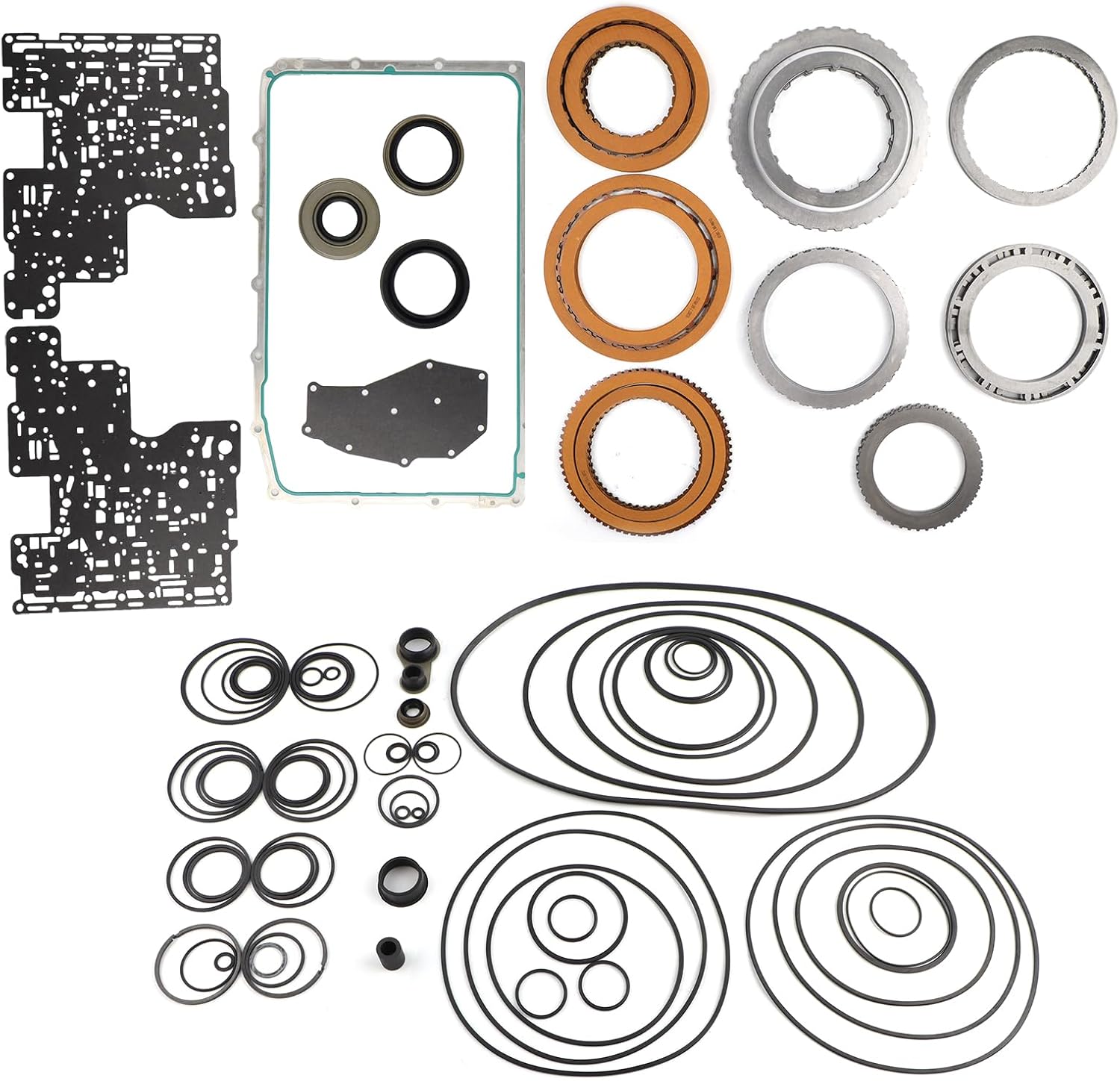
10R80 deluxe rebuild kit for the CDF teardown
If the pressure test says the CDF circuit is leaking, the unit comes apart and every seal Ford lists gets replaced. This deluxe kit covers 2017-up 10R80s, Ranger included, so the seals are on the bench before the case is open.
Shop the part for this fix →Need valve body parts too? The 10-speed parts collection has the Sonnax valve body kits and parts the Ford and GM 10-speeds share.
Need parts for this job?
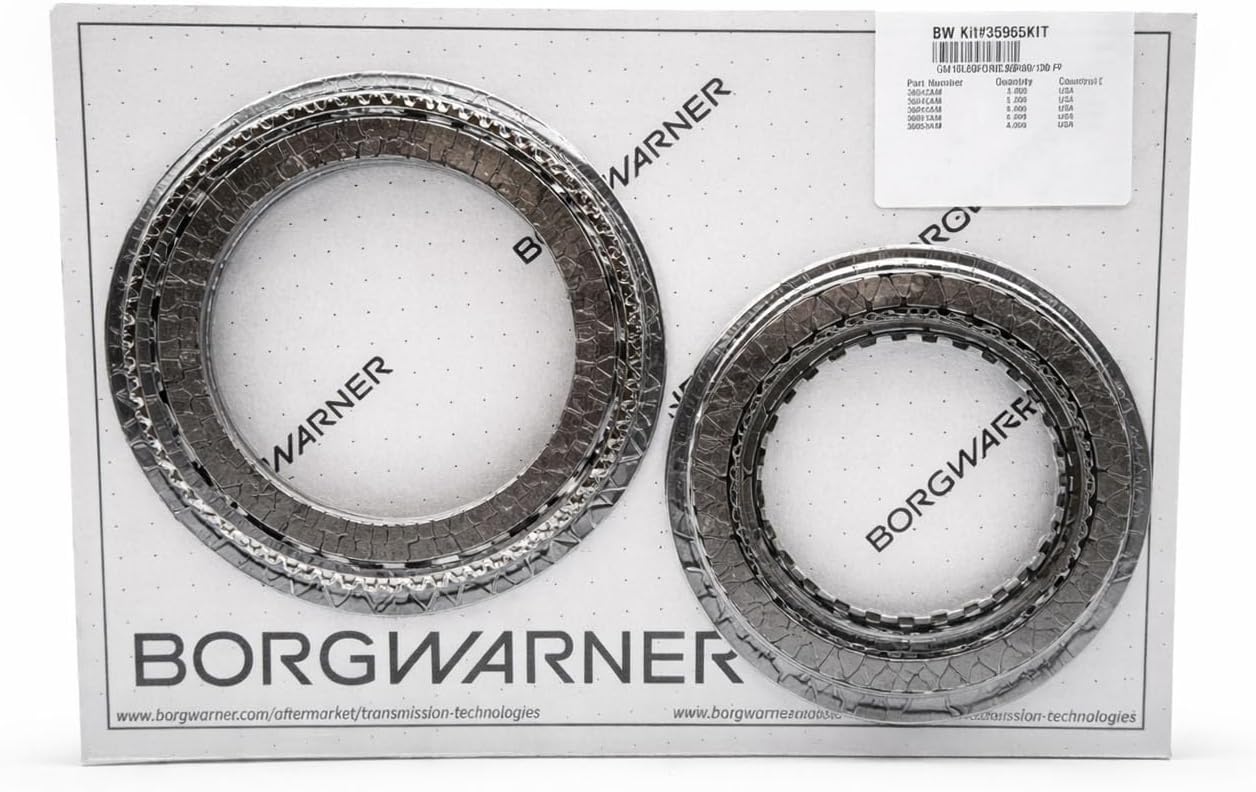
The Sonnax Zip Kit for a valve body overhaul, master rebuild kits, friction modules and MERCON ULV-spec fluid are all on our 10R80 parts page, with checkout on site.
FAQ
Why is my Ford Ranger transmission slipping?
On a 2019-2023 Ranger 10R80, Ford's bulletins list four causes: PCM/TCM software and keep alive memory, sticking valves in the main control valve body, the solenoid ID strategy, and a moving CDF clutch cylinder sleeve that leaks C, D and F clutch apply oil. Low or wrong fluid can feel the same. Check the fluid hot and relearn the adaptives before blaming hard parts.
Is there a TSB for a Ranger 10R80 slipping or flaring?
Yes. TSB 23-2152 covers 2019-2023 Rangers with harsh engagement or harsh or delayed shifts and fixes them with a reflash, adaptive relearn and, if needed, a valve body overhaul. TSB 22-2428 covers Rangers built on or before 15-Aug-2022 and adds the CDF clutch cylinder replacement, part JR3Z-7H351-B, as the last step.
Can low or overfilled fluid make a Ranger 10R80 slip?
Yes. Low fluid lets the pump draw air under hard acceleration and in long corners, which drops line pressure and causes flares. Ford calls for Motorcraft MERCON ULV only, checked on a level surface at 206-215 F. Do not fill by quart count, because a drain takes less than the 12.5 qt dry capacity.
How do I tell converter slip from clutch slip on a Ranger?
Log engine RPM, turbine shaft speed and output shaft speed. If turbine speed divided by output speed wanders from the commanded gear ratio, a gear clutch is slipping. If that ratio is steady but engine RPM runs above turbine speed with the converter commanded locked, the torque converter clutch is slipping.
Does an air check prove a 10R80 CDF leak?
Not in the truck. Ford's SSM 54674 says the in-car air check produces a high rate of false positives on 2021-2026 10R80s and must not be used to justify replacing a transmission. Use the FDRS clutch circuit leak test or the line pressure test with a transducer on the M10x1.0 port. Bench air checks of a drum with its mating shaft are still valid.
Related guides
- 10R80 Ranger Common Problems and Fixes
- 10R80 Slipping Under Load
- 10R80 Harsh and Delayed Shifts
- 10R80 Mustang Slipping: Causes and Fix
- 10R80 Valve Body Problems and Testing
Sources
- Ford Motor Company — Technical Service Bulletin 23-2152, "10R80 — Harsh Engagement And/Or Harsh/Delayed Shift" (22 May 2023, supersedes 23-2123). 2019-2023 Ranger applicability, DTC list, keep alive memory and main control valve body cause, service procedure, Ranger labor times, normal pan magnet flakes, firm-shift relearn note. static.nhtsa.gov (PDF)
- Ford Motor Company — Technical Service Bulletin 22-2428, "10R60/10R80/10R80 MHT Automatic Transmission — Harsh/Delayed Engagement And/Or Harsh/Delayed Shift" (26 May 2023). 15-Aug-2022 Ranger build cutoff, four stated causes including CDF sleeve movement, Ranger diagnostic path, CDF cylinder JR3Z-7H351-B, Ranger C/D/F plate counts, filter and separator plate numbers, seal list and clearance steps. static.nhtsa.gov (PDF)
- Ford Motor Company — Technical Service Bulletin 25-2475, "Harsh/Delayed Engagement And/Or Harsh/Delayed Shift" (29 Oct 2025). Line pressure leak test procedure (Ranger shown): M10x1.0 port, PIDs, TFT test windows, LPC back-probe, SSA/SSC 1.0 A commands. static.nhtsa.gov (PDF)
- Ford Motor Company — SSM 54674, "Various 2021-2026 Vehicles — 10R80 — New Transmission Clutch Circuit Leak Test In FDRS." New FDRS leak test, air check false positives, air check not to justify replacement. static.nhtsa.gov (PDF)
- Ford Motor Company — 2019 Ranger Workshop Manual, Section 307-01 "Automatic Transmission — 10-Speed — Specifications" (rev. 12/11/2018). MERCON ULV spec, 12.5 qt dry fill, 206-215 F check temperature, clutch application chart, plate counts, clutch clearances, selective snap rings, end clearance, gear ratios, transmission weight. Ford specifications (PDF)
- Sonnax — Caleb Perham, "Troubleshooting Pressure Loss in 10-Speed Clutch Packs" (April 2025). Sealing ring and hub bushing wear as a top cause of charge pressure loss, CDF symptoms, bench air checks, ULV-only fluid. sonnax.com