A 47RE with 150,000 or 200,000 miles on it is not automatically a rebuild. Plenty of these units behind the 5.9L Cummins and the 8.0L V10 in 1996-2002 Ram 2500 and 3500 trucks are still mechanically healthy at that mileage. What they usually have is deferred maintenance: fluid that was never changed on the towing schedule, bands that were never readjusted, a cooler circuit that has been slowly packing up, and a governor pressure solenoid that has been living in dirty oil for two decades.
This is the checklist we run on a high-mileage 47RE before we decide whether it gets a service or a teardown. Each step tells you whether the next one is worth doing. Specs come from Chrysler's 2001 Dodge Ram Truck (BR/BE) service manual, governor diagnostics from ATRA's GEARS magazine, and cooler and hard-part notes from Sonnax and TransGo. Sources are at the end.

Step 1: Read the Fluid Before You Touch Anything
Pull the dipstick hot, engine idling, parking brake set, selector in Neutral. The 47RE is checked in Neutral, not Park, at about 82 C (180 F) per the service manual. Note three things before you drain a drop: the level, the smell, and what is on the rag.
- Level low: find the leak. Low fluid lets the pump draw air, which the manual ties to low, slow-building pressure and slipping bands.
- Level high or foamy: the geartrain whips an overfill into foam, with the same damage as running low.
- Burnt smell with metal or friction material: the manual is direct about this one. That combination means the transmission needs a recondition, not a fluid change. Stop here and price the rebuild.
Dark fluid with no burnt smell and a clean rag is the unit this checklist is for.
Step 2: Drop the Pan and Read the Debris
Fine gray paste on the magnet is normal wear. Steel slivers, bronze bushing flakes, needle rollers or thrust washer chunks are not. Black, flaky friction material means a band or clutch has been slipping.
Torque the pan bolts to 17 N·m (13 ft-lb) and the filter screws to 4 N·m (35 in-lb), per the manual, with a new gasket.
Step 3: Adjust Both Bands
Chrysler's maintenance schedules list fluid, filter and band adjustment as one job. These are the 47RE numbers, not the 46RE's:
| Item | 47RE spec |
|---|---|
| Front (kickdown) band adjusting screw | 8 N·m (72 in-lb), then back off 1-7/8 turns |
| Front band locknut | 41 N·m (30 ft-lb) |
| Rear (low/reverse) band adjusting screw | 8 N·m (72 in-lb), then back off 3 turns |
| Rear band locknut | 34 N·m (25 ft-lb) |
| Cooler line fitting at the case | 18 N·m (13 ft-lb) |
Back the front locknut off 3-5 turns and make sure the screw turns freely before you torque it. If you are using Adapter C-3705 to reach the front screw, the manual drops the torque to 5 N·m (47-50 in-lb) because the adapter changes the effective torque.
Pay attention to how far the screw went in
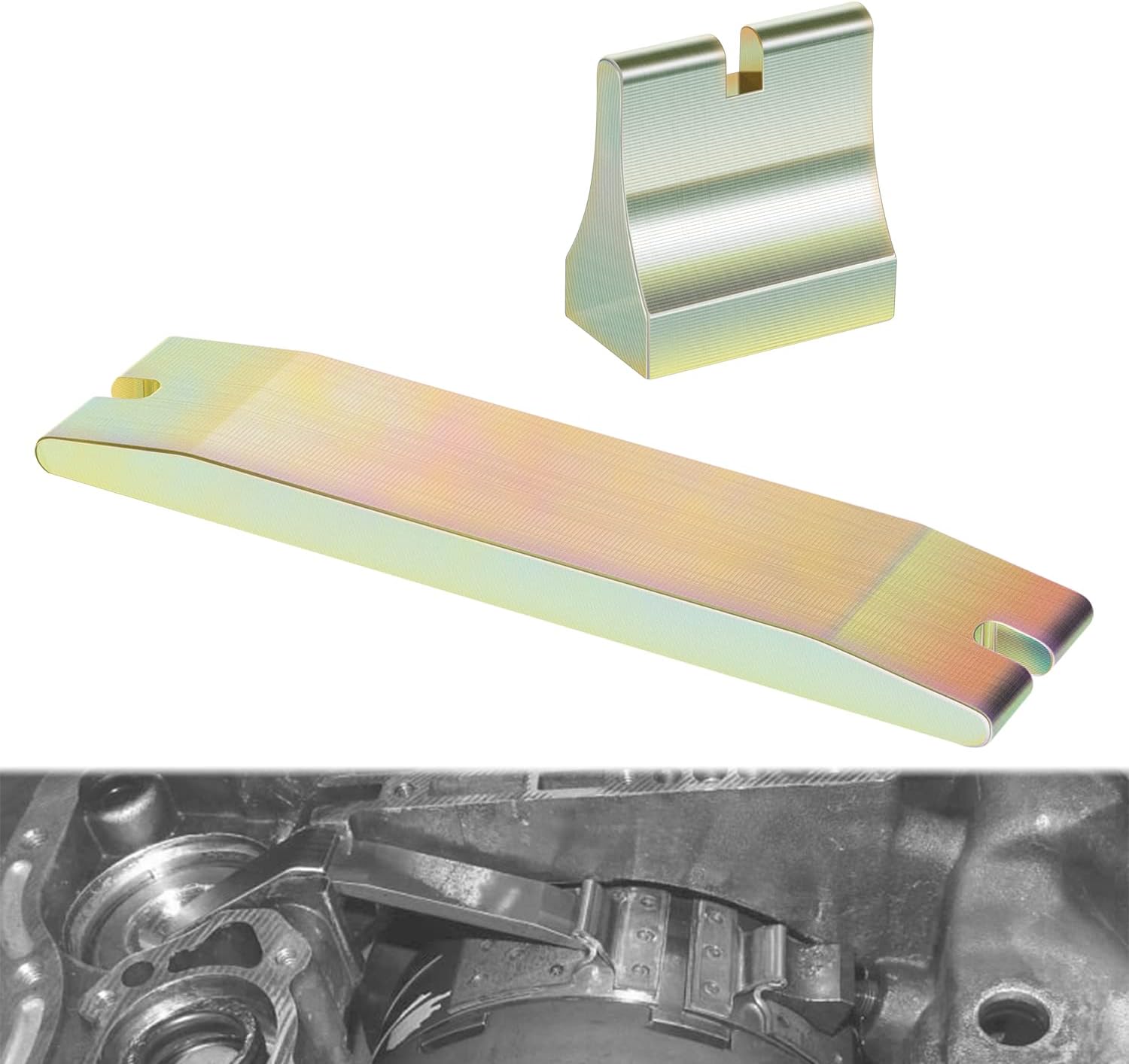
On a high-mileage unit the adjustment itself is a diagnostic. If the front screw turns a long way before it reaches 72 in-lb, the band lining is worn thin or the strut is bent. Sonnax notes that these Chrysler units commonly bend or break the kickdown band strut, which is why it makes a solid heat-treated heavy-duty kickdown band strut, 22825-01. A bent strut opens up band clearance, and on a towing truck that shows up as a slipping or flared 1-2 and 2-3 shift. If the adjustment ran out much further than you expect, plan on the strut and band at the next teardown rather than cranking the screw in to make up the difference.
Step 4: Check the Governor Pressure System
This is the step most services skip. The first three gears of a 47RE are shifted hydraulically by governor pressure, which the PCM makes with a duty-cycled governor pressure solenoid. As Dave Skora put it in his October 2006 GEARS article on troubleshooting the 42-47RE, if the unit does not shift properly from first through third, the first check is always governor pressure.
The numbers to work against, from that article:
- Governor pressure should be zero at a stop and rise about 1 psi per mph up to about 40 mph. Above about 40 mph the system sends mainline pressure to the governor port, so it stops tracking road speed.
- On the scan tool, Governor Desired Pressure and Governor Measured (transducer) Pressure should match each other and a gauge on the governor port. The scan tool only knows what the PCM tells it, so verify with the gauge.
- The governor transducer signal should read about 0.60-0.66 V at zero psi, about 3.0 V at 60 psi and about 4.5 V at 110 psi.
- There should be no governor pressure at all in Park, Reverse or Neutral. Pressure there means a crossleak in the case, valve body or governor body. Skora calls a loose or warped governor body a common problem.
The service manual's chart allows 0-1.5 psi at a stop; more than that keeps the transmission from downshifting.
Why high-mileage units fail this step
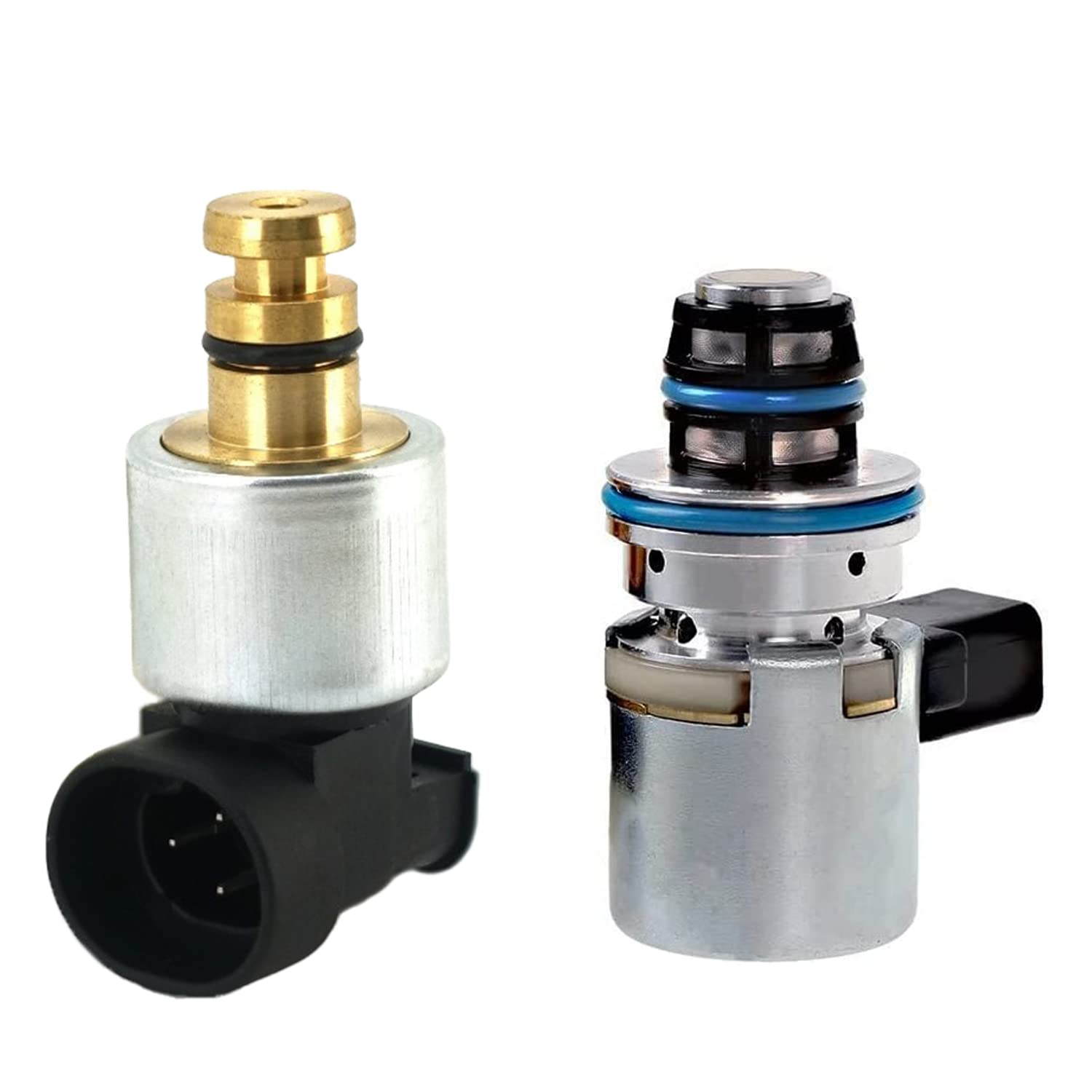
TransGo, which builds a repair kit for the OE solenoid, says 1995-2007 Dodge, Ram and Jeep trucks with the 42RE through 48RE family often come in with contaminated governor pressure solenoids. When the solenoid sticks or is restricted, the PCM sees the measured pressure disagree with the commanded pressure, sets a code and drops into limp-in. The symptoms TransGo lists are a 3rd-gear start, no upshift, governor solenoid or sensor performance codes, and limp mode. Its TF-GOV-SOL kit rebuilds the OE solenoid valve bore without removing the transmission, but only on solenoids that measure 2.5-5.0 ohms, so meter the solenoid first.
The GEARS article adds an important warning: a 3rd-gear start is not always limp mode. Crossleaks in the governor circuit and sticking shift valves cause the same 3rd-gear start without setting a code. The PCM only goes to limp mode if it sets a code or loses power. See our 47RE limp mode guide.
Step 5: Test the Cooler Circuit, Not Just the Cooler
Bob Warnke's Sonnax bulletin on 46-47RH/RE cooler and converter flow calls cooler restriction the most common issue in this family. Back pressure from a restriction acts on the switch valve and pushes it toward its spring, where it stages partway in its bore and chokes converter and cooler flow even more. Warnke notes trouble shows up as head pressure approaches 80 psi or more, and the symptom list includes P0740/P1740 converter codes, converter slip under high torque, delayed engagement, slow converter fill and hydraulic noise.
Measure it. Sonnax's instruction sheet for its 22771A-01 switch valve, which covers the 47RE, sets a minimum of 1 quart in 20 seconds (0.8 gpm) from the return line at the rear of the case, in Drive at idle. With a flow meter it lists 0.7-0.9 gpm at idle in Drive, about 1.8 gpm at 45 mph with the converter clutch off, and 2.1-2.2 gpm once it applies. Below that, find the restriction before you do anything else: the radiator cooler, any auxiliary cooler, the lines, or the drainback check valve in the cooler line. Sonnax's own quick check is to bypass the cooler temporarily and retest.
On 1996 and 1997 trucks, inspect the cooler line connectors at the case. NHTSA recall 97V084000 covered about 960,000 Chrysler trucks because the connector that holds the line to the transmission could melt under high-load fluid temperatures, letting the line come off and spray fluid. See our 47RE cooler line replacement guide.
Step 6: Line Pressure and the TV Cable
Put a gauge on the accumulator port. The manual's pressure chart calls for 54-60 psi at closed throttle. Low line pressure on a high-mileage unit points at pump wear, a worn pressure regulator bore, or internal leakage.
Every 47RE uses a mechanical throttle valve cable. Make sure it is not kinked, touching the engine, or stretched, and that the throttle body is at curb idle with the transmission throttle lever fully closed when you set it. A misadjusted TV cable changes line pressure and shift timing at the same time.
Step 7: Refill the Right Way
The 47RE takes Mopar ATF+4 (Chrysler MS-9602) only. The service fill is 3.8 L (4.0 qt), but the manual does not want you to dump in 4 quarts. Start with 3 pints after a fluid and filter change, start the engine, run through the ranges, and bring it up by the dipstick, finishing hot in Neutral. Wait at least two minutes after each addition for the fill tube to drain before you recheck. Skipping that wait is how most of these get overfilled. Full procedure: 47RE fluid type and capacity.
A 4-quart service only replaces about a quarter of the fluid, because the overhaul fill is 14-16 L (29-33 pints). On a neglected unit, do a second pan service a few hundred miles later rather than a pressure flush.
Service Interval Going Forward
The 2001 manual's maintenance schedules call for fluid, filter and band adjustment at 100,000 miles on Light Duty Schedule A, every 30,000 miles on Schedule B, and every 24,000 miles or 24 months on the Medium Duty schedule. Schedule B covers trailer towing, so a 47RE that tows is a 30,000-mile transmission by Chrysler's own definition.
When the Checklist Says Rebuild
If the fluid was burnt with debris, the bands would not adjust into spec, or line pressure stayed low after the other checks passed, the unit is coming apart. Put these on the parts list:
- The input shaft. Sonnax says input shaft failure in Dodge diesel transmissions is legendary and calls the OE two-piece shaft barely suitable even for stock power, with failures ranging from spline twist and breakage to clutch hub failure. Its one-piece 22121B-01 fits 1994-later units with the 1.245 in. sealing ring.
- The overdrive roller clutch bushing. Sonnax notes the output shaft housing bore varies, so replacement bushings can fit loose and kill the OD roller clutch. Use its oversized sprag pilot bushing, 12509-01.
- The cooler and lines. The manual says to reverse flush the cooler and lines and replace the converter after a failure that put sludge or metal in the fluid.
The Checklist
- Hot level check in Neutral; note smell and debris on the dipstick.
- Drop the pan; inspect the magnet and cut open the filter if needed.
- New filter and gasket; pan bolts 13 ft-lb, filter screws 35 in-lb.
- Adjust both bands to the 47RE specs; note how far the front screw traveled.
- Scan tool plus gauge on the governor port: zero at a stop, about 1 psi per mph, desired matches measured.
- Meter the governor solenoid if there are codes or 3rd-gear starts.
- Flow test the cooler return: at least 1 quart in 20 seconds in Drive at idle.
- On 1996-97 trucks, inspect the cooler line connectors for the recall remedy.
- Line pressure at the accumulator: 54-60 psi at closed throttle; check the TV cable.
- Refill with ATF+4 starting at 3 pints, finish by the dipstick hot in Neutral.
47RE Filter Kit with Pan Gasket 1998-2004 (OEM 52118789)
The filter and pan gasket for a 1998-2002 47RE service, from CoreTransmissionParts. Pair it with ATF+4 and adjust both bands while the pan is down.
View the filter kit →Shop RE-family transmission parts →
Frequently Asked Questions
How often should a high-mileage 47RE be serviced?
Chrysler's 2001 Ram service manual calls for fluid, filter and band adjustment every 30,000 miles on Schedule B, which covers trailer towing, and at 100,000 miles on the light-duty normal schedule. A 47RE that tows is a 30,000-mile transmission. After a catch-up service on a neglected unit, do a second pan service a few hundred miles later.
Is it safe to change the fluid in a 47RE with 200,000 miles?
Yes, if the fluid is not burnt and full of debris. The service manual says burnt fluid contaminated with metal or friction material means the transmission needs a recondition, not a fluid change. Dark fluid that does not smell burnt is a good candidate for a pan, filter and band service with ATF+4.
What are the 47RE band adjustment specs?
Per the 2001 Ram service manual, torque the front (kickdown) band screw to 72 in-lb and back it off 1-7/8 turns, then tighten the locknut to 30 ft-lb. Torque the rear band screw to 72 in-lb, back it off 3 turns, and tighten the locknut to 25 ft-lb. These differ from the 46RE numbers.
Why does my high-mileage 47RE start in third gear?
A 3rd-gear start usually means full mainline pressure is reaching the governor circuit. That happens in limp mode, often from a contaminated governor pressure solenoid, but GEARS notes crossleaks in the governor circuit and sticking shift valves cause the same 3rd-gear start without setting a code. Check with a scan tool and a gauge on the governor port.
Sources
- Sonnax — Bob Warnke, "46-47RH/RE Cooler and Converter Flow." Backs cooler restriction as the most common issue in this family, switch valve staging as head pressure nears 80 psi, the P0740/P1740, converter slip, delayed engagement and hydraulic noise symptoms, and the cooler bypass check. sonnax.com
- Sonnax — 4-Spool Switch Valve 22771A-01 instructions (42RE through 48RE), pump and cooler flow section. Backs the 1 quart in 20 seconds (0.8 gpm) minimum cooler flow in Drive at idle and the 0.7-0.9, 1.8 and 2.1-2.2 gpm flow meter readings. Sonnax instructions (PDF)
- ATRA GEARS Magazine — Dave Skora, "Troubleshooting the 42-47RE Transmissions," October 2006. Backs governor pressure as the first check for 1-3 shift problems, zero at a stop rising about 1 psi per mph to about 40 mph, verifying scan data with a gauge, the 0.60-0.66 / 3.0 / 4.5 V transducer readings, no governor pressure in P/R/N, the warped governor body note, and 3rd-gear starts without limp mode. atracom.blob.core.windows.net (PDF)
- TransGo — TF-GOV-SOL Governor Pressure Solenoid Repair Kit. Backs contaminated governor pressure solenoids in 1995-2007 42RE-48RE trucks, the commanded-versus-measured mismatch that sets codes and limp-in, the 3rd-gear start and no-upshift symptoms, in-vehicle repair, and the 2.5-5.0 ohm solenoid requirement. transgo.com
- Sonnax — "Dodge Diesel Input Shaft Upgrades for Every Performance Level" (2019). Backs the OE two-piece input shaft's failure modes (spline twist, breakage, clutch hub failure), the "barely suitable for stock" assessment, and 22121B-01 fitment for 1994-later units with the 1.245 in. sealing ring. sonnax.com
- NHTSA — Recall campaign 97V084000 (Chrysler). Backs the cooler line connector that could melt under high-load fluid temperatures and the roughly 960,000 affected trucks. NHTSA recall record
The fluid level procedure, 3-pint initial fill, service and overhaul capacities, pan, filter, band and cooler fitting torques, 54-60 psi line pressure, 0-1.5 psi governor pressure at a stop, and maintenance intervals are cited from Chrysler's 2001 Dodge Ram Truck (BR/BE) service manual (pages 0-6 to 0-13, 21-703, 21-709 to 21-710 and 21-715 to 21-718). That is a printed factory manual, so it is cited by page rather than linked. The Sonnax kickdown strut and sprag bushing pages linked in the text are product references, not counted as primary sources.