A noisy 47RE gets blamed for a lot of things it did not do. A whine on the highway or a bang on a coastdown often earns a rebuild quote. Often the noise is a throttle cable, a cooler circuit, a worn valve in the valve body, or a U-joint, and the transmission itself is fine.
This guide is about sorting 47RE noise complaints by type and by when they happen, so you know which section of the unit to suspect before the pan comes off. Per ATSG's 46RE/47RE/48RE technical manual, the 47RE was used behind the 5.9L Cummins diesel and the 8.0L V10 in 1995-2002 Ram pickups, so this is mostly a 2500/3500 truck that tows. Two things make 47RE noise diagnosis different from its 48RE successor: every 47RE still runs a mechanical throttle valve (TV) cable, and its shift timing is set hydraulically by an electronically controlled governor pressure circuit. Both of those show up in noise complaints.
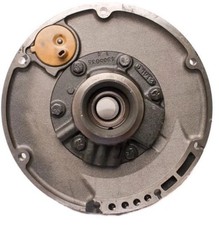
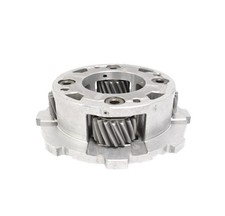
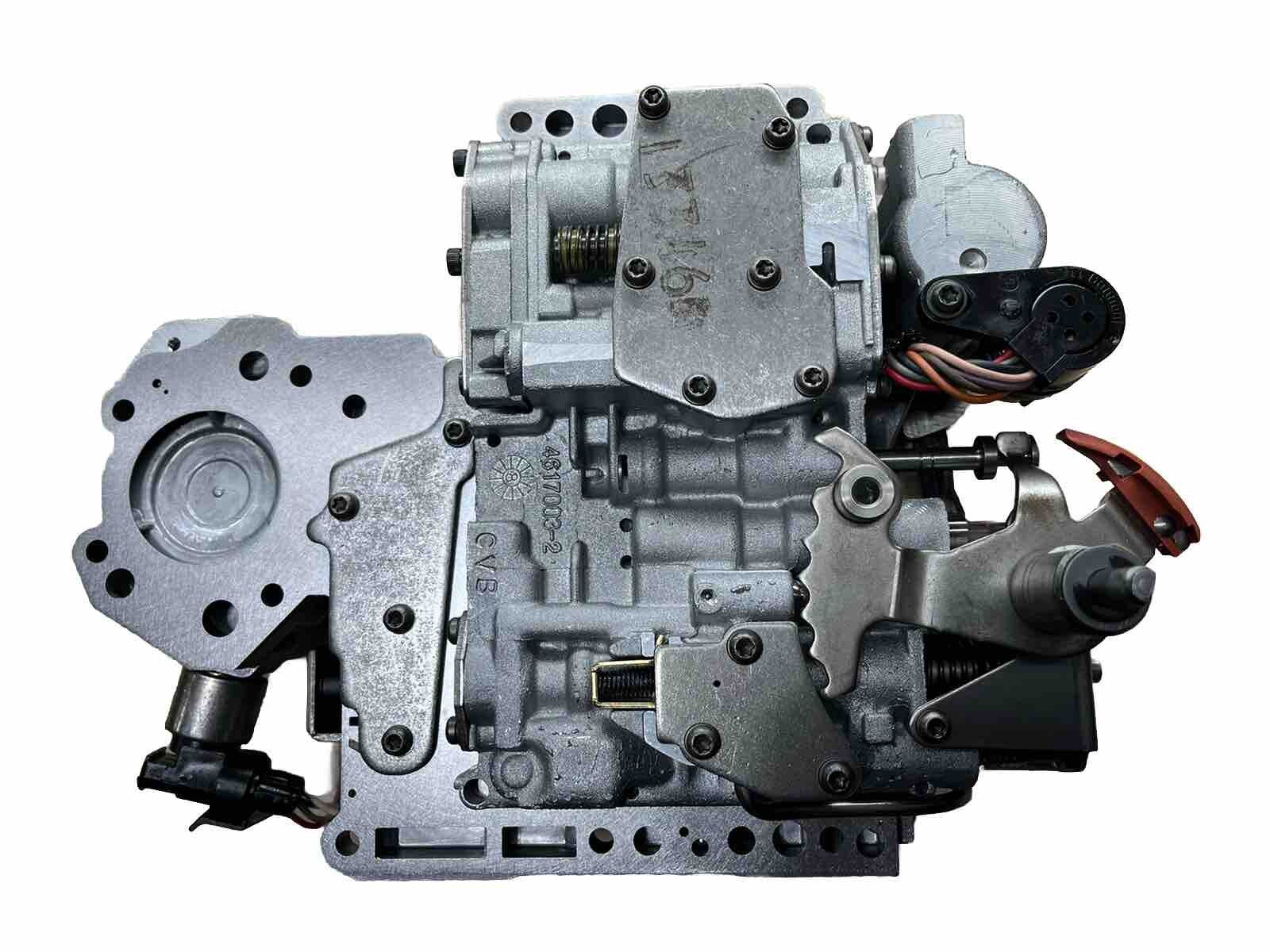
Three Noise Zones in a 47RE
ATSG describes the 46RE, 47RE and 48RE as four-speed units with two sections. First through third come from the front section: the front and rear clutches, the kickdown and low/reverse bands, the low roller clutch and the front and rear planetary gearsets. Fourth gear comes from the overdrive unit bolted to the back of the case, which has its own overdrive clutch, OD/direct clutch, overrun roller clutch and planetary gearset. The pump at the front is driven by the converter hub.
That layout gives you three places to put a noise:
- Engine-speed noise (present in Park and Neutral, changes with RPM): converter, flexplate, converter bolts, pump, and the hydraulic circuit including the valve body and cooler.
- Road-speed noise (follows vehicle speed, stays when you coast in Neutral): planetaries, low roller clutch, output shaft bearing and bushing, then the transfer case, driveshafts and axles.
- Fourth-gear-only noise: the overdrive unit.
Before Anything Else: Fluid Level and the Pan
Check the level the factory way: level ground, engine idling, parking brake set, selector in Neutral, fluid hot. The 47RE takes ATF+4 (Chrysler MS-9602) only. A low level lets the pump suck air past the filter, and aerated fluid makes a whine that climbs with RPM, usually with delayed engagement and a line pressure needle that will not sit still. An overfill lets the rotating parts whip the fluid into foam with the same symptoms plus fluid out the vent. Our 47RE fluid type and capacity guide has the fill amounts and the hot-check procedure.
If the noise is a growl or a grind, drop the pan before you do anything else. Fine gray sludge is normal. Steel slivers, roller pieces, bronze bushing flakes or chunks of thrust washer mean the noise is a part coming apart, and the diagnosis is now just about which part.
Buzz: Usually the Valve Body or the Cooler Circuit
A buzz is a high-pitched vibration, typically a valve oscillating in its bore. The factory diagnosis chart in Chrysler's 1998 Ram truck service manual (page 21-227) lists six causes of a buzzing noise: low fluid, a shift cable misrouted against the engine or bellhousing, a misassembled valve body (damaged valves or springs, loose bolts), leaking pump passages (porous casting, scored faces, excess rotor clearance, loose pump bolts), a plugged cooler, and a damaged overrunning clutch.
On a high-mile 47RE, two valve body wear points are the usual buzz makers, and Sonnax names both:
- Throttle buzz. Sonnax lists "throttle buzz" first among the complaints its 22771-03K throttle valve kit fixes on the 47RE and the rest of the Chrysler RWD family, along with shift timing concerns, poor kickdown, a late 2-3 and an oversensitive 3-2. The cause it gives is throttle valve and sleeve wear, and it notes the TV bore "wears out easily" in these units. A throttle buzz typically shows up at part throttle and changes as you move the pedal, because the cable is moving the TV plunger.
- Pressure regulator buzz. Sonnax's lube-regulated pressure regulator valve, 22771A-02K, lists pressure regulator buzz alongside delayed engagement, converter drainback, lube failures and converter bushing failure. Sonnax ties those to poor converter feed pressure from the OE valve. This buzz tends to be tied to engine speed and temperature rather than pedal position.
Sonnax's Chrysler 46/47RE vacuum test guide groups those same wear points, so a valve body that buzzes can be vacuum tested at the TV and pressure regulator bores rather than guessed at.
The cooler drainback valve and hydraulic noise
Some 47RE trucks have a drainback check valve in the cooler line. Sonnax's 22771A-02K instructions tell you to remove the cooler line drainback valve and say doing so prevents converter slippage, restricted cooler flow and hydraulic noise. Sonnax's separate write-up on 46/47RH-RE cooler and converter flow by Bob Warnke goes further. It calls cooler restriction the most common issue in this family and lists hydraulic noise as a symptom, along with 740/1740 slip codes, TCC slip at high torque, delayed engagements, slow converter fill and excessive stall. Restriction pushes the switch valve toward its spring, where it can stage mid-circuit and choke converter and cooler flow further, with trouble showing up as head pressure nears 80 psi. Warnke also notes that high release pressure in Reverse causes hydraulic noise in Drive or Reverse.
The test is simple and Sonnax calls it the most effective one: temporarily bypass the cooler and retest. If the buzz or whine drops, the restriction is in the cooler circuit. ATRA's GEARS magazine, in its 2022 article on a stalling 1999 Ram 2500 47RE, adds a quick check: loop the lines and blow no more than 40 psi of air into the rear cooler fitting, or run the return line into a bucket in gear and watch the flow.
Whine That Follows Engine Speed
A whine in Park and Neutral that climbs with RPM rules out the planetaries, output side and overdrive, because none of them are turning. Check, in order:
- Fluid level and filter. A cracked filter or a missing filter seal lets the pump pull air.
- The shift and TV cables, and the cooler lines. The factory chart (page 21-230) lists only two causes of a whine tied to engine speed: low fluid and a shift cable routed so it touches the engine or bellhousing. Pump noise travels down anything solid touching the case. Pull the cables and lines clear by hand and listen again.
- The cooler circuit. Bypass test, as above.
- The pump. A scored pump or one with excess rotor clearance whines and usually gives you slow engagement and low pressure hot first. GEARS found a less obvious pump fault on that 1999 truck: a warped stator support that let converter feed and return oil cross-leak, caught with an air test and confirmed with a flat file. The 47RE pump failure guide covers the pressure test.
Growl, Grind or Scrape
The factory chart (page 21-228) groups growling, grating and scraping noises together: a broken drive plate (flexplate), converter bolts hitting a bent dust shield, a broken or seized planetary gearset, a worn or broken overrunning clutch, scored or binding pump parts, a damaged output shaft bearing or bushing, faulty clutch application, and misadjusted front and rear bands.
The coast test splits these. Hold a steady road speed, shift to Neutral and let it roll. If the growl stays the same with the engine back at idle, it is on the output side: main geartrain, output bearing or bushing, overdrive, transfer case or axle. If it fades with engine RPM, it is on the input side: flexplate, converter, pump. A flexplate cracked around the converter bolt holes often makes a rhythmic knock at idle that changes when you load the engine against the brakes; look through the inspection opening with a light while someone bars the engine over by hand.
Noise in Fourth Gear Only
Since fourth comes entirely from the overdrive unit, toggle overdrive off at the same road speed. If the noise goes away in third, it lives in the overdrive section. The factory chart for noisy operation in fourth gear only (page 21-234) lists damaged OD clutch discs, plates or snap rings, a damaged OD piston or planetary thrust bearing, scored output shaft bearings, worn or chipped planetary gears, and worn or scored OD overrunning clutch rollers. All of those mean pulling the overdrive unit. Replace every thrust bearing in it while it is apart, and do not reuse a planetary with pitted pinion teeth.
The Clunk on a Closed-Throttle 4-3 Downshift
This is the classic 47RE complaint: coasting down, the unit drops from fourth to third and the driveline bangs. The factory chart (page 21-229) gives three causes: low fluid, a misadjusted throttle cable, and the wrong overdrive clutch select spacer (the OD piston thrust plate spacer, a selective part that sets OD clutch clearance).
The throttle cable matters more on a 47RE than on later units. ATSG notes that the electronic Transmission Throttle Valve Actuator only replaced the TV cable on 2005-up diesel trucks, so every 47RE relies on the cable. A cable that is too loose or too tight changes TV pressure, which changes both shift points and how hard the bands and clutches apply. Before you adjust it, confirm the transmission throttle lever is fully closed and the throttle body is at curb idle, then set the cable with the lock tab so the slack is just taken up. If the clunk started after a valve body, cable or engine job, check that first.
Rule out governor pressure
On the 42-47RE, first through third are shifted by governor pressure, which the PCM makes with a duty-cycled governor pressure solenoid. ATRA's 2006 GEARS troubleshooting article puts normal governor pressure at zero at a stop, rising about 1 psi per mph up to about 40 mph; above about 40 mph the system routes mainline pressure to the governor port. If governor pressure is wrong, coastdown shifts happen at the wrong speed and can land hard. Compare Governor Pressure Desired and Actual on the scan tool, then verify with a gauge on the governor port, because the scan tool only reports what the PCM thinks. GEARS lists the governor transducer at about 0.60-0.66 V at zero psi, 3.0 V at 60 psi and 4.5 V at 110 psi, and says an Actual reading above 105 psi at wide-open throttle in third or fourth points to excessive line pressure or a bad transducer.
Then check the driveline
Before you go inside, grab every U-joint, check the slip yoke and center support bearing if there is one, check transfer case and axle lash, and look at the transmission and transfer case mounts. A dry rear U-joint on a 3/4-ton diesel clunks on decel exactly like a transmission problem.
A Quick Diagnostic Sequence
- Fluid. Hot level in Neutral, ATF+4, smell and color. Pan down if it growls.
- Stationary test. Park and Neutral, raise RPM. Noise here is the front of the unit, the hydraulics, or something touching the case.
- Pedal sweep. A buzz that changes with pedal position points at the TV cable and throttle valve.
- Coast test. Neutral at road speed. Noise that stays is on the output side.
- Overdrive toggle. Same speed, third versus fourth. Fourth only means the overdrive unit.
- Cooler. Bypass it, then air or flow check it.
- Scan tool and gauges. Governor Desired versus Actual, verified with a gauge.
- Driveline. U-joints, yoke, mounts and lash before you call it internal.
Keeping It Quiet
- Get rid of cooler restrictions. Flush or replace the cooler after any failure that put metal in the pan, and follow Sonnax's advice on the drainback valve.
- Fix the valve body wear, not just the symptom. Worn TV and pressure regulator bores come back after a fluid change.
- Set the TV cable and measure the selectives (OD spacer, end play) any time they have been disturbed.
- Be careful with aggressive converters. GEARS warns that an aftermarket multi-disc converter clutch applies and releases harder and can make a marginal valve body worse.
Sonnax Throttle Valve Kit 22771-03K
If the buzz changes with pedal position, this is the Sonnax kit for worn TV valves and sleeves. Sonnax lists it for the 47RE and the rest of the Chrysler RWD family.
View the Sonnax throttle valve kit →Shop RE-family transmission parts →
Frequently Asked Questions
Why does my 47RE buzz when I press the gas pedal?
A buzz that changes with pedal position usually comes from the throttle valve circuit. Sonnax lists throttle buzz, poor kickdown, a late 2-3 and an oversensitive 3-2 as symptoms of throttle valve and sleeve wear in the 47RE valve body. Check that the TV cable is adjusted and not touching the engine first, then vacuum test or replace the worn TV bore parts.
What causes a clunk on a 47RE 4-3 downshift?
The factory diagnosis chart lists low fluid, a misadjusted throttle cable and the wrong overdrive clutch select spacer. Every 47RE uses a mechanical TV cable, so check its adjustment first, and confirm governor pressure is correct with a gauge. Rule out U-joints, the slip yoke, mounts and axle lash before going inside the transmission.
Can a restricted cooler make a 47RE noisy?
Yes. Sonnax calls cooler restriction the most common issue in the 46/47RE family and lists hydraulic noise among its symptoms, along with TCC slip codes and delayed engagement. Temporarily bypass the cooler and retest; if the noise drops, find the restriction. Sonnax also recommends removing the cooler line drainback valve.
How do I tell if a 47RE noise is in the overdrive unit?
Fourth gear comes entirely from the overdrive unit, so switch overdrive off at the same road speed. If the noise goes away in third, it is in the overdrive section: the OD planetary, overrun roller clutch, thrust bearings, OD clutch pack or output shaft bearings.
Sources
- ATSG — 46RE, 47RE, 48RE Technical Service Manual (introduction, vehicle application chart and general description), 2011. Backs the 47RE application behind the 5.9L diesel and 8.0L V10 in 1995-2002 Ram pickups, the two-section layout with fourth from the overdrive unit, the converter-driven pump, and the TTVA replacing the TV cable only on 2005-up diesel units. atsg.biz (PDF)
- ATRA GEARS Magazine — Dave Skora, "Troubleshooting the 42-47RE Transmissions," October 2006. Backs governor pressure at zero at a stop rising about 1 psi per mph to about 40 mph, mainline routed to the governor port above that, verifying with a gauge, the transducer voltages, and the 105 psi WOT note. atracom.blob.core.windows.net (PDF)
- Sonnax — Bob Warnke, "46-47RH/RE Cooler and Converter Flow." Backs cooler restriction as the most common issue, hydraulic noise in the symptom list, switch valve staging as head pressure nears 80 psi, Reverse release pressure causing hydraulic noise, and the cooler bypass test. sonnax.com
- Sonnax — Throttle Valve Kit 22771-03K. Backs throttle buzz, shift timing concerns, poor kickdown, late 2-3 and oversensitive 3-2 caused by throttle valve and sleeve wear, and the TV bore wearing easily in Chrysler RWD units including the 47RE. sonnax.com
- Sonnax — Lube Regulated Pressure Regulator Valve 22771A-02K. Backs pressure regulator buzz, delayed engagement and converter bushing failure from poor converter feed pressure, and removing the cooler line drainback valve to prevent restricted flow and hydraulic noise. sonnax.com
- ATRA GEARS Magazine — "A Dead Stop! A Typical Dodge 47RE Problem With an Unexpected Solution" (2022). Backs the 40 psi cooler air check and bucket flow check, the warped stator support cross-leak found by air test, and the caution on aggressive multi-disc converter clutches. gearsmagazine.com
- Chrysler Corporation — 1998 Dodge Ram Truck Service Manual, Group 21 Transmission and Transfer Case, 46RE/47RE diagnosis charts, pp. 21-227 to 21-234. Backs the six buzzing-noise causes, the growling, grating or scraping causes, the closed-throttle 4-3 clunk causes (low fluid, throttle cable, OD clutch select spacer), the engine-speed whine causes and the fourth-gear-only noise causes. archive.org
Sonnax's 46RE/47RE vacuum test guide covers testing the valve body bores.