A 48RE with 150,000 miles on it is not a used-up transmission. It is a transmission with a short, specific list of things that wear, drift out of adjustment, or quietly stop doing their job. Most of the high-mileage 48REs we tear down did not fail all at once. A band went out of adjustment, the throttle bore wore until line rise got lazy, the cooler circuit lost flow, and the converter clutch started slipping on every grade until the clutches cooked. Every one of those stages gave a warning that a proper service would have caught.
This is the checklist we run on a high-mileage 48RE that comes in for service, in the order we do it. It covers the 2003-2007 Ram 2500/3500 with the 5.9L Cummins and the 8.0L V10, the trucks ATSG lists for this unit. The numbers come from Chrysler's capacity sheets, ATSG, Transmission Digest, ATRA's GEARS Magazine and Sonnax; the sources are at the bottom.

Why a High-Mileage 48RE Needs More Than a Pan Drop
The 48RE is a hydraulic transmission for its first three gears, with an electronic governor and a lockup converter. Keith Clark's RE valve body piece in GEARS Magazine makes a point every builder should keep in mind: the valve body controls pressure, converter charge, the converter clutch, lube and cooling, and there are no hydraulic control circuits outside it. These units were also built without valve body gaskets, so they live with what Clark calls built-in calibrated leaks. As the bores wear, those leaks get bigger, and every one of them steals pressure from something.
That is why mileage matters more on a 48RE than on a lot of newer units. A 48RE does not have a line pressure sensor that will set a code when pressure goes soft. It just shifts a little later, locks the converter a little softer, and runs a little hotter, until something slips. A high-mileage service is your chance to catch that drift before it turns into a rebuild.
Step 1: Read the Fluid and the Pan Before You Change Anything
Pull the dipstick before the pan comes off. Note color and smell, and wipe a drop on a white shop towel. Dark brown with a burnt smell means the fluid has already been past its limit; pink or red with a clean smell means you are doing maintenance, not damage control. Our ATF color and smell chart covers the in-between cases.
Then drop the pan and read it like a report card:
- Fine gray paste on the magnet is normal wear from gears and drums.
- Black, fibrous material in the pan is band or clutch lining. A little is age. A layer you can scrape with a finger is a band or clutch that is slipping now.
- Bright flakes or chunks mean something is coming apart. Stop the service and plan a teardown; a fresh filter on a truck with chunks in the pan just buys you a tow later.
Step 2: Filter, Fill and Level to Spec
Chrysler's Ram Body Builder fluid capacity sheet for 2006 lists the 48RE service fill at 3.8 L (8 pints) and the overhaul fill at 14.0-16.0 L (29-33 pints). Do the math and a pan drop replaces roughly a quarter of the fluid in the truck. The converter, cooler and lines hold the rest. On a high-mileage truck with tired fluid, plan on two or three pan services a few hundred miles apart, or a proper exchange; our 48RE flush vs drain-and-fill guide covers when each one makes sense.
Use ATF+4 that states Chrysler MS-9602 on the label. Check the level hot, running, in Neutral, by the dipstick, not by a quart count. Torque the filter screws to 35 in-lb and the pan bolts to 125 in-lb (about 10 ft-lb). The pan rail distorts if you lean on it, and then you chase a weep for months. The full procedure is in our 48RE fluid type and capacity guide.
Step 3: Adjust Both Bands While the Pan Is Off
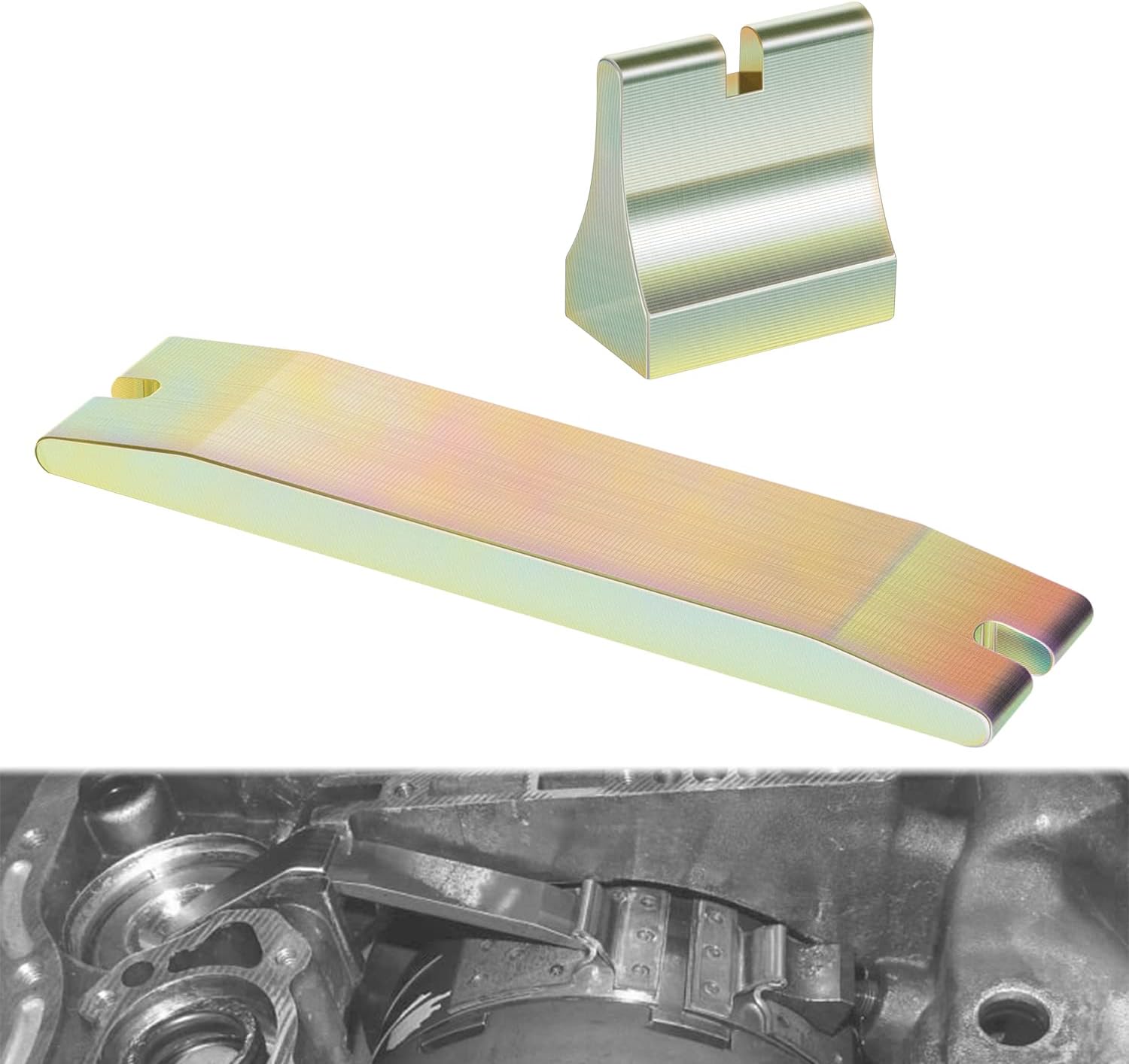
The 48RE has two adjustable bands, a kickdown (front) band and a low/reverse (rear) band, per ATSG's component breakdown. Adjustable bands are rare on modern automatics, and they are the single biggest reason a high-mileage 48RE starts flaring on the 1-2 or slipping on the 2-3. Lining wears, the clearance grows, and the servo has to travel farther before the band holds.
- Front (kickdown) band: adjuster on the left side of the case. Loosen the locknut, torque the adjusting screw to 72 in-lb, back it off 1-3/4 turns per the factory service manual for the 2003-2007 diesel trucks (confirm the V10 figure in the manual for your year, as it can differ), hold it, and torque the locknut to 30 ft-lb.
- Rear (low/reverse) band: adjuster is inside the pan. Torque the screw to 72 in-lb, back off 3 turns, and torque the locknut to 25 ft-lb.
Use an inch-pound torque wrench for the 72 in-lb step; guessing it with a ratchet is how people end up with a front band that drags. Count how far the screw moved before it hit 72 in-lb. If it went in a lot more than the last time it was set, the lining is worn and an adjustment is a short-term fix. If the truck has an aftermarket shift kit or valve body, follow that kit's band instructions instead, because they are matched to the modified calibration. This is also the time to look at the band strut and anchor; a worn or short strut lets the band apply crooked.
Step 4: Check Throttle Pressure Control
Throttle pressure is what sets line pressure and shift timing on this unit, so a high-mileage service has to check how it is being controlled. There are two versions.
Cable trucks (2003-2004 diesel and all V10)
These use a throttle valve cable. A stretched or misadjusted cable gives early, soft shifts and low line pressure under load, which is exactly the condition that wears bands and clutches. Check that the cable returns cleanly and is set to the factory spec at idle.
TTVA trucks (2005-2007 diesel)
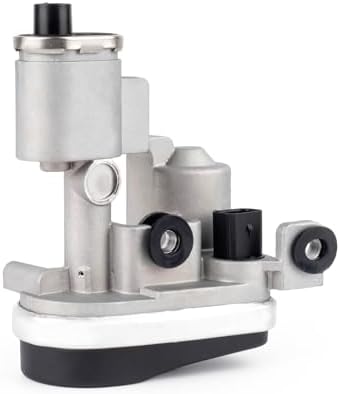
ATSG notes that starting with the 2005 model year, Rams with the 5.9L diesel and the 48RE got an electronically controlled Transmission Throttle Valve Actuator (TTVA) that replaced the cable and all its linkage. Jeff Parlee of Sonnax laid out the details in Transmission Digest. The actuator has two potentiometers and a DC motor, and a D-shaped opening at the bottom of its shaft fits onto the throttle shaft. There is no adjustment on the TTVA itself. Every key-on, the ECM runs a calibration to find the zero position, and the actuator must be initialized any time it is replaced or removed and reinstalled, by holding the key on for at least 30 seconds.
During that calibration the ECM looks for at least 48 degrees of travel from minimum to maximum. The catch for anyone who has had the valve body out: the throttle-shaft adjustment bolt on the pressure-regulator-spring bracket must sit 0.905 inch from the bracket to the inside edge of the bolt head. Some cable-style brackets are as short as 0.820 inch, and using one on a TTVA unit without resetting the bolt sets the codes. The TTVA code list from the same article:
- P1749 / P1750: throttle valve position sensor circuit low / high
- P1751: throttle valve position minimum range performance
- P1752: throttle valve span performance
- P1753: throttle valve mechanical performance
- P1754: throttle valve actuator stuck
- P1755: throttle valve control circuit
Scan for these on every high-mileage TTVA truck, even with no lamp on. P1751 or P1752 on a truck whose valve body has been swapped is almost always the bracket bolt, not the actuator.
Step 5: Prove the Cooling Circuit Flows
Heat is what kills high-mileage 48REs. GEARS Magazine's Chrysler overheating article puts the ideal maximum transmission temperature at 200 F and gives the rule: every 20 degrees above that cuts expected life in half, so 220 F is half life, 240 F a quarter, and 260 F one-eighth. The same article lists the six main causes of overheating: plugged cooler lines, a plugged cooler, a plugged internal filter, overloading, engine overheating, and a bad fan clutch.
- Flow test: cooler flow should be at least 1 gallon per minute, measured with a flow meter or timed into a bucket. A truck that has had a failure in its history often has debris in the cooler that a new filter never touches.
- Fan drive test: on trucks with an electronically controlled viscous fan, GEARS' procedure is to warm the engine, run it at 2000 rpm, and watch fan speed on the scan tool. It should reach 1850 rpm or more and hold for 30 seconds.
- Thermostatic bypass: if the lines, cooler and fan all check out and the truck still runs hot, suspect the cooler bypass valve stuck open. GEARS' advice is to replace the cooler as an assembly, because a flush will not fix a stuck valve.
On a truck that tows, log transmission temperature on a scan tool during a real pull. If it lives above 220 F on flat ground, fix the cooling circuit before you do anything else. Our 48RE towing upgrades guide covers auxiliary coolers and deep pans once the circuit is proven.
Step 6: Know the Valve Body Wear Points Past 100K
You do not have to pull the valve body on every service, but you need to know what the symptoms point to. Clark's GEARS article names the main wear areas on RE valve bodies:
- Throttle valve bore. Works with the 1-2 and 2-3 governor plugs, so check all three together on any shift timing complaint. On TTVA trucks it is worse, because the actuator moves the throttle lever on a computer algorithm with no direct pressure feedback; a worn bore gives the wrong pressure for the commanded position and the shifts come early or late.
- Switch valve. Clark says lockup apply and release problems from this valve become likely after about 100,000 miles. Symptoms: an overheated converter, TCC applying at idle, lugging or stalling, and TCC slipping or not applying.
- Line pressure plug and sleeve. Delayed engagement, slip in reverse, poor converter and cooler charge, soft TCC apply and unstable line pressure.
Sonnax is blunt about the throttle bore on this unit: its Heavy Duty Throttle Valve Kit page says the TV bore wears easily in Chrysler RWD units and that the 48RE shows much higher rates of poor line pressure rise and inconsistent shift timing than earlier models. The 22771-HDK3 kit uses a hardened steel plunger and valve and fits '05-later units with the motorized linkage. It is meant for new or lightly worn bores; for moderate to severe wear Sonnax points to the oversized 22771-04K kit, which needs the F-22771-TL tool kit and the VB-FIX reaming fixture. Clark's bottom line applies here too: in the worst cases, a replacement valve body makes more sense than repairing the old one.
The Checklist, In Order
- Check fluid color, smell and level hot in Neutral before touching anything.
- Drop the pan and read the magnet and sump for lining or metal.
- Replace the filter; torque filter screws to 35 in-lb and pan bolts to 125 in-lb.
- Adjust the front band (72 in-lb, back off 1-3/4) and rear band (72 in-lb, back off 3). Note how far each screw moved.
- Inspect the band strut and anchor.
- Cable trucks: check and set the TV cable. TTVA trucks: scan for P1749-P1755 and confirm the 0.905 inch bracket bolt if the valve body has been out.
- Flow-test the cooler (1 gpm minimum), test the fan drive, and log temperature under load.
- Refill with MS-9602 ATF+4 and set the level hot. Repeat the pan service in a few hundred miles if the fluid was dark.
- Road test for TCC apply, shift timing and flare. Late shifts, soft lockup or TCC slip point to the valve body wear points above.
48RE Transmission Filter and Pan Gasket Kit, OEM 52118789 (2003-2007)
The filter and gasket for the pan-down service and band adjustment above, matched to the 2003-2007 48RE. It is the first part on this checklist and the one you will buy every time.
View the 48RE filter kit →Shop 48RE transmission parts →
Frequently Asked Questions
How often should you service a high-mileage 48RE?
On a high-mileage 48RE, do a pan, filter and band adjustment at every fluid service, and shorten the interval if the truck tows. A pan drop only replaces about 8 of the 29 to 33 pints in the system, so if the fluid comes out dark, repeat the pan service a few hundred miles later or do a full exchange.
What are the 48RE band adjustment specs?
Per the factory service manual for the 2003-2007 diesel trucks, torque the front kickdown band screw to 72 in-lb, back it off 1-3/4 turns and torque the locknut to 30 ft-lb. For the rear low/reverse band, torque to 72 in-lb, back off 3 turns and torque the locknut to 25 ft-lb. If an aftermarket shift kit is installed, follow that kit's instructions.
Does the 48RE TTVA need to be adjusted?
No. The TTVA on 2005-2007 diesel 48REs has no adjustment. It must be initialized after it is replaced or reinstalled by holding the key on for at least 30 seconds, and the throttle-shaft bracket bolt must be set to 0.905 inch or the ECM can set P1751 or P1752.
Why does a high-mileage 48RE shift late or slip in lockup?
The most common cause is valve body wear. The throttle valve bore, switch valve and line pressure plug and sleeve all wear on RE valve bodies, and switch valve lockup problems become likely after about 100,000 miles. Low cooler flow and a misadjusted band can produce similar symptoms, so check those first.
How hot is too hot for a 48RE?
GEARS Magazine puts the ideal maximum at 200 F, and every 20 degrees above that cuts expected life in half. At 240 F the transmission is wearing four times as fast as at 200 F, so a truck that runs there on flat ground needs its cooling circuit fixed.
Sources
- Chrysler / Ram Body Builder — 2006 Ram Fluid Capacities. Backs the 48RE service fill of 3.8 L (8 pints) and overhaul fill of 14.0-16.0 L (29-33 pints). rambodybuilder.com (PDF)
- ATSG — Dodge/Jeep 46RE, 47RE, 48RE Technical Service Information (2011). Backs the 2003-2007 Ram 5.9L diesel and 8.0L V10 application, the kickdown (front) and low/reverse (rear) bands, and the 2005-up diesel TTVA replacing the throttle valve cable. atsg.biz (PDF)
- Jeff Parlee (Sonnax TASC Force), "Preventing 48RE Transmission Throttle-Valve-Actuator Codes," Transmission Digest (June 1, 2010). Backs the TTVA construction, no-adjustment design, 30-second initialization, 48-degree span requirement, 0.905 inch bracket bolt dimension, and the P1749-P1755 code list. transmissiondigest.com
- Keith Clark, "Bringing it Back to Life – A Logical Approach to the RE Valve Body," GEARS Magazine (ATRA) (January/February 2023). Backs the no-gasket calibrated-leak design, the throttle bore, switch valve and line pressure plug wear areas and their symptoms, the TTVA no-feedback point, and the 100,000-mile switch valve note. gearsmagazine.com
- GEARS Magazine (ATRA) — "48RE/68RFE/AS68RC Transmission Overheating" (September 2019). Backs the 200 F ideal maximum and life-halving rule, the six overheating causes, the 1 gpm cooler flow minimum, the 1850 rpm fan drive test, and the bypass valve guidance. gearsmagazine.com
- Sonnax — Heavy Duty Throttle Valve Kit 22771-HDK3. Backs the 48RE's higher rate of poor line pressure rise and inconsistent shift timing from TV bore wear, the kit's fitment to '05-later motorized-linkage units, and the oversized 22771-04K kit with F-22771-TL and VB-FIX tooling for worn bores. sonnax.com