"It shifts weird" covers five different Tahoe problems: a bang into 2nd, a flare between 2nd and 3rd, a clunk on the downshift at a light, late shifts on a cold morning, and a truck that starts in 3rd and never shifts. On a 4L60E those point at different parts, and one of them is not a failure at all. Pin down which shift, at what temperature, and whether a code is stored.
The short version: A clunk on the 2-3 or 3-2 shift, worse on 4WD trucks, is documented by GM bulletin 01-07-30-042 as normal torque reversal and should not be repaired. A harsh 1-2 with a TCC code (P1870 or P0894) is the computer running maximum line pressure, so fix the code first. A 2-3 flare points at the 3-4 clutch circuit, the #7 checkball, servo release metering, or (less often) a PCM that will not shut the B solenoid off cleanly. Odd shifting below freezing, or above 265°F, is the Tahoe doing what its owner manual says it does.


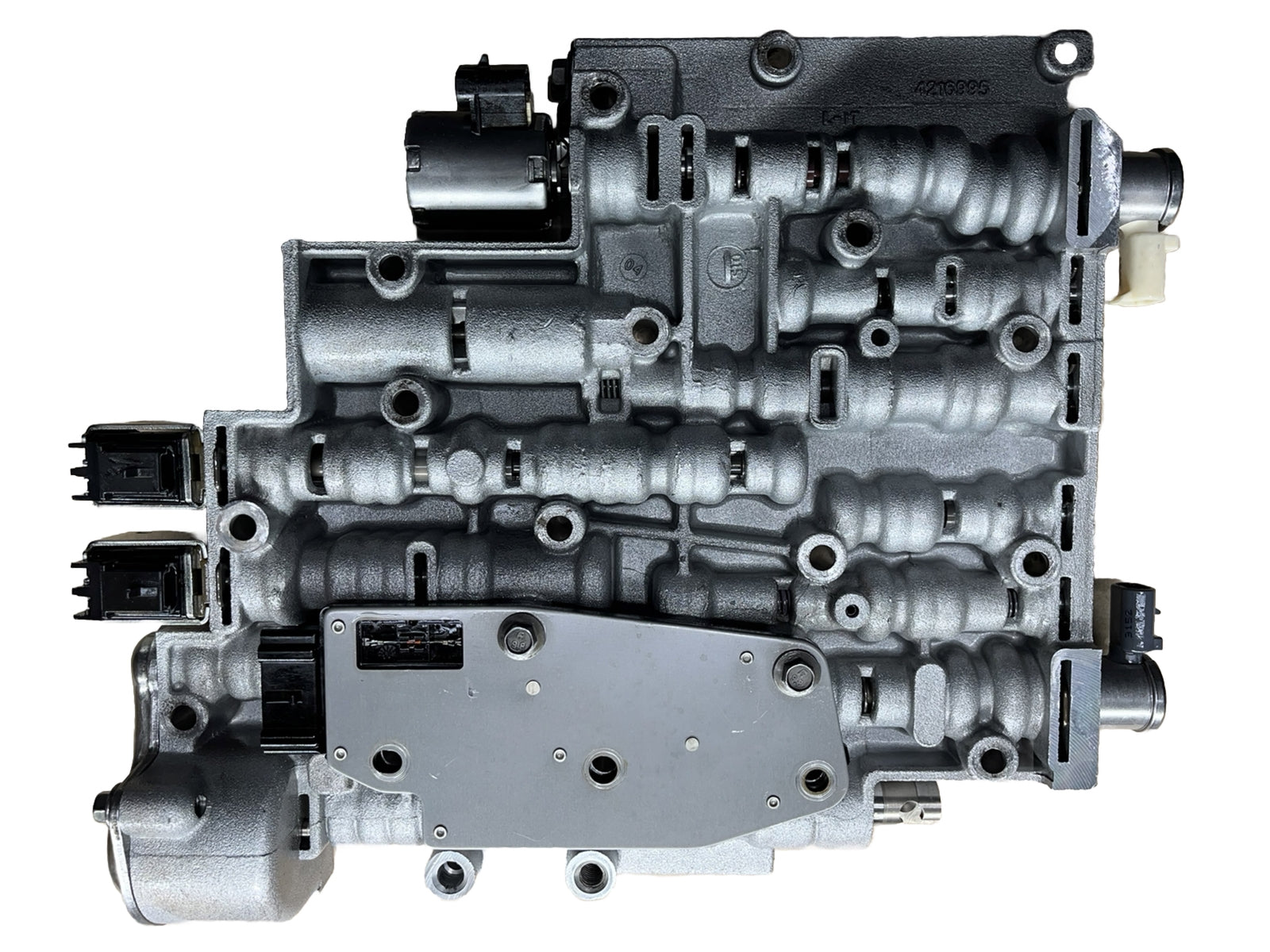
Know Which Tahoe and Which Shift
The 4L60E (RPO M30) is the four-speed behind the gas V8 in the 2000-2006 GMT800 Tahoe and the 2007-2008 four-speed GMT900 trucks; heavier packages got the 4L65E (M32), which shares the same hydraulics and the same shift complaints. Late GMT900 trucks moved to the six-speed, so read the RPO code on the glovebox label before you order a single part. Everything below applies to the four-speed.
Then drive it with a scan tool and watch these while it happens:
- Commanded gear and Shift Solenoid A / B commanded state (ON/OFF).
- Trans input speed and output speed. Divide input by output and compare to the 4L60E ratios: 3.06, 1.63, 1.00, 0.70. A ratio that runs high during or after a shift is a slip or a flare. A ratio that is dead on is a holding transmission.
- Trans fluid temperature (TFT). Normal per the Tahoe owner manual is 180-200°F.
- TCC slip speed and any stored codes, current and history.
The solenoid chart is short, and you should know it cold before you condemn anything electrical. Sonnax's Gregg Nader lays it out in his Transmission Digest test procedure: commanding 3rd turns both A and B off, 4th turns on A only, and 2nd turns on B only. First gear has both on. That means a Tahoe that loses power to both solenoids sits in 3rd in Drive, which is why "starts out in 3rd, no upshift or downshift" is almost always an electrical complaint, not a hard-parts one. Our failsafe guide walks through that circuit.
| What the Tahoe does | Most likely cause | First check |
|---|---|---|
| Clunk on 2-3 upshift or 3-2 downshift, shift itself is fine | Normal torque reversal (GM 01-07-30-042) | Confirm no flare or slip on the scan tool, then leave it alone |
| Harsh 1-2 with the check engine light on | High line pressure mode from a TCC code | Read codes; P1870 or P0894 points at the TCC circuit |
| Harsh 1-2 with no codes | Line pressure control, accumulator, servo, #8 checkball | Pressure gauge plus DVOM on the EPC circuit |
| Flare (RPM jump) on the 2-3 shift, or 3-2 flare | 3-4 clutch circuit leak, #7 checkball, servo release | Line pressure, then bench tests on the checkball and housing |
| Starts in 3rd, no shifts | Solenoid power or ground, or PCM | Solenoid commanded vs. actual, Trans fuse |
| Late, firm shifts only on cold mornings | Designed cold-weather strategy | Recheck once the engine is fully warm |
The 2-3 and 3-2 Clunk: GM Says Leave It Alone
This one costs shops money because it sounds like a broken part: a dull clunk under the floor right on the 2-3, or on the 3-2 coasting up to a light, while the shift itself is crisp and the fluid is clean.
GM addressed it in bulletin 01-07-30-042, which went through several revisions; revision G (September 22, 2011) covers 2012 and earlier 4L60-E, 4L65-E, and 4L70-E units in cars and light-duty trucks. As ATSG president Wayne Colonna summarizes it in Motor Age, the 2-3 shift releases the 2-4 band while the 3-4 clutch applies, and the 3-2 downshift does the reverse. The timing of that handoff can cause a momentary torque reversal at the output shaft, and the driveline answers with a clunk. GM notes it can be worse on 4WD vehicles because of the extra tolerances in the transfer case, which is exactly why Tahoe and Suburban owners complain about it more than 2WD pickup owners. GM's direction is plain: it is a normal condition and no repairs should be attempted.
Prove it before you say it. If the input-to-output ratio moves cleanly from 1.63 to 1.00 with no RPM flare, and the U-joints, slip yoke, and transfer case mounts are tight, it is the bulletin condition. If the RPM jumps during the shift, that is a flare, covered below.
Harsh 1-2 Shift: Fix the Code Before the Valve Body
A Tahoe that bangs into 2nd with the check engine light on is usually not a shift problem at all. Colonna's Transmission Digest article on the 4L60E harsh 1-2 calls line pressure boost control the long-running weak point of the unit, and says many harsh 1-2 complaints come from TCC slippage faults that set P1870 or P0894 and put the transmission into high line pressure mode. Clear up the converter clutch problem and the harsh shift often goes with it. Our P1870 guide covers the TCC side, including the worn isolator and regulator valve bores in the valve body.
Once the TCC codes are handled, Colonna lists the other line pressure suspects: a failed EPC solenoid driver in the ECM, lean misfire conditions, MAF sensor problems, and the EPC solenoid itself. His warning is worth taping to the scan tool: do not trust the EPC commanded amperage PID. It can show the right number when the driver has actually failed. Put a pressure gauge on the line tap and a DVOM on the EPC circuit and compare the actual current to the pressure you are seeing.
No codes, still harsh
Then it is mechanical, and the list from the same article is specific:
- Accumulator valve: sticking in the bore, or a cocked spring.
- Wrong servo: GM used four OE 2nd-apply servo sizes. Colonna notes most trucks should have the 553 or 159 piston; the 093 is the Corvette and high-performance Camaro piece. A Corvette servo in a stock Tahoe gives a firmer 1-2 by design, so ask what was installed during the last repair.
- 1-2 accumulator piston and spring orientation: early units installed the piston first with the spring on top; later units put the springs in first. With the springs underneath, more spring tension softens the shift, so mixing parts between years changes shift feel.
- #8 checkball: it lets band apply oil through the .067-.086 in. orifice in the separator plate on the 1-2. Leave it out and the 1-2 gets harsh. Check that someone has not drilled the orifice oversize.
- Servo cushion spring: pull the band apply pin and make sure it is not binding in the servo piston, which takes the cushion spring out of the shift.
- 4-3 sequence valve stuck inboard: it routes band apply oil to the 4th servo piston (6.108 sq. in. of area) with no metering, so the band slams on. Colonna notes it also causes 2-3 and 3-2 problems, so a harsh 1-2 plus a bad 2-3 means pull this valve first.
The 2-3 Flare: Where the Oil Is Leaking
A flare is the engine running up a few hundred RPM between 2nd and 3rd before the 3-4 clutch catches. The 2-3 is a handoff: the band has to release as the clutch applies. If the clutch is late, the engine flares. Nader's Transmission Digest article puts the common causes in one sentence: low line pressure and internal leaks of 3rd gear oil, plus input housings with the 3-4 piston feed hole machined wrong in the lip-seal area. On a high-mileage Tahoe, especially one that tows, check them in this order.
1. Line pressure
Gauge on the line tap, compared to factory spec in each range at idle and stall. Low everywhere sends you to the pump, pressure regulator, and EPC solenoid. Clear engine codes first; a MAF or TP fault changes commanded pressure.
2. The #7 checkball (3rd accumulator checkball assembly)
On the 4L60E the 2-4 servo doubles as the 3rd accumulator, and a hidden checkball in the case at the servo bore controls that circuit. Sonnax documents that a leak here lowers 3-4 clutch apply pressure, which is a direct cause of burnt 3-4 clutches, and also lowers band release pressure, so the band drags when it should be letting go. That is a 2-3 flare and a burnt band from one small leak. The test: vacuum at the assembly with a soft rubber tip, or, on the bench with the case pan-side up, drip solvent into the checkball assembly and watch the exhaust location inside the case. If it leaks, Sonnax says to reseat the ball with a punch and a light tap and retest, then replace the assembly if it still leaks.
3. Servo release metering
The servo release circuit controls how fast the band lets go on the 2-3 and how it reapplies on the 3-2. Sonnax ties inadequate metering of 2nd band servo release oil to reduced 3-4 clutch life, poor 2-3 shift feel, and 3-2 bind-up. Its 77701-076 servo release check valve kit adds an orifice and a ball check to meter that oil, and it must be used with a properly working OE capsule. If the 3-2 downshift either flares or binds up, this circuit and the #7 checkball are where you look.
4. The computer, when everything else checks good
Nader documented a 1998 GM truck that flared on the 2-3 before and after an overhaul, with no codes, normal line pressure, and a second valve body that did not help. A replacement computer fixed it. The tell was the B solenoid occasionally showing "short" on the scan tool. With DVOM leads in place of the Trans fuse and a bidirectional scanner commanding gears, the A solenoid dropped to zero current almost instantly when switched off, while B took about two seconds. The slow exhaust let the 2-3 shift valve creep, so the band came off before the 3-4 clutch applied. It is a ten-minute test with tools you already own.
When the Tahoe Is Shifting Exactly as Designed
Two Tahoe behaviors get written up as problems that the owner manual describes as normal. The 2005 Tahoe manual says that on days around 32°F (0°C) or colder, the transmission is designed to shift differently until the engine reaches operating temperature, to improve heater performance. Late upshifts on a cold start that go away once the truck is warm are the design, not a valve body.
Heat does the same thing from the other end. The manual says that at about 265°F (130°C) the DIC shows TRANSMISSION HOT and the transmission enters a protection mode, and you may notice a change in shifting patterns. It returns to normal below 260°F (127°C). At about 275°F it shows TRANS HOT IDLE ENGINE and chimes. A Tahoe that "shifts funny" only after a long pull with a camper is reporting its own temperature; find out why it got that hot.
The manual also says to use Tow/Haul (the button on the end of the column lever) for heavy loads, or THIRD if it hunts gears while towing. A truck hunting 3-4 on every grade with Tow/Haul off is in the wrong mode, not broken.
Fixing It So It Stays Fixed
Match the repair to what you proved. Clunk with a clean ratio: show the customer the bulletin. Harsh 1-2 with a TCC code: repair the TCC fault, and if the valve body bores are worn, replace the valve body instead of chasing it. Harsh 1-2 with no code: gauge, DVOM, and the mechanical list above. 2-3 flare: line pressure, then the #7 checkball, servo release, and input housing, and if the 3-4 clutch is already burnt, the rebuild has to fix whatever burned it.
On a Tahoe that tows, check the servo during any rebuild; our 2-4 servo upgrade guide covers the trade-off between a firmer shift and a truck that drives like a truck.
Then keep it cool: correct fluid and level, a clean cooler, Tow/Haul with a trailer, and severe-service fluid changes if it tows.
Sonnax Servo Release Check Valve Kit 77701-076
The drop-in metering fix Sonnax ties to poor 2-3 shift feel, 3-2 bind-up, and short 3-4 clutch life in the 4L60-E and 4L65-E. Use it with a good OE capsule. The full 4L60E lineup is here.
See the servo release kit →FAQ
Why does my Tahoe clunk when it shifts from 2nd to 3rd or downshifts 3-2?
GM bulletin 01-07-30-042 explains that the 2-3 and 3-2 shifts hand off between the 2-4 band and the 3-4 clutch, and the timing can cause a momentary torque reversal at the output shaft. GM says it can be worse on 4WD trucks because of transfer case tolerances, calls it a normal condition, and says no repairs should be attempted. Confirm there is no RPM flare during the shift before you accept that answer.
Why does my Tahoe 4L60E bang into 2nd gear?
The most common cause is a TCC slippage code such as P1870 or P0894 putting the transmission into high line pressure mode. Fix the converter clutch fault first. With no codes, check line pressure with a gauge and DVOM, the accumulator valve, the servo piston size, the #8 checkball and its orifice, and the 4-3 sequence valve.
What causes a 2-3 shift flare in a 4L60E?
Low line pressure and internal leaks of 3rd gear oil are the usual causes, including a leaking #7 checkball, poor servo release metering, and input housings with a mis-machined 3-4 feed hole. Sonnax also documented a case where the computer was slow to shut off the B solenoid, letting the band release before the 3-4 clutch applied.
Why does my Tahoe shift strangely after towing?
At about 265 degrees F the Tahoe enters a transmission protection mode that changes shift patterns, and it returns to normal below 260 degrees F. Use Tow/Haul or THIRD when towing, and find out why the fluid got that hot: low level, a restricted cooler, or a converter clutch that is not locking.
Keep the numbers at the bench. Our free transmission fluid spec chart lists the correct ATF type for the 4L60E and dozens of other units, so you never top off with the wrong fluid.
Sources
- Motor Age (VehicleServicePros), Wayne Colonna — A Problem That Isn't a Problem (January 2020). Backs: GM bulletin 01-07-30-042G (September 22, 2011) coverage of 2012 and earlier 4L60/65/70-E units, the 2-4 band and 3-4 clutch handoff on the 2-3 and 3-2 shifts, the output shaft torque reversal, the note that it can be worse on 4WD due to transfer case tolerances, and GM's no-repair direction. vehicleservicepros.com: A Problem That Isn't a Problem
- Transmission Digest, Gregg Nader (Sonnax TASC Force) — 4L60-E Flares on 2-3 Shift (Now What?) (November 2006). Backs: low line pressure, 3rd gear oil leaks, and mis-machined 3-4 feed holes as 2-3 flare causes; the A/B solenoid states for 2nd, 3rd, and 4th; the Trans fuse amperage test; the B solenoid taking about two seconds to drop out; and the PCM replacement fix. transmissiondigest.com: 4L60-E Flares on 2-3 Shift
- Transmission Digest, Wayne Colonna — 4L60E Harsh 1-2 Shift (April 2021). Backs: line pressure boost as the 4L60E weak point, P1870/P0894 high line pressure mode, the EPC driver/misfire/MAF suspects, the warning about the EPC amperage PID, the 553/159/093 servo pistons, 1-2 accumulator spring orientation, the #8 checkball and .067-.086 in. orifice, the servo cushion spring, and the 4-3 sequence valve. transmissiondigest.com: 4L60E Harsh 1-2 Shift
- Sonnax — Guard Against 4L60/E Band & 3-4 Clutch Failure: Test the 3rd Accumulator Checkball Assembly for Leakage. Backs: the #7 checkball lowering 3-4 apply and band release pressure, band drag, the vacuum and solvent drip tests, and the reseat-then-replace procedure. sonnax.com/tech_resources/323
- Sonnax — Servo Release Check Valve Kit 77701-076 technical page. Backs: inadequate 2nd band servo release metering as a cause of reduced 3-4 clutch life, poor 2-3 shift feel, and 3-2 bind-up; the orifice-and-ball-check design; and the requirement for a working OE capsule. sonnax.com/parts/2432
- General Motors — 2005 Chevrolet Tahoe Owner Manual. Backs: the cold-weather shift strategy at about 32°F, the 180-200°F normal range, the 265°F protection mode with changed shift patterns and 260°F reset, the 275°F TRANS HOT IDLE ENGINE warning, Tow/Haul location and Autoride interaction, and the advice to use THIRD when towing causes frequent shifting. GM: 2005 Tahoe owner manual (PDF)