These two GM automatics sit on opposite sides of a design generation. The 4L60E is the electronic four-speed that came out of the 700R4 lineage and went into nearly everything GM built rear-drive from 1993 through the mid-2010s. The 6L80 is the six-speed that started replacing it in trucks and performance cars around 2006. If you are choosing between them for a swap, or just trying to understand why the newer trans behaves so differently, the answer comes down to gearing, torque capacity, and how the two are controlled. This is the builder's version of that comparison, not the brochure one.
For more GM automatic coverage, browse our transmission guide library.
Gearing: Four Wide Steps vs. Six Close Ones
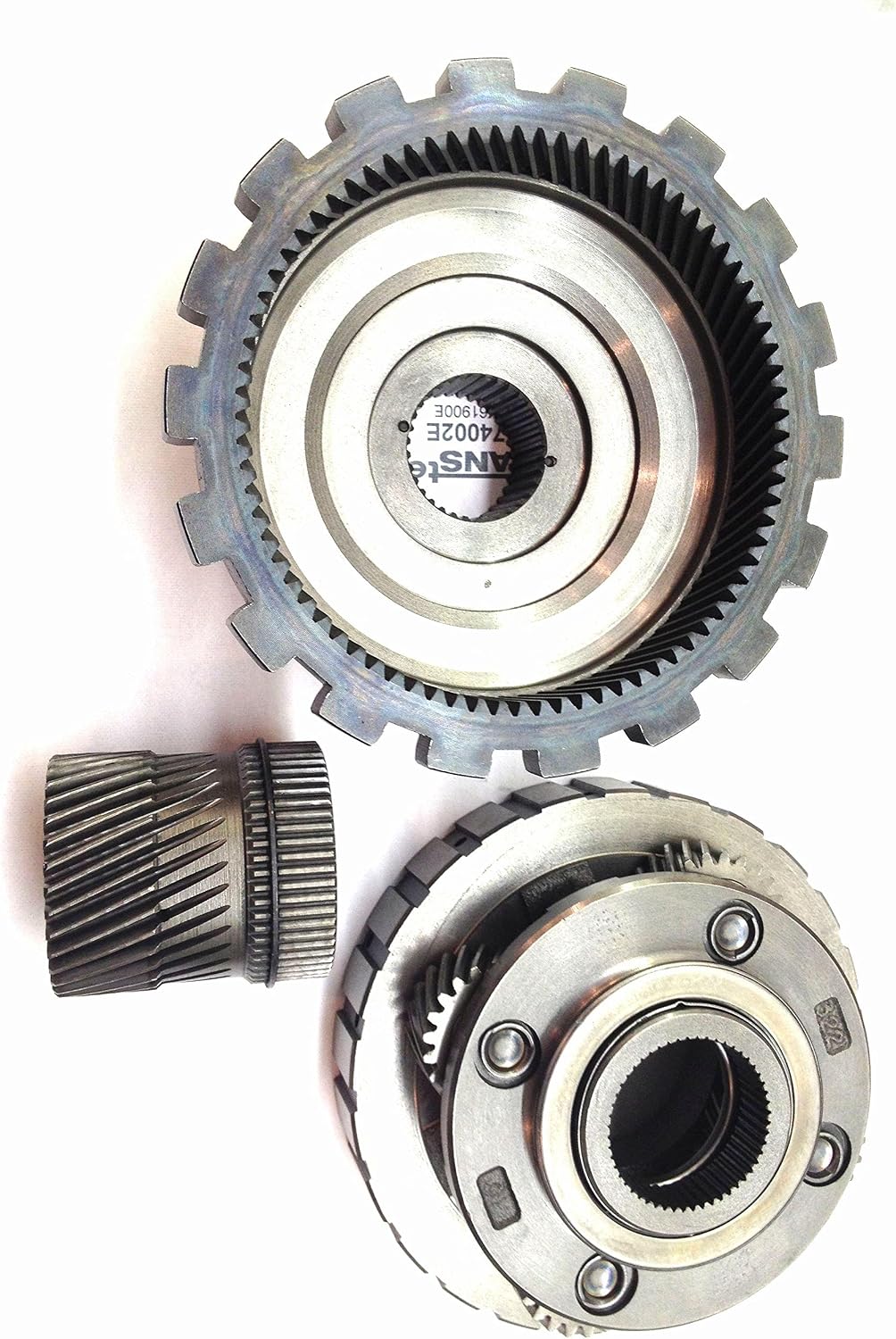
The 4L60E is a four-speed with a single overdrive. Per DieselHub's specification table, the ratios are 3.06 first, 1.63 second, 1.00 third, and 0.70 fourth, with a 2.29 reverse. That gives an overall ratio spread of about 4.40. Sonnax describes the 4L60 family as a "wide ratio" box, and the number that gets builders' attention is the jump from that steep 3.06 first gear straight to 1.63 second. It is a big RPM drop, and on a built engine it can pull the motor off its power band on the 1-2 shift, which is exactly why Sonnax sells a 2.84 close-ratio front planet to tighten that gap.
The 6L80 uses the extra two gears to smooth all of that out. Per the Novak Conversions guide, the ratios run 4.02 first, 2.36 second, 1.53 third, 1.15 fourth, 0.85 fifth, and 0.67 sixth, with a 3.06 reverse, for a 6.04 overall spread. Two things stand out. First, the 6L80 does not have a true 1.00 direct gear the way the 4L60E does; fourth is 1.15 and the transmission carries two overdrives (fifth and sixth) instead of one. Second, that deeper 4.02 first gear plus the tighter steps between gears is why a 6L80-equipped truck feels quicker off the line and turns lower cruise RPM at highway speed than the same truck would with a 4L60E. More gears, used well, is the whole point of the six-speed.
The reason GM could add two gears without adding two gears' worth of iron is the Lepelletier planetary system. Transmission Digest lays out the architecture: the ZF 6HP family and its relatives — the Ford 6R60 and the GM 6L80 — pair a Simpson (simple) front planet set with a Ravigneaux (compound) rear planet set, and that combination produces six forward speeds using only five clutch packs. That is the whole trick, and it is why a 6L80 fits a truck tunnel that a conventional six-speed built the old way never would. It also explains the missing 1.00 gear: the Lepelletier layout gets its ratio spread from driving the front sun gear at different speeds rather than from a dedicated direct-drive path.
Torque Capacity and Physical Size
The 4L60E was never a heavy-hitter by design. DieselHub lists the base 4L60E at roughly 350 lb-ft of maximum input torque, with the later 4L65E and 4L70E variants bumped to about 380 and 400 lb-ft respectively as GM chased higher GVW and torque ratings. That number is the honest ceiling for a stock unit. The 6L80 is rated higher, at around 440 lb-ft of input torque with a much larger output capacity, and the beefier 6L90 sibling carries the same architecture up to a heavier GVW class. So on the spec sheet, the 6L80 is the stronger transmission out of the box.
Size and weight track with that. The 4L60E is a compact, relatively light unit, in the neighborhood of 150 to 175 pounds depending on how it is filled, with a case length around 22 inches. The 6L80 is a physically bigger, heavier transmission, roughly 195 pounds dry and up to about 230 pounds full per the published specs, with a larger main case. Here is the surprising part that matters for swaps: despite being a much bigger transmission internally, the 6L80's overall installed length measured from the front of the bellhousing to the output shaft is nearly identical to the 4L60E, both sitting right around 26.9 inches. The bulk is in the body diameter, not the length.
Shop 4L60E parts →
Control: PCM vs. Integrated TCM
This is the single biggest practical difference between the two, and it is the one that trips up most swaps. The 4L60E is controlled by the vehicle's engine PCM in factory applications (some diesel and specialty setups use a separate TCM). Shift points, line pressure, and torque converter lockup are all commanded electronically by that controller, and because the 4L60E has been around for three decades, standalone controllers for it are cheap, plentiful, and well documented.
The 6L80 is a different animal. It carries its own transmission control module built into the valve body, a 32-bit adaptive-learning controller that communicates with the engine computer over a data bus. It is one of the few GM automatics with the controller integrated into the transmission itself. The consequence for anyone doing an engine or trans swap is direct: a Gen III LS PCM cannot run a 6L80. You either need a factory-correct engine-and-transmission controller pairing that already knows how to talk to that integrated module, or you need a dedicated standalone 6L80 controller. Budget for that up front, because a 6L80 dropped in with no control strategy is just an expensive paperweight.
Common Failures: Know the Weak Points Before You Choose
4L60E: Sun Shell and 3-4 Clutch
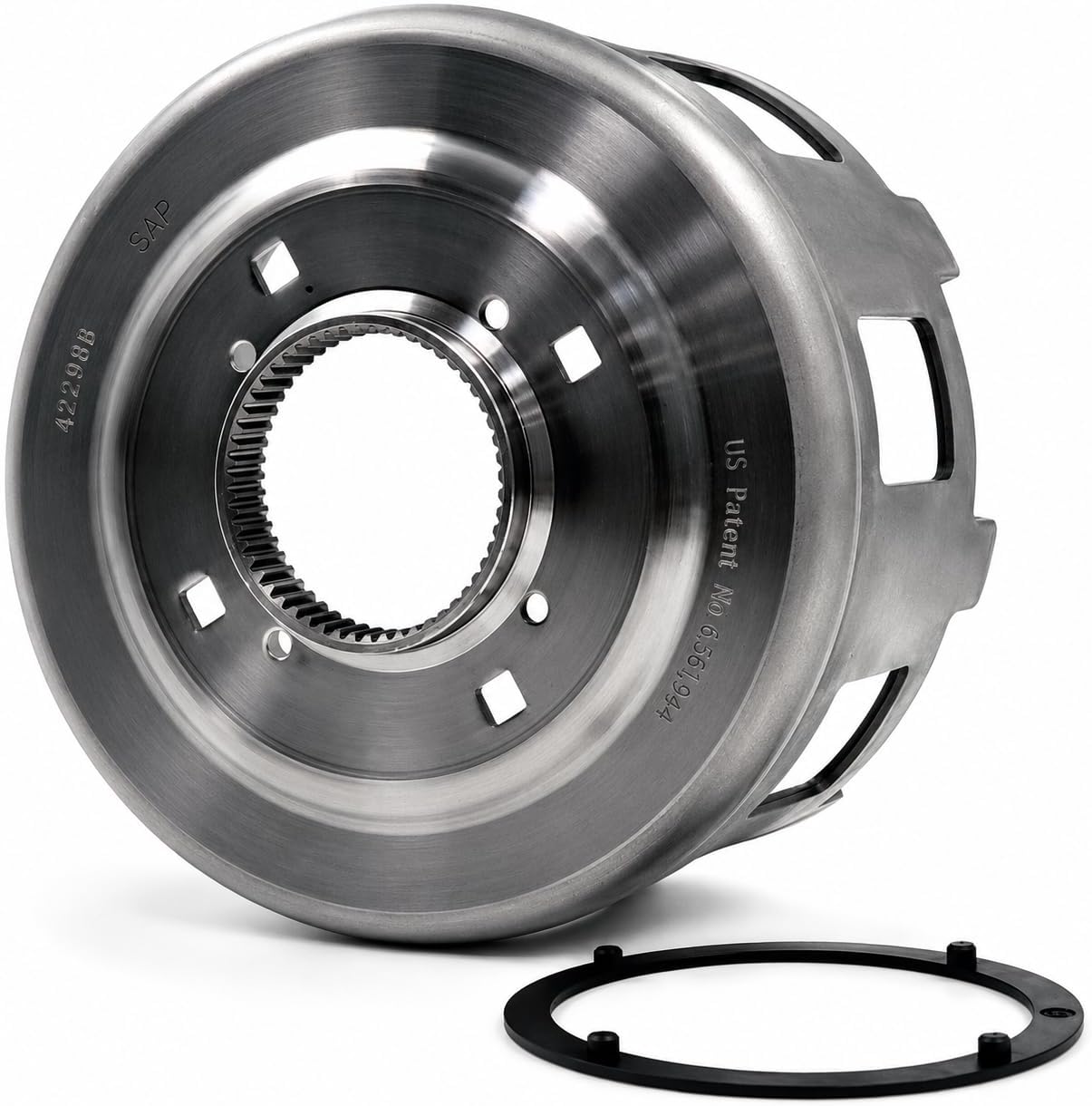
The 4L60E has two failures every rebuilder can recite from memory. The first is the sun shell. The factory shell is a stamped part with a thin wall, and it splits under torque. When it lets go you typically lose second, fourth, and reverse at once, which is why serious builders install a billet sun shell on every rebuild rather than trusting the stamped OE piece. The second is the 3-4 clutch pack. Sonnax's technical write-ups on 4L60E 3-4 clutch burnup point directly at the weak OE input housing and backing plate: under apply, the housing flexes, the pack loses even clamp load, heat builds in the limited space, and the frictions cook. Sonnax's fix is a reinforced input housing that stops the flex, which is why the Smart-Tech housing exists. If you are buying a used 4L60E of unknown history, assume both of these are on the clock.
6L80: Wave Plate and 3-5-R Clutch
The 6L80's signature failure is the 1-2-3-4 clutch wave plate. It is a wavy steel that cushions clutch apply, and the factory piece is thin for the load it carries. It work-hardens, cracks, and eventually breaks into pieces, sending debris through the unit. Towing accelerates it; even non-towing trucks tend to see it somewhere in the 80,000 to 150,000 mile window. The other 6L80 headline is the 3-5-R clutch, where a cracked drum weld or a sticking 3-5-R regulator valve shows up as a hard, delayed, or missing reverse. Sonnax's material on the 6L80/6L90 no-reverse condition walks through diagnosing whether the fault is the drum, the clutch, or the regulator valve in the valve body before you condemn the unit. The takeaway: the 6L80 is stronger on paper, but it has its own predictable failure list, and reverse complaints are where it usually announces trouble.
There is a third 6L80 wear item that gets blamed on everything else: the pressure regulator valve bore in the pump. Per Sonnax, the balance end of the PR valve commonly wears into the casting, which drives line pressure high and produces harsh shifts plus overheating from insufficient cooler and converter lube flow. Wear at the outboard spool does the opposite, cutting converter feed pressure and dropping line pressure. When both ends are worn the two faults do not cancel — pressure just goes erratic. That is the 6L80 that comes in with a different complaint every week. Check the PR bore before you chase shift quality with a tune.
Fluid: Not the Same Bottle
Do not carry your 4L60E fluid habits across. The 6L family runs DEXRON VI, and GM's own 2025 TechLink transmission capacity chart lists the 6L90 (RPO MYD) at a 5.7 liter / 6.0 quart fluid change capacity on that fluid. That is a service refill figure, not a dry fill — the pan service does not empty the converter, cooler or lines, which is why the whole-system numbers you see quoted for these units run roughly twice as high. Fill to the published change capacity, then set the final level by the procedure, not by the bottle count.
The Swap: What It Actually Takes
People swap a 4L60E out for a 6L80 for the extra gears, the taller overdrive, and the higher torque rating. It is a real upgrade, but it is not a bolt-in. Here is the honest checklist:
- Bellhousing and bolt pattern. The 4L60E uses a removable bellhousing (a six-bolt early pattern and a later LS-style pattern). The 6L80 has an integrated bellhousing cast into the case in the Gen III/Gen IV LS pattern. Confirm your engine's block pattern matches before anything else.
- Length is your friend, width is not. Because installed length is nearly identical, the driveshaft often does not need to change on length alone. But the 6L80's larger body usually means clearancing the transmission tunnel and relocating or fabricating a crossmember.
- Control is the real work. As covered above, you need a controller strategy that can command the integrated TCM. This is where most 6L80 swaps stall out.
- Torque converter and cooling. The 6L80 uses its own converter and benefits from adequate cooling given the heat these units make; do not reuse 4L60E converter or cooler assumptions.
- Shifter and range control. Sort out how the six-speed's range and shift control will be commanded in your chassis before the trans goes in.
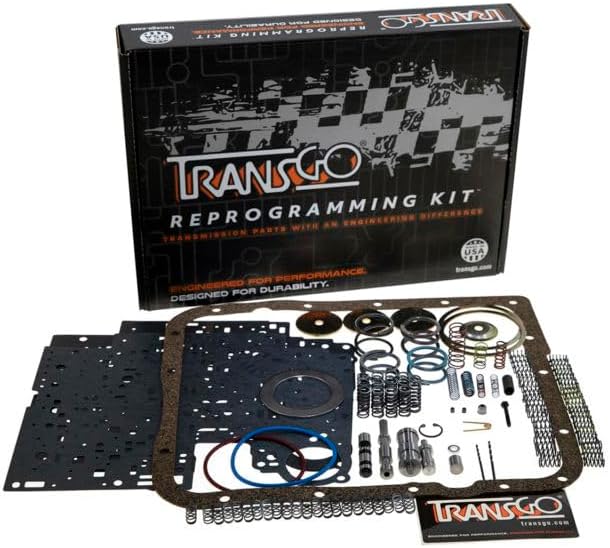
If the swap complexity is more than you want to take on, remember the 4L60E is not a dead end. A properly built 4L60E with a billet sun shell, a reinforced input housing, an upgraded 3-4 pack, and a good shift kit will hold power a stock 6L80 will not, and it runs off a controller you already understand. For a lot of builds, the smarter move is a strong 4L60E, not a half-finished 6L80 swap.
Building or fixing a 4L60E this week?
Billet sun shells, reinforced input housings, 3-4 clutch packs, shift kits, and the tools to set it up right — all in one place, shipped from the USA.
Shop 4L60E parts →Which Should You Choose?
If you want the most modern driving experience, better fuel economy from the twin overdrives, and higher stock torque capacity, and you can handle the controller and fabrication, the 6L80 is the better transmission. If you want simplicity, a huge and affordable aftermarket, easy standalone control, and a lighter, more compact unit that you can build to a known recipe, the 4L60E still earns its place. Neither is fragile when it is set up right; both have a short list of failures you can design around. Pick the one that matches your power target, your budget, and how much wiring you are willing to do.
Frequently Asked Questions
Is the 6L80 stronger than the 4L60E?
In stock form, yes. The base 4L60E is rated to roughly 350 lb-ft of input torque, while the 6L80 is rated to about 440 lb-ft. The 6L80 also spreads its power over six gears with a 6.04 ratio spread and two overdrives, so it puts torque to the ground more effectively. The catch is that the 4L60E has a deeper and cheaper aftermarket, so a well-built 4L60E can pass a stock 6L80 in holding power.
Will my LS PCM run a 6L80 like it runs a 4L60E?
No. The 4L60E is controlled by the engine PCM (or a standalone TCM in some applications). The 6L80 carries its own integrated transmission control module inside the valve body and talks to the engine controller over a data bus. A Gen III LS PCM cannot shift a 6L80, so a 6L80 swap needs a compatible factory controller setup or a dedicated standalone 6L80 controller.
Does a 4L60E to 6L80 swap require driveshaft changes?
Often not for length alone. Measured from the front of the bellhousing to the output shaft, the two are within a fraction of an inch of each other (roughly 26.9 inches). But the 6L80 has a bigger body and integrated bellhousing, so the transmission tunnel usually needs clearancing, the crossmember location changes, and you must sort the controller, wiring, and shift control before it will drive.
What is the most common failure on each transmission?
On the 4L60E, the two headline failures are the stamped sun shell cracking (which typically drops second, fourth, and reverse) and the 3-4 clutch pack burning up behind a flexing OE backing plate. On the 6L80, the classic failure is the 1-2-3-4 clutch wave plate cracking and breaking apart, followed by 3-5-R clutch problems that show up as a delayed or lost reverse.
Sources
- Sonnax — "Building the Killer 4L60E: Top Tips for Optimizing Your Transmission Upgrades." Backs the 4L60E family as a "wide ratio" design with a 3.06 first to 1.63 second gear step and the 2.84 close-ratio front planet used to tighten that gap. sonnax.com
- Sonnax — "Eliminate 3-4 Clutch Failure with the Smart-Tech Input Housing." Backs the weak OE 4L60E input housing and backing plate flexing under apply, uneven heat buildup in the limited clutch space, and 3-4 clutch burnup as a leading failure. sonnax.com
- Sonnax — "All Over the Map: Attacking 4L60-E Burnt 3-4 Clutches With Confidence." Backs the diagnosis of burnt 4L60E 3-4 clutch packs and the housing/backing-plate contribution to the failure. sonnax.com
- Sonnax — "Addressing GM 6L80, 6L90 No Reverse Condition." Backs the 3-5-R clutch, cracked drum weld, and sticking 3-5-R regulator valve as causes of a hard, delayed, or lost reverse on the 6L80/6L90. sonnax.com
- Novak Conversions — "The Novak Guide to the GM 6L80 & 6L90 Automatic Transmissions." Backs the 6L80 gear ratios (4.02 / 2.36 / 1.53 / 1.15 / 0.85 / 0.67, 3.06 reverse), the 6.04 ratio spread, two overdrives with no direct-drive gear, the integrated 32-bit adaptive controller, and physical size/weight and swap notes. novak-adapt.com
- DieselHub — "4L60E Transmission Specs, Gear Ratios, & History." Backs the 4L60E gear ratios (3.06 / 1.63 / 1.00 / 0.70, 2.29 reverse), the roughly 4.40 ratio spread, the 350 lb-ft input rating (with 380/400 lb-ft for 4L65E/4L70E), weight near 155 lb dry, case length around 22 in, and PCM/TCM control. dieselhub.com
- Transmission Digest — "Lepelletier Planetary System," Mike Riley. Backs the Lepelletier architecture used by the GM 6L80: a Simpson (simple) front planet set combined with a Ravigneaux (compound) rear planet set producing six forward speeds with only five clutch packs, the ZF 6HP family relationship shared with the Ford 6R60, and the historical reason GM moved to it rather than stacking on an additional planetary section. transmissiondigest.com
- Sonnax — "Why Do I Drill the Pump? Preventing Excess 6L80 Series Line Pressure with a Drop-In Sonnax PR Valve," Andrew Jessiman. Backs the 6L45/6L50/6L80/6L90 pressure regulator valve bore wear pattern: the balance end wearing into the casting causing high line pressure, harsh shifts and overheating from insufficient cooler/converter lube flow; outboard spool wear cutting converter feed pressure and causing low line pressure; and the erratic pressure that results when both ends are worn. sonnax.com
- GM TechLink — "2025 Transmission Capacities & Fluids (U.S. and Canada only)," General Motors, May 2025. Backs the DEXRON VI fluid specification for the 6L family and the 5.7 liter / 6.0 quart fluid change capacity listed for the 6L90 (RPO MYD). gm-techlink.com