A 4L80E that takes longer than it should to find 3rd, then flares or drops out of 3rd and 4th entirely, is not a sensor problem. It is the clutch pack that applies for both 3rd and 4th gear slipping or burnt, and the heavy-duty GM case has its own specific wear points for this failure that do not line up one-for-one with what you will read about the lighter 4L60E family. One naming quirk trips up a lot of techs before they even start: GM's own 4L80E parts catalog does not call this the 3-4 clutch. It sells 4th clutch steel plates and 4th clutch pistons. Same clutch pack, different label on the box.
The short version: A 4L80E that slips or loses 3rd and 4th, often with code P0734, has a worn or burnt 4th clutch pack (GM's own part numbering calls it the 4th clutch, not the 3-4 clutch). Sonnax's documentation ties the failure to two specific wear points: excess wear in the 3rd and Reverse checkball sleeves inside the 3-4 shift valve bore, and piston/pin wear inside the 4th accumulator that lets the piston cock and gall its bore. Either one bleeds apply oil off the clutch pack before it can fully clamp. Before you condemn the clutch pack off a P1870 code alone, also rule out a cracked torque converter clutch, which Transmission Digest documented as a known, hard-to-diagnose P1870 source on 2000-and-up 4L80E units.
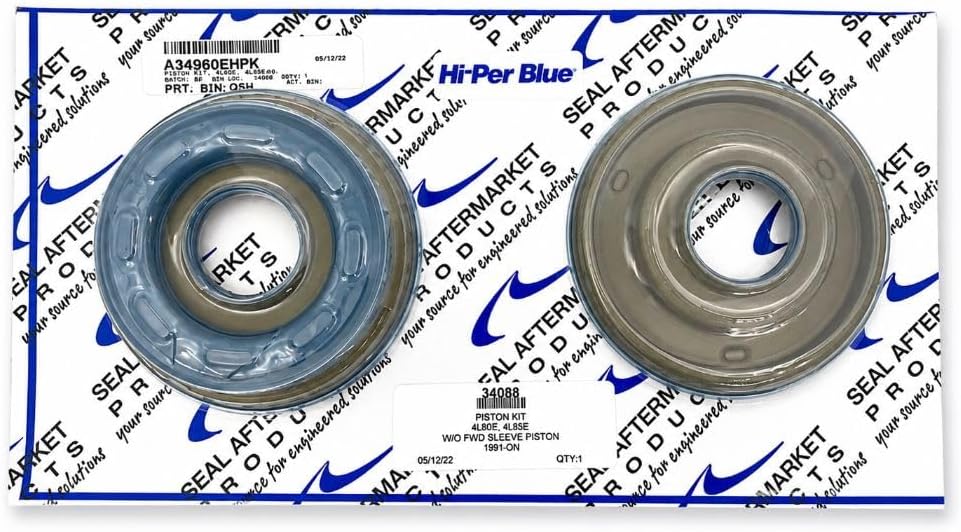
Symptoms of a 4L80E 3-4 (4th) Clutch Failure
The 4L80E applies this same clutch pack to hold both 3rd and 4th gear, so wear almost always shows up as a problem with the shift into 3rd before it ever costs you 4th outright. The early pattern is a slow or lazy engagement into 3rd, as if the pack is only partially clamping. Left alone, that progresses to a flare or RPM runaway right at the shift point, followed by the truck settling into driving on 1st and 2nd only, with the engine screaming at highway speed because it can no longer find an overdrive ratio.
Sonnax's own product documentation for the 3-4 shift valve bore circuit lists the confirmed symptom set directly: slipping in 3rd gear, slipping in 4th gear, slipping in Reverse, a gear ratio code, and a burned direct clutch. That last point is worth sitting with. A worn checkball sleeve in this circuit does not just affect 3rd and 4th, it can bleed enough pressure to also show up as a soft Reverse, which is a detail a lot of diagnostic flowcharts miss because they only ask about forward gears.
On the bench, pull the pan before you assume anything. Dark, glazed friction material confirms a slipping or burnt clutch pack. Metal glitter instead points toward a hard-parts failure, such as a cracked drum or a worn sprag, and changes the whole diagnosis.
P0734 and P1870: What Each Code Actually Tells You
P0734 (Gear 4 Incorrect Ratio) is the generic code defined under SAE J2012, the diagnostic trouble code definitions standard (SAE J2012). The PCM sets it when it measures a 4th-gear ratio between the input and output speed sensors that does not match what a correctly clamped 4th gear should produce. On a 4L80E, that is about as direct a description of a slipping 4th clutch pack as a code gets, and it is the code you should expect to see alongside the symptoms above.
P1870 is where a lot of diagnoses go sideways, because it is not specific to the 3-4/4th clutch at all. Transmission Digest technical writer Ed Lee, writing for the Sonnax TASC Force, documented a distinct and well-known failure on 2000-and-up 4L80E units: the torque converter clutch itself develops stress cracks near its circle of rivets, at a crease formed during stamping. Lee's writeup is specific about how frustrating this is to chase: the code "may not occur for 30-40 miles or even longer under light duty," and typically only appears once the converter clutch tries to apply under load, such as towing or hill driving. Modern friction material is good enough that a cracked clutch often shows no more evidence than hot spots on the front cover, so a tech chasing P1870 as a 3-4/4th clutch problem can tear into a perfectly good clutch pack and miss a cracked converter entirely.
The practical rule: P0734 points hard at the 4th clutch pack. P1870 needs the torque converter ruled in or out first, especially on a 2000-or-newer unit, before you spend labor hours inside the case.
What Actually Burns the 4th Clutch Pack
Sonnax sells dedicated repair parts for two specific, well-documented wear points in this circuit, and both point to the same root problem: apply oil leaking out of the 4th clutch circuit before the piston can fully clamp the pack.
The 3rd and Reverse checkball sleeves, in the 3-4 shift valve bore
Sonnax's documentation for its 34200-47K kit states it plainly: "Excess wear in 3rd and Reverse checkball sleeves allows valuable oil loss or cross-leakage." These sleeves live in the 3-4 shift valve bore on '95-and-later 4L80-E and 4L85-E units, and normal checkball movement over time wears them until the ball can no longer seal. Once that seal is gone, apply pressure to the direct clutches drops, and you get the symptom list above: slipping 3rd, slipping 4th, slipping Reverse, ratio codes, and a burned direct clutch.
The 4th accumulator piston and bore
Separately, Sonnax's 4th accumulator repair kit (34805-01K) targets a different leak path inside the same case. The 4th accumulator piston reciprocates every time the clutch applies and releases, and that repeated motion wears the piston-to-pin interface. Once that wear is advanced enough, the piston can cock sideways inside its bore and gall (score) the housing. A galled accumulator bore leaks 4th-clutch apply oil directly, which both softens the shift feel and, over enough miles, contributes to the same slipping and burning pattern as a bad checkball sleeve. Sonnax's kit replaces the OE pin-and-piston design with a pinless piston riding in a pressed-in sleeve specifically to stop this wear path from recurring.
Sonnax describes the same failure chain in its documentation for GM accumulator pistons: repeated reciprocation wears the piston pin bore, the fluid lost through that worn bore eventually exceeds what the pump can make up, and the piston can cock and gall its bore (per Sonnax, Pinless Accumulator Piston Kit 77998-03K). Its listed result is poor shift quality and burnt clutches, which is exactly the 4th-clutch story above.
There is one more accumulator-related part to check before you blame the clutch pack for a soft 3-4: the accumulator control valve in the valve body. On the 4L80-E and 4L85-E, Sonnax notes this valve controls shift firmness by managing accumulator back pressure. When the valve or its bore wears and lets torque signal oil leak to exhaust, line pressure drops and the shifts go soft. Sonnax lists the tells as soft shifts with low accumulator pressure, high line pressure in Drive and low line rise in Reverse (Sonnax 34994-22K). A line pressure test that shows normal or high pressure in Drive but weak rise in Reverse points you here, and a soft 3-4 that keeps slipping will cook a brand-new 4th clutch pack.
The broader 4L80E valve body picture
Sonnax also documents this failure as part of a wider pattern of 4L80E valve body wear. Its SC-4L80E "Sure Cure" kit, built for '91-and-later 4L80-E and 4L85-E units, is sold specifically to address "loss of oil pressure due to worn components in critical oil circuits," and its own listed problem set includes 3-4 Neutral, No 4th, No 3rd, and burnt forward clutch alongside converter and line-pressure issues. That tells you something important: by the time a 4L80E is old enough to be burning its 4th clutch, it is rarely just one worn checkball sleeve. The boost valve, shift valve springs, and case bushings in the same valve body are usually worn together, which is why a comprehensive valve body repair, not just a clutch pack swap, is the more durable fix on a higher-mileage unit.
The third leak point: low actuator feed pressure
There is a hydraulic cause that never touches the clutch circuit itself. In his Sonnax article "AFL and AFL," Frank Biolsi explains that the 4L80-E's actuator feed limit (AFL) valve regulates the feed pressure to all three shift valves, and that the 3-4 shift valve is the first one to creep back as that pressure gets critically low. As it moves, 4th clutch feed is reduced; if it moves far enough, 4th clutch feed is shut off. His teardown advice is to work back through the fourth accumulator, recheck the shift valves and springs, and air-check the 4th clutch (Sonnax, "AFL and AFL"). So a 4L80E that loses 4th intermittently with converter codes can be an AFL pressure problem, not a worn pack.
How to Diagnose It Before You Pull the Valve Body
- Scan for codes and freeze-frame data first. Note whether you have P0734, P1870, or both, and the mileage, speed, and load conditions when each one set.
- Check fluid level and condition. Low or badly burnt fluid can aerate the pump and mimic a clutch slip complaint on its own, so rule it out before condemning hard parts.
- Separate a P1870 converter complaint from a 4th clutch complaint. On a 2000-or-newer unit, a P1870 that is hard to reproduce and only shows under load is consistent with a cracked converter clutch, not a 3-4/4th clutch problem. Don't assume; test the converter.
- Drop the pan and look. Dark, glazed friction material confirms the 4th clutch pack. Metal glitter instead means a hard-parts failure and changes the diagnosis.
- Air- and vacuum-test the 3-4 shift valve bore and the 4th accumulator bore before reassembly. If the unit is apart anyway, test both of Sonnax's documented wear points rather than replacing friction material and hoping. A rebuild that skips this will likely burn the new pack again.
4L80E 3-4 Clutch Pack Upgraded Springs
A direct performance upgrade for this exact clutch pack, built to hold up better than the stock springs under repeated 3-4/4th apply cycles. Worth pairing with a checkball sleeve kit if you're already testing the 3-4 shift valve bore.
Shop the 4L80E 3-4 clutch pack springs →Testing the valve body circuit itself? Shop the Sonnax 3rd & Reverse checkball sleeve kit, or browse the full 4L80E parts collection.
Mistakes We See on the Bench
- Chasing P1870 as a clutch problem on a 2000-or-newer unit. Rule out a cracked converter clutch first; Transmission Digest's TASC Force writeup documents this as a known, hard-to-reproduce cause of P1870 on these years.
- Replacing friction material without testing the 3-4 shift valve bore. A fresh clutch pack installed over worn checkball sleeves burns again, because the apply-pressure leak was never addressed.
- Ignoring the 4th accumulator bore. A cocked, galled accumulator piston bore leaks apply oil just as effectively as a bad checkball sleeve, and it's easy to skip if you're only focused on the clutch pack itself.
- Treating this as a one-part fix on a high-mileage unit. Sonnax's own comprehensive kit for this case lists 3-4 Neutral and No 4th alongside half a dozen other worn-circuit symptoms, which means the boost valve and shift valve springs are often due at the same time.
- Searching GM's parts catalog for "3-4 clutch" and coming up empty. Search "4th clutch" instead; that's how GM's own service parts are labeled for this unit.
Keep the fluid right during the rebuild. Our free transmission fluid spec chart lists the correct ATF and capacities for the 4L80E and dozens of other units, so a clutch job doesn't end with the wrong fluid going back in.
FAQ
What are the symptoms of a 4L80E 3-4 clutch failure?
Sonnax lists the symptom set for a worn 3-4 shift valve bore circuit as slipping in 3rd gear, slipping in 4th gear, slipping in Reverse, a gear ratio code, and a burned direct clutch. In practice that shows up as a shift into 3rd that takes noticeably longer than normal, followed by a flare or complete loss of 3rd and 4th, with the truck still able to pull in 1st and 2nd.
Is P1870 always a 3-4 clutch problem on a 4L80E?
No. Transmission Digest technical writer Ed Lee documented a specific problem on 2000-and-up 4L80E units where the torque converter clutch itself develops stress cracks near its rivet circle, which sets a P1870 code that is, in his words, very difficult to diagnose and may not appear for 30 to 40 miles or longer under light duty. Before condemning the 4th clutch pack off a P1870 alone, rule out a cracked converter clutch, especially on a unit used for towing or hill driving.
Why does GM's parts catalog call it the 4th clutch instead of the 3-4 clutch?
On the 4L80E, GM's own service parts are sold as 4th clutch components, such as the 4th clutch steel plate and the 4th clutch piston and lip seal installer, rather than 3-4 clutch parts. It is the same clutch pack that engages for both 3rd and 4th gear, so the aftermarket and most techs still call it the 3-4 clutch out of habit carried over from the 4L60E family, but if you are cross-referencing GM part numbers, search 4th clutch first.
What actually causes the 4th clutch pack to burn on a 4L80E?
Sonnax's product documentation for the 3rd and Reverse checkball sleeve kit identifies excess wear in the 3rd and Reverse checkball sleeves, located in the 3-4 shift valve bore, as a cause of oil loss and cross-leakage that bleeds apply pressure off the direct clutches. Separately, Sonnax's 4th accumulator repair kit documentation describes a second wear path: repeated piston reciprocation in the 4th accumulator wears the piston-to-pin interface until the piston cocks and galls the accumulator bore, which lets 4th-clutch apply oil escape before the pack fully clamps.
Can a 4L80E 4th clutch failure be repaired without replacing the whole valve body?
Often, yes. Sonnax sells drop-in repair kits for both common wear points: the 34200-47K checkball sleeve kit restores the 3-4 shift valve bore without replacing the valve body casting, and the 34805-01K kit presses a sleeve and pinless piston into a worn 4th accumulator bore to salvage the housing. Both are far cheaper than a remanufactured valve body, but only fix what they target, so a full air and vacuum test of the circuit is still the right first step.
Sources
- Sonnax — 3rd & Reverse Checkball Sleeve Kit, Part No. 34200-47K, product page. Backs: GM 4L80-E/4L85-E 1995-and-later fitment, the exact problem statement ("Excess wear in 3rd and Reverse checkball sleeves allows valuable oil loss or cross-leakage"), the wear location in the 3-4 shift valve bore, and the listed symptoms of slipping 3rd/4th/Reverse, gear ratio codes, and burned direct clutch. sonnax.com/parts/4400-3rd-reverse-checkball-sleeve-kit
- Sonnax — The Sure Cure Kit, SC-4L80E, product page. Backs: '91-and-later 4L80-E/4L85-E fitment, the stated cause ("Loss of oil pressure due to worn components in critical oil circuits"), and the listed symptom set including 3-4 Neutral, No 4th, No 3rd, and burnt forward clutch as part of a broader worn-valve-body pattern. sonnax.com/parts/3030-the-sure-cure-kit
- Transmission Digest — Ed Lee (Sonnax TASC Force), "4L80 E Converter-Clutch Failure in 2000 & Up Vehicles," TASC Force Tips, published May 1, 2003. Backs: the documented torque converter clutch cracking failure on 2000-and-up 4L80E units, the resulting hard-to-diagnose P1870 code, and the detail that the code may not appear for 30-40 miles or longer under light duty. transmissiondigest.com — 4L80 E Converter-Clutch Failure in 2000 & Up Vehicles
- Sonnax — Pinless Accumulator Piston Kit, Part No. 77998-03K, product page. Backs: the GM accumulator wear mechanism (repeated piston reciprocation wears the piston pin bore, fluid loss through the pin bore that pump volume cannot make up, and the piston cocking and galling its bore), with poor shift quality and burnt clutches as the listed symptoms. Sonnax lists this particular kit for the 4L60 family; the 4L80-E counterpart is the 34805-01K 4th accumulator kit. sonnax.com/parts/2520-pinless-accumulator-piston-kit
- Sonnax — Oversized Accumulator Control Valve Kit, Part No. 34994-22K, product page. Backs: 4L80-E/4L85-E fitment, the accumulator control valve managing shift firmness through accumulator back pressure, and valve/bore wear causing soft shifts, low line rise in Reverse and high line pressure in Drive. sonnax.com/parts/2033-oversized-accumulator-control-valve-kit
- Sonnax — Frank Biolsi, "AFL and AFL," technical article. Backs the 4L80-E actuator feed limit valve regulating feed to all three shift valves, the 3-4 shift valve creeping back first at low AFL pressure and cutting 4th clutch feed, and the advice to check the fourth accumulator and air-check the 4th clutch. sonnax.com/tech_resources/118-afl-and-afl
- SAE International — J2012, "Diagnostic Trouble Code Definitions" (December 2018 revision). Backs P0734 as a standardized, generic powertrain code rather than a GM-specific one. sae.org/standards/content/j2012_201812