A Crown Victoria that slips is usually an old police car, an old taxi, or a Grand Marquis or Town Car that someone's grandfather drove carefully for twenty years. Those three cars fail differently, but the diagnosis is the same. Find out exactly which gear slips. Find out whether it does it cold or only hot. Then put a gauge on it before you order a single part. The 4R-series four-speed in these Panther cars tells you a lot if you know which clutch or band holds each gear.
This guide is the slipping-specific follow-up to our Crown Victoria 4R70W common problems page. It covers the gear-by-gear clutch chart, the line pressure numbers, and the faults that actually show up as a slip on these cars. Later Panther cars got the 4R75-series versions of the same family. Read the ID tag on the case before you buy parts, not the model year on the title.
Step one: make sure it is really slipping
Owners call a lot of things slipping. On a Crown Vic, three of them are not internal slips at all.
- A flashing O/D OFF light. Ford's 2003 Crown Victoria owner guide says the light should only come on when the driver cancels overdrive with the Transmission Control Switch. If it flashes, the PCM has logged a transmission fault and Ford says to get the car serviced. Pull codes first. A speed sensor or solenoid fault can put the unit in a failsafe that feels like a slip.
- Converter clutch slip. If the RPM wanders at a steady cruise and the scan tool shows the converter clutch commanded on, you may be looking at a converter or bypass clutch control problem, not a slipping gear. Our 4R70W converter shudder guide covers that path.
- A wiring or command fault. We will get to the ATRA case where a shorted PCM made a fresh rebuild lose Reverse when it got warm. If the command is wrong, the hard parts will never be right.
On the scan tool, log transmission fluid temperature (TFT), output shaft speed (OSS), turbine shaft speed (TSS) on later units that have it, commanded gear, commanded EPC and the TCC command together. A real slip shows up as engine or turbine speed climbing while output speed does not follow for the commanded ratio. If you only have engine RPM and vehicle speed, do the math against the 4R70W ratios below.
Check the fluid hot, and check it the Ford way
Ford's 2003 Crown Victoria owner guide calls for Motorcraft MERCON V. It lists the dry-fill capacity as 13.2 L (13.9 qt) on the standard car and 12.1 L (12.8 qt) on the Police or Handling Package. Ford also says the capacity changes with cooler size, so never fill by the number. Ford's procedure is to check after about 20 miles of driving, at 150-170 F (66-77 C), on level ground, and to add fluid in half-pint increments. The same guide warns against supplemental additives. Ford's current Motorcraft ATF chart repeats that warning in capital letters and lists the correct fluid for each 4R70 and 4R75 variant by build year. If the dipstick and the chart disagree on a later car, go with the chart.
Low fluid will cause a slip all by itself. The pump picks up air on hard stops and turns, so the slip shows up after a corner or a hard brake application. Overfilled fluid aerates too. If the fluid is low, find the leak and refill before you condemn anything internal. If it is dark, burnt-smelling and full of friction material, the slip is a symptom of parts that are already gone. A fluid change will not bring them back.
Which gear slips tells you which part
The 4R70W uses a Ravigneaux planetary gearset with four clutch packs, two bands and two one-way clutches. ATSG's AODE/4R70W/4R70E/4R75E Update Handbook lays out what is applied in each range. ATSG also gives the 4R70W ratios as 2.84, 1.55, 1.00 and 0.70, with 2.32 in Reverse. The AODE it replaced used 2.40, 1.47, 1.00, 0.67 and 2.00. Use the 4R70W numbers for your slip math.
| Range | What holds or drives it | If it slips only here, suspect |
|---|---|---|
| D 1st (2.84) | Forward clutch + low one-way clutch | Low one-way clutch if Manual 1 is fine; forward clutch if Manual 1 slips too |
| Manual 1st | Forward clutch + low/reverse band + low one-way clutch | Forward clutch (and the low/reverse band if engine braking is missing) |
| 2nd (1.55) | Forward clutch + intermediate clutch + intermediate one-way clutch | Intermediate clutch or intermediate one-way clutch; 1-2 accumulator |
| 3rd (1.00) | Forward + intermediate + direct clutches | Direct clutch (burned by the 2001-up cross leak or a stripped drum) |
| 4th (0.70) | Intermediate + direct clutches + overdrive band | Overdrive band, servo, servo regulator or servo pin bore |
| Reverse (2.32) | Reverse clutch + low/reverse band | Reverse clutch, low/reverse band and servo, reverse boost circuit |
Two patterns save a lot of time on a Crown Vic. If it slips in 1st, 2nd and 3rd but 4th and Reverse hold, look at the forward clutch circuit. The forward clutch is the only element applied in all three of those gears and released in 4th. If every gear slips, Reverse included, and it gets worse with throttle and heat, think line pressure first and clutches second.
Put a gauge on it: the line pressure numbers
The 4R70W has a line pressure tap and separate taps for EPC (TV), forward, intermediate and direct. ATSG's line pressure chart gives these idle readings:
- Park/Neutral: 50-75 psi line, 0-9 psi EPC
- Reverse: 80-120 psi line
- Drive, all forward gears, Manual 1 and 2: 50-75 psi line
- Applied clutch taps: roughly match line (50-75 psi) in the gears that use them. Released circuits read 0-5 psi.
ATSG's note under the chart is the important part: as throttle increases, pressure should increase. A Crown Vic with good idle pressure and no rise under load will slip on a hard pull and feel fine around town. Watch the clutch taps too. If forward reads well below line in 1st while line is in spec, oil is leaking between the valve body and the clutch, through seals, the drum or a cross leak.
Read the command side at the same time. In an ATRA Gears magazine case, hotline tech Rob Faucett chased a 4R70W that lost Reverse engagement when warm. With a meter on the pressure control circuit, he logged 3.2 volts at idle and 130 psi in Reverse while the unit was cold and working. Once it warmed up, the voltage climbed to 4.3 volts and the pressure dropped. The fix was a PCM, damaged after water got into the reverse light circuit. On these Ford units, a higher voltage on that circuit means less pressure. If the gauge drops and the command moves with it, the problem is upstream of the transmission.
Slips under throttle when hot: pressure regulator bore wear
This is the classic high-mileage Panther slip. Transmission Digest technical editor Wayne Colonna described it in "I Lost My EPC!" Bore wear in the pressure regulator valve can cut EPC pressure, or lose it completely, when the unit is hot. The result is little or no line rise, medium- to full-throttle slipping, and sliding shifts. The mechanism is sneaky. EPC oil reaches the pressure regulator valve next to a boost circuit that Ford's schematic shows running back to the pump inlet. Once the bore wears between the two, the pump sucks the EPC signal away.
The usual mistake is replacing the EPC solenoid. Colonna notes the problem stays after a new solenoid. The test is simple. Drop the pan and filter and blow compressed air into the TV pressure port. Air and fluid around the EPC solenoid area is normal. Air and fluid coming out of the filter opening means the bore is worn. He also notes that mild bore wear can go unnoticed and show up only as forward clutches that wear out early. That is worth remembering on a car that already burned one rebuild.
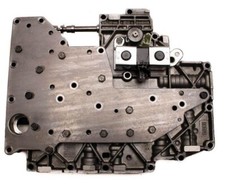
The fix is a reamed bore with an oversize valve, or a replacement valve body. On a Crown Vic that idled for years as a patrol car, I lean toward the valve body. The other bores are usually tired too.
Slips in 1st, 2nd and 3rd, Reverse is fine: forward clutch and drum
If the slip follows the forward clutch, check line pressure and the forward tap first. If both are good, the clutch is not getting its oil or cannot hold it. Sonnax documents chronic forward clutch drum breakage in the AOD, AODE and 4R70W family. Their Smart-Tech forward drum, 76654-01K, lists the symptoms: no forward, slipping gears, a broken drum and ratio codes. The OE drum splits at the snap ring groove. Depending on how far the crack has gone, you get a slip in the forward gears or no forward engagement at all.
On teardown, look hard at that snap ring groove before you reuse a drum. A cracked drum with fresh frictions in it will be back in a few months. While the forward clutch is out, check the forward piston seals and the sealing rings that feed it. They are the other common leak path.
Flare or slip into 3rd: the direct clutch
On 2001-and-later units, a burned direct clutch usually has a reason behind it. Sonnax explains that Ford deleted the two-bolt stiffener plate under the 2-3 accumulator for 2001. Without that clamp, forward clutch oil lifts the separator plate as much as 0.011 in. and cross leaks into the direct circuit. The direct clutch drags in 1st and 2nd and is already worn by the time it has to hold 3rd. The fix is to clamp the plate again with Sonnax's valve body retainer plate kit, 76507F-01K. Our 4R70W clutch failure guide covers the teardown signs.
Sonnax also identifies the OE direct drum and intermediate stub shaft as weak points, where drum splines strip and shafts break. A stripped direct drum feels like a sudden 2-3 neutral, not a gradual slip. If 3rd and 4th are both gone, check the drum splines and the stub shaft before you blame the frictions.
Slips only in 4th: the overdrive band
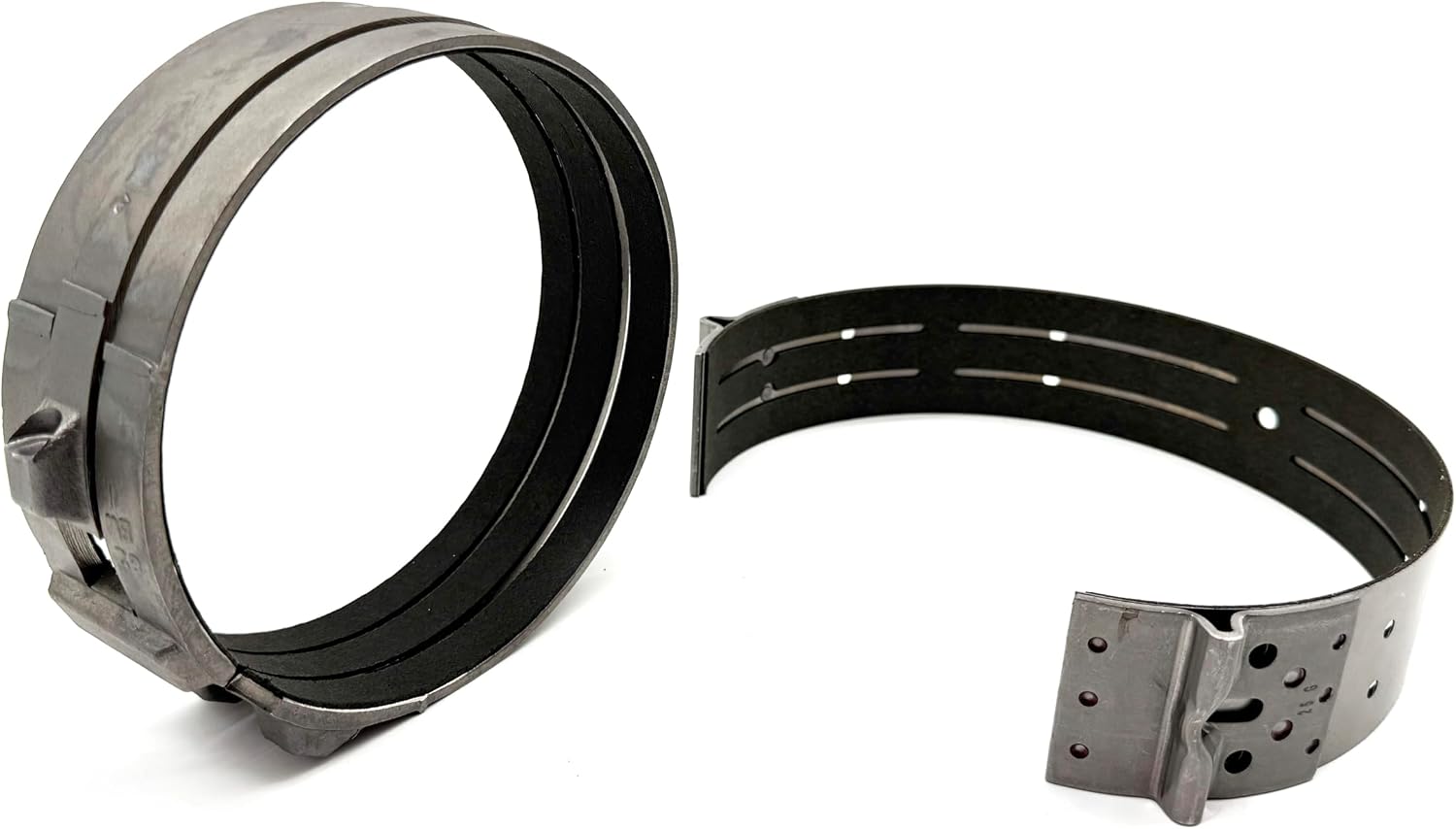
The Crown Vic lives in 4th at highway speed, so the overdrive band and its apply circuit do a lot of work. A slip or flare in 4th, a 3-4 neutral, or a 4-3-neutral pattern points at the overdrive band, the servo and the servo regulator circuit. Worn servo pin bores and servo regulator sleeves bleed off apply oil, so the band never gets a full squeeze. A new band alone will not survive if that leak is still there. Check the bore and the regulator when the case is apart. If it will not take 4th at all, start with the electrical checks in our won't shift into overdrive guide.
Reverse slips or engages late
Reverse uses the reverse clutch and the low/reverse band. It also runs the highest line pressure, 80-120 psi at idle per ATSG, so it is the first range to show a pressure problem. The Gears case is the warning here. Faucett's shop checked the reverse drum, the boost valve, the low servo, the servo cover and the case bore before they finally checked the command. Gauge it, meter the pressure control circuit, then tear down. Our 4R70W no reverse guide covers the hydraulic side.
Why Crown Vics slip sooner than other 4R70W cars
The hard parts are the same family as the F-150 and Mustang units. What differs is how the car was used. Police and taxi cars spend hours idling with the AC on and little air through the cooler. Then they get driven hard from a stop. Heat breaks down MERCON V, varnishes valves and wears the pressure regulator bore. That is the "slips only when hot" car. Grand Marquis and Town Car slips tend to be the slow kind: fluid that was never changed, worn frictions, and a tired valve body.
When you rebuild one, replace or flush the cooler. Old friction material sitting in the cooler and lines will go straight into the new clutches. Check that the auxiliary cooler, if fitted, is not plugged. Then set the fluid level hot, exactly as Ford describes.
The repair path I follow
- Pull codes and log TFT, OSS, TSS, commanded gear and EPC on a road test.
- Check the fluid level hot per Ford, and look at the fluid's condition.
- Find the gear that slips, using the chart above.
- Gauge line pressure, plus the clutch tap for that gear, at idle and under load. Meter the pressure control circuit at the same time.
- Low or no line rise with a good command: air test the TV port for pressure regulator bore wear.
- Good pressure everywhere but the slip is still there: the clutch, drum or band for that gear is worn out. Plan a rebuild with the forward drum, the 2001-up retainer plate and the overdrive servo bores in mind.
Sonnax Smart-Tech forward clutch drum 76654-01K
If your slip follows the forward clutch (1st, 2nd and 3rd slip, 4th and Reverse hold) and the drum is cracked at the snap ring groove, this is the replacement that does not split there again. Sold by our sister store, CoreTransmissionParts.
Shop the part for this fix →Need a rebuild kit, band, servo kit or pressure regulator valve kit instead? The 4R70W parts collection has the full range.
Need parts for this job?
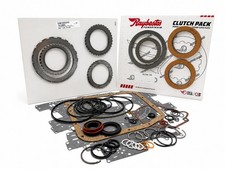
4R70W master rebuild kits, valve bodies, Kevlar overdrive and reverse band sets, solenoid kits and filter kits for the Crown Victoria, Grand Marquis and Town Car are on our 4R70W parts page, with checkout on site. Later 4R75-series cars are on the 4R75W parts page.
FAQ
Why does my Crown Victoria transmission slip only when it is hot?
The most common cause on a high-mileage 4R70W is wear in the pressure regulator valve bore. Transmission Digest documented that the wear lets the pump pull EPC pressure away when the unit is hot, so line pressure does not rise with throttle and the transmission slips under medium to full throttle. Low or overheated fluid can cause the same symptom, so check the level hot first.
What transmission fluid does a Crown Victoria 4R70W use?
Ford's 2003 Crown Victoria owner guide calls for Motorcraft MERCON V, about 13.9 qt dry fill on the standard car and 12.8 qt on the Police or Handling Package. Capacity varies with cooler size, so set the level on the dipstick at 150-170 F after about 20 miles of driving. Do not add supplemental additives.
What should 4R70W line pressure be?
ATSG's line pressure chart lists 50-75 psi at idle in Park, Neutral and the forward ranges, and 80-120 psi in Reverse, with EPC at 0-9 psi at idle. Pressure should rise as throttle increases. Good idle pressure with no rise under load points at the EPC and pressure regulator circuit.
Will a new EPC solenoid fix a slipping 4R70W?
Only if the solenoid or its command is the actual fault. Transmission Digest notes that when the pressure regulator bore is worn, the problem stays after a new EPC solenoid. Gauge line pressure and meter the pressure control circuit before you buy one, and air test the TV port for bore wear.
My Crown Vic slips in 1st, 2nd and 3rd but 4th and Reverse are fine. What is it?
The forward clutch is applied in 1st through 3rd and released in 4th, so that pattern points at the forward clutch circuit. Check line pressure and the forward tap first. If pressure is good, suspect a cracked forward drum at the snap ring groove, which Sonnax documents on this family, or leaking forward piston seals and sealing rings.
Related guides
- 4R70W Crown Victoria Common Problems and Fixes
- 4R70W Slipping: Causes and Fix
- 4R70W Pressure Control Solenoid Symptoms
- 4R70W 3-4 Clutch Failure
- 4R70W vs 4R75W Differences
Sources
- Ford Motor Company — 2003 Crown Victoria Owner Guide, Maintenance and Specifications and Instrument Cluster sections. Backs Motorcraft MERCON V, the 13.2 L (13.9 qt) and 12.1 L (12.8 qt) Police or Handling Package dry-fill capacities, capacity varying with cooler size, the 150-170 F check after about 20 miles, half-pint add increments, the no-additives warning, and the flashing O/D OFF light warning. Ford's host blocks direct access, so this links the Internet Archive copy. web.archive.org (PDF)
- Ford Customer Service Division (Motorcraft) — Automatic Transmission Fluid Chart. Backs fluid selection by 4R70 and 4R75 variant and build year, the instruction to follow the chart over older guides and dipsticks, and the warning against supplemental additives, treatments and cleaning agents. fcsdchemicalsandlubricants.com (PDF)
- Automatic Transmission Service Group (ATSG) — AODE, 4R70W, 4R70E, 4R75E Update Handbook, Internal Component Application Chart, Line Pressure Chart and "4R70W Introduced With Gear Ratio Changes." Backs the clutch, band and one-way clutch applied in each range, the 4R70W ratios (2.84, 1.55, 1.00, 0.70, 2.32 Reverse) versus the AODE, the pressure tap list, and the 50-75 psi idle line, 80-120 psi Reverse and 0-9 psi EPC specs. ATSG handbook (PDF)
- Transmission Digest — Wayne Colonna, "I Lost My EPC!" (Technically Speaking). Backs pressure regulator bore wear causing loss of EPC pressure when hot, the boost circuit routed to the pump inlet, medium- to full-throttle slipping, a new EPC solenoid not fixing it, the compressed air test at the TV port, and the link to premature forward clutch wear. transmissiondigest.com
- Sonnax — "Stop 4R70W Forward Drum Failure with a Sonnax Smart-Tech Drum," Smart-Tech Forward Clutch Drum 76654-01K, "4R70W, 4R75W 2001-Later Forward & Direct Clutch Problems: The Easy Valve Body Fix," and "Stop Chasing AODE, 4R70W Direct Clutch Drum Problems." Back forward drum cracking at the snap ring groove and its symptoms, the 2001 stiffener plate deletion and 0.011 in. separator plate bow, retainer plate kit 76507F-01K, and the stripped direct drum splines and broken stub shafts. forward drum · 76654-01K · cross leak · direct drum
- Gears Magazine (ATRA) — Rob Faucett, "The Rear-View Mirror Is Clear: A 4R70W With No Reverse." Backs the warm delayed-Reverse case, the 30 psi Reverse drop, the 3.2 V / 130 psi cold and 4.3 V hot pressure control readings, and the PCM failure caused by water in the reverse light circuit. gearsmagazine.com