The V8 Explorer is where these two units meet. Through 2001 the Explorer and Mountaineer V8 rode on a 4R70W, the same AOD-family four-speed you find in F-150s, Crown Vics and Mustangs. For 2002 Ford redesigned the truck, and per Ford's 2002 Explorer and Mountaineer service information, both the 4.0L V6 and the new 4.6L V8 went behind a 5R55W/S five-speed. Same nameplate, same badge on the tailgate, two transmissions with nothing in common.
That split causes real trouble at the counter. Customers ask for "the Explorer transmission," yards pull the wrong core, and techs used to the 4R70W walk up to a 2002-up truck looking for a dipstick that is not there. Below is what actually separates the two: the gearing, the hydraulics, the electronics, the service procedure, the failures, and what that means when one comes in on a hook.

The Short Version
| Item | 4R70W | 5R55W |
|---|---|---|
| Forward speeds | 4 | 5 |
| Ratios (ATRA) | 2.84 / 1.55 / 1.00 / 0.70, R 2.32 | 3.22 / 2.41 / 1.54 / 1.00 / 0.75, R 3.07 |
| Gear train | Ravigneaux compound planetary, AOD lineage | 3 compound planetary sets, 3 bands, 3 clutches, 2 one-way clutches |
| Shift solenoids | 2 on/off (SS1/A, SS2/B) + EPC + TCC | 4 on/off (SSA-SSD) + 3 pressure control (PC-A/B/C) + PWM TCC |
| Speed sensors | OSS (no TSS on the W) | TSS, ISS and OSS |
| Fluid | MERCON V (MERCON LV authorized for back-service) | MERCON V, 12.6 qt approx. (Ford 2002 Explorer) |
| Level check | Dipstick | No dipstick: pan level plug, engine running, 81-120 F TFT |
Gearing: Why the Five-Speed Feels Quicker Off the Line
ATRA's ratio chart puts the 4R70W at 2.84, 1.55, 1.00 and 0.70 with a 2.32 reverse. The 5R55W lists at 3.22, 2.41, 1.54, 1.00 and 0.75 with a 3.07 reverse. That is a 13 percent deeper first gear and a much deeper reverse, which is what you want in a two-ton SUV backing a trailer up a ramp.
Look at the spread too. The 4R70W covers 2.84 down to 0.70, a span of about 4.06. The 5R55W covers 3.22 to 0.75, about 4.29, and splits it into five steps instead of four. The big 4R70W jump is the 1-2 shift, where rpm drops by roughly 45 percent. The 5R55W's 1-2 drop is about 25 percent. Drivers feel that as a smoother, busier transmission.
One catch for anyone reading other charts: the same ATRA table lists the 5R55S and late 5R55N with a 2.29 second and 0.71 fifth, not 2.41 and 0.75. If a W core and an S core get mixed up, the PCM's expected ratios will not match, and you will chase ratio codes on a unit that is mechanically fine. Sonnax ties the difference to hardware: the W runs a 24-tooth overdrive sun gear and the S a 38-tooth gear.
Hydraulics: Clutch Drums Versus Bands and Servos
The 4R70W does most of its work with clutch packs. Per the component application chart in the Sonnax Zip Kit guide, it uses an intermediate clutch with a sprag, a reverse clutch, a forward clutch, a direct clutch, an overdrive band, a low/reverse band and a low roller clutch. Two bands, and most of the shift feel comes from clutch packs and accumulators.
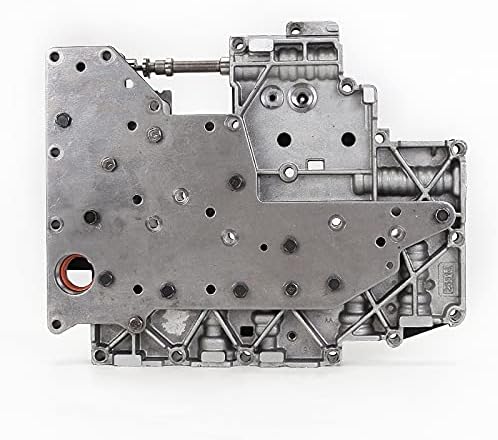
The 5R55W goes the other way. Ford's description is three bands, three multi-plate clutches and two one-way clutches over three compound planetary sets. Three servos means three servo pin bores in the aluminum case, and that is where the unit's best-known failure lives. Sonnax describes servo apply oil passing through the case bridge into an oscillating pin in an unhardened bore. As the bore wears, apply oil leaks away and release oil cross-leaks into the apply circuits. The symptoms Sonnax lists: 1-2, 2-3 and 4-5 flares, gear loss, band lining failure, and ratio codes. Their repair is a sleeve kit (56361J-01K) reamed from the pin bore centerline.
The 4R70W's worn-casting problem is somewhere else: the main pressure regulator bore. Sonnax's Brian Wing notes heavy scoring on the EPC end of the PR valve in 4R70W, 4R70E, 4R75W, 4R75E and AODE units. If the valve looks that bad, assume the bore is gone too. The result is low line rise, soft shifts and burned clutches. You can't trust your eyes on bore wear. Vacuum-test it, then ream and fit an oversize valve. On a 5R55W, the matching valve body wear shows up first, per Sonnax's Bob Warnke, in the TCC modulator bore (bore 9) and main regulator bore (bore 2). Then come the VFS 1, 2 and 3 modulator bores, which starve the clutches and servos of apply pressure.
Why that matters on the bench
A slipping 4R70W usually points you to a clutch pack, the PR/EPC circuit or a separator plate. A slipping 5R55W points you first to the servo pin bores and the VFS modulator valves, and only then to friction material. Rebuild a 5R55W with new bands and clutches and skip the case bores, and you will see it again.
Electronics: Four Solenoids Versus Eight
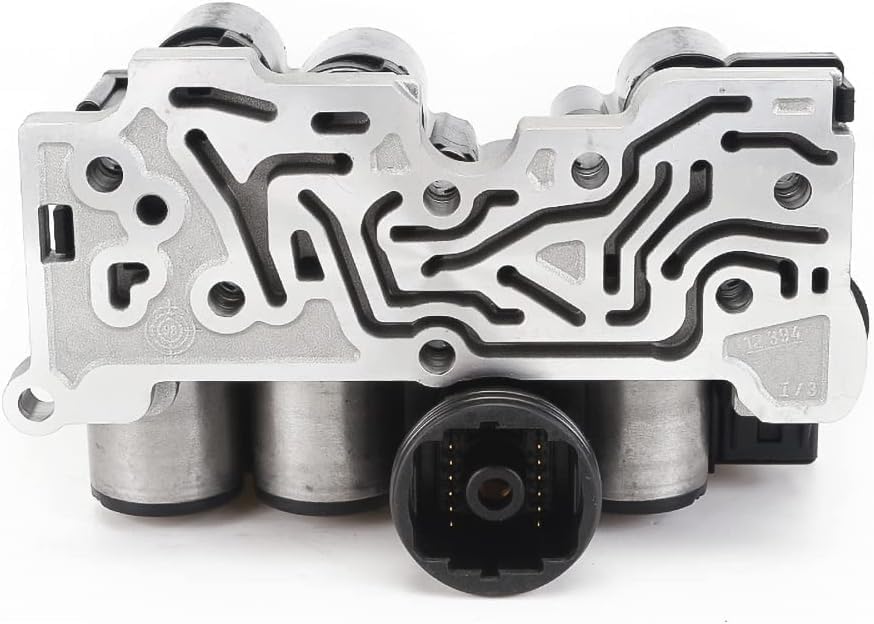
The 4R70W's solenoid body is simple. Per the Sonnax guide, SS1/A and SS2/B set the gear: 1st is on/off, 2nd off/off, 3rd off/on and 4th on/on. Both solenoids off gives you 2nd, which is the limp gear you will see on an unplugged or blown-fuse 4R70W. The other two solenoids are an EPC solenoid that sets line pressure and a TCC solenoid. Resistance specs at the case connector:
- SS1/A and SS2/B: 20-30 ohms
- TCC: 10-16 ohms
- EPC: 2-5 ohms
ATRA's 2009 interchange notes add a connector trap. From 1993-1997 the 4R70W connector is white with the wiring built into the connector. From 1998 on it is black with a separate hard plastic harness. The solenoids do not interchange between the two, and ATRA warns that the wrong harness creates multiple codes and erratic shifts.
The 5R55W is a different machine. Ford's 2002 diagnosis manual lists four on/off shift solenoids (SSA-SSD), one PWM TCC solenoid and three pressure control solenoids, PC-A, PC-B and PC-C, which control line pressure and the band and clutch apply pressures. In Transmission Digest, Jesse Zacarias explains the split. The on/off solenoids only line up valves. The three variable-force solenoids do the actual apply and release work, including the engagements into Drive and Reverse.
The 5R55W also gets three speed inputs where the 4R70W gets one. Ford lists a Turbine Shaft Speed sensor, an Intermediate Shaft Speed sensor that reads planetary sun gear speed to help set pressure, and an Output Shaft Speed sensor. ATRA notes that only the later 4R70E/4R75E center support has the notch for a turbine speed sensor, so a 4R70W runs without one. On a 5R55W, Ford says a failed TSS can cause flare on engagement, harsh shifts or delayed shifts with a hard apply. Scan the TSS, ISS and OSS PIDs before you condemn a clutch.
For a no-move or flare, Ford's diagnostics let you command each PC solenoid from 0 to 90 psi in 15 psi steps with the engine at 1500 rpm and read the result on a gauge. A 4R70W has nothing like it. You read EPC and line pressure, and that is all.
The part that goes in with a 5R55W servo bore repair
Once the pin bores are sleeved, the servo pistons are what restore band apply on a 5R55W. This kit is the matching piece, and it ships from CoreTransmissionParts.
5R55W Servo Piston Kit →Full catalogs: 5R55W parts • 4R70W parts
Service: The Dipstick Is Gone
This is the difference that bites quick-lube shops and DIY owners. The 4R70W has a dipstick. You check it hot in Park like any other four-speed of its era.
The 5R55W in the 2002-up Explorer has no dipstick. Per Ford's 2002 service procedure:
- Watch TFT on a scan tool with the engine at about 650 rpm idle. Bring it to 81-120 F, move the selector through every gear slowly, and return to Park.
- Raise the vehicle as level as possible. Ford lists pinion angle gauge 205-025 to help.
- With the engine running, remove the small center fluid level indicator plug with a 3/16 in. Allen. Hold the larger drain plug with a wrench while you do it.
- When fluid comes out as a thin stream or a drip, the level is correct. If nothing comes out, install fill tool 307-437. Pump in about a pint, then add half-pints until it drips.
The factory numbers that go with it: MERCON V (XT-5-QM or XT-5-DM), about 12.6 qt (12.0 L) total, 16 pan bolts at 97 in-lb, drain plug 19 ft-lb, converter drain plug 89 in-lb and always a new plug, solenoid body bolts 71 in-lb, and the pan gasket is reusable if it is not damaged. Ford sets the normal interval at 150,000 miles. Severe service (towing, heat over 90 F, heavy loads, off-road, dusty conditions) moves it to 30,000 miles. Most Explorers that tow fall in the severe column.
Fluid is the one place they overlap. Ford's current ATF reference chart lists the 4R70W, 4R75W/E and the 5R55N/W/S together. Both originally used MERCON V, and Ford's note authorizes back-servicing them with MERCON LV for a full refill or top-off. Keep the fill consistent on any one unit.
Line Pressure and Stall: Numbers to Test Against
Ford's 2002 Explorer specs for the 5R55W, gauge on the line pressure tap:
- 4.0L, D/3/2/1: 80-110 psi idle, 228-263 psi WOT stall. R: 145-190 idle, 282-350 stall. P/N: 75-120 idle.
- 4.6L, D/3/2/1: 100-135 psi idle, 228-263 psi WOT stall. R: 175-215 idle, 282-350 stall. P/N: 75-120 idle.
- Stall speed: 2557-3036 rpm (4.0L), 2687-3150 rpm (4.6L). Do the line pressure test first. Ford warns that stalling a unit with low pressure does more damage. Hold WOT no more than 5 seconds and run 1000 rpm in Neutral between tests.
On a 4R70W, the quick check is EPC behavior. Low line rise with good solenoid resistance sends you to the PR valve and bore that Sonnax flags. That is a vacuum test and a reamer, not a new solenoid.
Can You Swap One for the Other?
Not in any practical way. The 2002 Explorer was a new platform, and the 5R55W was built for it. The case, bellhousing, length, crossmember, shifter, harness and PCM strategy are all different. A 4R70W has two shift solenoids and one speed sensor. The 2002-up PCM expects four shift solenoids, three PC solenoids and three speed signals. Owners hoping to drop a "stronger" 4R70W into a 2003 Explorer V8 are signing up for a custom wiring and controller project, not a bolt-in.
Inside each family there is some room. 4R70W parts cross to the 4R75W in places, and 5R55W/S parts cross with the ratio and sun gear caveats above. Between the two families, nothing.
Which One Holds Up Better?
The 4R70W is the easier unit to keep alive. It has fewer solenoids, fewer servos, a deep aftermarket, and a known fix for each of its weak spots: the PR/EPC bore, separator plate support on 2001-up units, and the direct drum. A competent rebuild with the bores checked gives a long service life.
The 5R55W drives better and costs more to fix right. The gearing beats the four-speed everywhere. But its wear goes into the aluminum case at the servo pin bores and into the VFS modulator bores. A correct rebuild means checking and sleeving the case and replacing or reconditioning the solenoid body, not just installing a soft-parts kit. Budget for that, and for a PCM adaptive relearn after any solenoid work. Sonnax notes Ford units built after 2002 run adaptive strategy.
Need parts for this job?
Solenoid packs, valve bodies, pumps, servo and band parts, filters and full rebuild kits for both the 4R70W and the 5R55W, in stock and shipped from the USA.
Shop 4R70W parts → Shop 5R55W parts →Shop 5R55W parts →
FAQ
Did the Ford Explorer use a 4R70W or a 5R55W?
Both, in different years. The V8 Explorer and Mountaineer used the 4R70W four-speed through 2001. For the redesigned 2002 model, Ford's service information lists the 5R55W/S five-speed behind both the 4.0L V6 and the 4.6L V8.
Can I put a 4R70W in a 2002-up Explorer?
Not as a bolt-in. The 2002-up truck is a different platform, and its PCM expects four shift solenoids, three pressure control solenoids and turbine, intermediate and output speed signals. A 4R70W has two shift solenoids, an EPC solenoid and no turbine speed sensor, so a swap means custom mounting, wiring and transmission control.
How do you check fluid on a 5R55W with no dipstick?
Bring the fluid to 81-120 F on the scan tool's TFT reading, raise the vehicle level, and remove the small center level plug with a 3/16 in. Allen while the engine runs. A thin stream or drip means the level is correct. If nothing comes out, add MERCON V through the pan fill fitting with Ford tool 307-437 until it drips.
What are the 4R70W and 5R55W gear ratios?
Per ATRA, the 4R70W is 2.84, 1.55, 1.00 and 0.70 with a 2.32 reverse. The 5R55W is 3.22, 2.41, 1.54, 1.00 and 0.75 with a 3.07 reverse. The 5R55S lists a 2.29 second and 0.71 fifth instead, so do not mix W and S hard parts.
Which is more reliable, the 4R70W or the 5R55W?
The 4R70W is simpler and easier to rebuild for the long haul. It has fewer solenoids, fewer servos, and proven fixes for its pressure regulator bore and drum weak spots. The 5R55W shifts and launches better, but its wear goes into the aluminum case at the servo pin bores and the valve body VFS modulator bores, so a lasting rebuild costs more.
Sources
- Ford Motor Company service information, "2002 Automatic Transmissions: Servicing - Explorer & Mountaineer" (Ford/Mitchell). Backs the 5R55W/S application on the 2002 Explorer and Mountaineer 4.0L and 4.6L, MERCON V XT-5-QM/XT-5-DM, the 12.6 qt (12.0 L) capacity, the no-dipstick level-plug procedure (81-120 F TFT, 3/16 in. plug, tools 307-437 and 205-025), the 150,000 and 30,000-mile service intervals, and the pan, drain, converter plug and solenoid body torque specs. txnj.net (PDF)
- Ford Motor Company service information, "2002 Automatic Transmissions: 5R55W/S Diagnosis" (Ford/Mitchell). Backs the unit description (three compound planetary sets, three bands, three clutches, two one-way clutches), the solenoid list (SSA-SSD, PWM TCC, PC-A/B/C), the TSS/ISS/OSS descriptions, the PC solenoid 0-90 psi test, and the line pressure and stall speed specifications for the 4.0L and 4.6L. txnj.net (PDF)
- ATRA, gear ratio quick reference (2006-01_58). Backs the 4R70W ratios 2.84/1.55/1.00/0.70 R 2.32, the 5R55W ratios 3.22/2.41/1.54/1.00/0.75 R 3.07, and the 5R55S/late 5R55N 2.29 second and 0.71 fifth. atracom (PDF)
- ATRA, 2009 Ford interchange information (4R70W/4R70E/4R75E). Backs the 1993-97 white connector vs 1998-on black connector and lead frame (solenoids do not interchange), and the 4R70E/75E-only center support notch for the turbine speed sensor. atracom (PDF)
- Sonnax, Ford 4R70E/4R70W/4R75E/4R75W/AODE Zip Kit quick guide. Backs the 4R70W component application chart, the SS1/A-SS2/B solenoid chart, and the 20-30, 10-16 and 2-5 ohm solenoid resistance specs. sonnax (PDF)
- Sonnax, Brian Wing, "Watch Out for 4R70W Pressure Regulator Valve & Casting Wear." Backs the PR valve EPC-end scoring, bore wear, low line rise and soft shift symptoms, and the vacuum-test-and-ream repair. sonnax.com
- Sonnax, Bob Warnke, "Figuring Out the 5R55 Alphabet." Backs the 5R55W years (2002-03 Explorer/Mountaineer, then the S), the 24-tooth W vs 38-tooth S overdrive sun gear, the valve body bore wear order (bore 9, bore 2, then the VFS modulator bores), and the post-2002 adaptive relearn note. sonnax.com
- Sonnax, Overdrive & Intermediate Servo Pin Bore Sleeve Kit 56361J-01K. Backs the servo pin bore wear mechanism and its flare, gear loss and band failure symptoms. sonnax.com
- Transmission Digest, Jesse Zacarias, "Understanding the 5R55S/W Initial Engagements." Backs the split between the on/off shift solenoids, which only position valves, and the three variable-force solenoids, which control apply and release. transmissiondigest.com
- Ford Customer Service Division, Automatic Transmission Fluid quick reference chart (US). Backs the 4R70W, 4R75W/E and 5R55N/W/S fluid listing and the note authorizing MERCON LV back-service. fcsdchemicalsandlubricants.com (PDF)