A Super Duty that suddenly will not shift out of 3rd, or starts out in a gear that feels like 5th and stays there, is not always a dead transmission. On the 6R140 that is usually the control system protecting itself. The module has seen something it does not trust, it has dropped the solenoids to a known state, and it is letting the truck limp home on hydraulics alone.
Which default gear you got, which codes set, and whether the fault clears on a cold restart tell you most of what you need to know before the pan comes down. Here is how the TorqShift 6 fails safe, and the causes I check in order.


What limp mode actually is on a 6R140
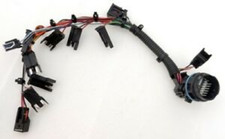
Ford calls it Failure Mode Effect Management, or FMEM. The 6R140 uses the same control layout as the rest of Ford's 6R family: a solenoid body (Ford's name for the valve body) with seven solenoids on a hard-wired internal harness, and the turbine speed (TSS), output speed (OSS), internal range (ITRS) and fluid temperature (TFT) sensors all mounted on that assembly. Lance Wiggins' GEARS Magazine write-up on the 6R80 control system explains the family's FMEM logic, but the 6R140 has its own solenoid layout, and Ford's 6.7L diesel OBD System Operation Summary spells out exactly what the 6R140 does. On this unit SSB, SSE and the line pressure (LPC) solenoid are normally high, so a dead solenoid feed does not leave you in 3rd.
- Solenoid power cut: when the PCM or TCM opens its internal solenoid power switch (TSPC faults P0657 or P2669, an EPC short to ground, or lost communication with the ADLER solenoid driver, P1636), Ford's summary says all seven solenoids go off and the unit gives Park, Reverse, Neutral and 5th in all forward ranges, with the converter clutch open and maximum line pressure. That is the truck that feels like it starts in second and never shifts.
- Solenoid data missing: if the TRID block, the flash memory holding solenoid characterization data for that specific transmission, fails its checksum or was never programmed (P163E or P163F), Ford's 2016 summary limits operation to Park, Reverse, Neutral and 3rd. A truck stuck in 3rd right after a module swap or reflash is usually this, not hard parts.
- Reverse stays available in failsafe.
So a truck in 5th gear failsafe engages hard on purpose, because line pressure is at maximum. Do not chase that harshness; chase whatever put it there. And ask the driver where it happened, because a highway failsafe and a from-a-stop failsafe give you different default gears and different clues.
Step 1: Read the codes like a sorting tool
Pull codes from every module, and save freeze frame before anything gets cleared. Then sort what you find into three groups, because each group points at a different part of the truck:
- Circuit and sensor codes (solenoid circuit, TSS, OSS, ITRS, TFT). These are electrical until proven otherwise: harness, connector, TCM supply, or a sensor.
- Gear ratio codes (P0729 and P0731 through P0736 are the standard gear 6, 1 through 5 and reverse ratio codes). The module commanded a gear and measured the wrong ratio between TSS and OSS. That is a clutch that did not hold, a solenoid that did not deliver, or a valve that did not move, but it can also be a speed signal that dropped out.
- Converter and slip codes. Torque converter clutch slip beyond what the module will accept.
On the road test, keep commanded gear, actual ratio, TSS, OSS, TFT, desired line pressure and TCC slip on screen, and note whether the failsafe shows up cold or only hot.
Cause 1: The internal harness and its splices
GEARS Magazine's "Revisiting the 6R140" says speed sensor and intermediate speed sensor (IMS) codes are common on this unit and are often temperature related or intermittent. The cause it gives is the splices in the internal wiring harness. They degrade in hot fluid until they open up as the harness expands.
That fits the usual complaint: fine cold, limp on a long pull, fine again the next morning. GEARS' fix is to repair the splices with solder and oil-resistant heat shrink. If several splices are bad or the insulation has gone hard, I replace the harness instead.
Because TSS and OSS signals feed the ratio calculation, a harness that is failing can also set ratio codes that look like a slipping clutch. If the ratio codes come with a sensor code, or the actual ratio on the scan tool jumps rather than slides, suspect the signal before you suspect the clutch.
Check the TCM supply too
On the diesel, Ford's summary has the TCM store P0882 or P0883 when its supply leaves the 9 to 16 volt range, and U0073 or U0100 (with the lamp on immediately) when it loses CAN messages from the ECM. Inspect the TCM connector and load-test power and ground while the truck is on the lift.
Cause 2: Fluid level, and the filter seal
Low fluid can look like limp mode: the truck drops into neutral and will not pull. Jim Mobley of the Sonnax TASC Force wrote up a 2016 F-550 6.7L with a PTO and a bucket body in Transmission Digest. It went into neutral at random in Drive or Reverse after a rebuild, yet pressure and level checked fine in the bay. The spec he gives for line pressure is 90 to 260 psi. On a cold start, though, pressure dropped to 0 psi driving up an inclined driveway and stayed there until the truck rolled back down.
The cause was a filter seal with no grip at all. The filter dropped out of the case as soon as its retaining bolt came out. On an incline, the pump pulled air around the seal instead of fluid. Mobley replaced it with a sturdier O-ring, set the level at the 196 to 216°F check window, and confirmed the repair on a 20 to 30 degree incline.
The lesson for limp complaints: check the level hot, on the scan tool's TFT reading, and if the complaint only shows up on grades or hard stops, pull the filter and look at the seal before you condemn anything else. The unit takes Mercon LV. Our 6R140 fluid type and capacity guide has the refill numbers.
6R140 Shift Solenoid Kit, 2011 and Up
A full set of shift solenoids for the Super Duty 6R140. Replace the set when a solenoid is sending ratio or performance codes and the harness checks good. Load the correct ID codes after install.
View the solenoid kit →Also browse the full 6R140 parts collection.
Cause 3: Solenoids out of band, or the wrong ID codes
If the harness and supply are good and you have ratio codes on one or two gears, look at the solenoids feeding the clutches in those gears. Per Sonnax's 6R140 solenoid strategy article, the solenoids are sorted into flow bands 1 through 5. Normally high solenoids have a black snout and normally low solenoids have a brown one. The valve body tag carries a 13-digit solenoid body strategy and a solenoid body ID, and the module needs both to model how each solenoid flows.
The GEARS control article makes the same point from the programming side. If the strategy etched on the main control does not match what the scan tool shows, the module is working from the wrong data. A single solenoid can only be replaced with one whose nozzle type and band number match the original. When a valve body or solenoid set goes in, the new strategy has to be loaded, the adaptive tables cleared and keep-alive memory reset, and then Ford's relearn drive done. Skip that and you can get shift faults that look like hardware failures and never adapt out.
Cause 4: Valve body wear and debris
When the inputs are honest, the fluid is right and the solenoids are correctly banded and coded, the valve body is next. Three patterns show up in the trade literature:
Forward clutch latch valve bore wear
Sonnax's listing for its oversized forward clutch latch valve kit (126740-06K) says wear in that bore lets critical pressure escape, which makes feedback pressure unstable. The symptom list includes gear ratio and solenoid codes, along with delayed engagement, harsh shifts, burnt forward clutches and overheated fluid. Those ratio codes are exactly what put the truck into failsafe. The repair is to ream the bore and install the oversized valve, or replace the valve body.
Debris and the 1-2-3-4 control valve
GEARS reports that debris from normal wear sticks the 1-2-3-4 control valve. The result is neutral when coming to a stop and harsh 5-4 and 6-4 forced downshifts. In most of these cases GEARS found no other internal damage, so a valve body repair or replacement is the fix, not an overhaul.
TCC regulator wear and slip codes
Rob Faucett's GEARS case on a repeat 6R140 TCC failure is a good model for slip-code limp complaints. His numbers were line pressure command 0.9 to 1.1 amps at idle and gauge readings of 92 psi at idle, 218 psi at stall and 140 psi on the highway. Everything read in range, but the truck shuddered and set a slip code, with slip swinging about 200 rpm. The cause was a worn TCC apply regulator valve bore that vacuum-tested low at 13 in. Hg. Reaming the bore and fitting oversized valves fixed it. The point: good pressure numbers do not clear the valve body. Vacuum-test the TCC regulator, charge limit and charge control bores.
Cause 5: Heat
GEARS gives 195 to 230°F as the normal 6R140 operating range. Two causes of running hot on these trucks are easy to miss. One is a low secondary cooling system, which serves the transmission along with the charge air cooler, fuel cooler and EGR cooler. The other is a pump stator sleeve that has partly turned and blocked converter charge oil. GEARS also notes that tuner programming that delays lockup makes more heat than normal. Heat breaks down the harness splices from Cause 1, so an overheating truck often comes in with intermittent sensor codes as well.
When it is not limp mode
A truck that will not move at all in any range is past failsafe. On a unit that was recently rebuilt, GEARS points to the input shaft, which is spin-welded to the 4-5-6 drum. That weld can break completely free. The drum air-checks fine, but the shaft turns inside it by hand. That is a hard-parts repair, and no amount of reprogramming will fix it.
Quick reference: what you see and where to look
| What you see | Look at first |
|---|---|
| Stuck in 5th from a stop, hard engagements, no lockup | Solenoid power faults (P0657, P2669, P1636, EPC short): TCM power and ground, the harness connector, the internal harness |
| Stuck in 3rd after a module swap or reflash | TRID block codes P163E or P163F: reprogram the solenoid data |
| Failed safe at highway speed, stuck in a high gear | E clutch circuit, speed signals, ratio codes on the upper gears |
| Limp only when hot, speed sensor or IMS codes | Internal harness splices (solder and oil-resistant heat shrink, or replace the harness) |
| Neutral on grades or hard stops, pressure falls to 0 | Fluid level checked hot, filter seal |
| Ratio codes on one or two gears, harness good | Solenoid band and ID codes, then forward clutch latch valve bore |
| TCC slip code, shudder, pressures in spec | Vacuum-test the TCC apply regulator bore |
| No movement in any range after a rebuild | Input shaft weld to the 4-5-6 drum |
Keeping it out of limp mode
- Treat intermittent sensor codes as a harness job, not a sensor job, until the splices are proven good.
- Check the level hot with TFT on the scan tool, and inspect the filter seal at every service.
- Never mix solenoid bands. Match the band or load new ID codes, then clear adaptives, reset KAM and do the relearn drive. Our adaptive relearn guide covers the process.
- Keep the secondary cooling system full and ask about tuning when you write up the job. Lockup strategy changes heat.
- Change the fluid and filter before they get dirty. Debris sticks valves, and sticking valves set codes.
FAQ
What gear does a 6R140 go to in limp mode?
It depends on the fault. Ford's 6R140 OBD documentation says that when solenoid power is cut, all seven solenoids go off and the unit gives Park, Reverse, Neutral and 5th in all forward ranges with the converter clutch open and maximum line pressure, so engagements feel harsh. If the TRID solenoid data block is corrupt or missing, operation is limited to Park, Reverse, Neutral and 3rd.
Why does my 6R140 go into limp mode only when it is hot?
Heat-related limp mode with speed sensor or intermediate speed sensor codes points first at the splices in the internal wiring harness. GEARS Magazine reports these codes are often temperature related or intermittent on the 6R140. Repair the splices with solder and oil-resistant heat shrink, or replace the harness.
Can low fluid put a 6R140 in limp mode?
It can cause a sudden loss of pressure that acts like limp mode. Transmission Digest documented a 6R140 whose line pressure dropped to 0 psi on an incline because the filter seal had failed. Check the level hot, at the 196 to 216 degree F window, and inspect the filter seal.
Will clearing codes get a 6R140 out of limp mode?
Clearing codes or restarting the truck may bring the shifts back for a while, but the fault that set the code is still there. If the cause is a harness, a solenoid or a worn valve bore, the truck will fail safe again. Fix the cause, then clear adaptives and do the relearn drive.
Getting a 6R140 out of limp mode?
Internal harnesses, solenoid kits, filter kits, valve bodies and Sonnax valve body kits, shipped from the USA.
Shop 6R140 parts →Sources
- GEARS Magazine (ATRA), July 2015 — “Let’s Play Ball: Controlling the 6R80,” Lance Wiggins. Backs the solenoid body with seven solenoids and valve-body-mounted TSS, OSS, ITRS and TFT sensors, FMEM operation after loss of control or power, 5th gear default for high-gear failures and 3rd gear for all others, all solenoids off in 3rd gear failsafe with SSB applying the B clutch, hydraulic forward clutch apply and maximum line pressure from PCA, the E clutch latch valves locking 5th, and the 13-digit strategy and band-matching rules. atracom.blob.core.windows.net (PDF)
- GEARS Magazine (ATRA) — “Problems and Fixes: Revisiting the 6R140 Transmission.” Backs common speed sensor and IMS codes that are temperature related or intermittent, the internal harness splice cause and the solder and oil-resistant heat shrink repair, the 1-2-3-4 control valve debris failure, the 195-230°F operating range, secondary cooling system and pump stator sleeve overheating causes, tuner-delayed lockup, and the input shaft spin weld to the 4-5-6 drum breaking free. gearsmagazine.com
- Transmission Digest — “Ford 6R140: Repairing the Elusive Intermittent Neutral Condition,” Jim Mobley, Sonnax. Backs the 2016 F-550 6.7L PTO case, the 90-260 psi line pressure spec, pressure falling to 0 psi on an incline, the failed filter seal and O-ring repair, and the 196-216°F level check window. transmissiondigest.com
- GEARS Magazine (ATRA) — “6R140 Repeat TCC Failure,” Rob Faucett. Backs the slip code with about 200 rpm slip swing, the 0.9-1.1 amp line pressure command at idle, the 92 / 218 / 140 psi gauge readings, the worn TCC apply regulator valve bore at 13 in. Hg on the vacuum test, and the ream-and-oversize repair. gearsmagazine.com
- Sonnax — “6R140 Transmission Solenoid Strategy Code: Don’t Break Up the Band,” Jason Larochelle. Backs flow bands 1 through 5, black snouts on normally high and brown on normally low solenoids, the strategy and ID codes on the valve body tag, and the programming, adaptive clear and KAM reset procedure. sonnax.com
- Sonnax — Oversized Forward Clutch Latch Valve Kit 126740-06K (6R140). Backs forward clutch latch valve bore wear causing feedback pressure instability, and the symptom list including gear ratio and solenoid codes, delayed engagement, harsh shifts, burnt forward clutches and overheated fluid. sonnax.com
- Ford Motor Company — “2016 MY OBD System Operation Summary for 6.7L Diesel Engines,” section “6R140 (RWD) Transmission with external PCM or TCM.” Backs the normally high solenoid default to Park, Reverse, Neutral and 5th with open TCC and maximum line pressure on TSPC (P0657, P2669), EPC short and ADLER (P1636) faults, the TRID block (P163E, P163F) limit to Park, Reverse, Neutral and 3rd, and the TCM voltage (P0882, P0883) and CAN (U0073, U0100) codes. Ford OBD summary (PDF, archive.org)
- Wayne Colonna — “Introducing Ford's TorqShift 6 Transmission,” Vehicle Service Pros. Backs SSB, SSE and LPC being normally high on the 6R140 and the fifth-and-reverse failsafe. vehicleservicepros.com
Shop 6R140 internal harnesses, solenoid kits, filter kits and valve bodies — shipped fast from the USA.
Shop 6R140 parts →Shop the 6R140 solenoid kit →