The complaint is always some version of the same thing: you pull the Cruze, Malibu, Equinox or Terrain out of Park, put it in Drive or Reverse, and nothing happens. The engine idles, the car sits, and then a second or two later it lands in gear with a thump. Sometimes it only happens first thing in the morning. Sometimes it happens every time. Sometimes it only happens in Reverse.
On the 6T30/6T40/6T45/6T50 family, a delayed engagement is a pressure problem until proven otherwise. Either the clutch that has to apply is not getting enough oil, or it is getting the oil and leaking it off. The trick is figuring out which clutch, and whether the leak is in the clutch, the valve body, the pump, or a mismatched part somebody put in during the last overhaul. Here is how I work through it, with the GM bulletins and technical references cited inline and listed at the bottom.
What Has to Happen for the 6T40 to Engage
Start with the apply chart, because it tells you where to look. Per the solenoid and clutch apply chart in Sonnax's 6T40 Gen 2 quick guide, the Low and Reverse clutch is applied (with no load) in Park and Neutral. From there:
| Engagement | Clutch that has to apply | What else holds | Solenoid that controls it |
|---|---|---|---|
| Park/Neutral to Drive | 1-2-3-4 clutch | Low one-way clutch holds; Low and Reverse clutch releases | 1-2-3-4 PCS (PCS5) |
| Park/Neutral to Reverse | 3-5-Reverse clutch | Low and Reverse clutch stays applied | 3-5-R PCS (PCS2) |
So a Drive engagement is really the 1-2-3-4 clutch coming on against the low sprag, and a Reverse engagement is the 3-5-R clutch coming on while the Low and Reverse clutch keeps holding. GEARS Magazine's "Understanding GM 6T40 Solenoids" lists PCS5 as the 1-2-3-4 clutch solenoid and PCS2 as the 3-5-R clutch solenoid, with every pressure control solenoid at 3-5 ohms and the on/off shift solenoid at 16-20 ohms.
One wrinkle matters for diagnosis: the two generations are wired opposite on those two solenoids. On Gen 1, PCS2 is normally high and PCS5 is normally low. GEARS notes that Gen 2 reversed both, so PCS2 became normally low and PCS5 normally high. Gen 1 TEHCMs have pressure switches and an 8th-digit ID of 1, 2 or 3; Gen 2 has no pressure switches and an ID of B, C or D. They are not interchangeable, and a wrong-generation TEHCM is its own category of problem.
This chart gives you the most useful question you can ask the customer: is it Drive, Reverse, or both?
- Delay into both Drive and Reverse: think about what the two circuits share. Fluid level, pump output and line pressure, the control solenoid filter plate, and leaks that bleed down line pressure everywhere.
- Delay into Drive only: the 1-2-3-4 clutch, its piston seals, PCS5 and the 1-2-3-4 regulator and boost valves. Because the 1-2-3-4 clutch is also applied in 2nd, 3rd and 4th, a leaking 1-2-3-4 circuit often shows up as flares in those gears too.
- Delay into Reverse only: the 3-5-R clutch, its piston, the 3-5-R waved plate and PCS2. The same clutch carries 3rd and 5th, so watch for flares there on the road test.
Step 1: Get the Fluid Level Right, Hot, at the Plug
It sounds basic, but the 6T40 punishes a bad level check more than most units. There is no dipstick. GEARS' "6T40/45 Diagnosis and Fixes" spells out the procedure: engine running, selector in Park, fluid at 85-95°C (185-205°F), and check at the level plug near the axle seal in the case. Sonnax's remanufactured valve body install sheet gives the same procedure in more detail: cycle the selector through each range pausing about 3 seconds in each, idle at 500-800 rpm for at least a minute, confirm TFT is 185-203°F, then pull the level plug and add DEXRON-VI until it drips.
The reason temperature matters so much is the thermal element. GEARS explains that the 6T40 uses a bimetal fluid level control valve: below about 60°C (140°F) fluid drains from the cover area into the sump, and as the unit warms, the element traps fluid up in the cover. Check it cold and it reads full when it is actually low. A unit that is a quart low with the fluid split between the cover and the sump can easily pull air at the pickup during a cold engagement, which is exactly the "only in the morning" delay.
Going the other way is not safe either. GEARS notes that as little as half a quart overfull pushes fluid out the vent, and an overfill can set P0218, transmission fluid over temperature. If you find a car that someone has "topped off" at the vent tube, drain it and set the level properly before you judge anything else.
Step 2: Line Pressure Before Parts
If the level is right and it still delays into both ranges, put a gauge on it. GM Preliminary Information PI0324E (December 2012), covering 2011-2013 Cruze, Malibu, Equinox, Terrain, LaCrosse, Regal, Verano, Sonic, Orlando and Captiva Sport with 6T30/6T40/6T45/6T50 units, lists complaints running from harsh shifts and slipping in more than one gear up to no movement at all, with P0776, P0796, P2714 or P2723 possible and often on low-mileage vehicles. GM's stated cause is no or low line pressure from a damaged transmission fluid pump, and the instruction is blunt: perform the line pressure check and do not replace the TEHCM or valve body first.
A pump that is on its way out does not usually go from fine to nothing. It goes through a stage where it cannot fill a clutch quickly at idle, especially with thin hot oil or before the converter and cooler circuits have refilled. That is a delayed engagement. Sonnax's diagnostic tips list the same chain on Gen 1 units: slippage, noise and possible P0776, P0796, P2714 and P2723 from low line pressure due to pump damage or wear.
Pay attention to P2723. GEARS points out that this pressure control solenoid 5 performance (stuck off) code may indicate a pressure leak in the clutch circuit rather than a failed solenoid. PCS5 runs the 1-2-3-4 clutch, the one that applies on every Drive engagement. A delayed Drive engagement with P2723 in history is pointing you at the 1-2-3-4 circuit, not at a new TEHCM.
Step 3: Watch It on the Scan Tool
With a capable scan tool you can see the delay instead of guessing at it. Monitor transmission fluid temperature, input shaft speed, output shaft speed, commanded gear and the commanded pressure on the pressure control solenoids while you shift from Park to Drive and Park to Reverse with your foot on the brake. On a healthy engagement, input speed drops away from engine speed promptly as the clutch pulls the input down against the held output. When the clutch is starved or leaking, input speed hangs at engine speed while the TCM is already commanding the gear, then falls off late and hard.
Repeat it cold and hot. A delay that goes away when the unit is warm and the level has been set correctly leans toward level or the thermal element. A delay that gets worse hot leans toward internal leakage, because thinner oil leaks past worn seals, rings and valve bores faster than the pump can make it up.
On Gen 2 controls, run the TEHCM performance test in the scan tool. GM bulletin PI0670A notes this test is functional and required on Gen 2 controls but does not work on Gen 1 (for example the 2012 Cruze and Sonic with the 1.8L). Use solenoid resistance and a proper driver on Gen 1, and never put 12 volts straight onto a pressure control solenoid.
Step 4: Rule Out Lost or Frozen Adapts
Before you tear into anything, make sure the TCM actually knows the transmission it is running. GEARS' "Why Doesn't My 6T40 Shift Right?" makes the case that frozen or reset adaptive values, from a battery disconnect, voltage problems or a poor connection, cause shift complaints with no codes at all, and that some flare and slip complaints were fixed with nothing but the Service Fast Learn Adapts procedure.
GM requires the fast learn after an overhaul or replacement, valve body service, speed sensor replacement, TEHCM replacement or software update. The conditions GEARS lists: TFT between 70-115°C (158-239°F), drive wheels blocked and parking brake set, zero throttle with no external rpm control, and the selector cycled from Park to Reverse three times first to purge air from the reverse clutches. Engagement quality is one of the things the TCM learns, so a unit that "delays after a battery replacement" may only need this.
Step 5: Delay Into Drive Only — the 1-2-3-4 Circuit
When Drive is slow and Reverse is crisp, the pump and line pressure are probably fine, and the leak is on the 1-2-3-4 side. In order of how often I find them:
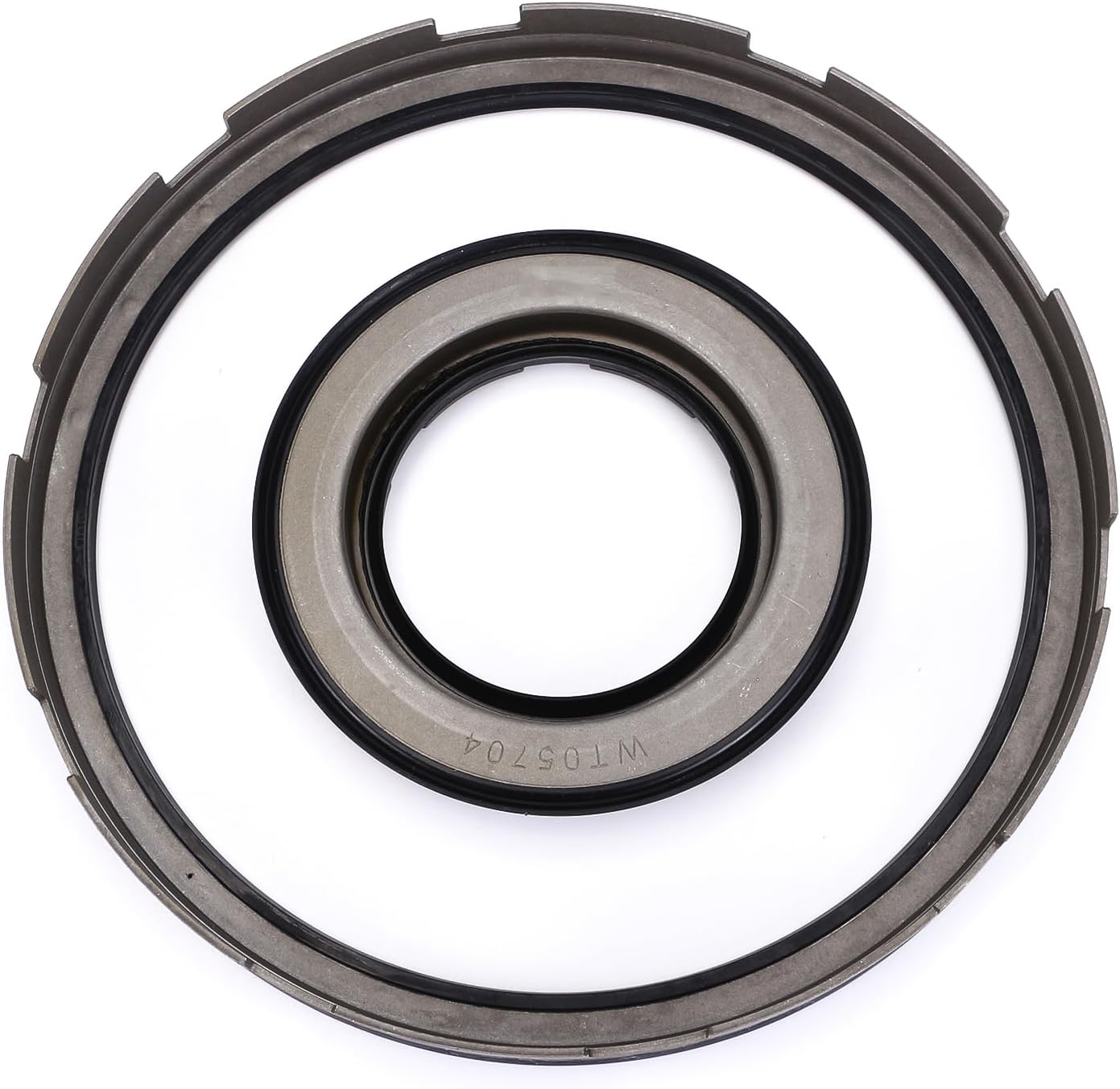
- 1-2-3-4 piston seals. A hardened or torn lip lets apply oil bleed off until the pump catches up, which is the delay, and then the clutch finally clamps, which is the thump. This is a teardown repair, and on a unit with miles on it a bonded piston set is the sensible way to renew every piston at once.
- Valve body wear and debris. The 1-2-3-4 regulator and boost valves live in the control valve body. Worn bores leak down the circuit the same way a bad seal does, and debris from a previous failure can hang a valve. Sonnax's install notes call for air checking the circuits with low regulated air while the valve body is out, and for a new filter plate on the TEHCM because the seals take a set and leak if reused.
- The control solenoid filter plate. Transmission Digest documented a Gen 1 Cruze where a damaged filter plate let actuator feed pressure cross into a pressure switch circuit, causing a flare to neutral on the 1-2 shift. That plate is a seal between circuits, and a damaged one makes good solenoids look bad.
Step 6: Delay Into Reverse Only — the 3-5-R Circuit
A slow Reverse with good Drive puts the 3-5-R clutch at the top of the list. GM bulletin PI0670A (February 2012) covers exactly this family of complaints: slip when reverse is selected or no reverse, slip or flare into 3rd or 5th, and P0776. For Gen 1 controls, GM's order is to inspect the valve body, the pump, the 3-5-R housing and then the 3-5-R piston for cut or damaged sealing lips, and to not replace the TEHCM before the piston has been visually inspected.
GM also warns that air checking the 3-5-R clutch through the case feed ports frequently leads to the wrong diagnosis. The only reliable test of that piston is taking the transmission apart and looking at it. The broken 3-5-R waved plate is the other big 3-5-R failure on these units; our 6T40 no-reverse guide covers that bulletin and repair in detail.
Step 7: Delay After an Overhaul — Check the Generation
If the delay showed up right after a rebuild, look hard at what went back in. Transmission Digest's "6T40 delayed engagements after overhaul" describes a Gen 1 unit with a significant delay into both Drive and Reverse and low line pressure. Somebody had installed a Gen 2 4-5-6 clutch housing with a three-ring support tower in a Gen 1 transmission.
The difference is the compensator. The Gen 1 piston has inner and outer lip seals and runs on a four-ring support tower with a compensator circuit. The Gen 2 piston has only an outer seal and uses a backfill circuit with no compensator, on a three-ring tower. In the Gen 1 case, compensator oil leaked past the missing inner seal, the compensator valve could not fully stroke, and line pressure bled off everywhere. The fix was putting Gen 1 housing parts and the four-ring tower back in. Count the rings on the support tower before you blame anything else on a fresh build.
After any overhaul, fill it properly, check the level hot at the plug, and run the fast learn. Sonnax's install notes list the valve body bolt torques as 106 in-lb for the 53 mm, 60 mm and 105 mm bolts and 71 in-lb for the three 40.5 mm TEHCM bolts, with the manual valve aligned to the detent lever during installation. A misaligned manual valve is its own source of mushy engagements.
My Diagnostic Order
- Ask: Drive, Reverse or both? Cold, hot or always?
- Set the level hot at the plug, 185-205°F, engine running, in Park. DEXRON-VI only.
- Pull codes. P0776 points at 3-5-R, P2723 at the 1-2-3-4 circuit, and P0776/P0796/P2714/P2723 together at pump and line pressure.
- Watch input speed against engine speed on the engagement, cold and hot.
- Run a line pressure check before replacing the TEHCM or valve body (PI0324E).
- Run the fast learn if adapts could have been lost.
- If it is still delayed, it is internal: pump, piston seals, valve body wear, or wrong-generation parts.
6T40 bonded piston set at Core Transmission Parts
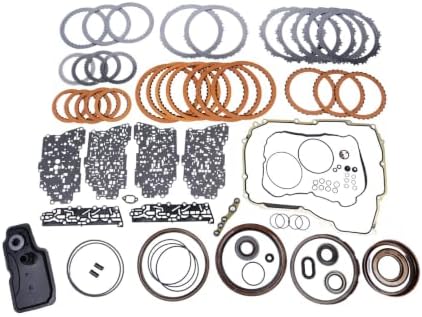
Leaking piston seals are the most common internal cause of a slow engagement on a high-mileage 6T40. Core Transmission Parts carries a bonded piston set for 2012-up units, plus complete master rebuild kits if the pump or clutches are also done.
View the 6T40 bonded piston set →6T40 and 6T45 bonded piston sets, rebuild kits with frictions and steels, valve bodies and solenoid kits — shipped fast from the USA.
Shop 6T40 parts →Related guides
- 6T40 No Reverse: Diagnosis and Fix
- 6T40 Slipping: Causes and Fix
- 6T40 Harsh Shift Causes and Fix
- 6T40 Valve Body Symptoms
- 6T40 Identification Guide
FAQ
Why is my 6T40 slow to go into Drive or Reverse?
The usual causes are low fluid checked at the wrong temperature, low line pressure from a worn or damaged pump, or an internal leak in the clutch circuit that has to apply. GM bulletin PI0324E tells techs to run a line pressure check before replacing the TEHCM or valve body, because a damaged pump causes these complaints on 6T30, 6T40, 6T45 and 6T50 units.
Which clutch applies when you shift a 6T40 into Drive?
The 1-2-3-4 clutch, controlled by pressure control solenoid 5, applies while the low one-way clutch holds. In Reverse the 3-5-R clutch applies, controlled by PCS2, while the Low and Reverse clutch stays applied. A delay into only one range points at that range's clutch circuit.
How do you check 6T40 transmission fluid level?
There is no dipstick. With the engine running and the selector in Park, bring the fluid to 85-95°C (185-205°F), then remove the level plug in the case and add DEXRON-VI until it drips. Checking cold gives a false reading because the thermal element holds fluid in the cover once the unit is warm.
Can a relearn fix a 6T40 delayed engagement?
Sometimes. If the adaptive values were reset or frozen by a battery disconnect or voltage problem, running the Service Fast Learn Adapts procedure can restore normal engagements. GM requires it after overhaul, valve body or TEHCM replacement, speed sensor replacement and software updates.
Why does my 6T40 have delayed engagement after a rebuild?
One documented cause is mixing generations. Transmission Digest describes a Gen 1 unit rebuilt with a Gen 2 4-5-6 clutch housing and three-ring support tower, which leaked compensator oil and dropped line pressure, causing delays into Drive and Reverse. Gen 1 units need the Gen 1 housing and four-ring tower.
Sources
- General Motors — Preliminary Information PI0324E, "No Forward, No Reverse, No Crank, Engine Cranks But Will Not Start (Perform Transmission Line Pressure Check)," December 2012 (via NHTSA). Backs the 2011-2013 6T30/40/45/50 applications, the complaint list, DTCs P0776/P0796/P2714/P2723, the damaged-pump low line pressure cause, and the line pressure check before replacing the TEHCM or valve body. static.nhtsa.gov (PDF)
- General Motors — Preliminary Information PI0670A, "Diagnostic Tips for DTC P0776, Slips in or No Reverse, Third, Fifth," February 2012 (via NHTSA). Backs the reverse/3rd/5th complaint list, the Gen 1 inspection order including 3-5-R piston sealing lips, the Gen 1 versus Gen 2 TEHCM performance test note, and the warning against case air checks of the 3-5-R clutch. static.nhtsa.gov (PDF)
- Transmission Digest — "6T40 delayed engagements after overhaul." Backs the Gen 1 unit with delayed Drive and Reverse and low line pressure, the Gen 2 4-5-6 housing and three-ring support tower cause, the compensator piston seal differences, and the Gen 1 parts correction. transmissiondigest.com
- ATRA / GEARS Magazine — "6T40/45 Diagnosis and Fixes." Backs the hot level check at 85-95°C at the case plug, the bimetal fluid level control valve behavior below 60°C, the half-quart overfill and P0218 warning, and P2723 indicating a clutch circuit leak. gearsmagazine.com
- ATRA / GEARS Magazine — "Understanding GM 6T40 Solenoids." Backs the PCS2 (3-5-R) and PCS5 (1-2-3-4) assignments, the Gen 1 versus Gen 2 normally-high/normally-low reversal, resistance specs, and the non-interchangeable generations. gearsmagazine.com
- Sonnax — 6T40-GEN2-ZIP quick guide and GM6T40-1 remanufactured valve body tech and install tips. Backs the solenoid and clutch apply chart (1-2-3-4 clutch and low one-way clutch in 1st, 3-5-R and Low and Reverse in reverse), the TEHCM generation ID digits, the fluid fill procedure and TFT range, valve body bolt torques, and the pump-wear diagnostic tip. sonnax.com quick guide (PDF) • sonnax.com install tips (PDF)
Also referenced: ATRA / GEARS, "Why Doesn't My 6T40 Shift Right?," for the Service Fast Learn Adapts conditions and frozen-adapt complaints, gearsmagazine.com; and Transmission Digest, "Shift pointers: 6T40 neutral drop," for the damaged filter plate case, transmissiondigest.com.