Most E-Class 722.6 shift complaints come in sounding the same: "it shifts hard," "it bangs into 2nd," "it hangs in a gear," or "it won't shift at all." The words are the same, but the causes are different. A W210 E320 that thumps on the 2-1 downshift, a W211 that holds 2nd after a cold start, and a car that shifts fine but bucks at 40 mph each need a different repair. This is the order I work an E-Class shift complaint, from the scan tool to the valve body, using Mercedes WIS, ATSG and Sonnax data instead of guesses.
How the 722.6 Decides When and How Hard to Shift
Know what controls the shift before you start replacing parts. ATSG's 722.6 manual describes a fully adaptive control system. The TCM takes data from the shift lever assembly, the engine computer and the ABS module over the CAN bus, with most messages sent every 20 milliseconds, and it calculates the pressure each shift needs from load and engine speed.
The hydraulics are split into three "shift groups." Three on/off, normally closed shift solenoids (1-2/4-5, 2-3 and 3-4) each start one group of valves. ATSG notes that a solenoid is toggled on to make its shift and then switched off again, so in a steady gear all three are off. The shift solenoids only decide when a shift happens. How the shift feels is controlled by two pulse-width modulated solenoids:
- Modulating pressure control (MPC) solenoid: line pressure. Minimum exhaust gives high pressure, maximum exhaust gives low pressure.
- Shift pressure control (SPC) solenoid: the pressure cutback during the shift and the clamping force on the holding clutch.
ATSG says the MPC and SPC solenoids "work in tandem" with the shift solenoids to control shift feel, and the two are interchangeable. In practice, a harsh or soft shift points at pressure control (MPC, SPC, regulator valves, adaptations). A missing or late shift points at a shift solenoid, a shift valve or a speed signal.
Step 1: Sort the Complaint Into One of Four Buckets
| What the driver feels | Where to look first |
|---|---|
| Starts in 2nd, will not upshift, check-engine light | Limp mode: electrical fault, read codes first |
| Harsh or soft on every shift, no codes | Fluid level, adaptations, MPC/SPC circuits, pressure regulating valves |
| One shift is bad (2-3 flare, 1-2 bang, 2-1 clunk) | The overlap and command valves for that shift group |
| Bucking or "rumble strip" feel at steady speed | Converter clutch apply, not the gear shifts |
Ask the driver when it happens: cold or hot, light or heavy throttle, upshift or downshift. That question narrows the problem more than anything else this early.
Step 2: Limp Mode and the "Stuck in 2nd" Complaint
Because the shift solenoids sit off while the car is in gear, ATSG explains that when the TCM sees a fault, the transmission stays in whatever gear it was in at that moment. Once the car is stopped, the engine is switched off for 10 seconds and restarted, 2nd gear is available hydraulically (3rd on some models), along with reverse. That is the classic E-Class that pulls away slowly in 2nd and never upshifts.
Two details from ATSG save comebacks:
- A permanent limp-in fault can clear on a key cycle. If the same code is seen on three key cycles, it will not recover until the code is cleared with a scan tool.
- After a repair, "all codes must be cleared for the limp mode feature to be turned off." A fixed car that stays in 2nd may just still have stored codes.
ATSG also lists faults that put the transmission in neutral instead of 2nd. Improper ratio, input sensor overspeed and engine overspeed codes cause a loss of drive. If the car has no drive, start with those codes, not the solenoids. Our 722 limp mode guide covers the code list in more detail.
Step 3: Test the Solenoid Circuits From the Connector
Do this before you drop the pan. ATSG gives solenoid resistance values that you can measure at the TCM connector or at the 13-pin case connector on the left side of the transmission. On the conductor plate side, pin 6 is the common terminal:
| Component | Case connector pins | Spec |
|---|---|---|
| 1-2/4-5 shift solenoid | 6 and 13 | 2.5 - 6.5 ohms |
| 2-3 shift solenoid | 6 and 8 | 2.5 - 6.5 ohms |
| 3-4 shift solenoid | 6 and 9 | 2.5 - 6.5 ohms |
| TCC (PWM) solenoid | 6 and 11 | 2.0 - 4.0 ohms |
| MPC solenoid | 6 and 2 | 2.5 - 6.5 ohms |
| SPC solenoid | 6 and 10 | 2.5 - 6.5 ohms |
Measure at the case connector first. If a solenoid reads out of spec there, the problem is inside the transmission: the solenoid or the conductor plate. If it reads good at the case but bad at the TCM, the problem is in the harness. While you have the plug off, look for ATF in the connector. A wet plug can short pins and set the same codes as a failed conductor plate. The leaking guide sleeve and its repair are covered in our E-Class common problems guide.
An ohmmeter only proves the coil is intact. It cannot catch a solenoid that sticks or leaks. For an SPC or MPC solenoid that reads good but the shift quality still drifts, compare commanded values on a scan tool hot and cold, or swap the two. ATSG notes they are interchangeable, so a swap is a useful check. If the complaint changes with the swap, you have found the bad solenoid.
Step 4: Fluid Level, Set Hot, the Factory Way
The level has to be set correctly before shift quality means anything. Daimler's WIS procedure AR27.00-P-0100AC has you read the level on the long service dipstick through the locked filler cap. The car must be level. Range B on the stick is the hot reading, and WIS says a precise check is only possible above 80 C (180 F). It also says to read the oil temperature on the scan tool in R or D with the brake applied, not in Park. WIS warns that "insufficient and excessive quantities of oil can result in malfunctions and transmission damage." A low 722.6 flares and slips on shifts. An overfilled one can foam and give the same erratic shifts.
Use the correct fluid. Mercedes-Benz USA Star Bulletin S-B-00.40/89d allows only fluid meeting sheet 236.14 in the 722.6 (MB part A001 989 68 03 10, the red ATF 134) and says 236.14, 236.15 and 236.16 fluids must never be mixed. A car that started shifting badly after a quick-lube "universal" ATF top-off should get a fluid exchange before anything else.
Step 5: Adaptations, the Free Fix People Skip
A Transmission Digest article on Mercedes adaptations explains that the 5G-Tronic control system "knows exactly how much time in milliseconds it should take to complete a shift" and keeps adjusting to stay on that target. It also runs a driving style adaptation based on acceleration and deceleration, how fast the throttle moves, lateral acceleration and how often gears change. The article notes that the check-engine light comes on when adaptations go outside the allowed range.
This matters on an E-Class for two reasons. After a fluid change, valve body job or new solenoids, the TCM is still using values learned on the old, worn parts, so the shifts can be harsh or slow until it learns again. On a high-mileage car, the stored values may be compensating for wear right up to their limit. Transmission Digest notes that resetting adaptations may need a factory scan tool or an equivalent aftermarket tool, and that the prerequisites, such as a fluid temperature window, have to be met or the procedure will abort. Reset after every hydraulic or electrical repair, then do a gentle road test that goes through every gear several times. Owners on forums report better results from light-throttle driving for the first few dozen shifts. That is field experience, not a factory number.
If a reset cures the complaint for a week and then the harshness comes back, the TCM is not the cause. It is adapting around a mechanical or hydraulic problem, so move on to the valve body.
Step 6: Match the Bad Shift to Its Valves
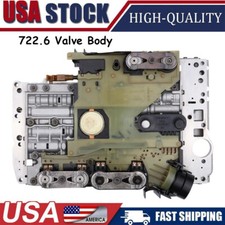
When the codes are clear, the circuits test good, the level is correct and the adaptations are fresh, but one shift is still wrong, the valve body is the next stop. Sonnax's 722.6 vacuum test guide links each complaint to specific valves, which is the most useful map available for this unit:
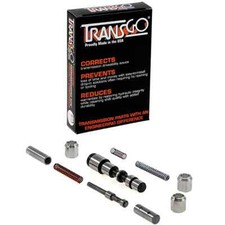
- 1-2 or 2-1 and 4-5 or 5-4 shift concerns: the 1-2/4-5 holding pressure shift valve, shift pressure shift valve and command valve. A 1-2 flare, bump or harsh shift adds the 1-2/4-5 overlap control valve and its sleeve and plunger.
- 2-3 or 3-2 concerns: the 2-3 holding pressure shift valve, shift pressure shift valve and command valve. For a 2-3 flare or harsh shift, check the 2-3 overlap control valve (Sonnax 68942-27K) and its sleeve and plunger (68942-03).
- 3-4 or 4-3 concerns: the 3-4 command, holding pressure and shift pressure shift valves. For a flare or harsh shift, check the 3-4 overlap control valve (68942-31K) and its sleeve (68942-04).
- Shift concerns in all forward gears, with shift codes: the shift pressure regulating valve and the shift valve pressure regulating valve.
- Delayed engagement, shift flares and long shift duration: the regulating valve pressure control (68942-17K).
- No 2-3, 4-3 neutral, soft shifts under acceleration, delayed engagement: the pressure regulator valve (68942-07K or sleeve 68942-06).
Several of these Sonnax kits need reaming tools and the VB-FIX fixture, so plan for bench time or a remanufactured valve body. Vacuum test the bores before you order parts. A worn bore leaks the oil that is supposed to control the overlap between the off-going and on-coming clutch, and on a clutch-to-clutch transmission that shows up directly as a flare or a bang. Our 722.6 valve body symptoms post covers the bench test.
One mechanical note from ATSG's rebuild section: the K2 clutch got a dished cushion plate that "was not used in the K-2 clutch on all models," and ATSG suggests it was "probably added because of harsh upshift or downshift concerns." If the unit has been apart before and a harsh shift involves K2 (3rd, 4th and 5th), check that the cushion plate is there and facing the right way.
Step 7: When the "Shift Problem" Is Really the Converter
Sonnax published a 2004 E320 owner's account of years of shift complaints, described as shudder, judder, "rumble strips," loping and bucking. They were not fixed even after both the transmission and the torque converter were replaced. A shop finally fixed the car with Sonnax's converter clutch release kit, MB-CP-10K. The lesson for any E-Class: if the complaint happens at steady speed or light throttle and not during an actual gear change, it is in the converter clutch apply circuit, not in the shift hardware.
On the scan tool, log engine speed against turbine speed with the converter clutch commanded on. ATSG notes the TCC is available in 2nd through 5th depending on speed, throttle and ATF temperature, and that the TCC solenoid ramps apply pressure through the TCC control valve. A small amount of controlled slip is normal. Slip that hunts up and down is what the driver feels as bucking. Our 722.6 converter shudder guide covers that circuit.
The Diagnostic Order, Start to Finish
- Read and record every code before you clear anything. Ratio, overspeed and input sensor codes come first.
- Check the solenoid resistances at the 13-pin connector and inspect the plug for ATF.
- Set the level hot above 80 C, with temperature read in R or D, using 236.14 fluid only.
- Reset adaptations with a capable scan tool and do a gentle road test through every gear.
- Match any shift that is still bad to its valve group and vacuum test those bores.
- Separate converter complaints from shift complaints with engine and turbine speed logged together.
- Repair: solenoid kit or conductor plate for electrical faults, valve body kit or a replacement valve body for hydraulic wear, then clear codes and reset adaptations again.
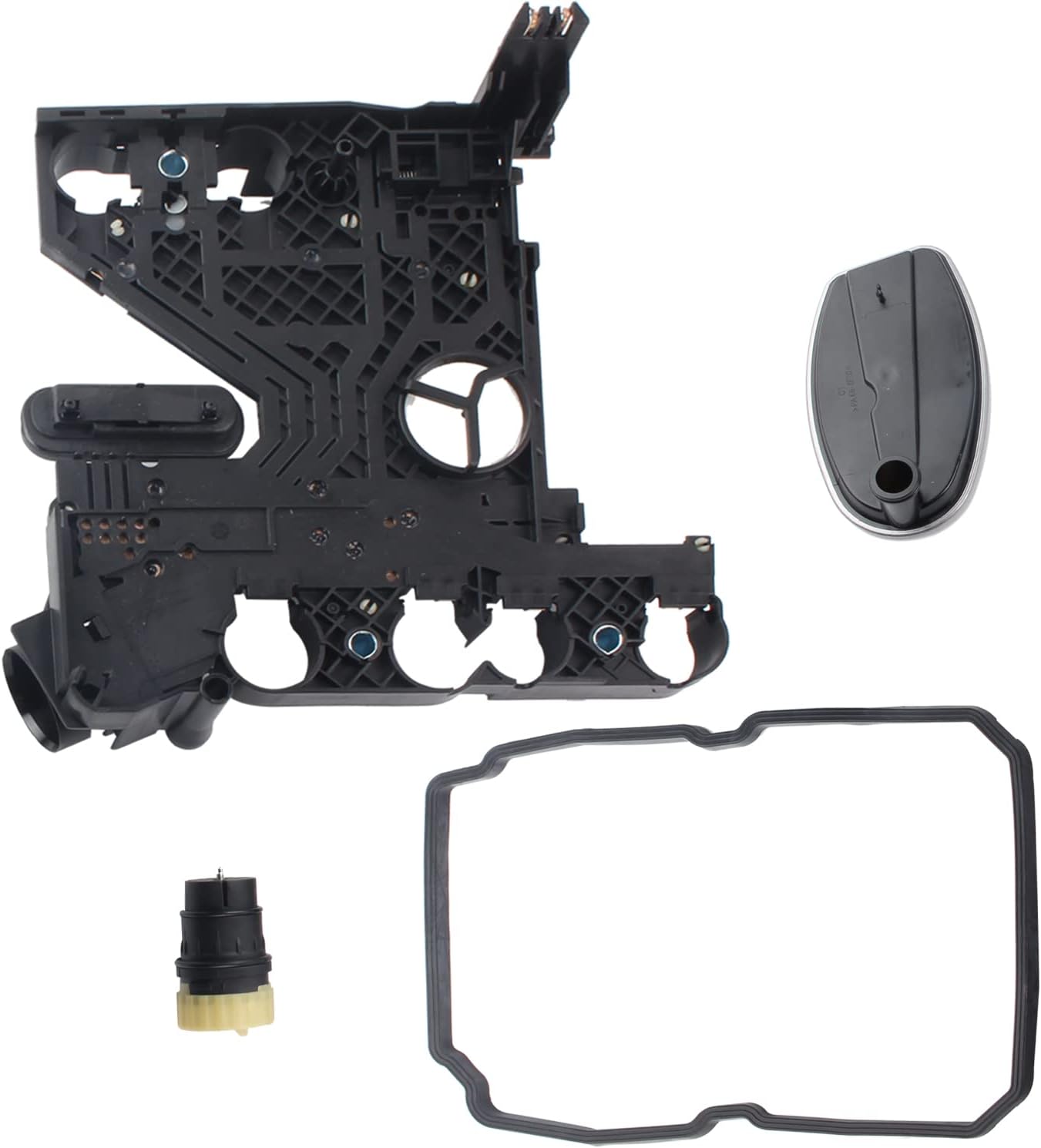
722.6 Shift Solenoid Kit (1994-2005)
Covers the W210 and early W211 era. If the ohm test or a swap test points at a shift solenoid, CoreTransmissionParts carries a 722.6 shift solenoid kit for that range.
View the solenoid kit →Shop 722.6 parts →
Frequently Asked Questions
Why is my Mercedes E-Class stuck in 2nd gear?
That is the 722.6 limp-home mode. When the TCM sees a fault it holds the current gear, and after the car is stopped, shut off for 10 seconds and restarted, only 2nd gear and reverse are available. Read the codes first, since electrical faults at the solenoids, speed sensors or 13-pin connector are the usual trigger, and clear all codes after the repair or limp mode stays on.
What causes harsh shifting in a 722.6 E-Class?
The common causes are a fluid level that was not set hot, the wrong fluid, old adaptation values, a faulty shift pressure (SPC) or line pressure (MPC) solenoid, and worn valve body bores at the overlap and pressure regulating valves. Work them in that order, cheapest first, before you condemn the transmission.
Do you need to reset adaptations on a 722.6 after a fluid change or repair?
Yes. The TCM learns shift timing in milliseconds and keeps those values after a repair, so new parts or fresh fluid can shift harshly until it relearns. A reset needs a factory-level or capable aftermarket scan tool that talks to the transmission module, and its temperature prerequisites must be met or the procedure aborts.
What should the 722.6 shift solenoids measure?
Per ATSG, the 1-2/4-5, 2-3 and 3-4 shift solenoids and the MPC and SPC solenoids should read 2.5 to 6.5 ohms, and the TCC solenoid 2.0 to 4.0 ohms, measured at the TCM or the 13-pin case connector. A good reading proves only the coil, so a sticking solenoid can still pass.
Sources
- ATSG, "Mercedes, Jaguar, Daimler/Chrysler 722.6 5 Speed" technical manual, 2009. Backs the adaptive TCM and 20 ms CAN messages, the three shift groups and on/off shift solenoids, MPC/SPC/TCC functions and interchangeability, limp mode in 2nd (10-second restart, three-key-cycle rule, clear-all-codes note), loss-of-drive codes, the solenoid ohm table and pinout, TCC availability, and the K2 cushion plate note. https://www.w124performance.com/docs/mb/transmission/722.6/trans_722.6_ATSG_2009.pdf
- Sonnax, "Mercedes 722.6/Chrysler NAG 1 Vacuum Test Guide." Backs the valve-to-complaint map for 1-2/2-1, 2-3/3-2, 3-4/4-3 and all-gear shift concerns, and the kit numbers 68942-27K, -03, -31K, -04, -17K, -07K and -06 with their tooling requirements. https://www.sonnax.com/tech_resources/412-mercedes-722-6-chrysler-nag-1-vacuum-test-guide
- Transmission Digest, Andrew Markel, "Adapting Sensors in Mercedes Transmissions," February 26, 2026. Backs the 5G-Tronic millisecond shift-time target, the driving style adaptation inputs, the check-engine light when adaptations exceed range, and the scan-tool reset prerequisites. https://www.transmissiondigest.com/adapting-sensors-in-mercedes-transmissions/
- Sonnax, "My MB E320 Sedan Story, a.k.a. My 722.6 Story," April 13, 2013. Backs the 2004 E320 case where shudder and bucking complaints survived a transmission and converter replacement and were fixed with converter clutch release kit MB-CP-10K. https://www.sonnax.com/tech_resources/326-my-mb-e320-sedan-story-a-k-a-my-722-6-story
- Daimler AG WIS AR27.00-P-0100AC, "Check oil level in automatic transmission and correct if necessary," Transmission 722.6. Backs the hot level check above 80 C, the scan-tool temperature reading in R or D with the brake applied, the level-vehicle requirement, and the under/over-fill warning. https://mbclub.ru/public/manuals/mercedes-benz/transmission/adaptation/722.6/ar27-00-p-0100ac-722-6-atf-level-check.pdf
- Mercedes-Benz USA Star Bulletin S-B-00.40/89d, "Operating Fluid Specification Changes for Automatic Transmission," November 6, 2013 (NHTSA-hosted). Backs the 236.14-only requirement for the 722.6, part number A001 989 68 03 10, red ATF 134, and the never-mix rule. https://static.nhtsa.gov/odi/tsbs/2013/SB-10059805-2280.pdf
Forum reports on W210 and W211 adaptation resets informed the field notes above but are not counted as sources.
Shop conductor plates, solenoid kits and valve bodies for the E-Class 722.6, on our own secure checkout.
Shop 722.6 parts →