A 722.6 that won't move in Drive or Reverse is a different animal from one that slips, flares or sits in limp mode. If the car still moves in 2nd and Reverse, the electronics have pulled the plug and the hydraulics are doing their failsafe job. If it won't move at all, in any range, something common to every gear has quit: fluid supply, pump output, line pressure, the manual valve, or the mechanical path from the engine into the geartrain. That narrows the hunt a lot, and most of it can be sorted before the pan comes off.
This guide works from Mercedes-Benz's own level-check procedure and fluid bulletin, Sonnax's valve body wear documentation for the 722.6/NAG1, and two Transmission Digest technical articles on this unit's pressure-control weak spots. Sources are listed at the end.

First, Make Sure It Is Really a No-Move
Before you condemn anything, pin down exactly what the car does. Four questions separate the easy jobs from the expensive ones:
- Does the engine rev freely in D and R with no load at all? That points at no pressure or no drive to the geartrain. If the engine pulls down slightly when you select a range but the car doesn't move, an element is trying to apply and slipping, which is a pressure or friction problem.
- Does it move in 2nd and Reverse only? That is not a no-move. That is the 722.6 electrical failsafe. Mercedes’ own 2005 C-Class owner’s manual describes it: in limp-home mode only second gear and reverse can be selected, and the driver is told to stop, shift to P, switch off, wait at least ten seconds and restart. The TCM has dropped power to the solenoids and the valve body is sitting in its hydraulic default. Chase the code and the conductor plate, not the pump.
- Did it fail suddenly or fade out? A sudden loss after a bang or grind is mechanical. Engagement that got slower over weeks, especially hot, then quit entirely is classic pressure-control wear.
- Does the car roll freely in Neutral? If it won't roll, you have a park pawl, brake or driveline bind, not a transmission no-move.
Step 1: Check the Fluid the Way Mercedes Says To
Low fluid is the most common reason a 722.6 stops moving, and it is the one most often checked wrong. The 722.6 has no conventional dipstick; the filler tube is sealed with a cap and a breakaway locking pin. Mercedes WIS procedure AR27.00-P-0100AC spells out the job: the car must sit level on its wheels or the reading is wrong, you break the plate off the locking pin to remove the cap, and you read the level with dipstick tool 140 589 15 21 00, which has two separate ranges, one for about 25 C (77 F) and one for 80 C (180 F).
The procedure has you idle in Park, hold the brake and cycle through the ranges several times with the engine at idle, return to Park, then read. The WIS document is blunt that a precise check is only possible above 80 C, and it has you confirm oil temperature with Star Diagnosis in R or D before taking the hot reading. It also warns that both too little and too much oil can cause malfunctions and transmission damage.
If you are starting from a dry or nearly dry unit, WIS has you put in about 5 liters before starting the engine, then top up. Initial fill quantities run from 7.0 to about 9.2 liters depending on the exact 722.6xx code; the common 722.600-series units list 7.5 L (+0.5). For a service refill the factory number is lower than you might expect: the 2005 C-Class sedan owner’s manual lists 8.5 US qt (8.0 L) for the C230 Kompressor, C240 and C320 and 9.3 US qt (8.7 L) for the C55 AMG, and the same manual tells owners the level never needs checking, which is why leaks go unnoticed until the car stops moving. The only approved oil is MB sheet 236.14, which Mercedes star bulletin S-B-00.40/89d lists as red ATF 134, part number A001 989 68 03 10, and it must never be mixed with the blue 236.15 or gold 236.16 fluids used in later units. Chrysler NAG1 applications are the exception: Transmission Digest notes that Sprinter, Crossfire and Mercedes units need the specific Mercedes fluid, while the other Chrysler applications use ATF+4.
If the level was low enough to cause a no-move, find out where it went. On this unit the usual suspects are the 13-pin connector seal at the case, the pan gasket, the cooler lines and the front seal. Fill it, cycle the ranges, and if it now moves normally you are fixing a leak, not a transmission.
Read the fluid, not just the level
Pull a sample. Clean red fluid with the right level and a no-move means you look at pressure and the manual valve next. Black, burnt fluid with friction material says the clutches already gave up. Fine silver or brass glitter with a sudden no-move says something hard broke, and you are probably pulling the unit.
Step 2: Use the Scan Tool Before the Wrenches
Hook up Star/Xentry or a scan tool with Mercedes enhanced transmission data. You want three things:
- Stored codes. Speed sensor, solenoid supply or plausibility codes mean the TCM may be holding the unit in failsafe. Fix those first.
- Selector lever position. Cycle P-R-N-D and confirm the TCM sees what the lever says. A mismatch means a range signal or selector problem upstream of the hydraulics.
- Transmission oil temperature and input speed. You need the temperature for the hot level check anyway. With the brake held in D, if computed input (turbine) speed keeps tracking engine speed, nothing is applying. If it drops toward zero but the car won't pull, the element is applying but can't hold.
Also confirm the selector cable actually moves the manual valve through its detents. A popped cable bushing or a broken bracket leaves the manual valve parked in P or N no matter where the lever sits, and it looks like a dead transmission from the driver's seat.
Step 3: Pressure Control, the Real 722.6 Weak Spot
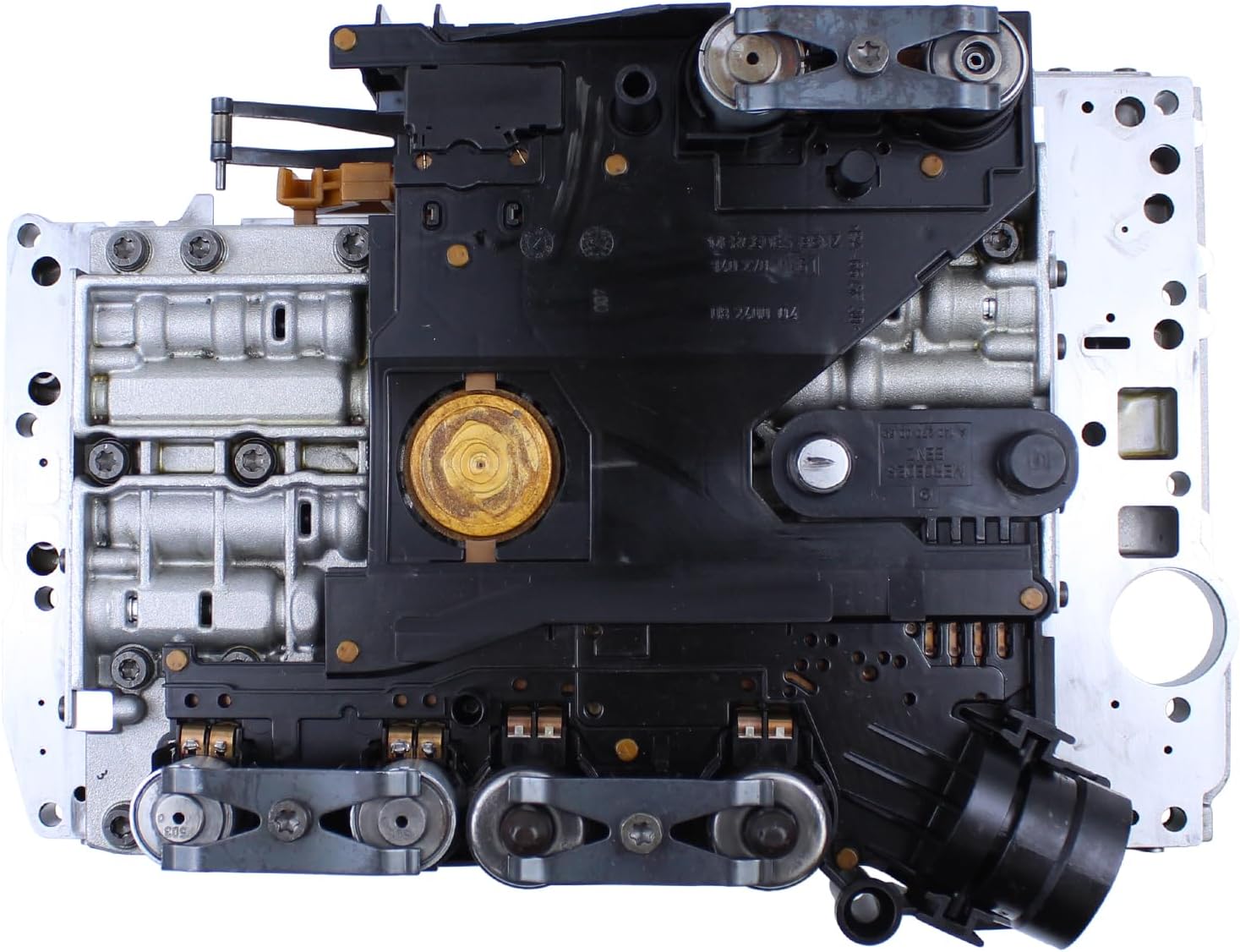
If the fluid is right, there are no codes and the cable is connected, the next suspect is the valve body pressure circuit. The 722.6 regulates what Mercedes calls working pressure from load-sensitive solenoid signal oil, and when that circuit leaks, pressure doesn't rise like it should. Mio Cundl's Transmission Digest article on this unit traces it to the working-pressure regulator valve: the outer bore wears, modulated solenoid signal oil leaks past the boost end of the valve, and working pressure no longer climbs with engine load. He reports that many high-mileage cars repaired under Mercedes warranty in 1998 had exactly this wear, showing up as a 2-3 flare that put the car into limp mode. The 1-2/4-5, 2-3 and 3-4 overlap sleeves sit in the same signal circuit, and wear at any of them also bleeds off pressure at the working-pressure valve.
Sonnax's 722.6/NAG1 vacuum test guide lists four circuits whose wear produces delayed engagement, and on a tired unit delayed engagement is the step before no engagement:
- Manual valve (upper valve body): reduced line pressure and delayed Drive/Reverse engagement. Sonnax repair part 68942-16.
- Line pressure regulating valve (upper valve body): delayed engagement, soft shifts, slip codes, loss of the 2-3 shift, 4-3 neutral on downshift and loss of lockup. Oversized valve 68942-07K or oversized sleeve 68942-06.
- Control valve pressure regulating valve (lower valve body): delayed engagement, poor line rise and long shift duration. Oversized kit 68942-17K, early and late units.
- Lubricating pressure control valve: delayed engagement, converter overheat and higher-than-normal stall speeds. Oversized kit 68942-14K.
One more cheap one on early units: Sonnax documents that the OE regulating pressure control valve spring on 1999-and-earlier valve bodies (the two-valve control pressure regulator bore) usually breaks near the middle, and the two halves screw into each other. The spring gets shorter, line pressure drops, and the listed symptoms start with delayed engagement into Drive or Reverse. Sonnax's replacement spring, 68942-01, fits without bore modifications and can go in with the valve body still in the car.
The tell for this whole family of faults is temperature. Worn bores leak more as the oil thins, so the car usually engages cold, gets lazy as it warms up, then stops moving after a long drive or in traffic. Vacuum-test the valve body: Sonnax's guide shows each test port, and a low vacuum reading means wear.
Cold stall into Drive is a related clue
Wayne Colonna's Transmission Digest write-up on the 722.6/NAG1 describes a lube regulator bore wear problem that shows up from the other direction. When the inboard land of the lubrication-pressure regulator valve wears its bore, unregulated line pressure feeds the converter charge circuit. The 722.6 converter uses a multi-plate clutch pack, and that excess pressure partly applies it. The lockup solenoid is pulsed at about 40 percent in Park or Neutral, so with cold oil there can be enough apply to stall the engine when you drop it into Drive. If your no-move complaint started as a cold stall into gear, inspect that bore.
Step 4: When It Is Mechanical
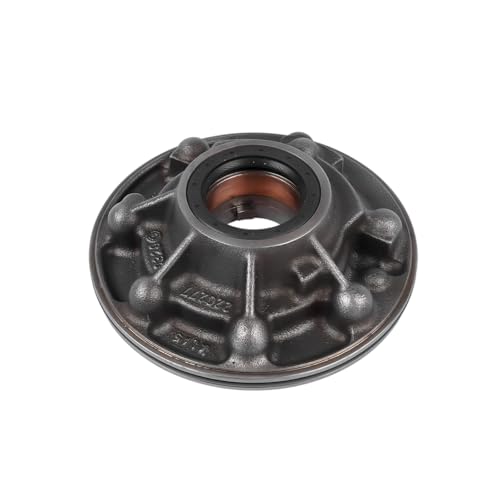
Good fluid, no codes, a healthy valve body and still no movement in any range means the problem is upstream of the clutches or in the geartrain itself. The front pump is driven by the converter hub, so a converter that isn't engaging the pump, or a pump with a scored gear set or cracked housing, gives you no pressure in any range. The engine revs freely, the fluid looks fine, and the pressure just isn't there. Also check that the flexplate-to-converter bolts are present and tight; a converter that has let go of the flexplate gives exactly the same "revs free, goes nowhere" complaint with a perfectly healthy transmission behind it.
Beyond that, a broken input shaft, a stripped spline, or burned-up friction packs across several elements will all do it. Burned clutches usually announce themselves in the fluid sample long before total failure. Sudden no-move with metal in the pan is a teardown, and at that point a master rebuild kit makes more sense than chasing one part.
The Fix Path, in Order of Cost
- Low fluid from a leak: fix the leak (often the 13-pin connector seal or pan gasket), refill with 236.14 fluid and check hot per WIS. Cheapest outcome by far.
- Selector cable or range signal: reattach or replace the cable bushing, or fix the range signal path on the conductor plate.
- Worn valve body bores or broken regulator spring: ream and sleeve with the Sonnax kits if you are set up for it, or swap in a replacement valve body with solenoids, which most shops find faster.
- Pump or converter drive failure: unit comes out. Replace the pump, inspect the converter hub and bushing, and flush the cooler.
- Burned clutches or broken hard parts: full rebuild with a master kit, new steels and a fresh or remanufactured converter.
After any valve body or in-case repair, reset and relearn the adaptations with the scan tool and do a hot level check. A good repair with stale adaptations still drives badly.
722.6 Master Transmission Rebuild Kit
Frictions, steels, seals and gaskets for a 722.6/NAG1 when the no-move turns out to be burned clutches or a pump teardown.
View the 722.6 master rebuild kit →Shop 722.6 parts →
Frequently Asked Questions
Why won't my Mercedes 722.6 move in any gear?
The most common cause is low fluid, usually from a leak at the 13-pin connector seal, pan gasket or cooler lines. After that, look at line pressure: Sonnax documents worn manual valve and pressure regulator bores in the 722.6 valve body as causes of reduced line pressure and delayed engagement, which gets worse hot until the unit stops engaging. If fluid and pressure check out, suspect a pump, converter drive or input shaft failure.
Is no movement the same as 722.6 limp mode?
No. In the electrical failsafe the 722.6 still drives in 2nd gear and Reverse because the valve body defaults there when the TCM drops solenoid power. If the car moves in 2nd and Reverse only, chase the stored code and the conductor plate. A true no-move in every range points at fluid, pressure or a mechanical failure common to all gears.
How do you check the fluid level on a 722.6?
Per Mercedes WIS procedure AR27.00-P-0100AC, park the car level, break the locking pin and remove the filler cap, idle in Park, cycle through the ranges with the brake applied, return to Park and read it with dipstick tool 140 589 15 21 00. The dipstick has a 25 C range and an 80 C range, and Mercedes says a precise check is only possible above 80 C.
What fluid and how much does a 722.6 take?
Mercedes star bulletin S-B-00.40/89d specifies sheet 236.14 fluid, red ATF 134, part number A001 989 68 03 10, and says it must not be mixed with 236.15 or 236.16 oils. Initial fill runs from about 7.0 to 9.2 liters depending on the exact 722.6xx code, with 7.5 L (+0.5) for the common 722.600-series units. Chrysler NAG1 units other than Sprinter and Crossfire use ATF+4.
Can a broken spring cause a 722.6 to stop engaging?
On 1999-and-earlier valve bodies, Sonnax documents that the regulating pressure control valve spring often breaks near the middle and the halves screw together, shortening the spring and changing line pressure. The first listed symptom is delayed engagement into Drive or Reverse. The replacement spring, Sonnax 68942-01, can be installed with the valve body still in the car.
Sources
- Mercedes-Benz (Daimler AG) — WIS AR27.00-P-0100AC, "Check oil level in automatic transmission and correct if necessary," Transmission 722.6. Backs the level-on-wheels requirement, locking pin and cap removal, the 25 C and 80 C dipstick ranges, dipstick tool 140 589 15 21 00, the 5-liter pre-start fill, the over-80 C precise check using Star Diagnosis, and the initial fill quantities by 722.6xx code (7.5 L +0.5 for the common 722.600 series). Factory document, PDF copy hosted by mbclub.ru
- Mercedes-Benz USA / Mercedes-Benz Canada — Star Bulletin S-B-00.40/89d, "Operating Fluid Specification Changes for Automatic Transmission" (November 6, 2013). Backs the 722.6 fluid: sheet 236.14, ATF 134, red, part number A001 989 68 03 10, and the rule that it must not be mixed with 236.15 or 236.16 oils. static.nhtsa.gov (PDF)
- Sonnax — "Mercedes 722.6/NAG 1 Vacuum Test Guide" (Critical Wear Areas & Vacuum Test Locations). Backs the manual valve, line pressure regulating valve, control valve pressure regulating valve and lubricating pressure control valve symptom lists (delayed engagement, reduced line pressure, poor line rise) and repair part numbers 68942-16, 68942-07K, 68942-06, 68942-17K and 68942-14K. sonnax.com
- Sonnax — Regulating Pressure Control Valve Spring 68942-01, 722.6 application. Backs the broken-spring failure (breaks near the middle, halves screw together), the resulting line pressure change and delayed Drive/Reverse engagement, the 1999-and-earlier fitment and in-car installation. sonnax.com
- Transmission Digest — Mio Cundl, "Mercedes 722.6, Daimler W5, Porsche W5, Jaguar 722.6" (June 1, 2009). Backs the working-pressure regulator bore wear mechanism, the overlap sleeve leaks in the same signal circuit, the 1998 warranty-era 2-3 flare and limp-mode pattern, and the NAG1 fluid split (Sprinter/Crossfire/Mercedes fluid vs ATF+4). transmissiondigest.com
- Transmission Digest — Wayne Colonna (ATSG), "722.6/NAG 1" (January 1, 2010). Backs the lubrication-pressure regulator bore wear, the multi-plate converter clutch partial apply, the roughly 40 percent lockup solenoid pulse in Park/Neutral, and the resulting cold stall into Drive. transmissiondigest.com
- Mercedes-Benz USA — 2005 C-Class Sedan Operator’s Manual (C230 Kompressor, C240, C320, C55 AMG, 4MATIC). Backs the limp-home behavior (2nd and Reverse only) and the ten-second restart procedure, the owner no-check fluid note, and the 8.5 US qt (8.0 L) and 9.3 US qt (8.7 L) automatic transmission capacities. mbusa.com (PDF)
Shop 722.x pumps, valve bodies and rebuild kits on our own secure checkout.
Shop 722.x parts →