A 722.6 that makes noise is telling you where it hurts, but only if you sort the noise before you start ordering parts. A whine that follows engine rpm in Park lives in a different part of the case than a whine that follows road speed, and a clunk on a 2-1 coast-down at a stop sign is almost never the same failure as a clunk when you drop it into Drive. This guide walks through how we split those apart on the 722.6 (and the Chrysler-badged NAG1 version in Sprinters, Jeeps and LX cars), what each noise usually turns out to be, and which tests prove it before the pan comes off. Sources are listed at the end.
Know the Layout Before You Chase a Noise
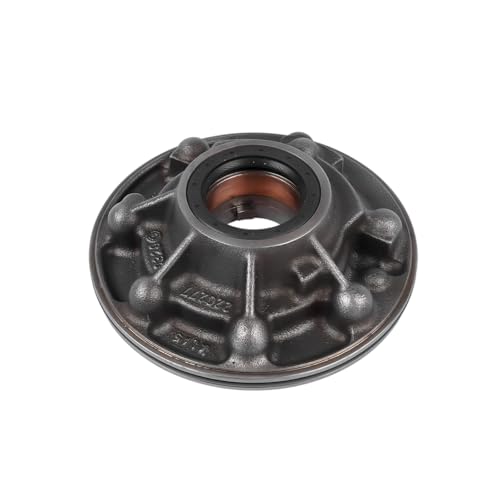
The 722.6 is a five-speed built around three simple planetary gearsets, three multi-plate clutches (K1, K2, K3), three brakes (B1, B2, B3) and two freewheels (F1 and F2). Up front, a crescent-style gear pump is driven directly by the torque converter hub, so the pump turns any time the engine runs, in any range. The converter itself is unusual for its era: Sonnax points out that the 722.6 was one of the first five-speeds with load-sensitive working pressure and overlap clutch control, and its converter clutch is a multi-disc pack rather than a single-face lockup (Sonnax, "Mercedes 722.6, Daimler W5, Porsche W5, Jaguar 722.6").
That layout gives you three diagnostic buckets:
- Engine-speed related: pump gears, pump bushing, converter hub and pilot, converter internals. These make noise in Park and Neutral.
- Output-speed related: planetary gearsets, thrust bearings, output shaft, and everything downstream (driveshaft, flex discs, center support bearing, differential). These are quiet in Park and change with road speed, not rpm.
- Event related: clunks and bumps that only happen on engagement, upshift, downshift or converter apply. On this unit those are mostly hydraulic and electronic.
Step One: Fluid Level, Checked the Factory Way
Do not skip this. A low 722.6 aerates its fluid, the pump starts drawing foam, and you get a pump whine plus soft, late engagements that can sound and feel like a hard-parts failure. The catch is that there is no factory dipstick. Daimler's workshop procedure AR27.00-P-0100AC has you remove the filler-pipe cap, break off the locking pin, and read the level with special tool 140 589 15 21 00. That dipstick has two ranges: range A for a cold check around 25 C (77 F) and range B, which is only valid with the fluid above 80 C (176 F) confirmed on a scan tool. The same document warns that both under-filling and over-filling cause malfunctions and transmission damage (Daimler AG, AR27.00-P-0100AC).
If the level is wrong in either direction, correct it with an MB 236.14-rated fluid, drive it to temperature, recheck, and only then move on. Initial-charge capacity runs roughly 7.0 to 9.2 liters depending on the sub-variant, but a pan drop takes far less; our 722.6 fluid type and capacity guide has the full table.
Whine That Follows Engine RPM: Pump, Bushing and Converter Hub
Test: warm the fluid, set the parking brake, and run the engine from idle to about 2,500 rpm in Park, then Neutral, then Drive against the brakes. If the whine rises and falls with engine speed in every range, including Park, the noise source is ahead of the gear train. On a 722.6 that means the pump assembly or the converter.
The most common root cause we see is pump bushing wear. Sonnax makes a dedicated replacement for the 722.6 pump bushing (part 68004-01) and the pump stator rear bushing (68915-01) for '96-later Mercedes and Jaguar units, steel backed with a copper-alloy bearing surface because the OE part wears (Sonnax, part 68004-01). The wear is rarely random. On the bench, a badly worn 722.6 pump bushing almost always traces back to side load from drive plate, converter pilot or hub run-out, and in bad cases the housing bore wears along with the bushing, which is why oversize finish-in-place bushings exist for these pumps. Once the bushing opens up, the converter hub walks, the pump gears lose their running clearance on one side, and you hear it.
That has two practical consequences:
- Check the converter hub before you blame the pump. Look for a polished, scored or stepped hub. Indicate the flexplate and converter pilot runout if the car has had the transmission out before. A pump rebuilt onto a bad hub will chew a new bushing.
- Pump whine usually comes with pressure symptoms. A worn bushing leaks pump output, so look for soft or late engagement when hot, flare on upshifts, and a front seal that weeps. A whine with perfect shift quality and a dry seal leans more toward the converter.
If the whine changes when the converter clutch applies (watch the scan tool, below) or sounds more like a growl than a pure tone, suspect the converter's internal bearings or stator.
Whine That Follows Road Speed: Gear Train or Driveline
If the unit is quiet in Park and Neutral at any rpm but whines on the road, note exactly when. Does the pitch track vehicle speed in every gear, or does it come and go with particular gears?
- Present in one or two gears only, then gone after a shift: that points inside the transmission, at the planetary set that is carrying torque in that gear. A gearset with worn pinion needles or a failing thrust bearing typically whines under load and quiets on coast. On a teardown, look for blued pinion shafts, pinion end play, and pitted thrust washers. Fluid analysis or a magnet loaded with fine bright steel backs this up.
- Present at the same road speed regardless of gear: that is downstream of the transmission. Rear differential bearing and pinion noise, wheel bearings and tires all live here. Coast the car in Neutral at the speed where the noise is worst; if the noise stays with the engine at idle, it is not the transmission.
Hum or Vibration at Cruise: Converter Clutch Judder
Some 722.6 "noise" complaints are really a low hum or drone at steady cruise that comes and goes with lockup. Transmission Digest technical editor Wayne Colonna of ATSG described a 722.6 TCC judder that is "not quite" a chatter or shudder but "more like a vibration," and depending on line pressure it can be followed by a very harsh engagement. The cause in that write-up is wear in the lubrication-pressure regulator valve bore in the upper valve body, a bore most people never look at for a converter complaint (Transmission Digest, "722.6/NAG 1"). Because the converter clutch is applied by oil fed down the input shaft, anything that robs that circuit shows up as clutch slip-and-grab.
The converter itself is the other half of the story. Sonnax's Ed Lee wrote that two major 722.6 issues, shudder on TCC apply and insufficient or no cooler flow, both come from the lack of a positive seal between the input/turbine shaft and the aluminum sleeve in the converter cover. As the converter ages, the interference fit stops sealing, TCC apply oil leaks off, and clamping force drops. The rebuilder's fix is machining the sleeve for a positive seal (Transmission Digest, "The Importance of a Positive Seal: 722.6 Issues").
On the scan tool, compare engine speed to turbine speed (calculated from the N2 and N3 sensors on the conductor plate). With the converter clutch commanded on, slip should settle to near zero. A slip figure that hunts up and down while you hear or feel the hum confirms the converter clutch circuit. Our 722.6 torque converter shudder guide covers the full cold-stall and TCC test.
Clunks: Engagement, Shift and Coast-Down
Before you go inside the transmission, put the car on a lift and have a helper shift Drive-Reverse-Drive with the brakes held. Watch the transmission mount, the driveshaft flex disc (guibo) and the center support bearing. A torn mount or a cracked flex disc makes a sharp clunk on every engagement, and no valve body will fix it. Also check for slop at the differential pinion.
If the driveline is tight, the clunk is almost always hydraulic or adaptive on this unit:
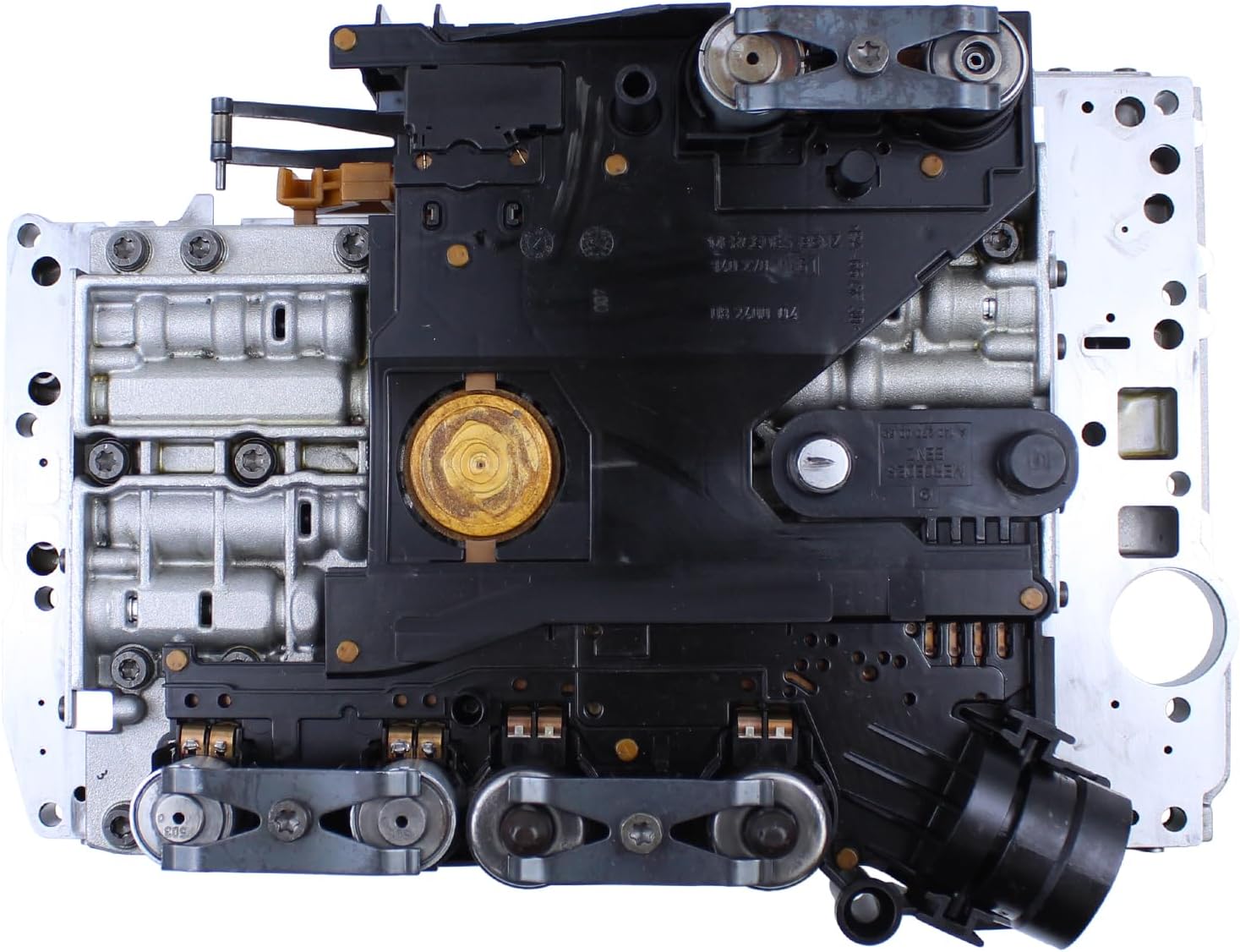
- Harsh 1-2 or 2-1 shifts, or a bump on the 1-2: Sonnax's 722.6/NAG1 vacuum test guide ties 1-2 and 4-5 flare, bump and harsh shifts to the 1-2/4-5 overlap control valve and sleeve, and ties 1-2 and 2-1 shift concerns to the 1-2/4-5 holding pressure and command valves in the lower valve body (Sonnax, Mercedes 722.6/Chrysler NAG 1 Vacuum Test Guide). A worn sleeve leaks shift pressure, the clutch overlap goes wrong, and the oncoming element catches late and hard.
- Flare followed by a bang: wear in the outer bore of the working pressure regulator valve lets modulating solenoid signal oil leak past the boost end of the valve, so working pressure never rises with engine load. Sonnax documents engine flare on 2-3 and 4-5 upshifts and neutral flare on 5-4 and 3-2 downshifts from this wear, blaming a soft valve body casting. When the slipping element finally grabs, it does so with a clunk (Sonnax, "Mercedes 722.6, Daimler W5, Porsche W5, Jaguar 722.6").
- Harsh after a valve body, conductor plate or battery job: the TCM's adaptive values may not match the new hardware. Reset adaptations with a capable scan tool and drive through a full warm-up cycle before you condemn the new part.
- Clunk on take-off or engagement with no shift involved: look at the freewheels (F1 and F2). A freewheel that slips and then locks gives a bang on initial acceleration. That is a teardown diagnosis, and it usually comes with debris in the pan.
The rule we work by: a clunk that only happens during a shift event, with clean fluid, is a valve body or calibration issue until proven otherwise. Vacuum-test the valve body bores before you buy hard parts.
Shop the part for this fix
If vacuum testing shows worn bores or sleeves, a complete 722.6 valve body with solenoids gets the shift-pressure circuit back to spec in one swap. Confirm your valve body part number before ordering.
722.6 valve body with solenoids at CoreTransmissionParts →Doing the full job? Browse 722.6 rebuild kits.
A Quick Noise Map for the 722.6
- Whine in Park, rises with rpm: pump bushing, pump gears, converter hub. Check fluid level first.
- Whine in some gears only, under load: planetary set or thrust bearing for that gear.
- Whine at a set road speed in any gear, also in Neutral coast: differential, wheel bearings, tires.
- Hum or vibration at cruise with lockup: converter clutch circuit, lube regulator bore, converter sleeve seal.
- Clunk on Drive or Reverse engagement: mounts, flex disc, center bearing first, then engagement pressure.
- Clunk or bump on upshift or downshift: overlap sleeves, working pressure regulator bore, adaptations.
How to Keep a 722.6 Quiet
Keep the fluid at the correct level with the correct MB-spec fluid, and service the filter and conductor plate seal on a schedule rather than trusting the old lifetime-fill line; see our 722.6 filter and pan service guide. When the unit is out for any reason, replace the pump bushing with an upgraded part, inspect the converter hub, and check flexplate runout so the new bushing is not loaded on one side. When the valve body is off, vacuum-test the working pressure and overlap circuits; bushing a worn bore costs far less than a comeback.
Need parts for this job?
Pumps, planetaries, valve bodies, conductor plates and rebuild kits for the 722.6 and NAG1, all on our own secure checkout.
Shop 722.6 parts →Frequently Asked Questions
Why does my 722.6 whine in Park?
A whine in Park that rises and falls with engine rpm comes from the front of the transmission, because the 722.6 pump is driven by the torque converter hub and turns whenever the engine runs. The usual causes are low or over-filled fluid, a worn pump bushing, or a damaged converter hub. Check the fluid level the factory way with the 140 589 15 21 00 dipstick at operating temperature before condemning the pump.
Is a 722.6 whine at highway speed the transmission or the differential?
Coast the car in Neutral at the speed where the noise is worst. If the whine continues with the engine at idle, it follows road speed and is usually the differential, wheel bearings or tires. A whine that only appears in certain gears under load and disappears after a shift points inside the transmission at a planetary set or thrust bearing.
What causes a clunk on the 2-1 downshift in a Mercedes 722.6?
On a 722.6 with a tight driveline, a harsh 2-1 or 1-2 is usually hydraulic. Sonnax's vacuum test guide ties 1-2 and 2-1 shift concerns to the 1-2/4-5 holding pressure and command valves, and 1-2 bump and harsh shifts to the 1-2/4-5 overlap control valve and sleeve. Check mounts and the driveshaft flex disc first, then vacuum-test the valve body and reset adaptations.
Can a bad torque converter make a 722.6 hum?
Yes. A 722.6 converter clutch that slips and grabs at cruise feels and sounds like a low hum or vibration. Transmission Digest traced one version to wear in the lubrication-pressure regulator valve bore, and Sonnax's Ed Lee documented TCC apply shudder from a lost seal between the input shaft and the converter cover sleeve. Watch engine versus turbine speed on a scan tool with lockup commanded to confirm it.
Sources
- Daimler AG — AR27.00-P-0100AC, "Check oil level in automatic transmission and correct if necessary," Transmission 722.6. Backs the special tool 140 589 15 21 00 dipstick, the cold (range A) and hot above 80 C (range B) check procedure, and the warning that both under- and over-filling cause malfunctions and damage. mbclub.ru (PDF)
- Sonnax — "Mercedes 722.6, Daimler W5, Porsche W5, Jaguar 722.6." Backs working pressure regulator valve outer-bore wear, the pMod signal leak, 2-3/4-5 upshift flare and 5-4/3-2 neutral flare, the soft casting, and the load-sensitive pressure and multi-disc converter clutch design. sonnax.com
- Sonnax — Mercedes 722.6/Chrysler NAG 1 Vacuum Test Guide. Backs the valve-to-symptom map: the 1-2/4-5 overlap control valve and sleeve for 1-2 and 4-5 flare, bump and harsh shifts, and the 1-2/4-5 holding pressure and command valves for 1-2 and 2-1 shift concerns. sonnax.com
- Sonnax — 722.6 Pump Bushing, part 68004-01. Backs the replacement pump bushing (68004-01) and pump stator rear bushing (68915-01) for '96-later units and the steel-backed copper-alloy construction for wear resistance. sonnax.com
- Transmission Digest — Wayne Colonna (ATSG), "722.6/NAG 1." Backs the TCC judder described as a vibration rather than a chatter, possibly followed by harsh engagement, caused by lubrication-pressure regulator valve bore wear in the upper valve body. transmissiondigest.com
- Transmission Digest — Ed Lee (Sonnax), "The Importance of a Positive Seal: 722.6 Issues." Backs the TCC apply shudder and low cooler flow caused by the lost interference-fit seal between the input shaft and converter cover sleeve, and the positive-seal machining fix. transmissiondigest.com