A Mercedes or Dodge/Jeep NAG1 rolls in with a complaint that sounds electrical before you even hook up a scanner: it won't upshift at times, or it's stuck making do in what feels like second gear, RPMs climbing past 4,000 while the car tops out around 30 mph. Sometimes it's less dramatic -- just an occasional hesitation on a shift, or a code that was there yesterday and is gone today. On the 722.6 five-speed (badged NAG1 in Chrysler, Dodge and Jeep applications, also found in Porsche and early Jaguar products), that pattern points at one circuit more often than anything else: the N2 and N3 speed sensors built into the conductor plate.
This isn't a part you can see without dropping the pan, and it isn't a sensor you unbolt and swap on its own. Understanding how the TCM uses these two signals, what the codes actually mean, and why a dying sensor can hide from a scan tool is the difference between a 20-minute diagnosis and a comeback.

What N2 and N3 Actually Monitor
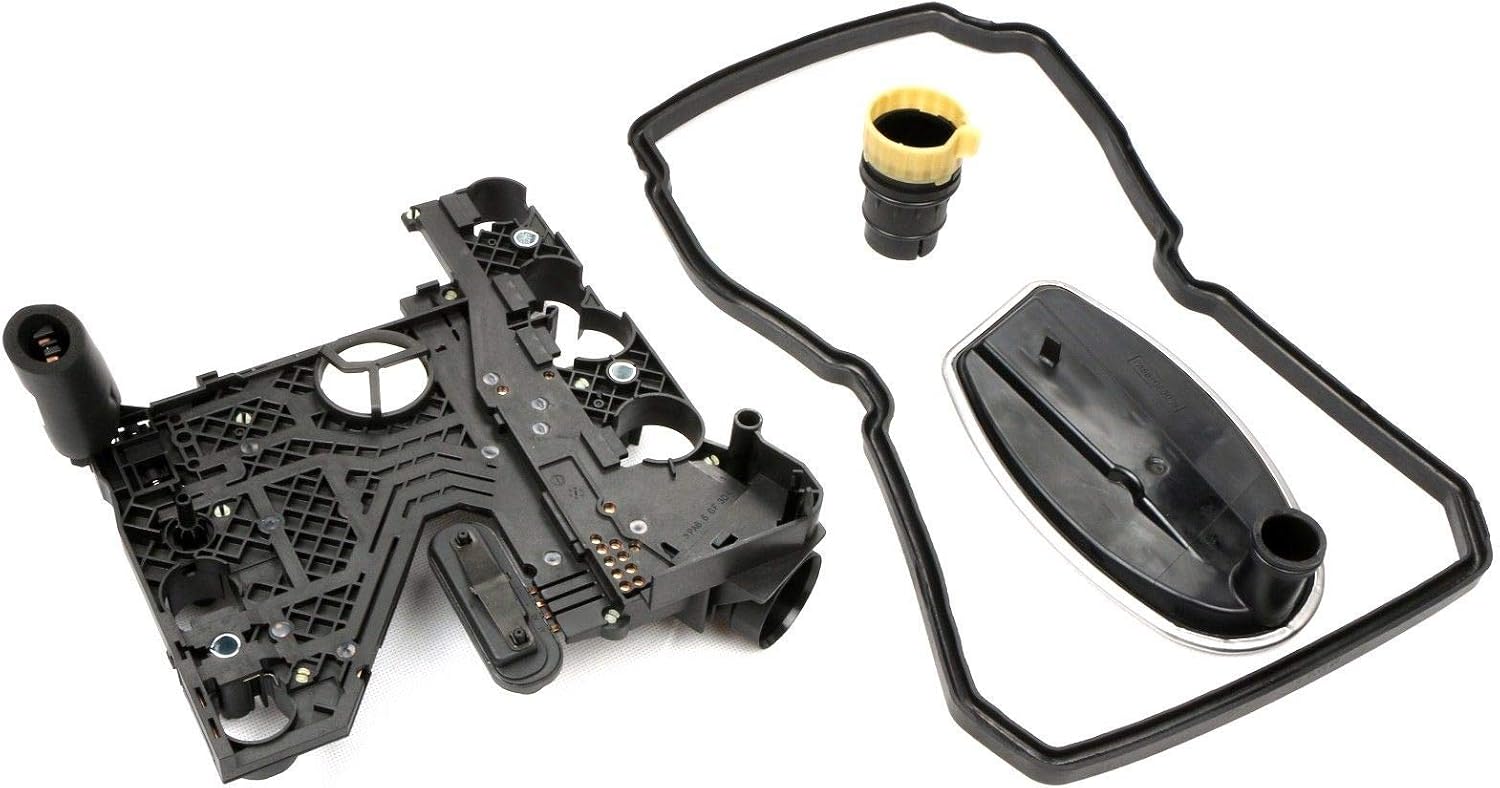
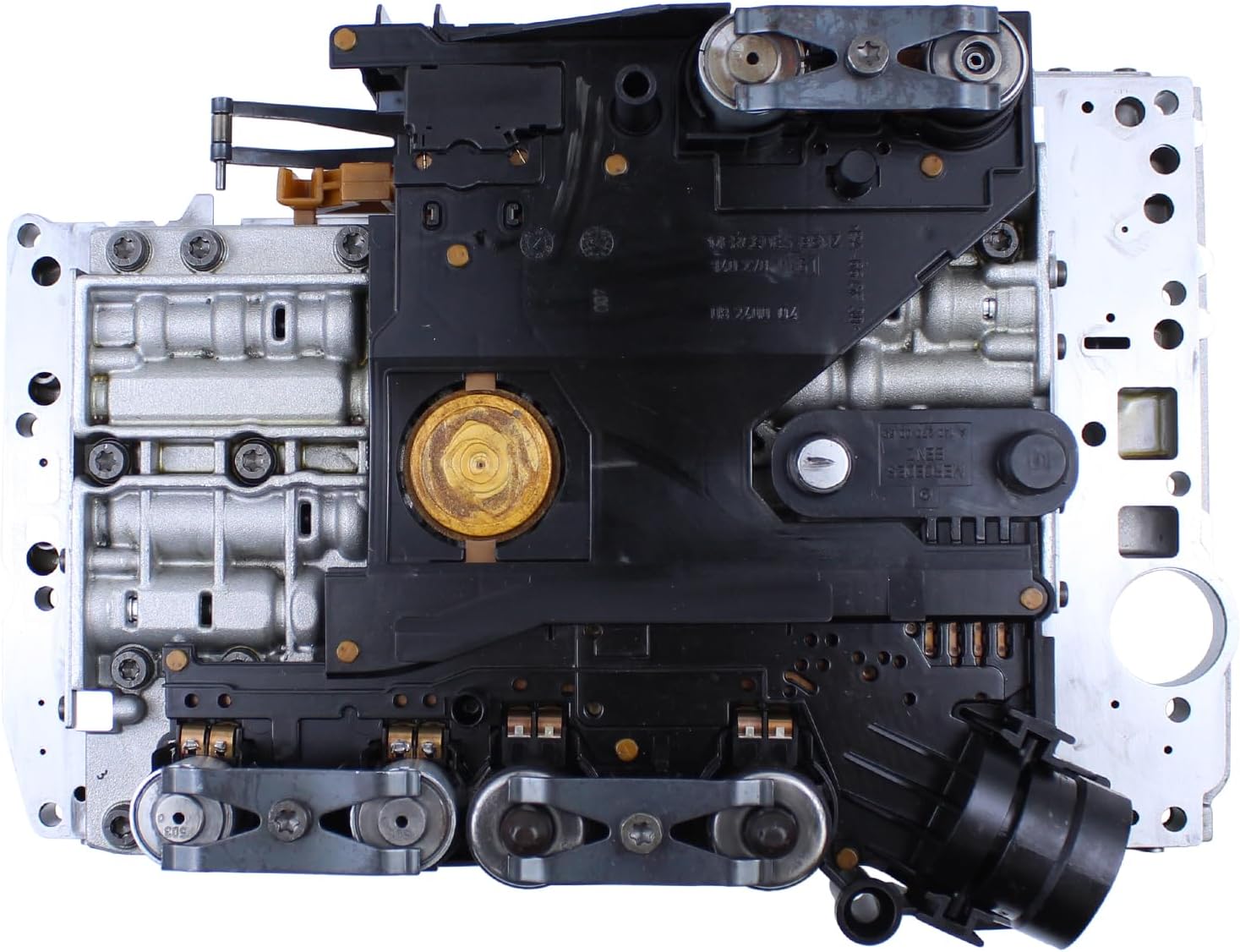
The conductor plate sits on top of the valve body, inside the pan. It's the flexible circuit board that carries power and signal between the TCM and the six shift solenoids, and it also carries the two internal speed sensors the TCM relies on to verify every shift actually happened. Transmission Digest's documented bench work on a 2009 E350 with the 722.6 lays out the split cleanly: Y3/6n2 is active any time the vehicle is moving, forward or reverse, reading input/turbine shaft speed, while Y3/6n3 only comes alive in 2nd, 3rd and 4th gear, reading intermediate shaft speed so the TCM can confirm the gear it commanded is the gear it got.
Both sensors are 3-wire designs sharing a common 6-volt supply and a common ground from the TCM, with each sensor keeping its own dedicated return/signal wire. A healthy sensor produces a clean square wave swinging from 0.0 to 6.0 volts, with frequency rising and falling directly with road speed. That shared-supply, separate-return wiring matters diagnostically: a short or open on one sensor's return wire doesn't necessarily take the other down with it, which is why you can get a single N3 code with N2 reading perfectly fine the whole time.
The Codes You Will Actually See
Pull codes from the transmission control module itself, not just the engine computer -- a basic generic reader that only talks to the powertrain ECU will frequently miss what the TCM is storing. On the OBD-II side, the codes that map to this circuit are:
- P0715 -- Input/Turbine Speed Sensor Circuit Malfunction. The most commonly cited code tied to the N2/N3 circuit on these units.
- P0717 -- Input/Turbine Speed Sensor Circuit No Signal. A flatlined N2 signal, usually a harder, more consistent fault than an intermittent dropout.
- P0720 -- Output Speed Sensor Circuit Malfunction.
- P0722 -- Output Speed Sensor Circuit No Signal.
Underneath those generic codes, the Mercedes TCM speaks its own language, and it's worth knowing the logic because it tells you whether a fault is active right now or only showed up once under specific conditions. Mercedes codes on the 722.6 run from 002 to 065 for the base faults; any code above 098 is the intermittent version of a root code, and you find the root by subtracting 96. In one documented case, a 1998 M320 stored codes 014 (rpm comparison: rpm N2 to rpm N3 implausible), 109 (rpm sensor N3 intermittent), 110 (rpm N2 to rpm N3 implausible, intermittent) and 137 (CAN communication with the transfer-case module faulty) -- with 109 and 110 both resolving back to base codes 013 and 014 once you subtract 96. A separate 2009 E350 case stored manufacturer code 2767, pointing directly at the Y3/6n3 sensor, with the scan data showing a flatlined 8,000 rpm reading on that channel.
The pattern to watch for: a code in the low double-to-triple digits (013, 014) means the fault is live right now. The same number plus 96 (109, 110) means it happened and cleared -- which is your cue to go looking for an intermittent connection rather than a flat-out dead sensor.
The generic OBD-II side is less specific. In ATSG's 722.6 manual the Mercedes code table maps four different root faults to the same P0715: N2/N3 sensor supply voltage out of range, RPM sensor N2, RPM sensor N3, and an implausible N2-to-N3 comparison, plus P0700 for excessive N2 or N3 rpm. ATSG also notes that an input sensor overspeed reading is one of the faults that can make the TCM drop the transmission into neutral (loss of drive) rather than just holding a gear. So a bare P0715 from a generic reader tells you the circuit, not which sensor; read the Mercedes code from the TCM before you order anything.
Why a Dying Sensor Can Hide From the Scan Tool
Here's the part that catches techs off guard: a 722.6 can be actively misbehaving on one speed-sensor channel and still show no code and a "normal" PID. A documented R&R Tech case on a 2009 E350 AWD backs this up directly. With a scope connected to the N2 and N3 signal wires at the TCM (referenced to battery ground, since both sensors share a ground and 6-volt supply off the TCM), the technician recorded a clean 0-to-6-volt square wave on both channels during normal driving. After about four miles on the highway in 4th gear, the N3 signal started dropping -- fluctuating down to under 0.5 volts for stretches -- while the transmission stayed in gear, the PID read normal, and no code set at all.
The working theory, confirmed by further testing: the TCM only flags a DTC once a speed signal goes to a complete flatline at 0.0 volts. Short of that, if the computer sees any plausible signal activity, it keeps shifting using the other sensor's data rather than throwing a fault. That's why "no codes, shifts fine, but customer says it hesitated once on the highway" is not a reason to clear the customer and move on -- it's a reason to scope the sensor circuit under load and heat, not just plug in a code reader in the shop bay.
OTC 5610 Transmission & Engine Oil Pressure Tester Kit
Before you commit to a conductor plate on a shift complaint, rule out a hydraulic pressure problem causing similar symptoms. This kit lets you tap the 722.6 line pressure port and confirm the pump and regulator are healthy, so you're not chasing an electrical fault when the real issue is apply pressure.
View in the Gearbox Insider Store →Rule Out the Cheap Stuff First
Two failures outside the conductor plate itself produce symptoms that are nearly indistinguishable from a bad N2/N3 sensor, and both are worth ten minutes before you order a part.
The 13-pin connector
The 722.6's external 13-pin connector, where the vehicle harness plugs into the transmission case, is a well-known leak point. The internal O-ring and adapter sleeve harden with age, and once they leak, fluid doesn't just drip -- it wicks up inside the harness insulation toward the TCM, corroding the same signal wires a failing conductor plate affects. The documented M320 repair traced exactly this: a leaking connector let fluid wick up the harness and flake the insulation at a bend point, producing an intermittent short to voltage on the N3 return wire. Cutting out the damaged section, splicing with heat-shrink, and resealing the connector cleared the fault completely -- no conductor plate needed.
The TCM power/relay circuit
On that same vehicle, after the harness repair the car still refused to shift on a cold restart, this time throwing code 041 (no CAN communication with the transfer-case module) and a transfer-case code for a voltage-supply fault. The root cause was a failed K12 relay, which intermittently failed to energize circuit 15, the feed for fuse F22 supplying the TCM, the transfer-case module and the ABS module together. With those modules unpowered, no speed-sensor data reached the TCM at all -- not because any sensor was bad, but because the modules reading them had no power. If you see a no-shift condition that comes with other unrelated module faults (ABS, transfer case), check the relay and fuse feed before you touch the valve body.
The Fix: It's a Conductor Plate, Not a Sensor
Once you've confirmed the fault is really in the sensor circuit and not the connector or the power feed, there's no standalone N2 or N3 sensor to order. Both are built into the conductor plate's circuitry, the same part that carries the shift solenoid traces and the fluid temperature signal, so a confirmed sensor fault, a solenoid driver issue, and a general code 014 implausibility all lead to the same repair: pull the pan, drop the valve body, swap the conductor plate, and reinstall with a new filter and pan gasket.
After the plate is in, the job isn't done. Clear the codes, perform the transmission adaptation reset with a capable scan tool -- most replacement plates don't need variant coding, but the learned shift-adaptation values from the old, degrading plate still need to be cleared -- and drive it through a deliberate relearn cycle at light-to-moderate throttle through all five gears until the transmission reaches full operating temperature. If you have live data access, watch the N2/N3 signals during that drive; they should hold a clean square wave with no dropouts, which is your real confirmation the new plate is doing its job, not just that the code reader is quiet.
Fill with the correct fluid. The 722.6 calls for MB-Approval 236.14, a 100% synthetic ATF -- Motul's published 236.14 technical data sheet lists it as red in color, with a viscosity of 29.6 mm²/s at 40°C and 6.6 mm²/s at 100°C, formulated specifically for Mercedes rear- and all-wheel-drive automatics including the 5-speed units with a regulated torque converter lockup clutch, which is exactly the 722.6's architecture. A generic multi-vehicle ATF without that approval changes friction characteristics enough to cause shudder and harsh shifts that can mimic the exact symptoms you just fixed.
Febi's conductor plate service bulletin confirms the layout: N2 and N3 are Hall-effect sensors mounted on the conductor plate itself, alongside the six solenoids and the temperature sensor, and any failure of those devices sets a fault code. The same bulletin flags the cause behind many repeat failures. The 13-pin guide sleeve is sealed by O-rings that are "a common source of transmission oil leaks," and once they fail, ATF can enter the harness plug where metal particles suspended in the fluid can short circuits. Replace the sleeve and its O-rings with the plate, tighten the sleeve's 7 mm screw to 2.5 Nm, and torque the valve body bolts to 8 Nm (71 in-lb per ATSG).
Why This Is Worth Diagnosing Carefully
This isn't a cosmetic shift-quality complaint. A federally logged NHTSA safety complaint (ODI case 10552012) on a 2007 ML350 with only 66,000 miles describes the real-world failure mode in plain terms: the car would stop shifting to any gear when leaving a stop sign or traffic light and would not accelerate, a dangerous condition in traffic, with the dealer repair quoted at $1,700. That's the stakes of getting the diagnosis wrong -- misdiagnosing a connector or relay fault as a conductor plate (or the reverse) either leaves a customer with an unresolved safety issue or costs them money on a part that was never the problem. Confirm with codes, confirm with a scope, rule out the cheap failure points, and only then commit to the plate.
FAQ
What fault codes point to a bad 722.6 speed sensor?
Generic OBD-II codes P0715 (input/turbine speed sensor circuit malfunction), P0717 (input/turbine speed sensor no signal), P0720 (output speed sensor circuit malfunction) and P0722 (output speed sensor no signal) all point at the N2/N3 circuit. The transmission control module itself speaks Mercedes-specific codes, where 013 is rpm sensor N3, 014 is rpm N2 to rpm N3 implausible, and a manufacturer code like 2767 flags the Y3/6n3 sensor directly. Pull codes from the TCM, not just the engine computer, or you will miss these.
What is the difference between the N2 and N3 speed sensors on the 722.6?
Both live on the conductor plate and both are 3-wire sensors sharing a common 6-volt supply and ground from the TCM, each with its own return signal wire. N2 (Y3/6n2) is active any time the vehicle is moving, forward or reverse, and reads input shaft speed. N3 (Y3/6n3) only reads in 2nd, 3rd and 4th gear and is used to confirm intermediate shaft speed during a shift. The TCM compares the two to verify a shift actually happened correctly.
Can the 722.6 speed sensor be replaced separately from the conductor plate?
No. On the 722.6 the N2 and N3 speed sensors are built into the conductor plate assembly as part of its circuitry, not sold or serviced as standalone parts. A failed sensor means replacing the whole conductor plate, which also carries the shift solenoid traces and the temperature sensor signal, so the repair is the same job whether the complaint is a sensor, a solenoid driver, or general code 014 implausibility.
Why would a 722.6 throw a speed-sensor code only sometimes?
Because the sensor can degrade without fully failing. Scoping the N3 signal in a documented Transmission Digest case showed the voltage dropping from a clean 0 to 6 volt square wave down to under 0.5 volts for stretches of a drive, with the transmission still shifting normally and no code setting, because the TCM only flags a DTC once the signal goes to a dead flatline. A code that comes and goes, or a Mercedes code in the 096-plus range (which marks the intermittent version of a root code), both point to exactly this kind of marginal, heat- or vibration-triggered connection rather than a sensor that is cleanly dead.
Can a bad 13-pin connector cause the same symptoms as a failed speed sensor?
Yes, and it is the first thing to rule out because it is a cheap fix. The 722.6's external 13-pin connector is a known leak point; fluid wicks up the harness insulation toward the TCM and corrodes the same speed-sensor signal wires a failed conductor plate would affect, producing an identical limp-mode-in-second complaint. A documented repair case also traced a no-shift condition to a failed K12 relay that cut power to the TCM, transfer-case module and ABS module together, which killed all speed-sensor reporting without any sensor actually being bad. Check the connector and the relay/fuse circuit before you condemn the plate.
722.6 Transmission Valve Body with Solenoids — CoreTransmissionParts
If diagnosis points past the conductor plate to the valve body assembly itself, our sister site CoreTransmissionParts stocks a complete 722.6 valve body with solenoids as an OEM replacement.
Shop the part on CoreTransmissionParts →Need parts for this job?
Conductor plates, valve bodies, solenoids, filters, gaskets and the correct 236.14 fluid for this unit — shipped fast from the USA on secure checkout.
Shop 722.x Mercedes parts →Sources
- Transmission Digest — "Are We Listening?" by Jesse Zacarias (March 1, 2013) — Backs the Mercedes TCM code logic (codes 002-065, with codes above 098 marking the intermittent version of a root code found by subtracting 96), the documented codes 013/014/109/110/137 on a 1998 Mercedes M320 with the 722.6, the conductor-plate circuit-board replacement recommendation for pre-2003 units, the 13-pin connector fluid-wicking failure, and the K12 relay/fuse F22 power-feed fault that killed speed-sensor reporting to the TCM, transfer-case module and ABS module. https://www.transmissiondigest.com/are-we-listening/
- Transmission Digest — "Sensor signal? Nearly none, but unit still worked" by Randy Peterson (January 1, 2017) — Backs the Y3/6n2 and Y3/6n3 sensor function split (N2 active whenever moving, N3 active in 2nd-4th gear), the shared 6-volt supply/ground with separate return wires, the 0-to-6-volt square wave signal pattern, manufacturer code 2767 on a 2009 Mercedes E350 with the 722.6, and the scope-documented case of the N3 signal degrading to under 0.5 volts without a DTC setting or the transmission losing function. https://www.transmissiondigest.com/sensor-signal-nearly-none-but-unit-still-worked/
- Sonnax — Mercedes 722.6, Daimler W5, Porsche W5, Jaguar 722.6 — Backs the unit background: production beginning in the 1996 model year, use across Mercedes, Porsche and Jaguar plus the Chrysler/Dodge/Jeep NAG1 designation, and the W5A naming convention. https://www.sonnax.com/tech_resources/129-mercedes-722-6-daimler-w5-porsche-w5-jaguar-722-6
- NHTSA Office of Defects Investigation — Complaint ODI #10552012 — Backs the real-world safety and cost stakes: a 2007 Mercedes ML350 with 66,000 miles that would not shift to any gear when pulling away from a stop, logged as a speed-sensor repair quoted at $1,700. https://static.nhtsa.gov/complaints/10552012/10552012-AF0DEE517AE802CAE05375E8789808C8.pdf
- Motul — ATF 236.14 Technical Data Sheet — Backs the fluid specification: MB-Approval 236.14, a 100% synthetic ATF formulated for Mercedes RWD/AWD automatics including the 5-speed units with a regulated torque converter lockup clutch, with published viscosity of 29.6 mm²/s at 40°C and 6.6 mm²/s at 100°C. https://azupim01.motul.com/media/motulData/DO/base/ATF_236.14_en_FR_motul_19281_20210809.pdf
- ATSG (Automatic Transmission Service Group), "Mercedes, Jaguar, Daimler/Chrysler 722.6 5 Speed" technical manual (2009) — Backs the Mercedes-to-OBD code table mapping N2/N3 supply voltage, N2, N3 and N2/N3 comparison faults to P0715 and excessive N2/N3 rpm to P0700, loss of drive on input sensor overspeed, and the 8 Nm (71 in-lb) valve body bolt torque. w124performance.com (PDF)
- Febi Bilstein technical bulletin, "Mercedes Benz Conductor Plate" (July 2013) — Backs N2 and N3 as Hall-effect sensors on the conductor plate, fault codes from any plate device failure, the guide sleeve O-ring leaks letting ATF and metal particles into the harness plug, and the 2.5 Nm sleeve screw torque. techtips.ie (PDF)