A TH350 that sits in gear for two or three seconds before it grabs is one of the most common complaints on these old GM three-speeds. Owners usually call it slipping. It is not quite the same thing. Slipping happens after a clutch is applied and cannot hold the load. A delayed engagement happens before the clutch is ever applied: you pull the selector into Drive or Reverse, the engine idles, nothing happens, and then the car lurches when the clutch finally fills and clamps. Builder Larry Speicher put it plainly in a Chevy Hardcore diagnostic piece: customers bring cars in for a slipping transmission that is really suffering from a delayed engagement.
The distinction matters because the causes are different. A delayed engagement is a fill-time problem. Something is keeping oil from reaching the apply piston fast enough, or keeping pressure low once it gets there. On a fully hydraulic unit like the TH350, with no computer, no solenoids and no codes, you find it with the selector, a pressure gauge and a little patience.

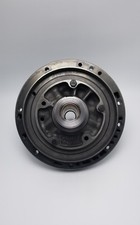

What Has to Happen When You Pull It Into Gear
When the selector moves, the manual valve in the valve body routes line pressure to the clutch circuit for that range. In Drive, that is the forward clutch; in first gear the low roller clutch does the holding against the case, so the forward clutch is the only hydraulic apply you are waiting on. In Reverse, two clutches have to fill and apply together: the direct clutch and the low/reverse clutch, with line pressure boosted by the reverse boost valve.
Fill time depends on three things: how much oil the pump is delivering at idle, how much of it is leaking away before it reaches the piston, and whether the piston seals hold once it gets there. Every cause below falls into one of those three buckets. Pinning down which range is late, and when, tells you which bucket you are in.
Read the Pattern First
- Late into Drive only, Reverse is fine: the forward clutch circuit. Forward piston seals, the sealing rings that feed the forward drum, or the forward clutch clearance.
- Late into Reverse only, Drive is fine: the reverse circuit. Low/reverse or direct piston seals, the reverse boost valve and sleeve, or linkage that is not pulling the manual valve fully into the reverse detent.
- Late into both: something common to every range. Low fluid, a plugged pump screen, a worn pump, a leaking modulator, or a case bore leak such as the intermediate servo or 1-2 accumulator.
- Late only when cold, fine once warm: hardened lip seals that have taken a set and do not seal until they warm up and soften.
- Fine cold, late when hot: leakage. Thin hot ATF pushes past worn bores, bushings and sealing rings that held when the oil was thick.
- Late only on the first start after sitting overnight: oil has drained down out of the converter and cooler circuit and the pump has to refill it before there is pressure to spare for the clutch. A healthy pump does that quickly. A worn pump does it slowly, so the delay gets longer over time.
Step 1: The Free Checks
Fluid level, checked the right way
Low fluid is the number one cause, and the Chevy Hardcore piece lists it first along with a clogged filter. Check it in Park, on level ground, at operating temperature. The GM 1976 light truck service supplement (ST-330-76) notes the TH350 dipstick reading rises about 3/4 inch between 60 F and 180 F, so a level that looks right on a cold engine can be a quart short once the unit is hot. When it is low, the pickup can uncover on a hard engagement and the pump draws air instead of oil. Top off with a DEXRON-licensed ATF; see our TH350 fluid type and capacity guide.
Linkage detent
GM's service supplement carries a blunt caution: operating the transmission out of full detent reduces oil pressure and partially engages the affected clutch, and can cause failure after a few miles. A column linkage that is a little off will put the manual valve partway into the range, so the clutch circuit gets a restricted feed and fills slowly. Put the selector in D, then R, and confirm from under the car that the transmission lever drops cleanly into each detent.
Vacuum modulator and its line
The TH350 sets line pressure with a vacuum modulator, one diaphragm and one spring with vacuum acting against the spring. A ruptured diaphragm lets the engine suck ATF through the vacuum line and burn it, and the unit runs low on both fluid and pressure. Pull the hose at the modulator nipple; any ATF in it means the modulator is done. The Chevy Hardcore piece also warns against replacing the factory steel vacuum line with generic rubber hose, which can collapse and throw the pressure off.
Step 2: Line Pressure Test
Tee a gauge rated for at least 300 psi into the line pressure tap and warm the fluid. Jeff Parlee of the Sonnax TASC Force, writing in Transmission Digest, recommends a gauge rated above the highest pressure you expect and, on a modulated unit, reading maximum line pressure with the vacuum line disconnected to check what the pump can really make.
GM's ST-330-76 figures for a 350 V-8 give you the targets. With the modulator connected at 12 in. Hg absolute manifold pressure: about 85 psi in Drive and 129 psi in Reverse. With the vacuum tube disconnected at 1200 rpm: about 167 psi in Drive and 254 psi in Reverse. Our TH350 pressure testing guide covers the hookup in detail.
- Low in every range, connected and disconnected: the pump cannot keep up, or oil is leaking away before it reaches the clutches. Look at the pump, the pressure regulator and the case bores below.
- Normal with vacuum off, low with it on: modulator or vacuum supply.
- Line pressure normal, engagement still late: the oil is there but is not staying in the clutch circuit. That points at piston seals or sealing rings.
If you can tap the clutch circuit itself, Parlee's rule of thumb is useful: a clutch circuit reading more than about 10 percent below line pressure indicates a leak in that circuit, while 0 to 10 percent is normal sealing ring leakage.
Step 3: The Leaks That Cause It
Intermediate servo bore
This is the classic TH350 delayed-engagement cause because it bleeds pressure in every range. Sonnax notes that line pressure sits on the spring side of the intermediate servo piston in Reverse, Neutral and Drive, and the bore scores from repeated cycling. Excess leakage past the piston gives low line pressure and delayed engagements. Their 35709-01K sleeve kit lists low line pressure in Reverse, Neutral and Drive and delayed engagement among the symptoms it cures.
1-2 accumulator bore
The 1-2 accumulator piston oscillates during normal driving, and per Sonnax the bore in TH350 and TH350C cases becomes worn or scored from it. The listed results are low line pressure, delayed forward and delayed reverse engagement, 1-2 slip, intermediate clutch failure and, at the extreme, a destroyed case. The 35719-01K sleeve kit fixes it without scrapping the case.
Reverse boost valve and sleeve
If Reverse is the late one, look here. Sonnax states the OE boost valve sleeve wears from the steel valve reciprocating in the aluminum sleeve, giving low line pressure, soft 1-2 and 2-3 shifts and a soft reverse engagement or shudder. Pressure that will not rise properly in Reverse makes the reverse pistons fill slowly.
Front pump and pump bushing
The TH350 uses a gear pump driven by the converter hub. In its bushing tech article, Sonnax ties a worn pump bushing to a leaking front seal, pump noise, excess converter hub-to-bushing clearance and low pump volume. Once the bushing wears, the hub and inner gear run off-center and chew the gears and crescent, and the pump loses volume at idle, exactly where engagement happens. A pump that is late every morning after sitting and fine once running is often this.
Seals and sealing rings
Lip seals on the forward, direct and low/reverse pistons harden with age and heat. The Chevy Hardcore piece names brittle lip seals as the cause when the delay only shows up cold. Cast-iron or Teflon sealing rings that feed the clutch drums wear their grooves and leak more when hot. Neither one can be fixed with an additive for long; the cure is a seal kit.
Step 4: The Repair
If the free checks and the modulator are good, the fix is internal. Pull the pan first and look. A clean pan with a little normal fuzz and good fluid supports a leak or seal diagnosis. Heavy friction material means a clutch has already burned, and the job is a rebuild. Service both screens while you are in there, the small one in the governor feed and the larger oil pump pressure screen; most rebuild kits include both.
With the valve body off, sleeve a scored servo bore and a worn accumulator bore, replace the boost valve and sleeve if Reverse was the complaint, and mark every check ball pocket before the spacer plate comes off so each ball goes back where it came from. Then air check each clutch circuit with dry, regulated air. A firm thump with little hiss is good; a long hiss is a cut seal, a broken ring or a cracked drum.
If the unit comes out, check the converter before you reuse it. GM's 1976 overhaul supplement (ST-330-76, Section 7A) measures converter end clearance with collet tool J-21371-8 and a dial indicator on the hub: it should be less than .050 inch, and at .050 inch or more the converter must be replaced. The same section's clutch chart is worth keeping on the bench: the forward clutch runs 4 drive and 4 driven plates on 250 L-6 and 262-305 V-8 units but 5 and 5 on 350 and 400 V-8 and truck units, so a forward pack built with the wrong count stacks up with the wrong clearance and engages late or harsh. Replace all piston lip seals and sealing rings, install a new pump bushing, and check the pump gears and crescent for scoring. GM's supplement also cautions that the forward and direct pistons look almost identical, so keep them straight. Set clutch clearances to your kit's spec; excess clearance makes a piston travel farther before the pack clamps, and that alone adds engagement delay.
Quick Diagnostic Order
- Note which range is late and whether it is cold, hot or only after sitting.
- Check fluid hot. Remember the 3/4 inch rise from cold to hot.
- Confirm the linkage puts the lever fully into each detent.
- Pull the modulator hose; ATF in it means a ruptured diaphragm.
- Pressure test with vacuum on and off and compare to the GM numbers.
- Low everywhere: pump, servo bore, accumulator bore. Low in Reverse only: boost valve sleeve. Pressure good: seals and rings.
- Air check the circuits before you commit to a full rebuild.
View the servo sleeve kit →
FAQ
Why is my TH350 slow to go into Drive?
If only Drive is late, the forward clutch circuit is the suspect: hardened forward piston seals, worn sealing rings feeding the forward drum, or excess clutch clearance. Check the fluid level hot and the linkage detent first, then pressure test to see whether line pressure is normal.
Is a delayed engagement the same as slipping?
No. Slipping happens after a clutch is applied and cannot hold the load. A delayed engagement is the time before the clutch applies at all, caused by slow fill from low pump volume, low line pressure, or oil leaking out of the clutch circuit.
Why does my TH350 only delay engagement when cold?
Old lip seals harden and take a set, so they do not seal well until the fluid warms them up. If the delay goes away after a few minutes of running, plan on a seal kit. A delay that gets worse when hot points at worn bores, bushings and sealing rings instead.
What line pressure should a TH350 have?
GM's 1976 service supplement lists about 85 psi in Drive and 129 psi in Reverse with the modulator connected at 12 in. Hg absolute, and about 167 psi in Drive and 254 psi in Reverse with the vacuum tube disconnected at 1200 rpm, for a 350 V-8. Low readings in every range point at the pump or a case bore leak.
Sources
- General Motors — 1976 Chevrolet Light Truck Service and Overhaul Supplement, ST-330-76, Section 7A Turbo Hydra-Matic 350. Backs the TH350 oil pressure figures (85 psi Drive and 129 psi Reverse with the modulator connected at 12 in. Hg absolute; 167 psi Drive and 254 psi Reverse with the vacuum tube disconnected at 1200 rpm, 350 V-8), the vacuum modulator description, the out-of-detent caution, the 3/4 inch fluid level rise from 60 F to 180 F, the note that the forward and direct pistons look almost identical, the converter end clearance check (tool J-21371-8, replace at .050 inch or more), and the THM 350 clutch plate chart by engine. 73-87chevytrucks.com (PDF)
- Sonnax — TH350/TH350C Intermediate Servo Sleeve Kit, Part No. 35709-01K. Backs line pressure on the spring side of the servo in R, N and D, bore scoring from cycling, and the low line pressure and delayed engagement symptoms. sonnax.com
- Sonnax — TH350/TH350C 1-2 Accumulator Sleeve Kit, Part No. 35719-01K. Backs 1-2 accumulator bore wear from oscillation and the delayed forward, delayed reverse, low line pressure and 1-2 slip symptoms. sonnax.com
- Sonnax — TH350/TH350C Boost Valve Kit, Part No. 35754-01K. Backs boost sleeve wear from the steel valve in the aluminum sleeve and the low line pressure and soft reverse engagement symptoms. sonnax.com
- Sonnax — "Bushwhacked: Keys to Avoiding Preventable Bushing Problems." Backs the TH350/TH400 pump bushing (34034T-01) concerns: leaking front seal, pump noise, excess converter hub-to-bushing clearance and low pump volume. sonnax.com
- Transmission Digest — "Diagnosis with Pressure Gauges," Jeff Parlee, Sonnax TASC Force. Backs gauge selection, reading maximum line pressure with vacuum disconnected on a modulated unit, and the 10 percent clutch-circuit-to-line leak threshold. transmissiondigest.com
- Chevy Hardcore — "Diagnosing GM Transmissions." Backs the delayed-engagement-versus-slipping distinction, low fluid, clogged filter and brittle cold lip seals as causes, ATF in the modulator hose, and the rubber vacuum line warning. chevyhardcore.com