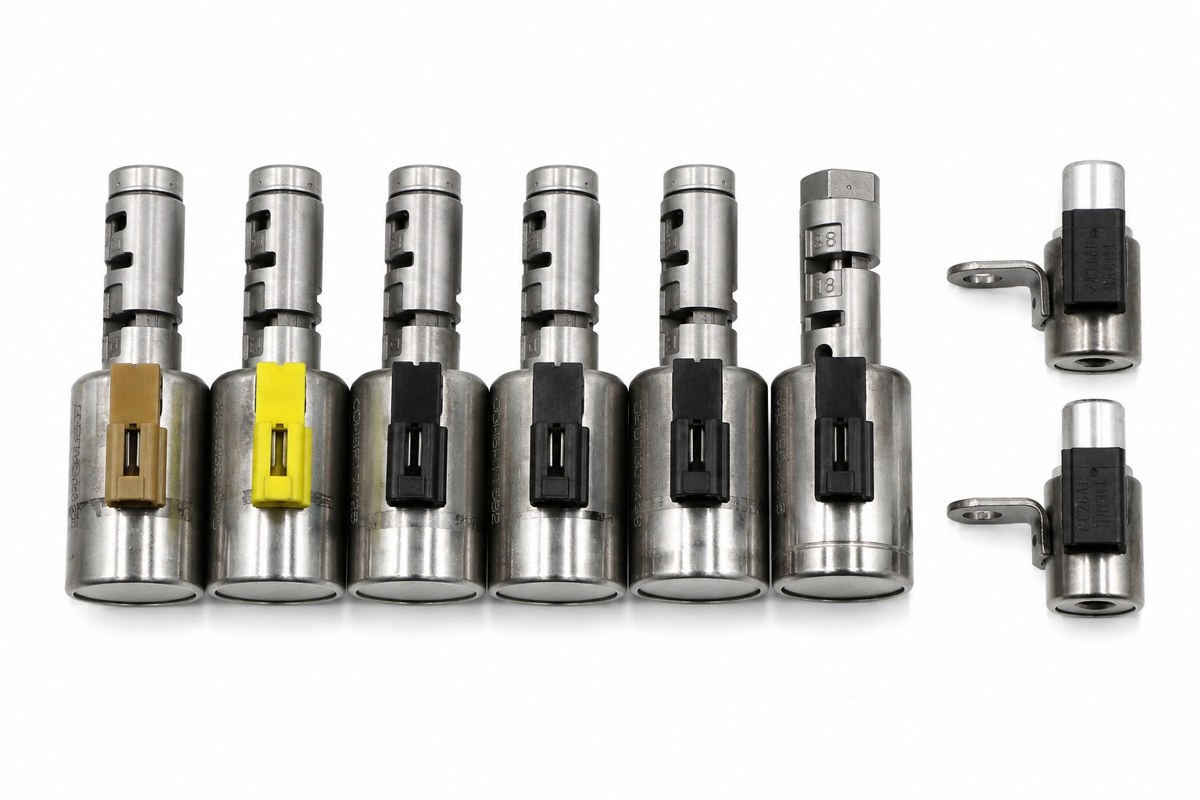
When a Volkswagen or Audi with the six-speed 09G automatic starts banging the 3-2 coastdown, flaring between gears once it is fully warm, or dropping into limp mode with a solenoid fault, the electrical side of the valve body is the first place to look. This kit replaces the complete set: as pictured, six linear pressure control solenoids and two small bracket-mounted on/off solenoids, the full eight-piece complement of the Aisin TF-60SN that VW calls the 09G. Replacing all eight at once gives every clutch circuit the same fresh response instead of mixing new parts with tired ones.
What the solenoids do in a 09G
The 09G has no conventional shift valves switching clutches on and off. According to Transmission Digest's breakdown of Rostra's research, it uses six linear solenoids and two on/off solenoids. Four of the linear solenoids directly control clutches and brakes (N92 for K1, N282 for K2, N90 for K3 and N283 for B1), one controls line pressure and one controls torque converter lockup. The TCM drives them with a 300 Hz pulse-width signal, so it can ramp one clutch off while the next one comes on. The two on/off solenoids are normally closed and are energized for jobs like engine braking and converter lockup. Because every shift is an overlap between two or three elements, one slow solenoid is enough to spoil shift quality even with healthy clutches.
Symptoms this kit addresses
- Harsh 3-2 or 2-1 coastdown shifts in stop-and-go driving, the circuits Sonnax says work hardest in city traffic
- Shifts that are fine cold but flare or slam once the fluid passes roughly 85 C
- Bump into Drive or Reverse, or a slipping feel when the converter clutch applies
- Solenoid electrical or gear ratio faults stored in the TCM, with the transmission held in a fail-safe gear
- Shift quality that keeps changing as the adaptations chase a sticking solenoid
How to confirm before you buy
Pull codes from the TCM with a VW-capable tool and note which solenoid or clutch is named. A hot-only complaint points strongly at the solenoids: Sonnax describes plungers that begin to seize in their coil bushings at operating temperature, so a part can measure fine cold and still cause the problem. Resistance, function and hot-soak checks are covered in our guide to bench testing transmission solenoids. If the fluid is black and burnt, clutch wear has likely started, and if the complaint is a true slip rather than a flare, read our flare vs slip explainer before spending money on electrical parts.
Fitment
This set is listed for 09G transmissions from 2006 through 2015, which covers front-drive VW Jetta, Passat, Golf, Rabbit, Beetle and related Audi models. That range crosses the 2008 change in solenoid size, so it is the one thing to check before ordering. With the pan down, measure the can of one linear solenoid: our large-can 09G kit with filter and gasket fits the 1.0 inch style and our slim-body 09G kit fits the 0.75 inch style. Compare the connector colors and the two small on/off solenoids against the photos, or send us your year and VIN and we will confirm before it ships. More Aisin six-speed parts are on our Aisin transmission page.
Install notes
- Drain the fluid, drop the pan and filter, unplug the internal harness and lower the valve body; Sonnax notes that on most of these units the body must come down or out to swap solenoids.
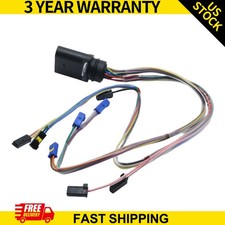
- Mark each solenoid's bore before removal and install the new one in the matching position with clean O-rings. Unclip connectors gently; brittle ones crack, and a damaged loom calls for a 09G internal wiring harness.
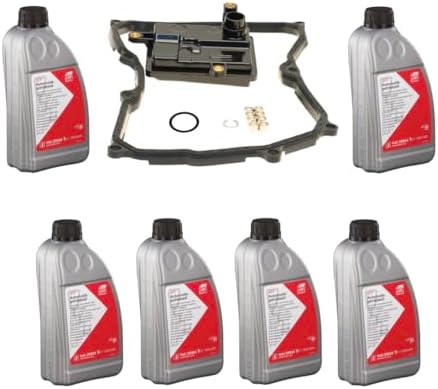
- Fit a new 09G filter and pan gasket kit so debris from the old parts does not reach the new ones.
- Refill with ATF meeting VW G 055 025 and set the level at the check plug with the engine running and the fluid in the specified temperature window.
- Reset adaptations and drive through every gear so the TCM relearns clutch fill times, as explained in our adaptive relearn guide.
If new solenoids do not cure a hot flare, bore wear at the solenoid modulator or clutch control valves is the next suspect, and the valve body itself needs attention.