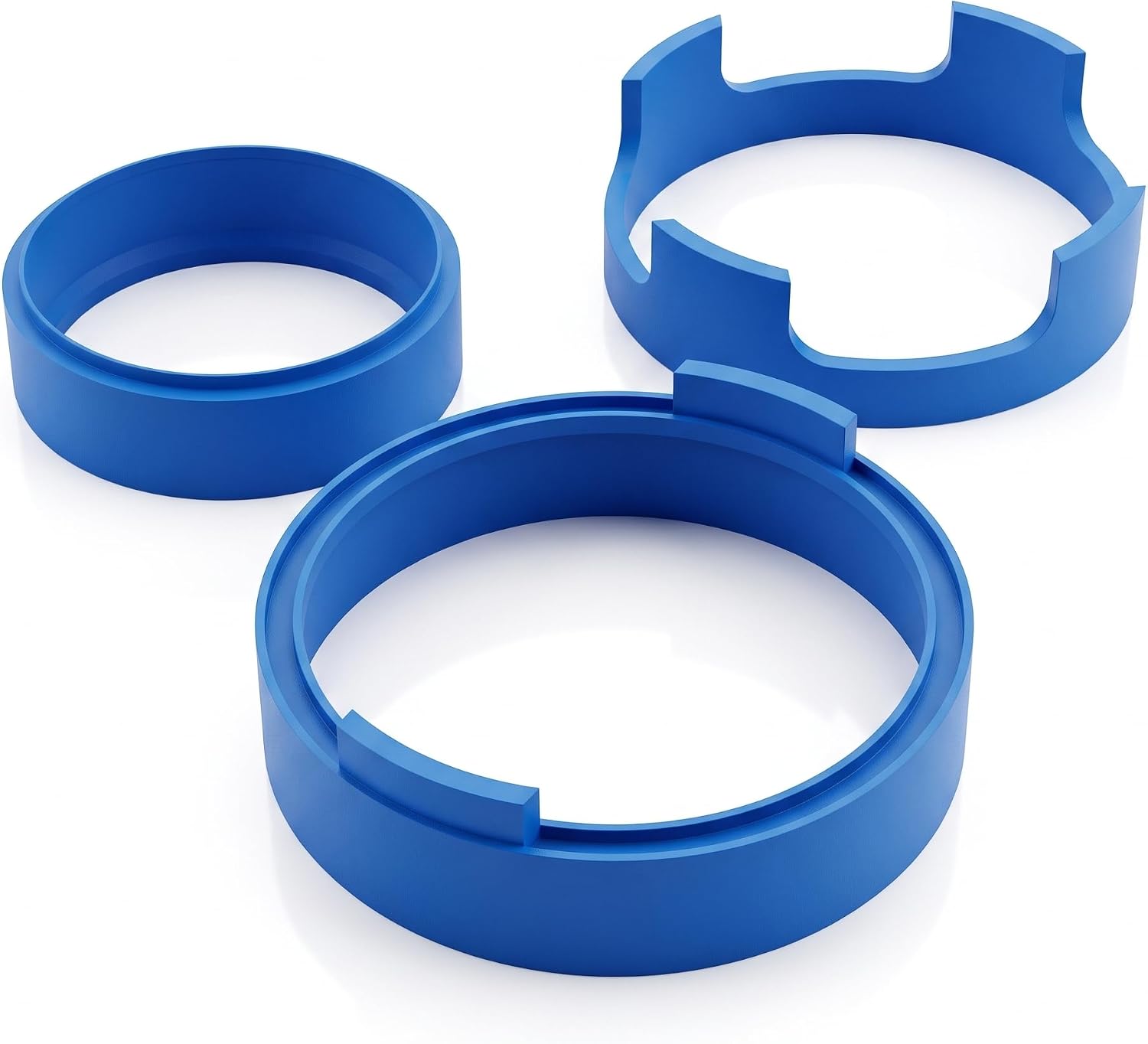
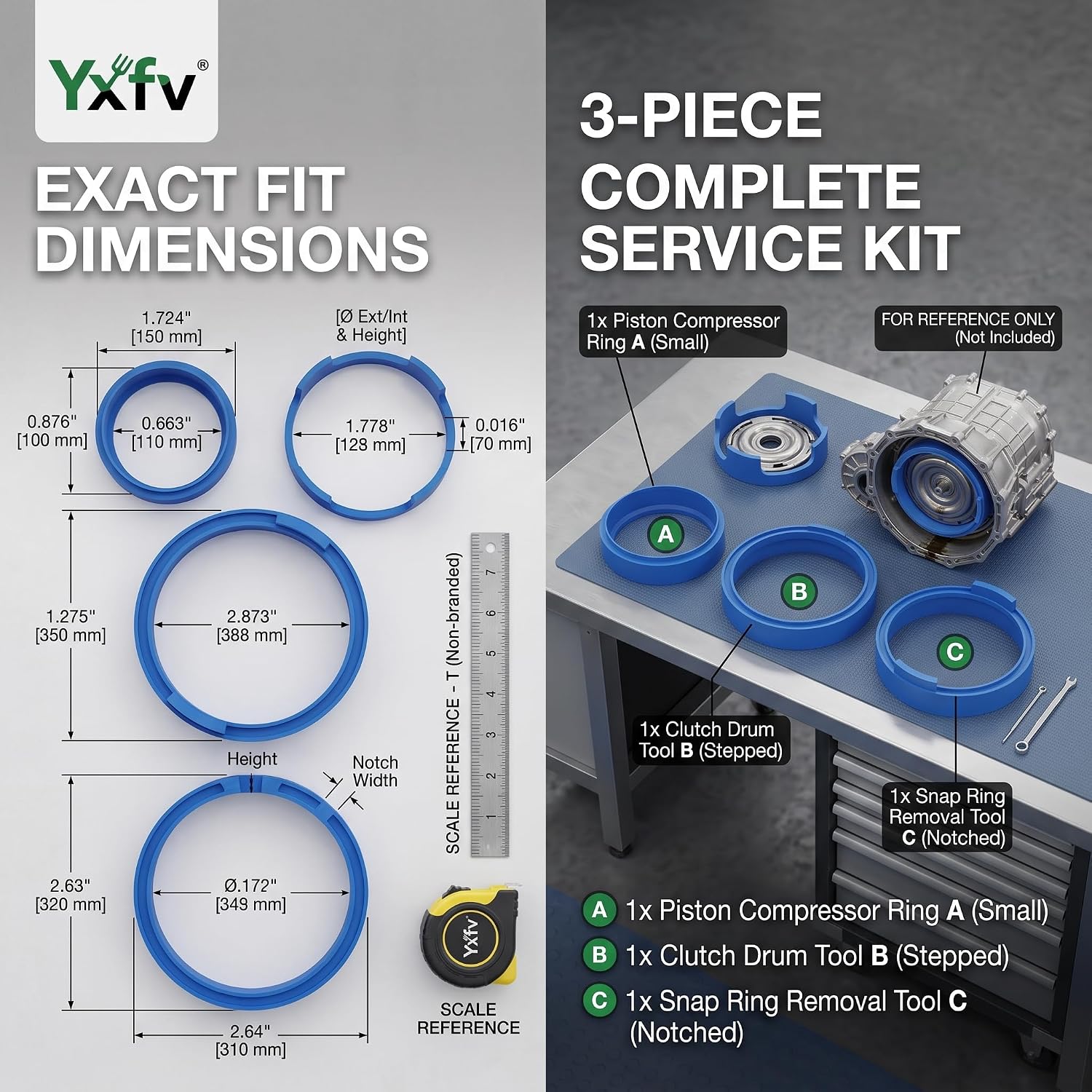
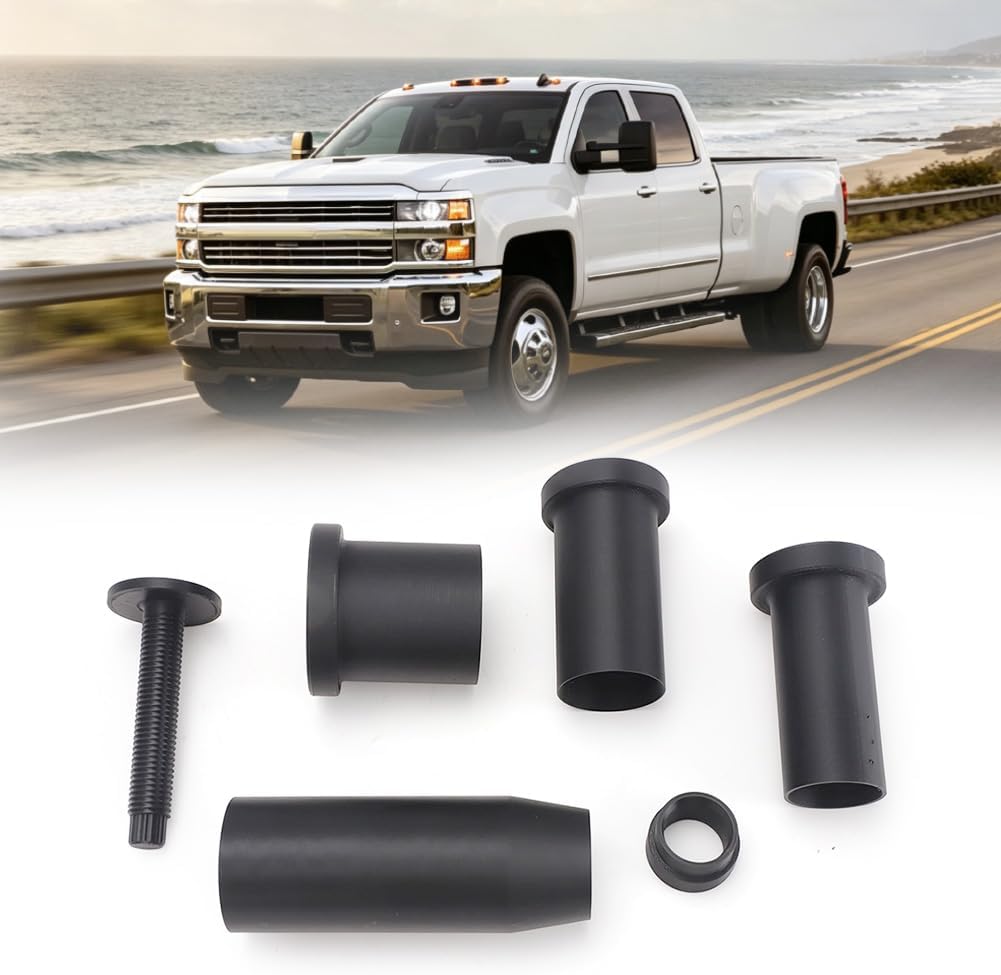
Pulling a clutch piston out of a Ford 10R80 or GM 10L80 drum means getting a snap ring out from under a spring pack that is pushing back hard, in a groove that sits down inside the drum. Do it with sockets, a pry bar or a universal compressor and the load goes to one side: the spring cage bends, the ring launches, or the groove gets chewed. This alloy steel compressor is shaped for the drums in these ten-speeds, the units behind 2017-up F-150, Expedition, Mustang and Ranger and GM's Silverado, Sierra, Tahoe, Yukon and Escalade, so the spring comes down square and the snap ring comes out clean.
What the return spring compressor does in a 10R80 or 10L80
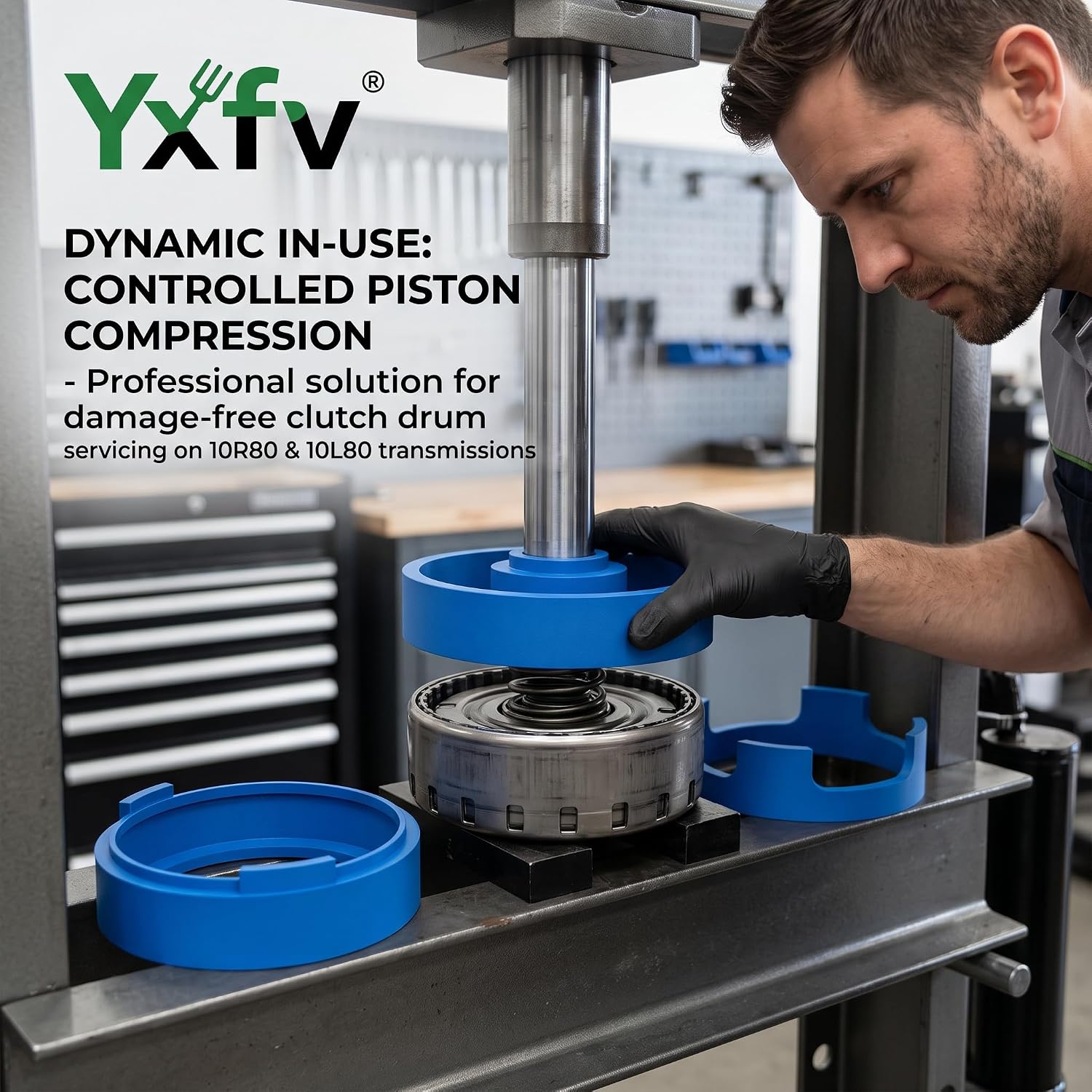
Each clutch in these transmissions is applied by a piston that oil pressure pushes into the clutch pack. When the solenoid releases that clutch, a return spring assembly pushes the piston back so the pack opens up. That spring is held in place by a snap ring, and with the spring under preload you cannot get the ring out until something takes the load off it. This tool sits on the spring retainer and presses it down evenly around its circumference, just far enough to unload the snap ring. The contact points are slim so they leave room at the recessed grooves, which is where most stalled teardowns get stuck.
Why it matters on a ten-speed: ATRA's GEARS Magazine notes that clutch clearances on the 10L must be within specification, because the shift strategy cannot compensate for clearance that is out of range, and the result is harsh or binding shifts. A bent spring cage or a distorted snap ring changes how the piston returns and seats, which works against you when you set clearance on reassembly.
Symptoms that lead to pulling a piston
- A slip, flare or bind on shifts that use one clutch, pointing at that piston seal or the pack behind it
- Burned friction plates and dark, burnt-smelling fluid at a pan drop
- Harsh shifts that a clean adaptive relearn will not fix
- Clutch-related codes such as gear ratio errors that come back after clearing
- A previous rebuild with cut piston seals, often caused by prying against the drum
How to confirm before you tear in
Rule out the cheaper causes first. Check the fluid level hot, scan all modules for codes, and look at the hydraulic controls; our 10L80 shift solenoid symptoms guide covers the electrical side, and trucks in GM's valve body recall population are covered in GM 10L80 transmission problems and the valve body recall. Once the problem is confirmed inside the case, air check the drums. Sonnax recommends checking each drum with its mating input part so you can tell a piston seal leak from a sealing ring or bushing leak before you decide what to replace.
Fitment
This compressor is made for the Ford 10R80 and the GM 10L80 only and should not be used on other transmissions. Both units share the same ten-speed design, though Ford and GM parts are not always interchangeable and GM made running changes over the years. Check the tool against your actual drum before loading it. If you are unsure of the exact unit in your vehicle, send us your year and VIN. The full line of parts for this family is on our 10L80/10L90 collection page.
Install notes
- Set the drum on a solid bench or press table and center the tool on the spring retainer before applying any load.
- Compress only until the snap ring is unloaded. Going further can collapse or kink the spring pack.
- Remove the ring, release the tool slowly, then lift out the return spring and piston.
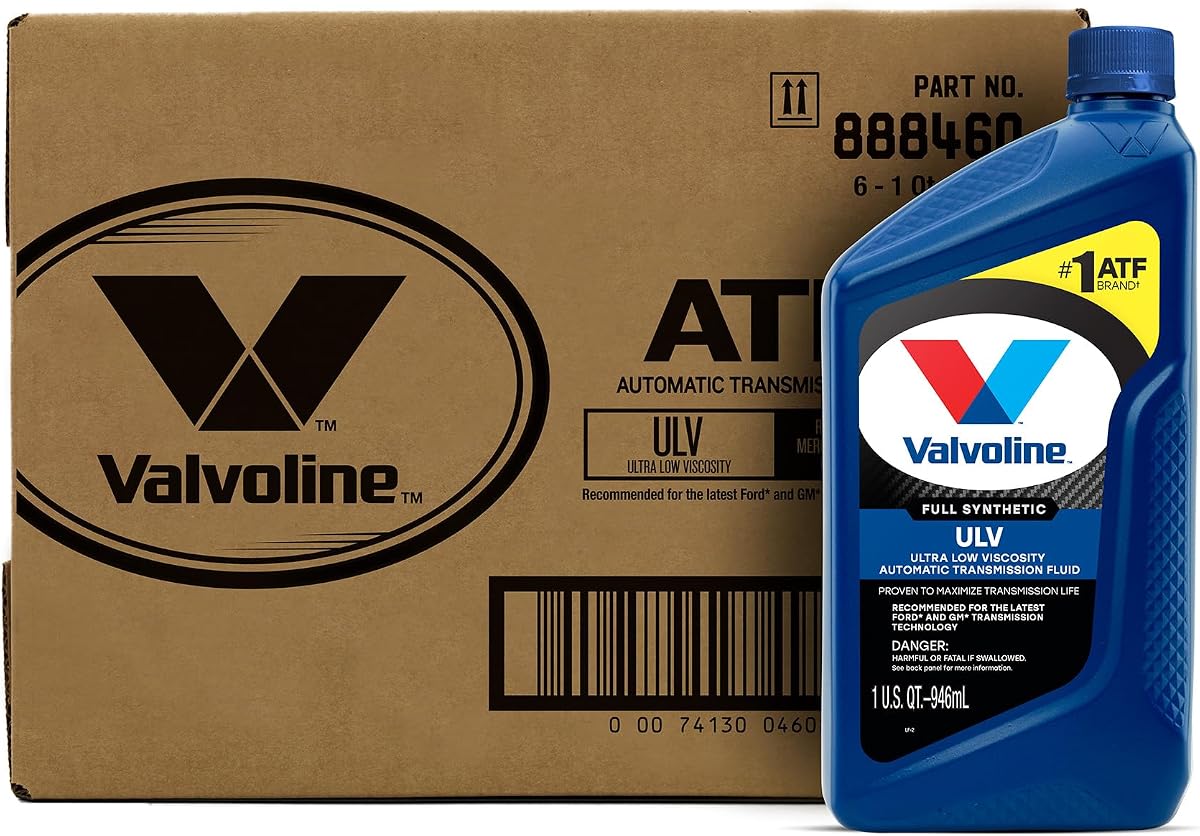
- Install new piston seals or a new bonded piston, lube them with clean ULV fluid, and work them into the bore without twisting a lip.
- Reverse the procedure, then check that the snap ring sits fully in its groove all the way around before you set clutch clearance to spec.
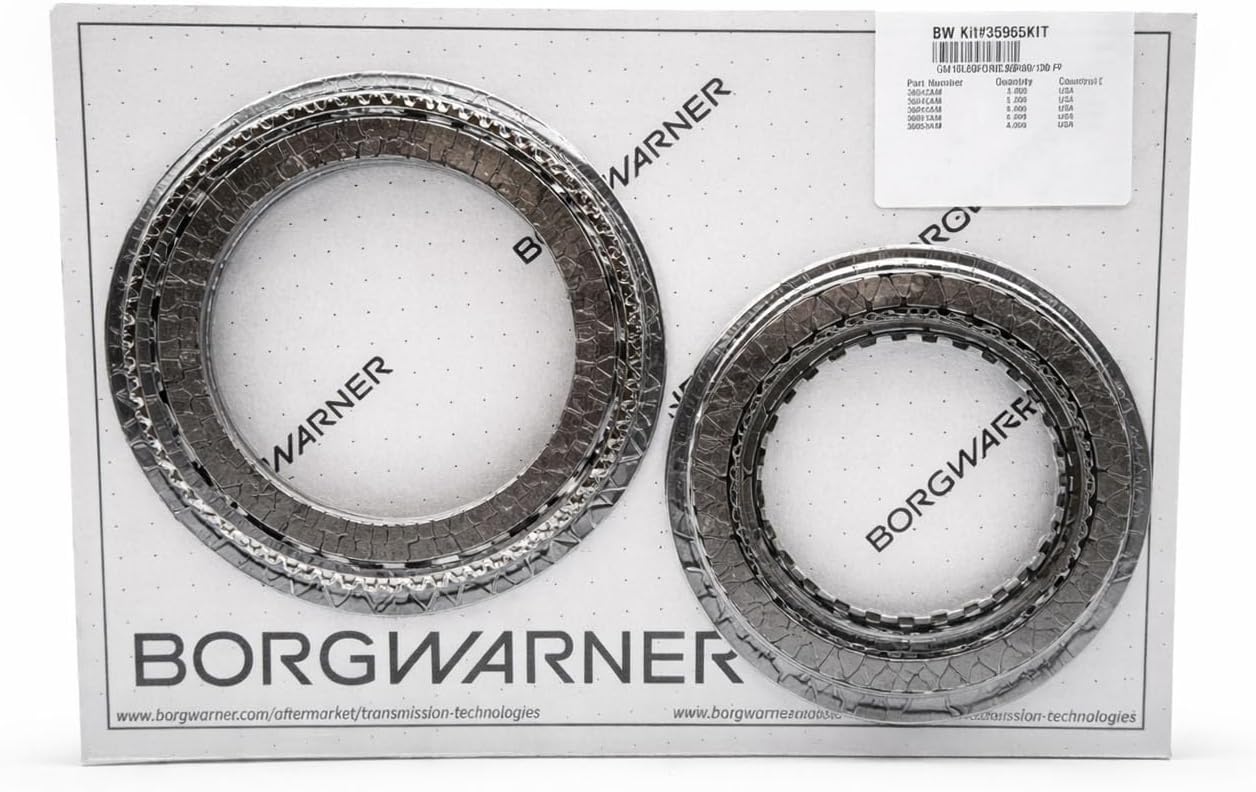
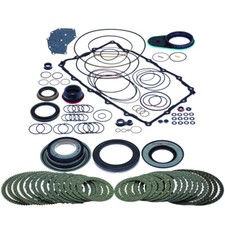
For new frictions and steels, the 10R80 friction clutch module kit 35955KIT is the usual pairing, and a full seal job goes faster with the 10L90 master rebuild kit. Refill with MERCON ULV on Ford units or DEXRON ULV on GM, then run the adaptive relearn.